

Loobo BG9711A Portable Radioactivity Monitor for Food and Water
| Brand | Loobo |
|---|---|
| Origin | Shandong, China |
| Manufacturer Type | Authorized Distributor |
| Country of Origin | China |
| Model | BG9711A |
| Price | Upon Request |
| Detector | Ø40×37 mm NaI(Tl) Scintillation Crystal |
| Measured Radionuclides | Cs-137, Cs-134 (calibration-compatible with I-125, Co-60, etc.) |
| Detection Limit | 20 Bq/L (relative to Cs-137) |
| Measurement Protocol | 30-min background + 10-min sample |
| Lead Shielding Thickness | 25 mm |
| Display | LCD showing activity or specific activity with uncertainty estimation |
| Background Subtraction | Enabled |
| LED Status Indicators | Green (safe), Yellow (elevated), Red (exceeds regulatory threshold) |
| Operating Temperature | 10–35 °C |
| Operating Humidity | ≤80% RH at 40 °C |
| Primary Power | DC 9 V / 1000 mA adapter |
| Backup Power | Two AA batteries |
| Power Consumption | <200 mW |
| Dimensions (L×W×H) | 190×190×350 mm |
| Net Weight | 26.4 kg |
| Data Storage | 200 measurement records |
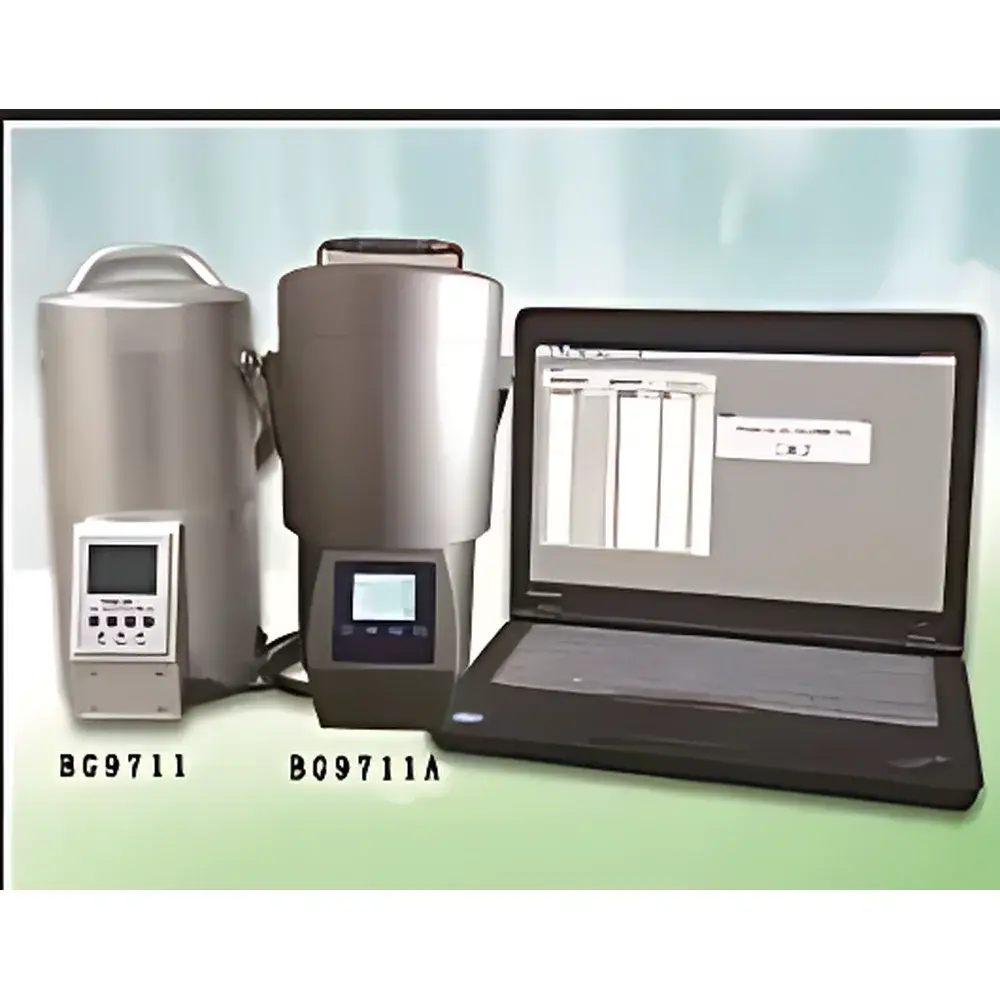
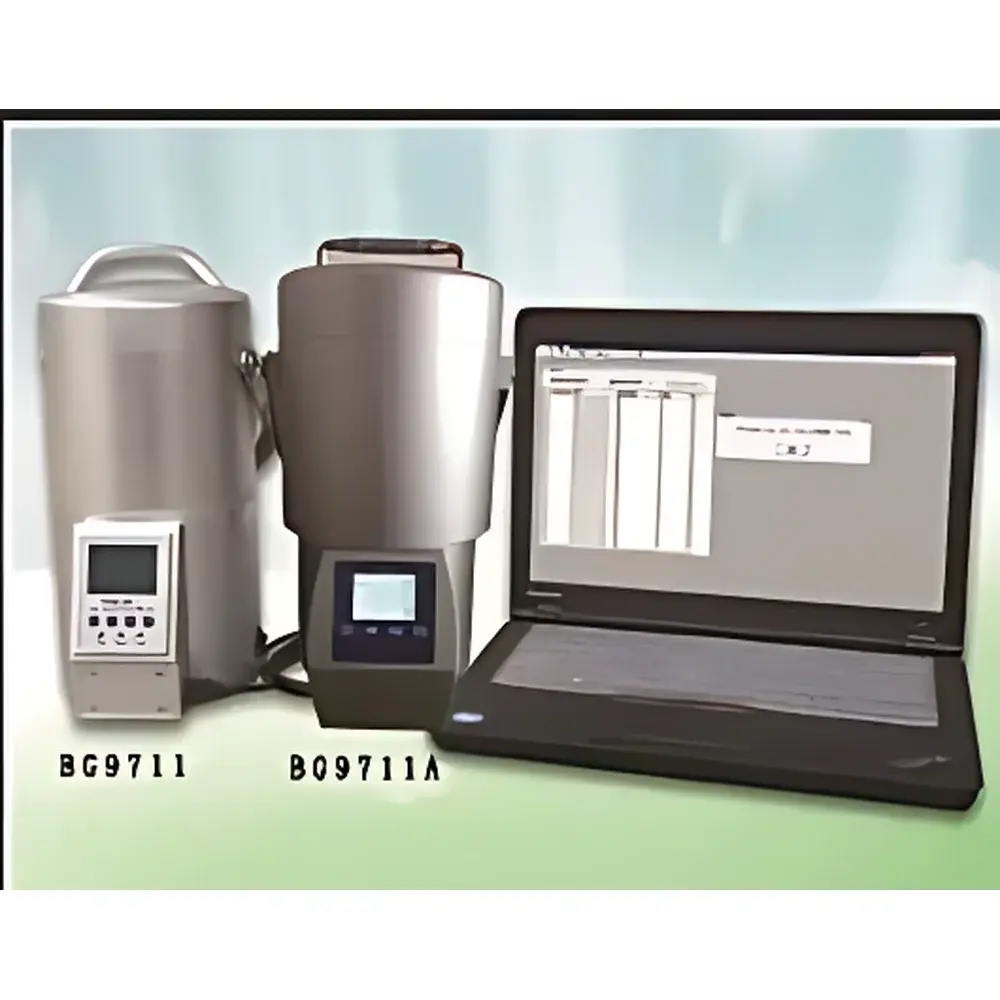
| Connectivity | Optional USB interface for PC-based control and data export |
| Compliance | Designed for field-deployable radiological screening per IAEA Safety Guides RS-G-1.8 and national food/water monitoring protocols |
Overview
The Loobo BG9711A Portable Radioactivity Monitor for Food and Water is a field-deployable gamma spectrometric screening instrument engineered for rapid, on-site assessment of radionuclide activity concentrations in liquid and solid matrices. It employs a thallium-doped sodium iodide [NaI(Tl)] scintillation detector—Ø40 mm diameter × 37 mm thickness—optimized for high detection efficiency in the 60–1800 keV energy range, covering key anthropogenic isotopes including 137Cs (662 keV), 134Cs (605 & 796 keV), 60Co (1173 & 1332 keV), and 125I (35.5 keV). The instrument operates on the principle of gamma-ray photon interaction with the scintillator crystal, followed by photomultiplier conversion and pulse-height analysis to quantify activity via calibrated energy windows. Its integrated 25 mm lead shielding minimizes background interference, enabling reliable measurements down to 20 Bq/L for 137Cs under standardized 30-minute background + 10-minute sample acquisition protocols. Designed for operational continuity in variable environments, it supports dual-power operation (DC 9 V adapter or two AA cells), maintains real-time clock and configuration integrity during power loss, and delivers direct readout of activity (Bq/kg or Bq/L) with statistical uncertainty estimation on its backlit LCD.
Key Features
- Integrated 25 mm lead-lined aluminum housing providing effective passive shielding against ambient gamma radiation, ensuring measurement fidelity in uncontrolled field settings.
- Real-time tri-color LED status indicators (green/yellow/red) mapped to internationally referenced activity thresholds—enabling immediate visual risk categorization without interpretation delay.
- Onboard microprocessor executing background subtraction, energy window calibration, and decay correction; stores up to 200 complete measurement records with timestamp, sample ID, and uncertainty metadata.
- Intuitive soft-key navigation with contextual screen prompts—eliminating reliance on external manuals and reducing operator training time.
- USB interface (optional) compliant with CDC/ISO/IEC 17025-aligned data transfer protocols, supporting traceable export of raw spectra, processed results, and audit logs to laboratory information management systems (LIMS).
- Robust mechanical design: sealed metal enclosure rated IP54 for dust and splash resistance; operating temperature range validated from 10 °C to 35 °C at ≤80% RH (40 °C).
Sample Compatibility & Compliance
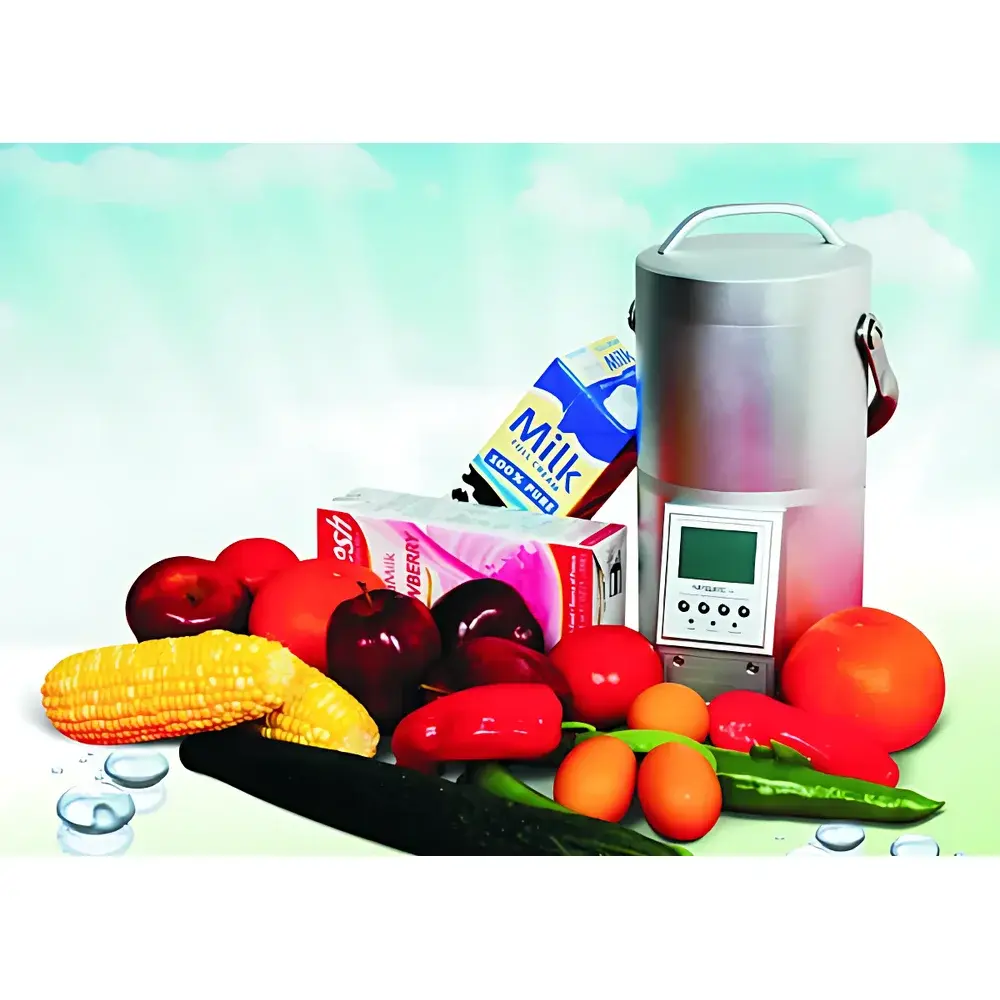
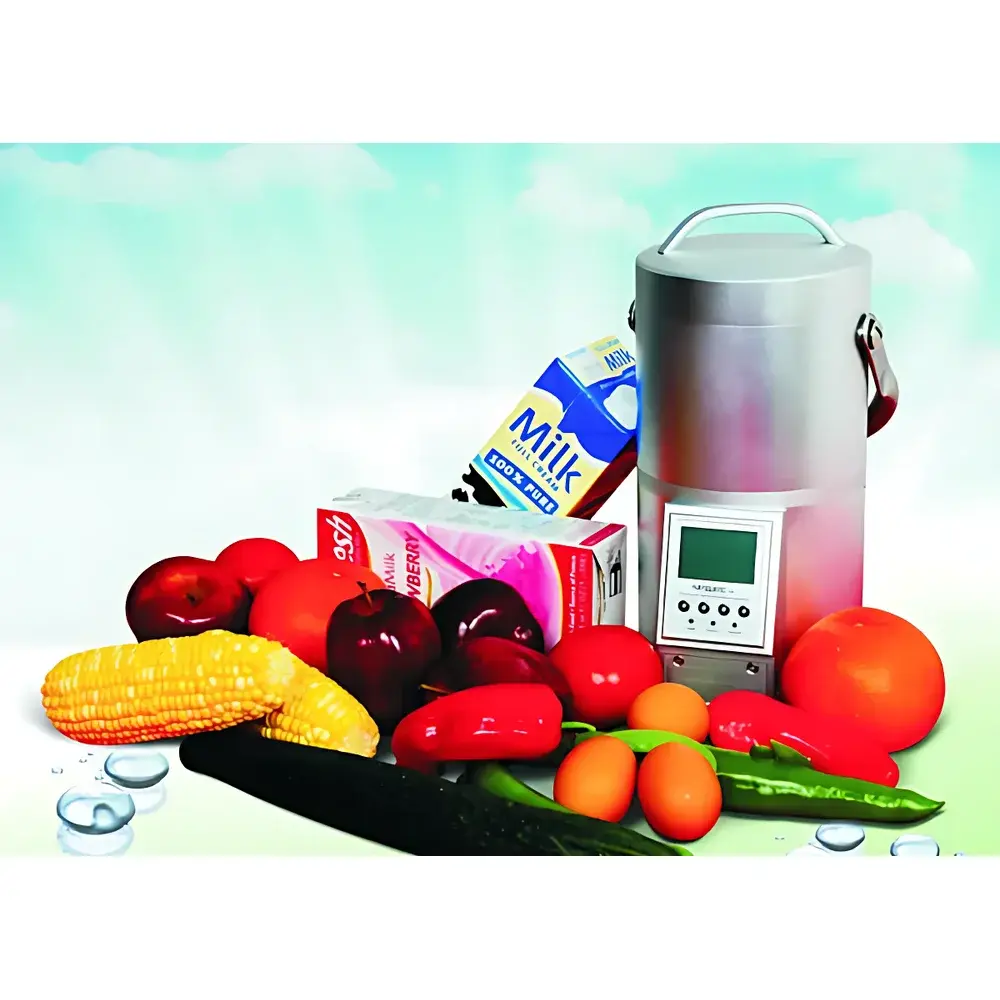
The BG9711A accommodates standardized geometries—including 1 L water samples in supplied polyethylene measurement cups and homogenized solid food composites (e.g., grains, dairy powders, leafy vegetables) weighed using the included precision electronic balance (0.01 g resolution). Its calibration methodology adheres to ISO 11929:2019 (evaluation of measurement uncertainty in ionizing radiation) and aligns with IAEA Technical Reports Series No. 488 (Guidelines for Radiological Monitoring of Food and Drinking Water). While not a certified reference instrument for regulatory reporting, it fulfills Tier-1 screening requirements under national food safety frameworks (e.g., China GB 14883.1–2016, EU Council Regulation No. 2016/52) and environmental surveillance mandates (e.g., WHO Guidelines for Drinking-water Quality, 4th ed.). All firmware and calibration files are version-controlled and support GLP-compliant documentation workflows.
Software & Data Management
The optional PC software suite provides full remote instrument control—including preset method selection (water, milk, grain), adjustable counting time, spectral review, and re-analysis with alternate energy windows. Data exports comply with ASTM E1352-20 (Standard Practice for Digital Data Exchange in Radiation Measurement) and generate CSV/Excel-compatible reports containing raw counts, net peak area, efficiency-corrected activity, expanded uncertainty (k=2), and pass/fail flags relative to user-defined action levels. Audit trails record all parameter changes, calibration events, and data exports with operator ID and timestamp—supporting FDA 21 CFR Part 11 compliance when deployed with electronic signature modules.
Applications
- Rapid post-incident screening following nuclear facility anomalies or transport accidents—prioritizing high-risk commodities for confirmatory lab analysis.
- Frontline verification at border inspection posts, cold chain distribution hubs, and wholesale markets to enforce import/export radionuclide limits.
- Periodic surveillance in municipal water treatment plants and dairy processing facilities as part of HACCP-based radiological hazard plans.
- Field validation of decontamination efficacy in agricultural zones affected by historical fallout or accidental releases.
- Training and capacity building for public health laboratories in low-resource settings requiring rugged, battery-operated gamma screening capability.
FAQ
Can the BG9711A quantify alpha or beta emitters such as 210Po or 90Sr?
No. It is optimized for gamma-emitting radionuclides detectable via NaI(Tl) scintillation. Alpha/beta emitters require proportional counters or liquid scintillation systems.
Is factory recalibration required annually?
Yes. Annual energy and efficiency calibration using traceable 137Cs and 60Co check sources is recommended to maintain stated detection limits and uncertainty budgets.
Does the instrument meet ISO/IEC 17025 accreditation requirements for testing laboratories?
It serves as a screening tool—not a primary reference standard. Accredited labs must validate its performance against certified reference materials per ISO/IEC 17025 Clause 7.7 before incorporating results into accredited reports.
What is the minimum detectable activity (MDA) for 134Cs in milk powder?
Under identical 30+10 min protocol and 100 g sample mass, MDA is approximately 35 Bq/kg—calculated per Currie equation with instrument-specific background count rate and efficiency.
Can the USB interface support automated data ingestion into enterprise LIMS platforms?
Yes—via configurable CSV output schema and HTTP POST API integration; custom mapping templates available upon request for major LIMS vendors (LabWare, Thermo Fisher SampleManager, STARLIMS).







