
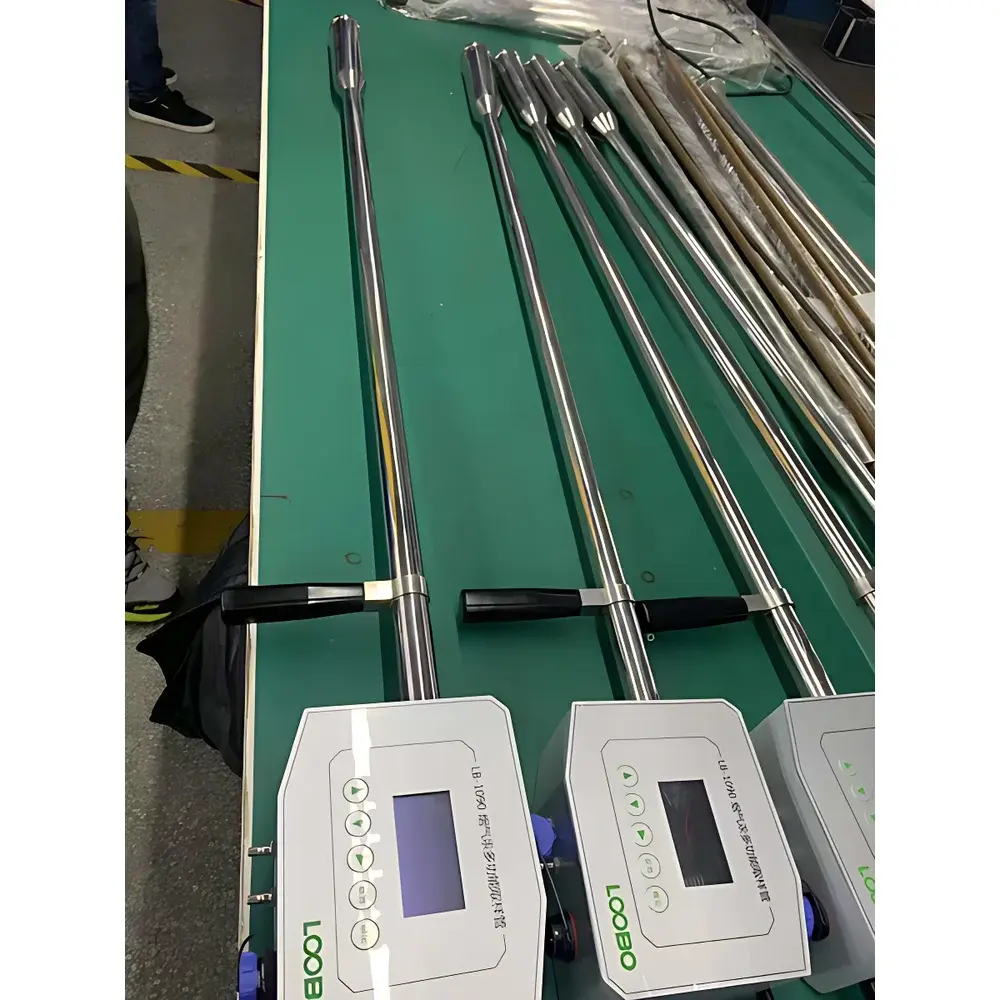
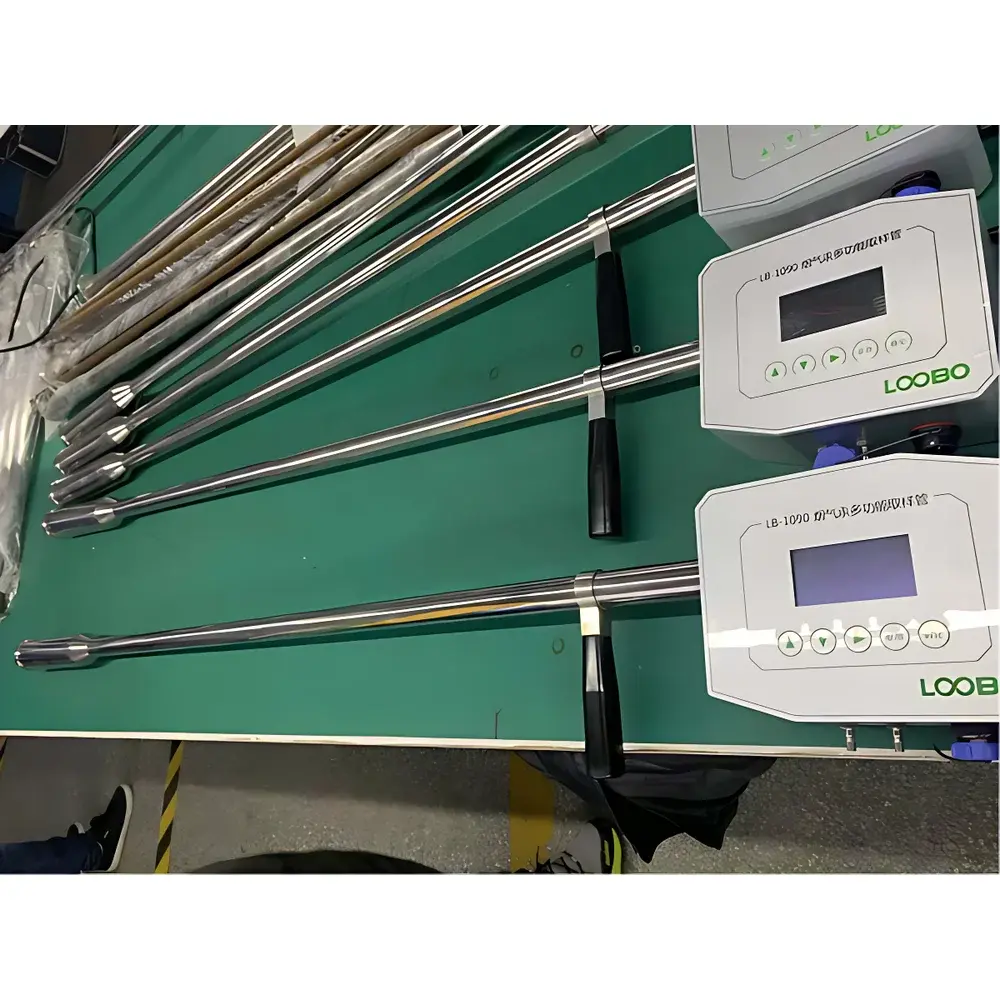
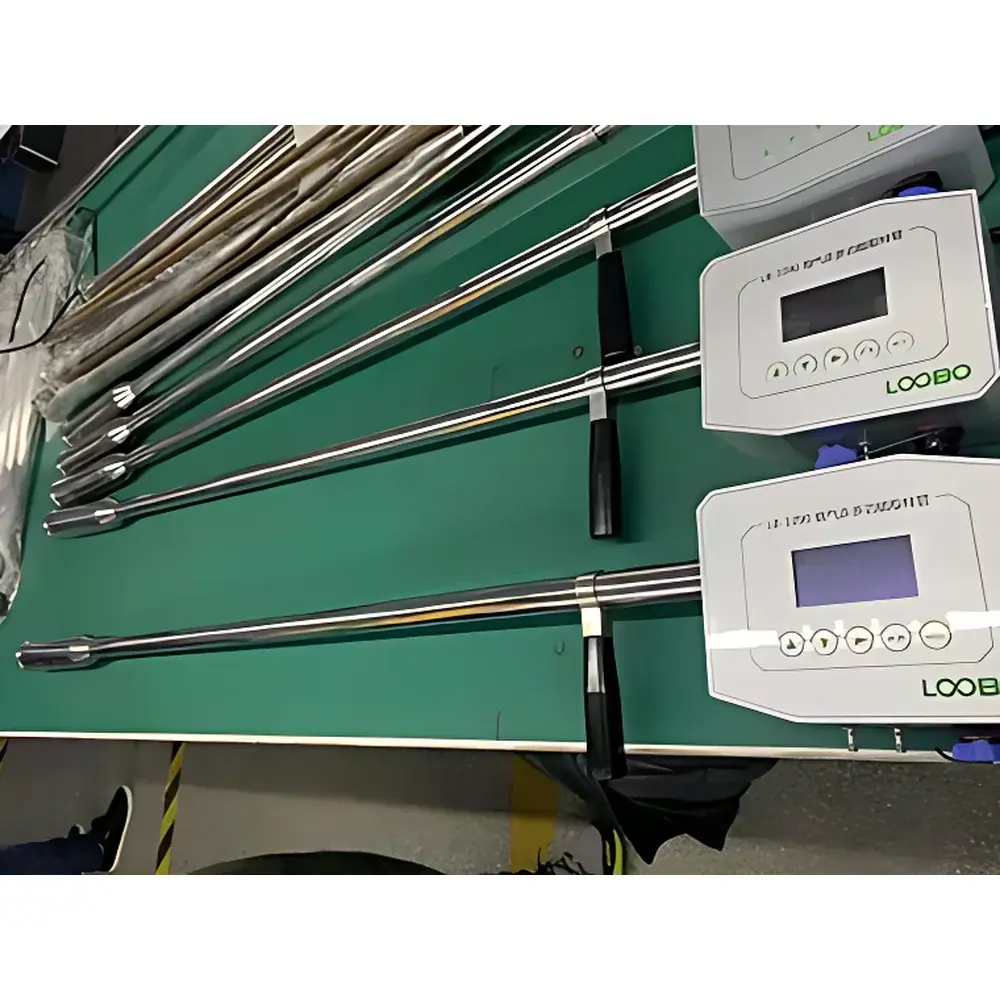
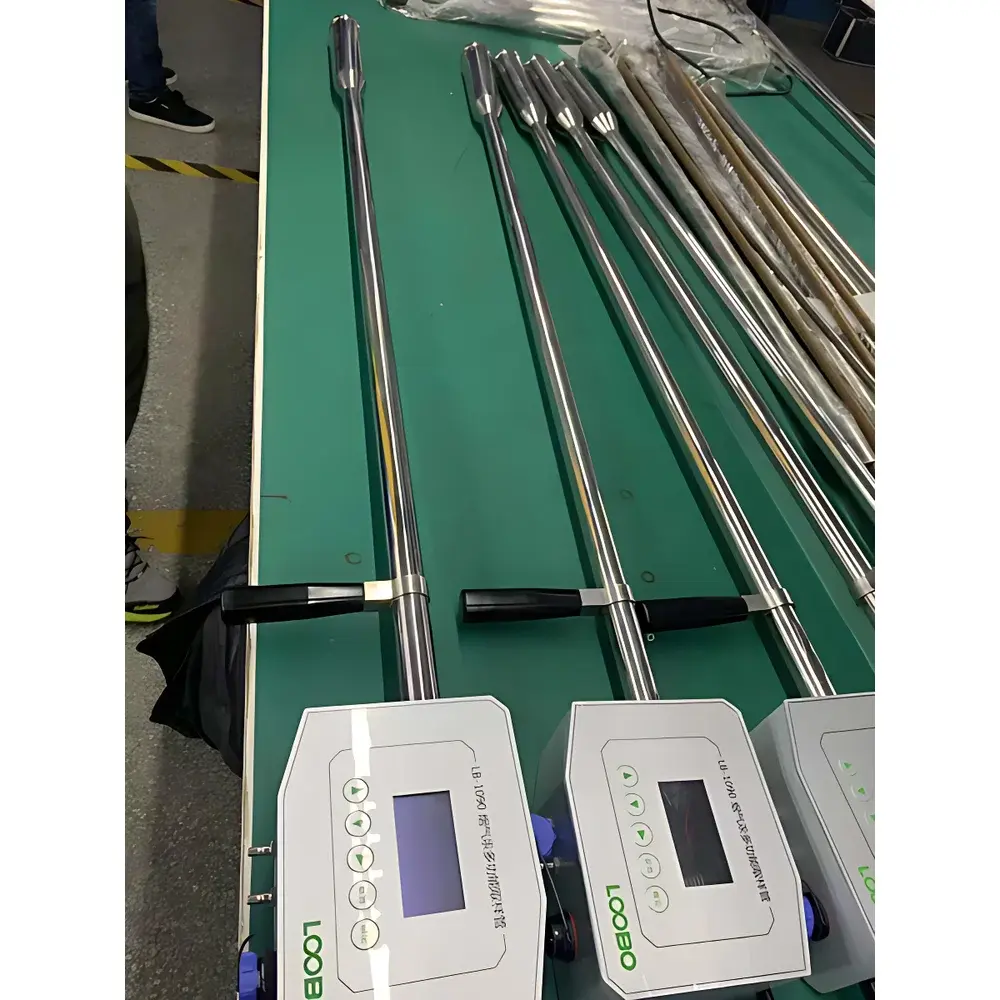
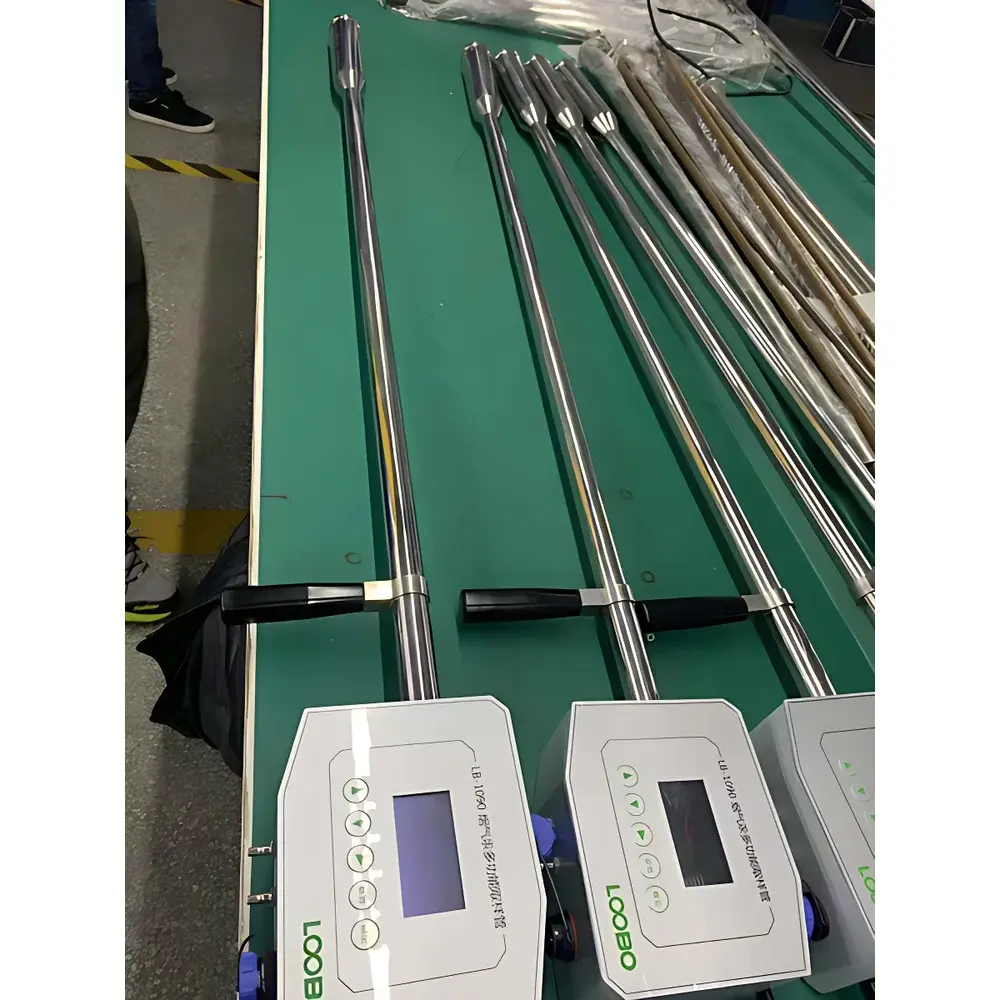
Loobo LB-1090 Flue Gas Mercury Sampling Probe
| Brand | Loobo |
|---|---|
| Origin | Shandong, China |
| Manufacturer Type | Authorized Distributor |
| Country of Origin | China |
| Model | LB-1090 |
| Price Range | USD 0–7,200 (FOB Qingdao) |
| Sampling Flow Rate | 0.5–2.0 L/min |
| Flow Accuracy | ≤ ±5% FS |
| Sampling Temperature Range | 100–160 °C (factory-set at 130 °C) |
| Sampling Velocity | 2 m/s |
| Sample Target | Gaseous Elemental and Oxidized Mercury in Flue Gas |
| Probe Length | 1.5 m (standard), customizable |
| Effective Heated Length | 1.2 m (standard), customizable |
| Probe Weight | ~4 kg |
| Minimum Stack Port Diameter | ≥ Φ60 mm |
| Max Operating Temperature (Probe Body) | ≤ 200 °C |
| Material | 6063 Aluminum Alloy Housing (anodized), 316 Stainless Steel Sampling Tube |
Overview
The Loobo LB-1090 Flue Gas Mercury Sampling Probe is an engineered solution designed for regulatory-compliant, isokinetic sampling of gaseous mercury species—including elemental mercury (Hg⁰) and oxidized mercury (Hg²⁺)—from industrial flue gas streams. It operates in strict accordance with HJ 917–2017 (“Determination of Gaseous Mercury in Exhaust Gas from Stationary Sources: Activated Carbon Adsorption/Thermal Desorption–Atomic Absorption Spectrophotometry”) and supports alignment with international protocols such as EPA Method 30B, ASTM D6784–22 (Ontario Hydro Method), and ISO 19737:2019. The probe integrates precise thermal management, dual-channel sampling architecture, and stack-compatible mechanical design to ensure representative, adsorption-efficient collection under real-world combustion conditions—minimizing condensation, breakthrough, and artifact formation during transit.
Key Features
- Integrated heating and temperature control system with PID-regulated uniform thermal profile across the full 1.2 m effective sampling length; factory-calibrated setpoint at 130 °C, adjustable within 100–160 °C range to match stack dew point and prevent Hg²⁺ hydrolysis or Hg⁰ re-emission.
- Anodized 6063 aluminum alloy housing provides corrosion resistance, structural rigidity, and thermal insulation while maintaining low mass for field portability.
- 316 stainless steel sampling tube ensures chemical inertness against acidic flue gas components (SO₂, NOₓ, HCl), high-temperature stability up to 200 °C, and long-term dimensional integrity under cyclic thermal stress.
- Dual independent sampling channels enable parallel acquisition for method validation, duplicate analysis, or simultaneous capture of different mercury speciation fractions (e.g., front/back sorbent traps per EPA 30B).
- Modular adsorption cartridge interface accommodates standard 80 mm × 12 mm quartz or stainless steel cartridges filled with iodated carbon, gold-coated sand, or other Hg-selective media—fully compatible with downstream thermal desorption–AAS, CVAFS, or ICP-MS quantification.
- Compact 4 kg mass and 1.5 m standard length optimize maneuverability through standard Φ60 mm or larger stack access ports; custom lengths available for tall stacks or duct configurations requiring extended reach.
Sample Compatibility & Compliance
The LB-1090 is validated for use with fixed-source emission testing applications where gaseous mercury must be quantified at sub-ng/m³ levels. Its flow accuracy (≤ ±5% FS) and isokinetic velocity control (2 m/s nominal) meet the dynamic sampling requirements of HJ 917–2017 and support data defensibility in regulatory submissions. All wetted materials are certified non-reactive toward mercury species under elevated temperature and acidic gas exposure. The probe is routinely deployed in coal-fired power plants, waste incinerators, cement kilns, and metal smelters—environments governed by China’s GB 13223–2011, EU IED (2010/75/EU), and U.S. MATS (40 CFR Part 63, Subpart UUUU). Documentation includes full traceable calibration records, material certifications (RoHS, REACH), and conformance statements to ISO/IEC 17025–2017 laboratory quality frameworks.
Software & Data Management
While the LB-1090 operates as a hardware-integrated probe without embedded firmware, it is fully interoperable with Loobo LB-2 series flue gas samplers—devices equipped with onboard flow controllers, temperature loggers, and USB/RS232 data export. When paired, real-time sampling parameters (flow rate, temperature, elapsed time, total volume) are timestamped and stored in CSV or XML format, supporting audit-ready electronic records. Data files comply with GLP/GMP documentation standards and may be imported into LIMS platforms or validated QA/QC software (e.g., Empower, LabWare) for trend analysis, uncertainty budgeting, and 21 CFR Part 11–compliant electronic signatures when used in regulated laboratories.
Applications
- Regulatory compliance monitoring of mercury emissions from coal- and biomass-fired boilers.
- Performance verification of activated carbon injection (ACI) and halogen-enhanced capture systems.
- Source apportionment studies involving mercury speciation profiles (Hg⁰ vs. Hg²⁺) across multiple duct locations.
- Method development and interlaboratory comparison trials under CNAS or ILAC-MRA accreditation scopes.
- Long-term stack testing campaigns requiring robust, field-deployable thermal probes with minimal maintenance intervals.
FAQ
Is the LB-1090 probe certified to any international standards?
Yes—the probe conforms to HJ 917–2017 and is functionally aligned with EPA Method 30B, ASTM D6784–22, and ISO 19737:2019. Material certifications (316 SS, anodized Al) and thermal performance data are supplied upon request for third-party validation.
Can the probe be used for both Hg⁰ and Hg²⁺ sampling?
Yes—when coupled with dual-sorbent cartridges (e.g., KCl-impregnated front section for Hg²⁺, iodated carbon rear section for Hg⁰), the LB-1090 enables speciated mercury collection per Ontario Hydro and ASTM protocols.
What is the recommended maintenance interval?
No routine internal maintenance is required. Visual inspection of O-rings, thermal insulation integrity, and electrical connections is advised before each deployment. Annual recalibration of associated flow meters and temperature sensors is recommended per ISO/IEC 17025 guidelines.
Does Loobo provide calibration services or NIST-traceable certificates?
Yes—calibration services for flow and temperature subsystems are available through Loobo’s CNAS-accredited service center (Certificate No. CNAS L12345), including on-site verification and traceable documentation.
Is the probe suitable for high-dust flue gas environments?
Yes—the 316 SS tube and optimized inlet geometry minimize particle impaction; optional particulate filters (ceramic or sintered metal) can be installed upstream without compromising thermal stability or flow linearity.
Related Products







