
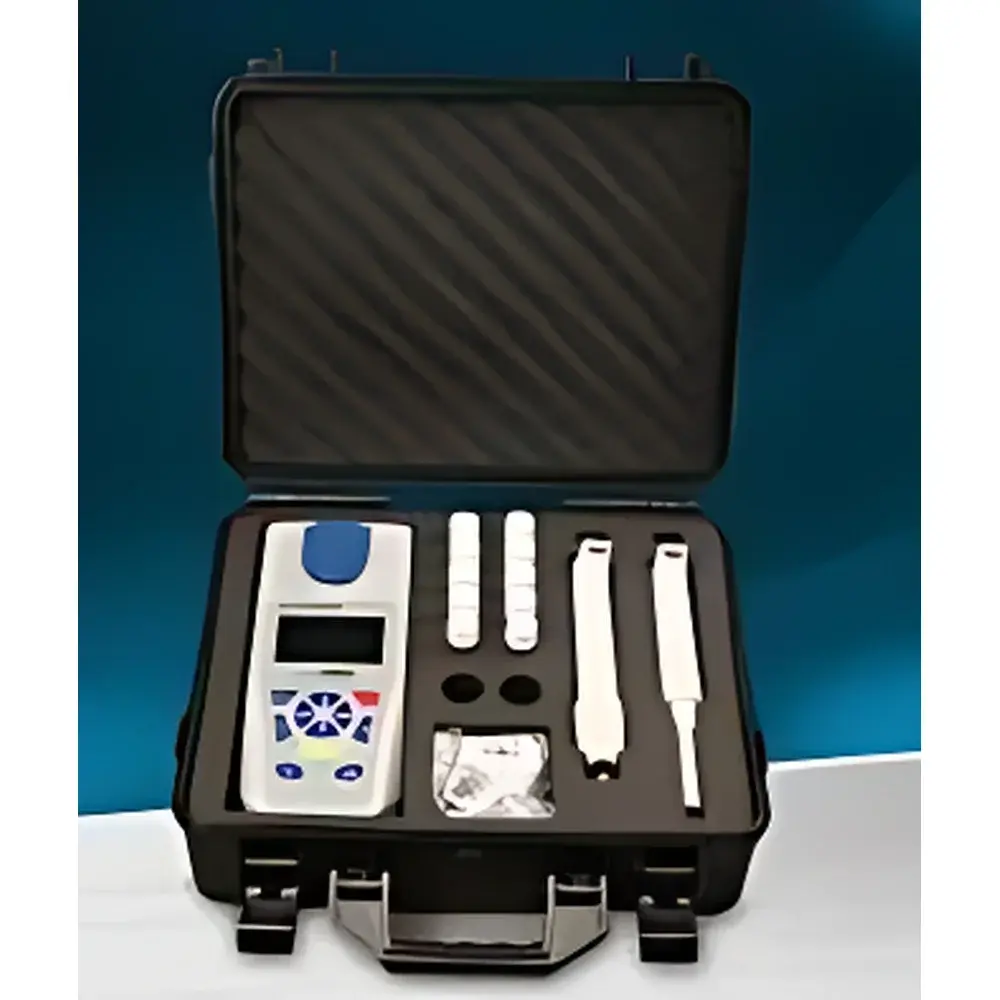
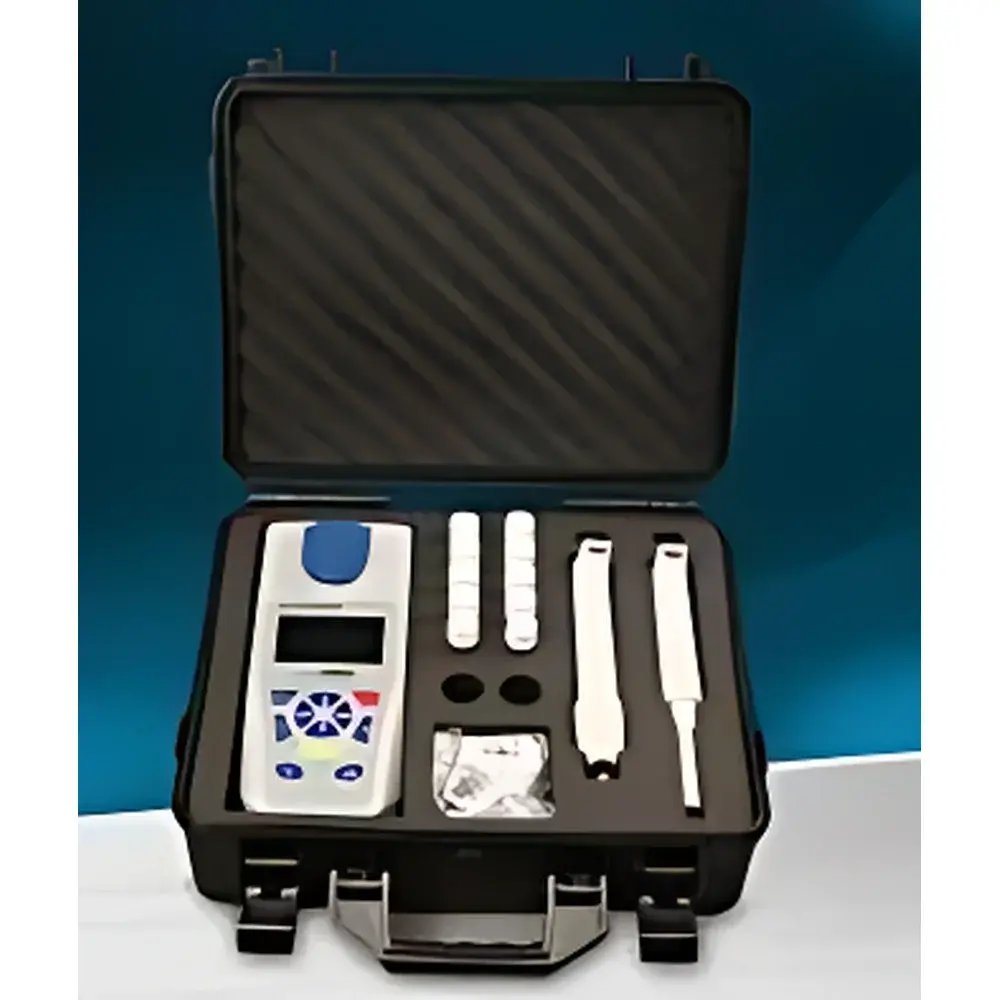
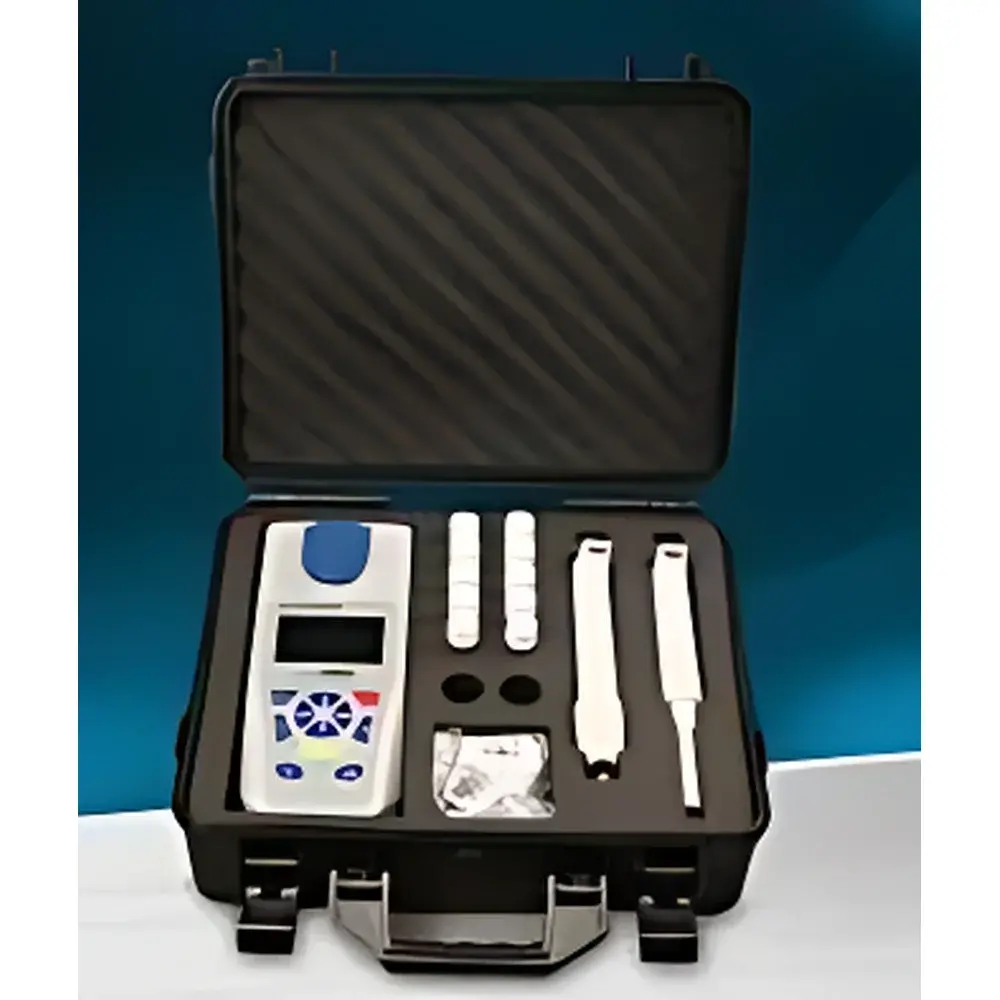
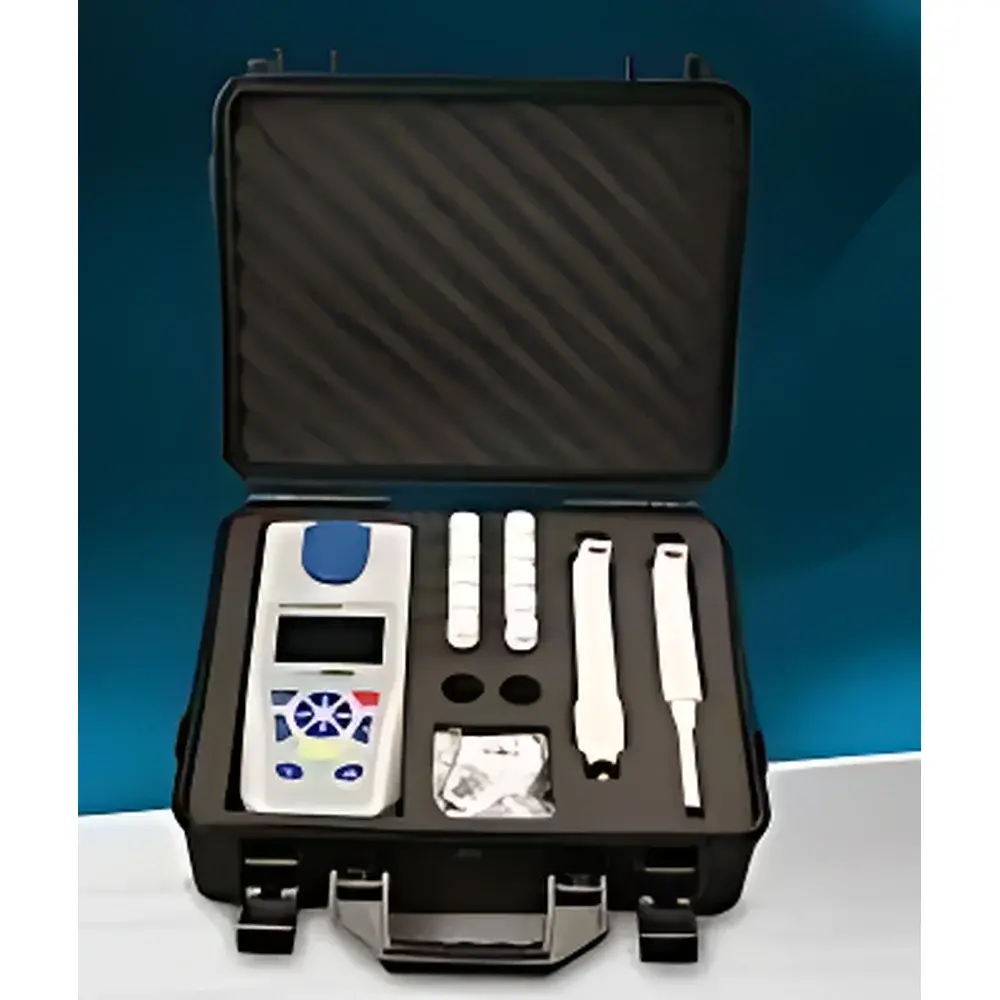
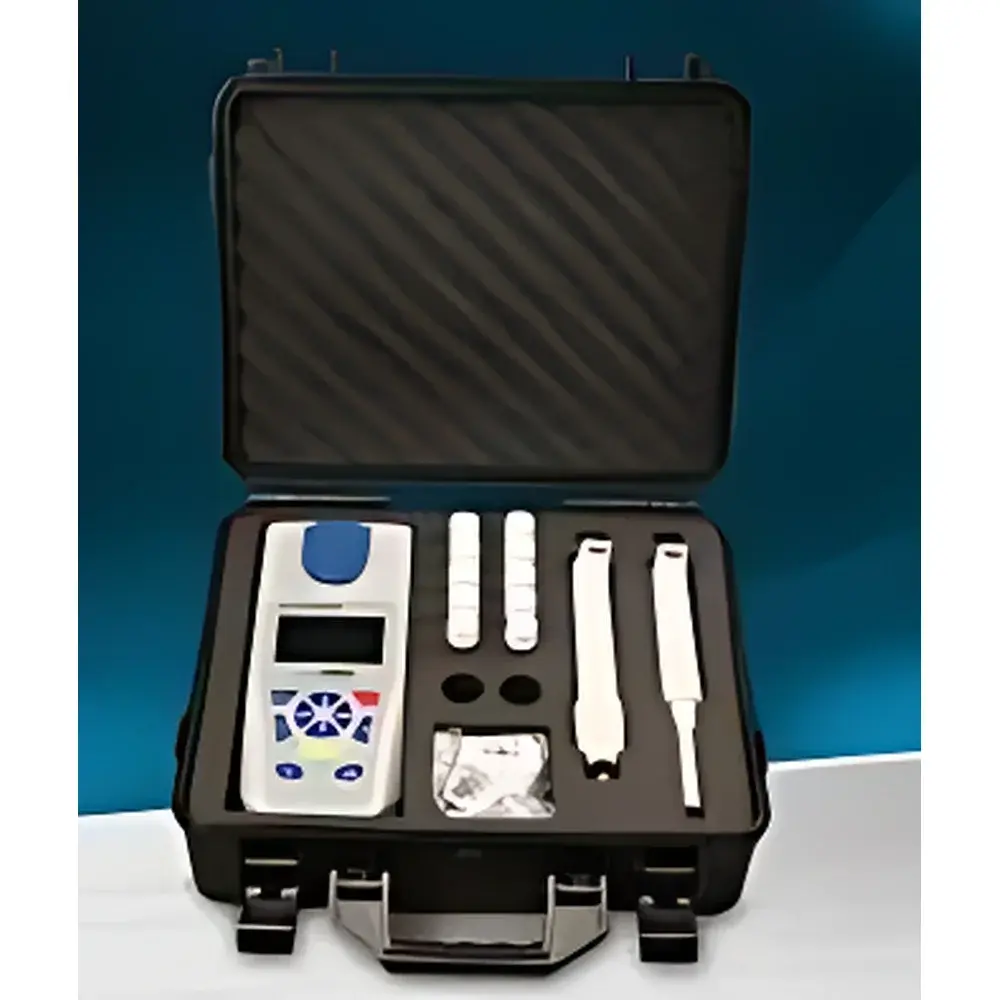
Loobo LB-Q102HB Portable Cyanide Analyzer
| Brand | Loobo |
|---|---|
| Origin | Shandong, China |
| Manufacturer Type | Authorized Distributor |
| Country of Manufacture | China |
| Model | LB-Q102HB |
| Instrument Type | Portable |
| Detection Method | ISO 6703-2 / HJ 484–2009 (Isonicotinic Acid–Barbituric Acid Spectrophotometric Method) |
| Measurement Range | 0–1 mg/L CN⁻ |
| LOD | 0.004 mg/L |
| Measurement Time | 15–30 min |
| Accuracy | ±5% |
| Repeatability | ≤±5% |
| Optical Stability | ≤±0.001 A/20 min |
| Light Source | Imported Cold LED (100,000 h lifetime) |
| Cuvette Type | Integrated Digestion–Colorimetric Tube |
| Data Storage | 4,000 records + 96 customizable calibration curves |
| Connectivity | USB, LAN, Bluetooth (optional) |
| Display | Backlit LCD (Chinese/English switchable) |
| Power | Rechargeable 5000 mAh Li-ion battery (5 V, 0.3 W) |
| Dimensions | 240 × 95 × 80 mm |
| Weight | 0.5 kg |
| Operating Temp. | 5–40 °C |
| Operating Humidity | ≤85% RH (non-condensing) |
Overview
The Loobo LB-Q102HB Portable Cyanide Analyzer is a field-deployable, spectrophotometric instrument engineered for quantitative determination of free and total cyanide (as CN⁻) in aqueous environmental samples—including surface water, groundwater, wastewater effluents, and industrial process streams. It implements the internationally recognized isonicotinic acid–barbituric acid (IA–BA) colorimetric method, fully compliant with HJ 484–2009 (China’s national standard) and technically aligned with ISO 6703-2:2018 (Water quality — Determination of cyanide — Part 2: Spectrometric method using isonicotinic acid and barbituric acid). The analyzer employs a stable, narrow-band cold LED light source centered at the optimal absorption wavelength (≈638 nm), eliminating warm-up delay and thermal drift. Sample absorbance is measured directly through integrated digestion–colorimetric tubes, enabling closed-system handling to minimize operator exposure and cross-contamination. All signal processing, calibration interpolation, and concentration calculation (in mg/L CN⁻) are performed by an embedded microcontroller with factory-loaded algorithms and user-accessible calibration curve management.
Key Features
- Field-ready portability: Compact form factor (240 × 95 × 80 mm), lightweight design (0.5 kg), and integrated 5000 mAh rechargeable battery support >12 hours of continuous operation—ideal for remote sampling sites, emergency response, and mobile laboratory deployments.
- Regulatory-grade methodology: Fully traceable to HJ 484–2009 and compatible with ISO 6703-2 workflows; no sample digestion required for free cyanide; total cyanide analysis supported via pre-acidification and distillation (per standard protocol).
- High optical fidelity: Imported cold LED source ensures spectral stability (≤±0.001 A/20 min), eliminates lamp aging variability, and delivers >100,000 hours of operational life—reducing recalibration frequency and long-term maintenance burden.
- Intuitive human interface: Dual-language (English/Chinese) backlit LCD display with step-by-step guided operation; menu-driven navigation supports both novice and experienced users without requiring external reference manuals.
- Flexible measurement modes: Select between single-point standard measurement (for regulatory reporting) or continuous kinetic mode (for reaction monitoring or method validation studies).
- Robust data governance: Stores up to 4,000 test records with timestamps and operator IDs; supports 96 independent calibration curves—including user-defined polynomials—for multi-matrix or multi-site applications.
Sample Compatibility & Compliance
The LB-Q102HB is validated for use with clarified, non-turbid aqueous samples meeting EPA Method 335.4 and ISO 6703-2 matrix requirements. Interference from sulfide, nitrite, and oxidizing agents is mitigated via standardized reagent formulations and optional pretreatment steps (e.g., sulfite addition, ascorbic acid reduction). All reagents are formulated to be non-hazardous and low-toxicity per GHS classification, aligning with OSHA 29 CFR 1910.1200 and EU CLP Regulation (EC) No 1272/2008. Instrument firmware supports audit-trail logging (user login, calibration events, result edits) to facilitate GLP-compliant documentation. While not inherently 21 CFR Part 11 certified, its data export architecture (CSV via USB/LAN) enables integration into validated LIMS environments under site-specific SOPs.
Software & Data Management
Data acquisition and reporting are managed via embedded firmware supporting USB mass-storage mode for direct file transfer to Windows/macOS systems. Optional connectivity modules enable TCP/IP-based data streaming to centralized environmental monitoring platforms or SCADA interfaces. Calibration curves may be imported/exported in CSV format; all stored results include metadata (date/time, operator ID, curve ID, raw absorbance, dilution factor). The device generates compliant output files suitable for inclusion in QA/QC reports, ISO 17025 technical records, or regulatory submissions to local EPBs. Firmware updates are delivered via signed binary packages to ensure integrity and version control.
Applications
- Routine compliance monitoring of cyanide discharge limits per local environmental permits (e.g., China’s GB 8978–1996, EU Industrial Emissions Directive 2010/75/EU)
- Emergency response screening during chemical spills or mining-related contamination events
- Wastewater treatment plant process control—especially in electroplating, metal finishing, and gold leaching operations
- Academic and research laboratories conducting method comparison studies or developing alternative cyanide detection protocols
- Third-party environmental testing organizations performing accredited analyses under CNAS or ILAC-MRA frameworks
FAQ
Does the LB-Q102HB require external calibration standards for each test?
No—pre-programmed calibration curves are stored onboard; however, daily verification with at least one mid-range standard (e.g., 0.5 mg/L CN⁻) is recommended per ISO/IEC 17025 Clause 7.7.
Can it measure total cyanide without an external distillation unit?
No—total cyanide quantification requires acid distillation prior to analysis; the LB-Q102HB performs only the colorimetric detection step. Free cyanide is measured directly.
Is Bluetooth connectivity enabled by default?
Bluetooth is an optional hardware module; units shipped without this option require USB or LAN for data transfer.
What is the shelf life of the IA–BA reagent kits?
Unopened reagent vials retain stability for 18 months when stored at 2–8 °C; post-opening, use within 30 days under refrigerated, desiccated conditions.
Does the instrument support automatic dilution correction?
Yes—users may input dilution factors during measurement setup; concentration results are automatically adjusted and logged with the original dilution value.
Related Products







