
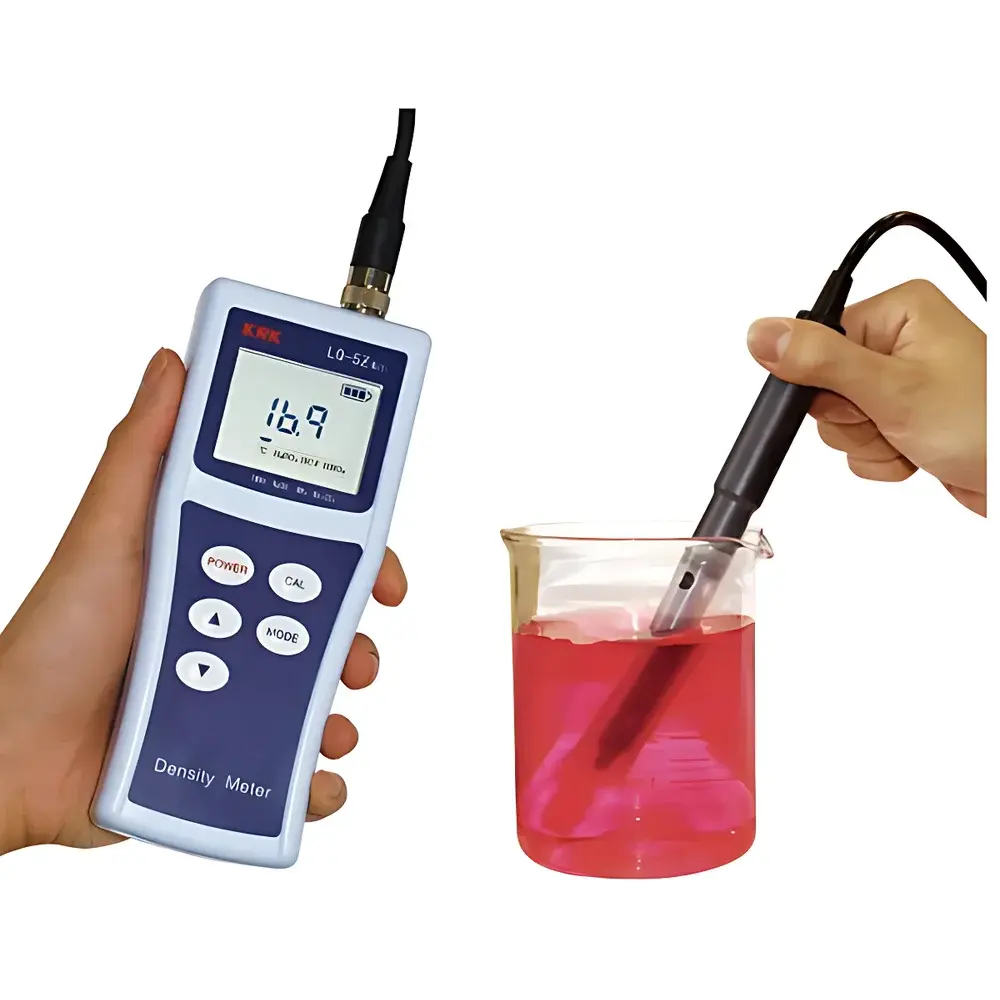
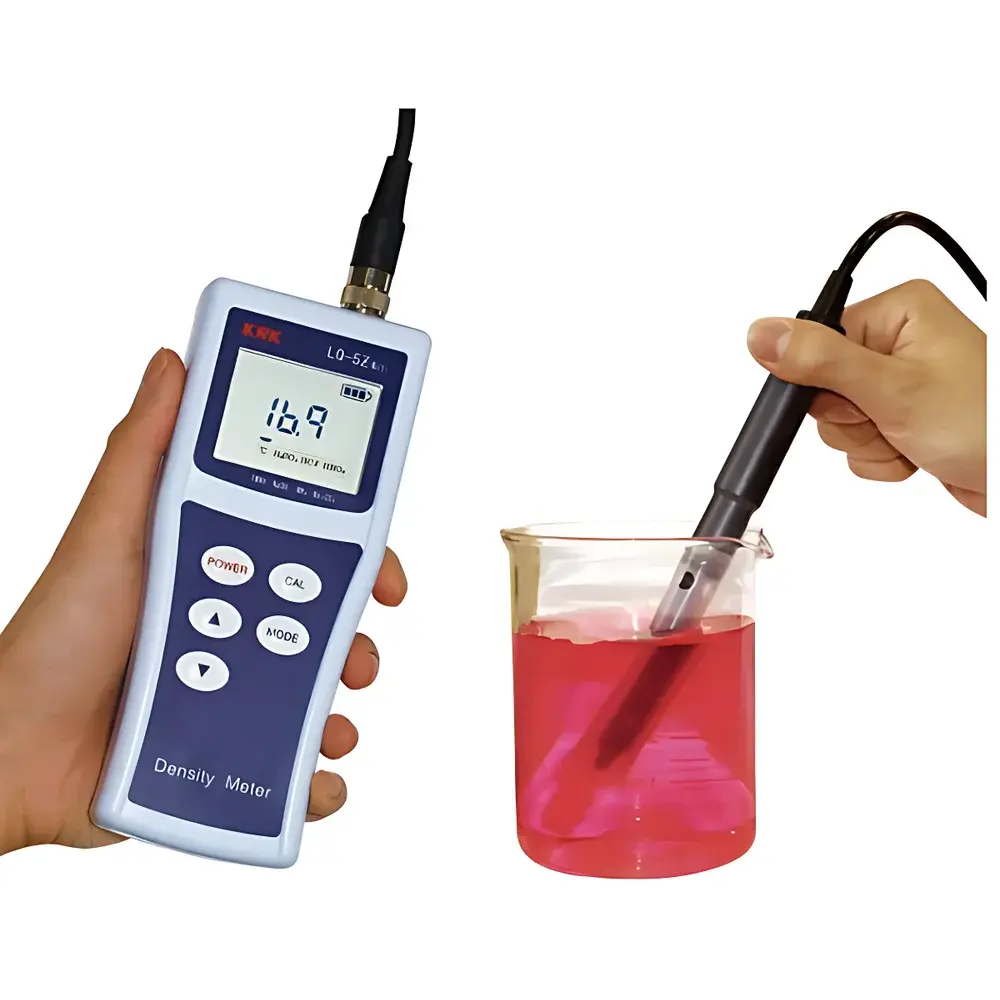
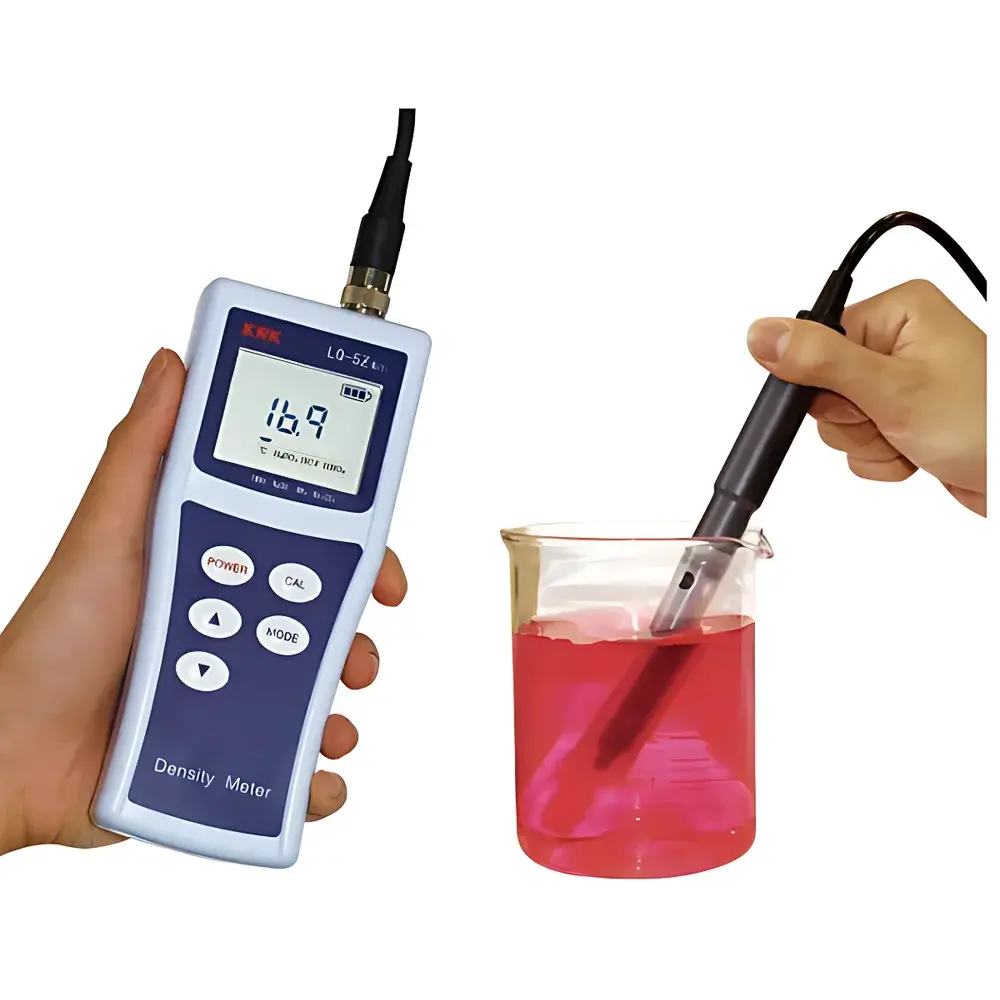
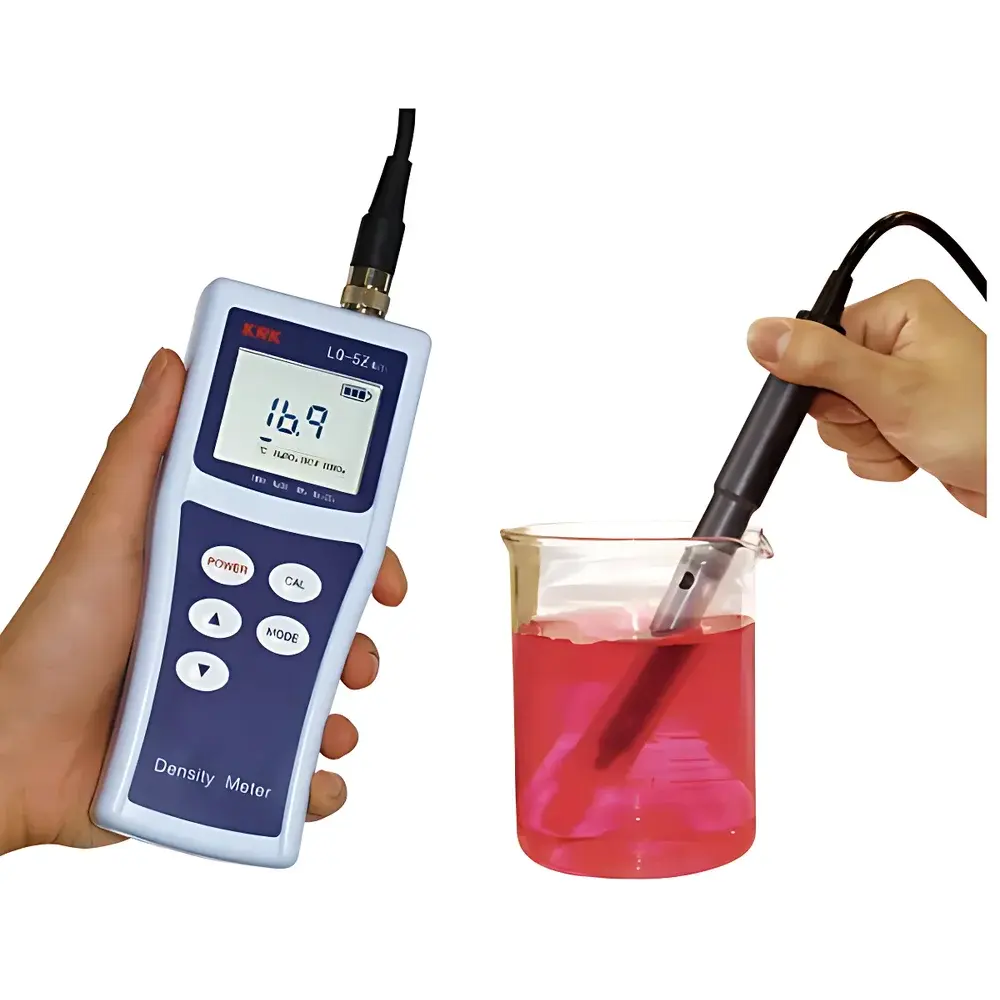
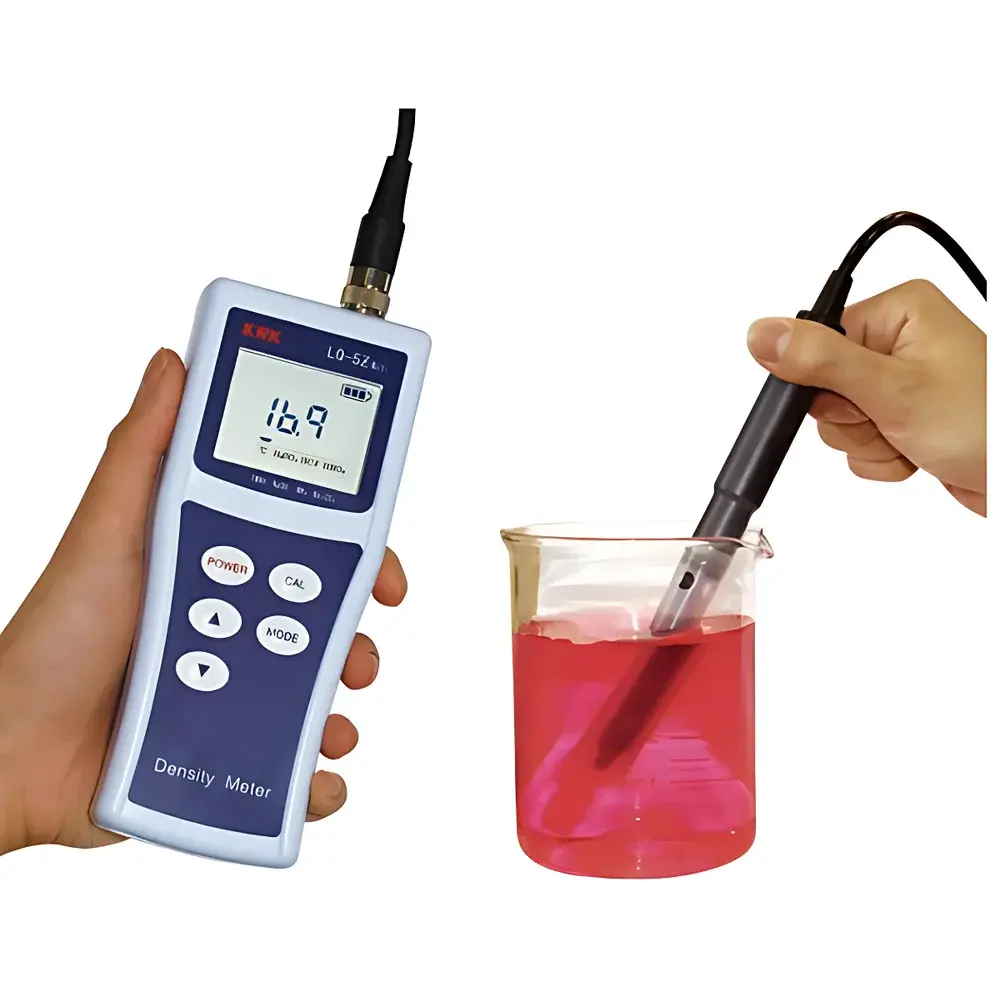
LQ-5Z-Multi Portable Multi-Parameter Water Quality Analyzer
| Brand | — |
|---|---|
| Origin | Beijing, China |
| Manufacturer Type | Authorized Distributor |
| Country of Origin | China |
| Model | LQ-5Z-Multi |
| Pricing | Available Upon Request |
| Measurement Principle | Electrode-Based (Grab Sampling) |
| Measurement Range | TMAH: 0.00–5.0% / 0.0–50.0 g/L |
| NaOH | 0.00–3.00% / 0.0–30.0 g/L |
| Na₂CO₃ | 0.0–10.0% / 0–100 g/L |
| NH₃ | 0.0–2.00% / 0.0–20.0 g/L |
| H₂SO₄ | 0.0–2.00% / 0.0–20.0 g/L |
| HNO₃ | 0.0–2.00% / 0.0–20.0 g/L |
| Sample Temperature | 0.0–40.0 °C |
| Accuracy | ±5% FS |
| Calibration | Zero and Span Calibration |
| Temperature Compensation | Automatic |
| Enclosure Rating | IP66 |
| Power Supply | 3×AAA batteries with auto power-off |
| Electrode Type | 4C-type, 1 m standard cable |
| Dimensions (Instrument) | 75(W)×180(D)×38(H) mm |
| Electrode Dimensions | φ17×180(L) mm |
| Weight (Instrument) | ~300 g |
| Weight (Electrode) | ~50 g |
| Standard Kit | Analyzer with batteries, 4C electrode, user manual, certificate of conformity |
Overview
The LQ-5Z-Multi Portable Multi-Parameter Water Quality Analyzer is an engineered field-deployable instrument designed for rapid, on-site quantification of key inorganic alkaline and acidic solutes in aqueous matrices. Unlike optical or titrimetric systems, the LQ-5Z-Multi employs a multi-electrode potentiometric architecture—specifically configured with ion-selective and conductivity-coupled sensing elements—to deliver simultaneous concentration estimates for tetramethylammonium hydroxide (TMAH), sodium hydroxide (NaOH), sodium carbonate (Na₂CO₃), ammonia (NH₃), sulfuric acid (H₂SO₄), and nitric acid (HNO₃). Its measurement principle relies on calibrated voltage response differentials across selective membranes under controlled ionic strength conditions, with automatic temperature compensation applied per NIST-traceable algorithms. The device operates exclusively via grab sampling—requiring manual immersion of the integrated 4C-type electrode assembly—and is optimized for industrial process water monitoring, semiconductor rinse effluent verification, electroplating bath control, and wastewater pre-treatment screening where real-time alkalinity/acidity profiling is operationally critical.
Key Features
- True multi-analyte capability: Simultaneous estimation of six chemically distinct species—three alkaline (TMAH, NaOH, Na₂CO₃, NH₃) and three acidic (H₂SO₄, HNO₃)—using a single electrode interface and unified calibration workflow.
- Ruggedized field design: IP66-rated enclosure ensures protection against high-pressure water jets and dust ingress, enabling reliable operation in outdoor, humid, or splash-prone environments including wastewater pump stations and manufacturing cleanrooms.
- Low-power portable architecture: Powered by three standard AAA alkaline cells with intelligent auto-shutdown after five minutes of inactivity—extending operational life to >200 hours per battery set under typical intermittent use.
- Integrated thermal management: Onboard Pt1000 sensor enables real-time sample temperature acquisition (0.0–40.0 °C) and applies matrix-specific compensation curves to mitigate drift in conductivity and ISE response.
- Zero-span calibration protocol: Supports two-point calibration using certified reference standards; no proprietary buffer kits required—users may prepare traceable solutions per ISO 6497 or ASTM D1129 guidelines.
- Compact ergonomic form factor: Instrument body measures only 75×180×38 mm and weighs <300 g—designed for one-handed operation during mobile surveys or confined-space access.
Sample Compatibility & Compliance
The LQ-5Z-Multi is validated for use with clarified, non-viscous aqueous samples exhibiting total suspended solids (TSS) <10 mg/L and turbidity <5 NTU. It is not suitable for slurries, emulsions, or highly oxidizing media exceeding 100 ppm free chlorine. While not certified to IEC 61000-6-2/4 for EMC immunity, its analog front-end design minimizes susceptibility to RF interference in typical plant-floor environments. The analyzer conforms to RoHS Directive 2011/65/EU and meets CE marking requirements for portable electrical equipment under Low Voltage Directive 2014/35/EU. For regulated applications—including those governed by EPA Method 300.0 (anions), ASTM D1129 (alkalinity), or ISO 9964-1 (pH and conductivity)—users must validate method equivalence per their internal QA/QC protocols and document calibration traceability to national standards.
Software & Data Management
The LQ-5Z-Multi operates as a standalone instrument with no embedded Bluetooth, USB, or cloud connectivity. All measurements are displayed in real time on a high-contrast monochrome LCD with dual-unit readout (%, g/L). Data logging is manual: users record values alongside timestamp, location, and operator ID in external field notebooks or LIMS-compatible spreadsheets. Though no proprietary software is supplied, the device supports GLP-aligned documentation practices—its zero-span calibration history, battery status indicator, and temperature-stamped readings facilitate audit-ready entries. For laboratories requiring electronic records under FDA 21 CFR Part 11, integration is achievable via external digital voice recorders or tablet-based data capture apps synchronized to instrument use logs.
Applications
- Semiconductor fabrication: Monitoring TMAH concentration in photoresist strip baths and verifying NaOH levels in wafer cleaning tanks.
- Electroplating facilities: Tracking carbonate buildup in nickel strike baths and detecting nitric acid carryover in passivation rinse lines.
- Municipal wastewater plants: Screening ammonia spikes in influent streams and assessing acid dosing efficacy in pH correction basins.
- Pharmaceutical utilities: Verifying low-level caustic residuals in purified water distribution loop swab tests.
- Academic environmental labs: Supporting student field exercises in stream chemistry where multi-parameter alkalinity-acidity profiling informs buffering capacity analysis.
FAQ
Does the LQ-5Z-Multi support continuous online monitoring?
No—it is strictly a grab-sampling instrument requiring manual electrode immersion and discrete measurement cycles.
Can the 4C electrode be used with other analyzers?
The 4C electrode uses a proprietary pinout and impedance-matching configuration; it is not cross-compatible with third-party meters.
Is NIST-traceable calibration verification possible?
Yes—users may validate performance using NIST SRM 3118 (for conductivity) and custom-prepared TMAH/NaOH reference solutions traceable to ISO Guide 35.
What maintenance is required beyond calibration?
Electrode storage in KCl-saturated solution is recommended; membrane cleaning with mild detergent and deionized water every 50 measurements ensures long-term reproducibility.
Does the device meet EPA or ISO method validation criteria?
It is not pre-validated to any specific regulatory method, but its measurement uncertainty (±5% FS) falls within acceptable ranges for screening per EPA SW-846 Method 9060A and ISO 5667-3 Annex B guidance.







