
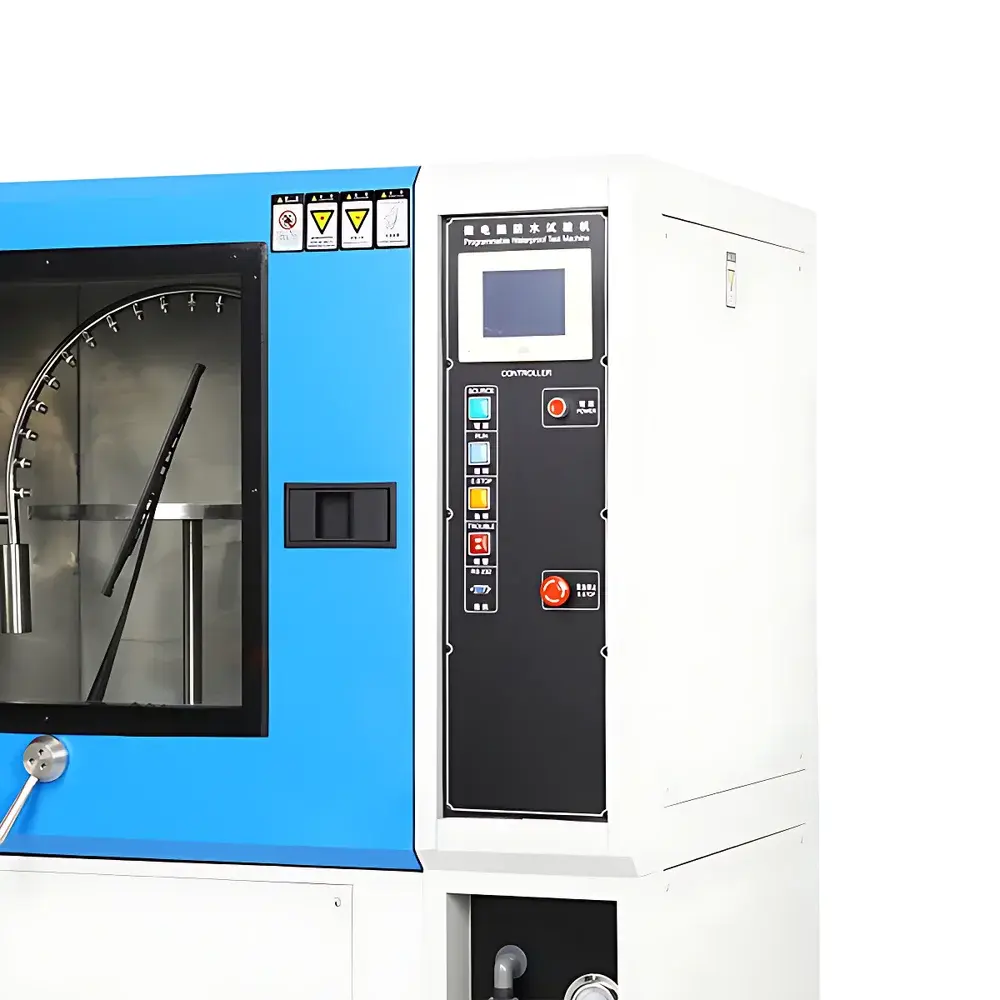
OK LS-805 Integrated Rain Test Chamber for IPX1–X6 Ingress Protection Validation
| Brand | OK Instruments |
|---|---|
| Origin | Guangdong, China |
| Manufacturer Type | OEM/ODM Producer |
| Country of Origin | China |
| Model | LS-805 |
| Price | USD 3,500 (FOB Guangdong) |
| Temperature Range | (RT + 10°C) to 55°C |
| Rainfall Intensity | 10–20 cm/h |
| Droplet Diameter | 0.5–4.5 mm |
| Wind Speed | 5–18 m/s |
| Test Duration | 0–999 min |
Overview
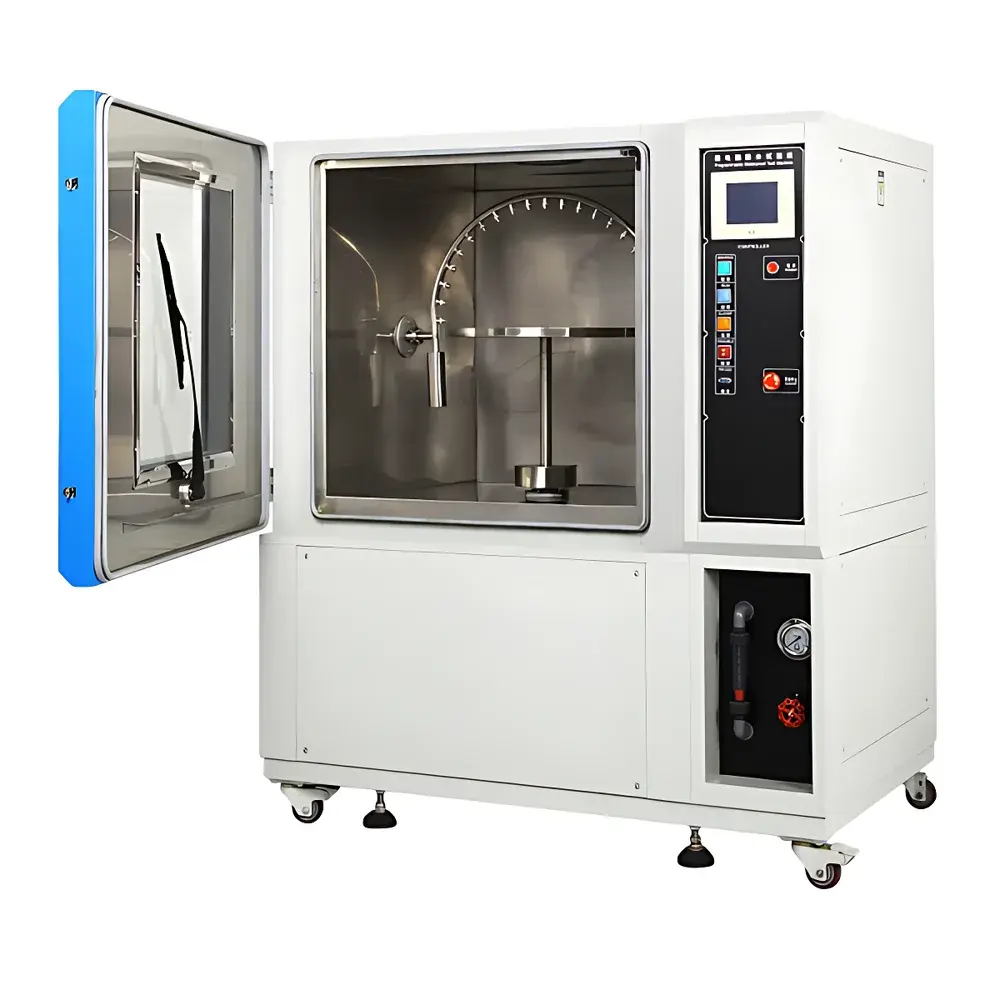
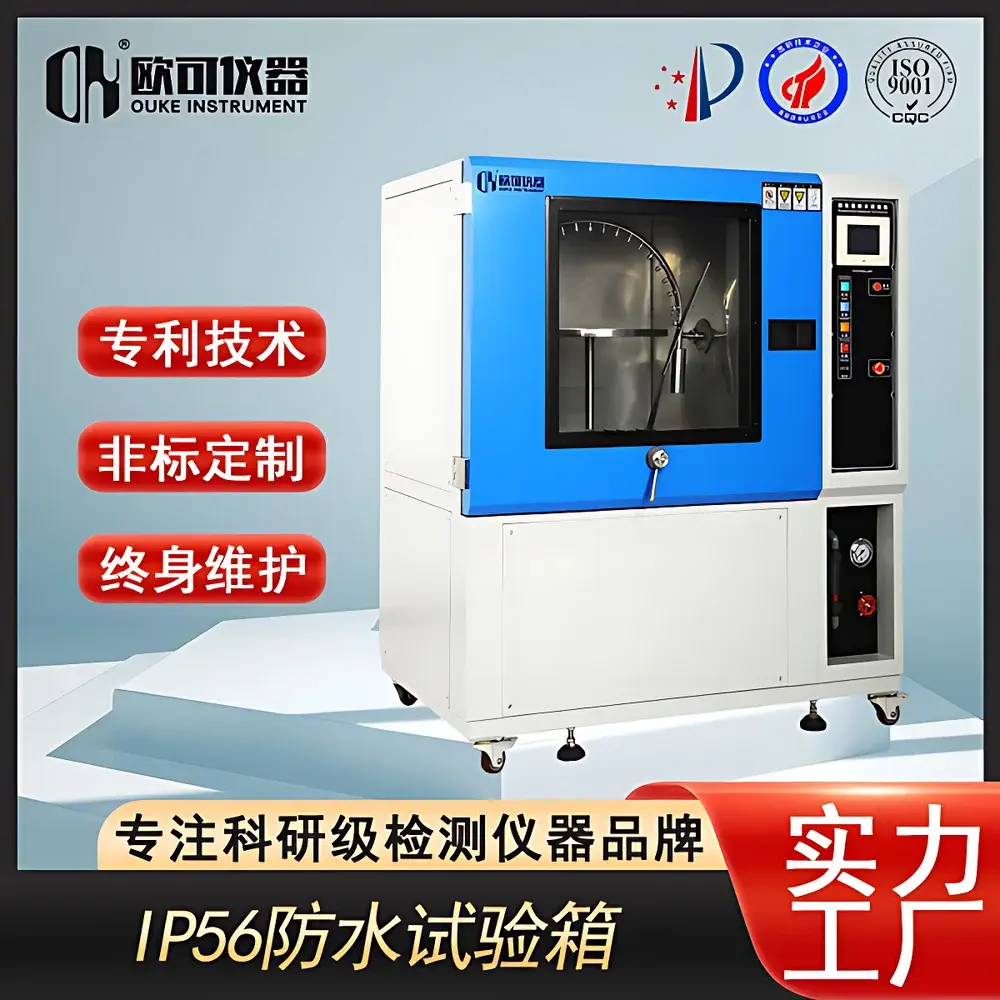
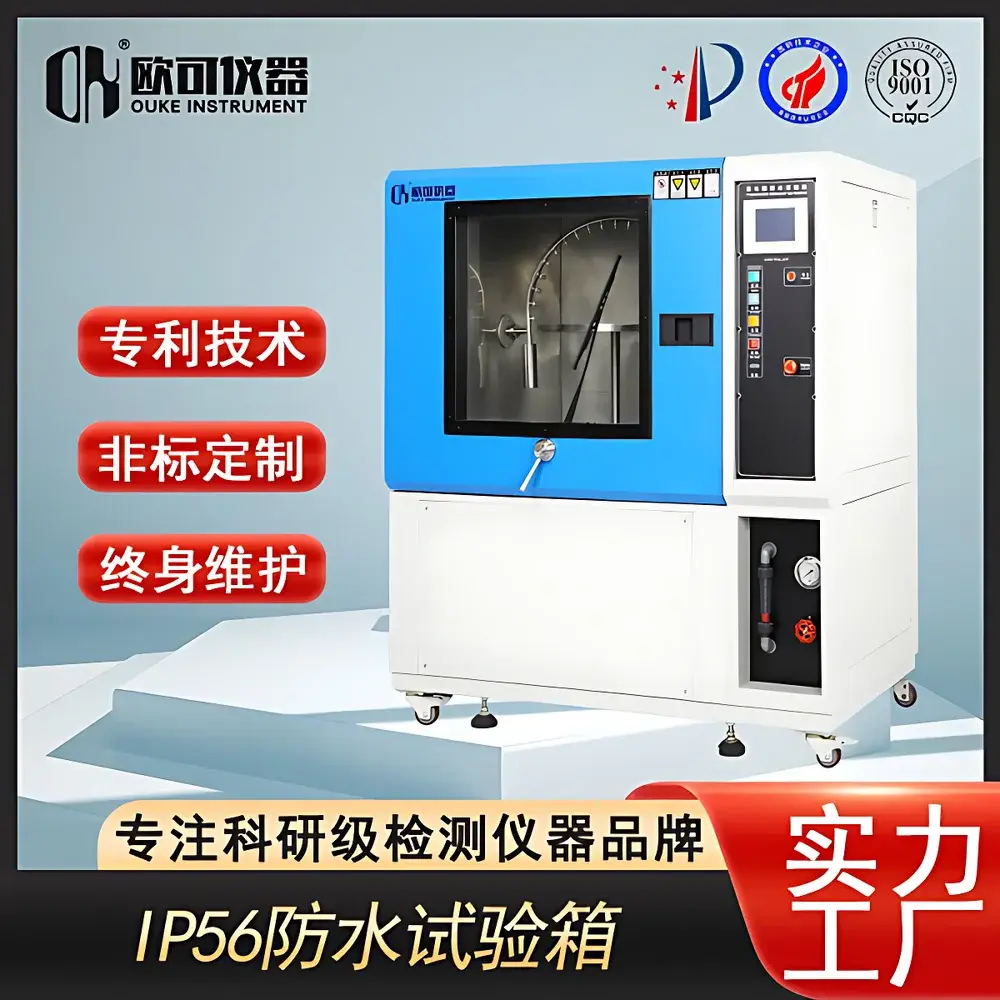
The OK LS-805 Integrated Rain Test Chamber is an engineered environmental test system designed to replicate standardized water ingress conditions in a fully enclosed, stainless-steel chamber. It operates on the principle of controlled fluid dynamics and calibrated hydraulic delivery to simulate drip, oscillating spray, direct jet, and high-pressure water exposure—enabling precise validation of enclosure integrity per IEC 60529 (IP Code), GB 4208, ISO 20653, and DIN 40050-9. Unlike open-loop or modular rain test setups, the LS-805 integrates all critical subsystems—including programmable spray manifolds, precision flow-regulated pumps, motorized sample rotation, closed-loop water filtration, and real-time parameter monitoring—within a single, leak-tight chamber. This architecture ensures repeatable test execution under laboratory-grade conditions, eliminating external water dispersion, minimizing operator intervention, and supporting GLP-compliant documentation workflows.
Key Features
- Multi-mode IP rating validation: Supports full-spectrum testing from IPX1/IPX2 (vertical/tilted drip) through IPX3/IPX4 (oscillating pipe sweep) to IPX5/IPX6 (high-flow, high-pressure jet), with automatic mechanical switching between spray modules.
- Stainless-steel monocoque construction: Inner chamber fabricated from SUS304 stainless steel; outer housing powder-coated mild steel or optional SUS201; all gaskets rated for continuous water immersion and thermal cycling up to 55°C.
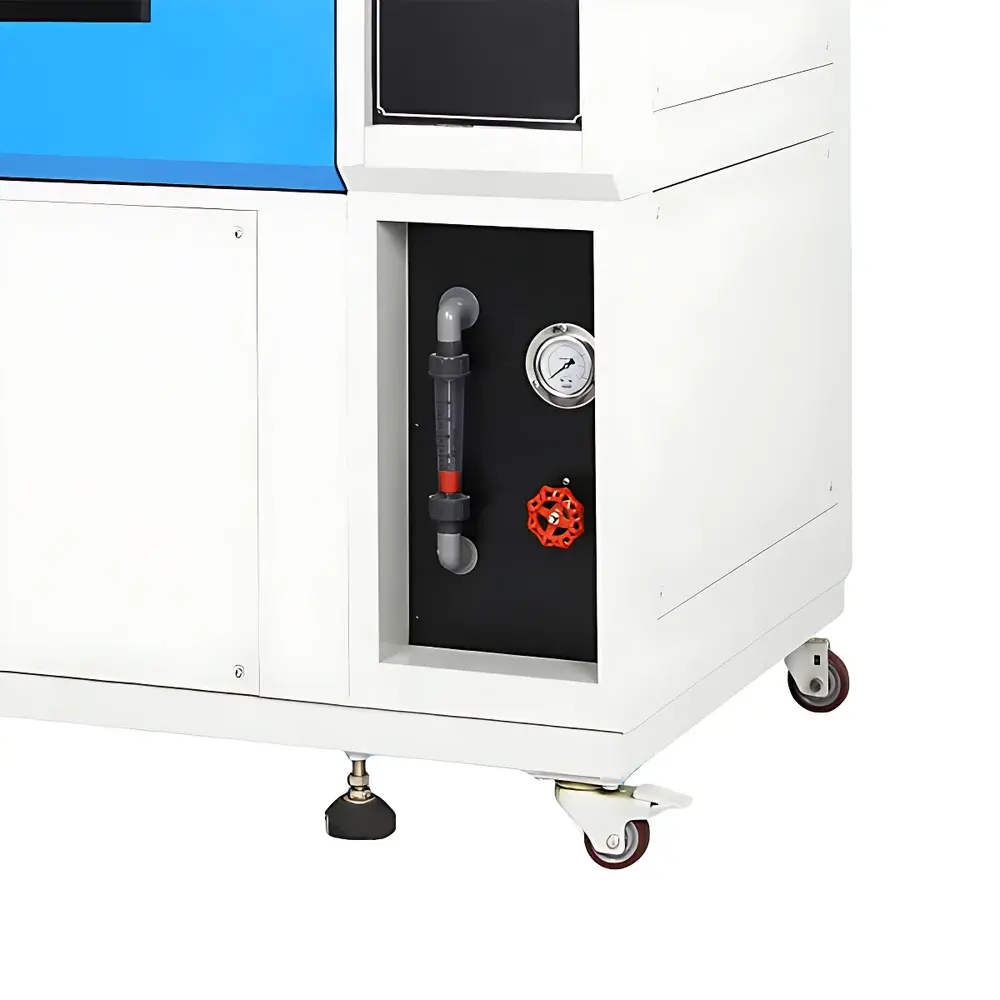
- Calibrated hydraulic control: Dual-stage centrifugal pump system with digital pressure regulation (up to 0.8 MPa); turbine-based flow meters (±1% FS accuracy) for IPX5 (12.5 ± 0.625 L/min) and IPX6 (100 ± 5 L/min) compliance verification.
- Programmable test sequencing: 7-inch industrial touchscreen HMI with PLC-based controller; stores ≥50 preloaded standard test profiles (e.g., IEC 60529 Annex B, C, D); supports user-defined ramping, dwell, and multi-step cycles.
- Closed-loop water management: Integrated 100 L SUS304 reservoir with level sensing, multi-stage filtration (5 µm particulate + activated carbon), and optional deionized water compatibility to prevent nozzle clogging and scaling.
- Safety-integrated operation: Interlocked door switch, leakage detection sensors, dry-run protection, overpressure cutoff, and galvanically isolated power supply for live-sample testing under wet conditions.
Sample Compatibility & Compliance
The LS-805 accommodates samples up to 1,000 × 1,000 × 1,000 mm (D×W×H) on a load-rated (200 kg max), 1–5 rpm continuously adjustable turntable. Sample mounting uses configurable stainless-steel grating or custom fixtures. The chamber meets structural and metrological requirements for third-party certification labs conducting IP testing per IEC 60529 Clause 13 (drip), Clause 14 (pipe oscillation), and Clause 15 (jet). All spray nozzles, pipe radii, and impact angles conform to dimensional tolerances specified in IEC 60529 Annexes. Optional wind simulation (5–18 m/s via integrated axial fan) enables combined environmental stress testing aligned with ISO 20653 for automotive E/E components. Calibration certificates traceable to NIM (China National Institute of Metrology) are available upon request.
Software & Data Management
The embedded control firmware supports audit-ready data logging: timestamped records of actual flow rate, pressure, temperature, duration, and actuator status are stored internally (≥30 days) and exportable via USB or Ethernet (Modbus TCP). Optional software add-ons provide CSV/Excel report generation, PDF certificate output with digital signature, and integration with LIMS platforms. For regulated environments, the system can be configured to comply with FDA 21 CFR Part 11 requirements—including electronic signatures, audit trails, and role-based access control—when deployed with validated firmware version 2.4 or higher.
Applications
The LS-805 serves R&D, QA/QC, and certification laboratories across industries where ingress protection is mission-critical: outdoor LED lighting fixtures (IEC 60598), automotive ECUs and ADAS housings (ISO 20653), consumer electronics enclosures (IEC 60529), industrial control panels (UL 50E), telecom base station cabinets, and medical device housings subject to IEC 60601-1 clause 11.3. Its ability to execute sequential IPX1→X6 tests without manual reconfiguration reduces turnaround time for product development cycles and supports accelerated reliability qualification per MIL-STD-810 Method 512.5.
FAQ
Does the LS-805 meet IEC 60529 calibration requirements for accredited testing labs?
Yes—the spray geometry, flow calibration, and timing mechanisms are designed and verified against IEC 60529 Annex specifications. Full calibration documentation and traceable certificates are provided with optional metrology package.
Can the chamber perform IPX9K testing?
No—IPX9K (high-temperature, high-pressure steam jet per DIN 40050-9) requires specialized heated nozzles and temperature-controlled water delivery not included in the LS-805 configuration. A dedicated IPX9K upgrade module is available as a separate system.
Is deionized water mandatory?
It is strongly recommended—especially for IPX5/IPX6 testing—to avoid mineral deposition in fine orifices. Tap water may be used only if paired with an inline softener and 1 µm pre-filter.
What electrical infrastructure is required for installation?
Standard configuration requires AC 380 V, 50 Hz, three-phase five-wire supply (32 A circuit breaker minimum). Dedicated grounding and GFCI protection are mandatory per IEC 61000-6-3.
How often do consumables require replacement?
Nozzles and silicone seals should be inspected quarterly; typical service life is 12–18 months under normal lab usage. Filter cartridges require replacement every 3 months or after 200 test hours, whichever occurs first.



