
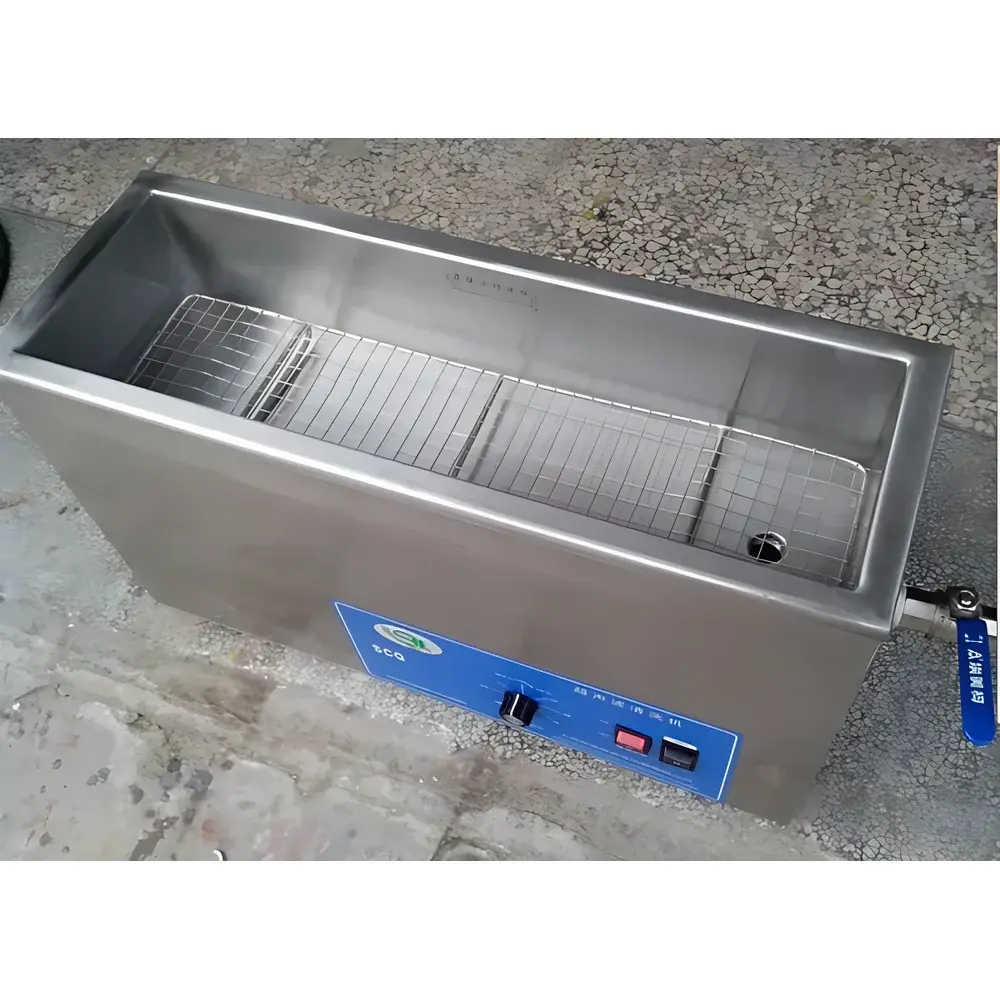
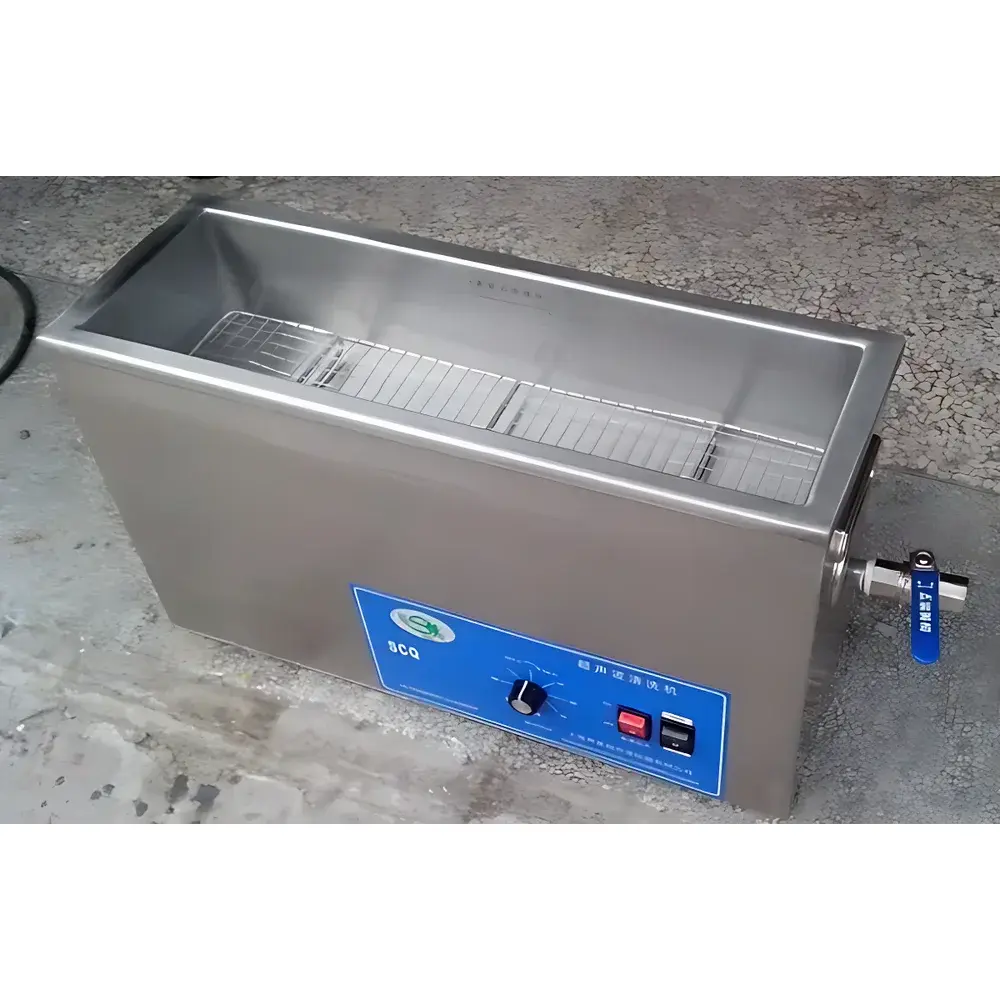
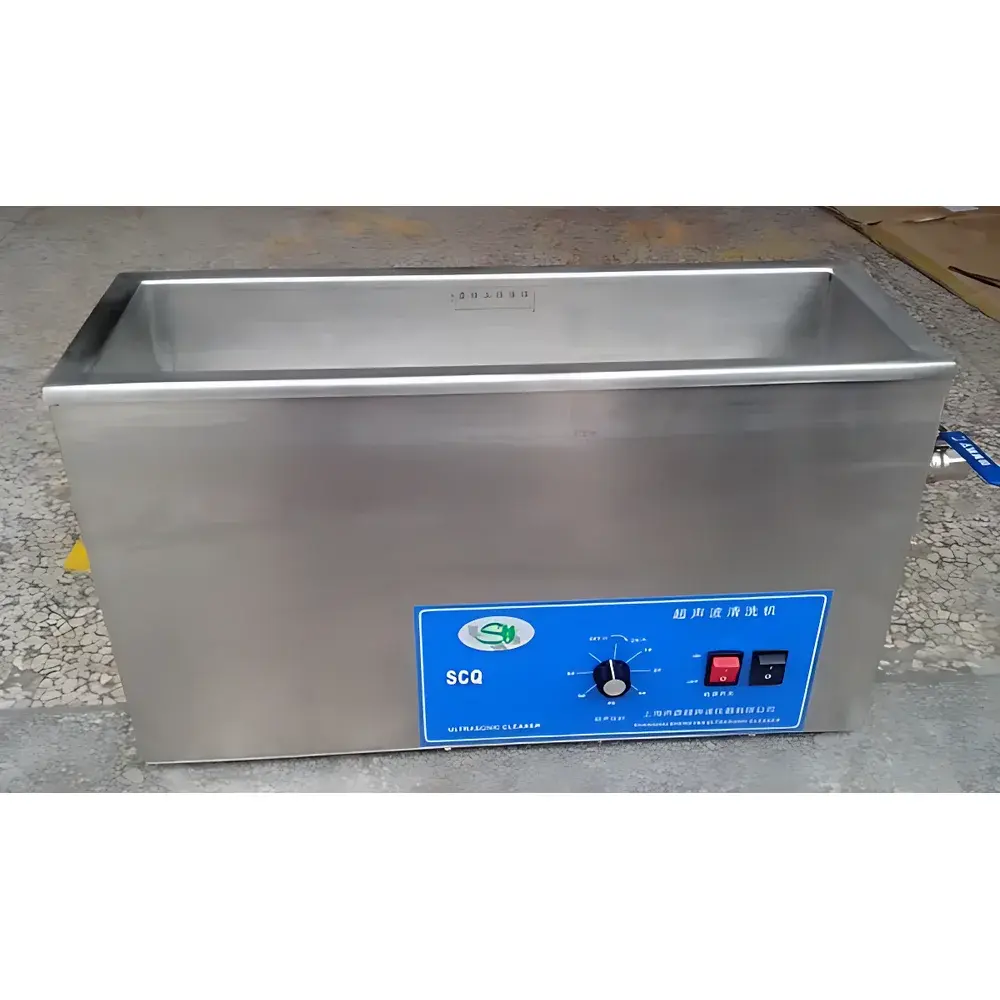
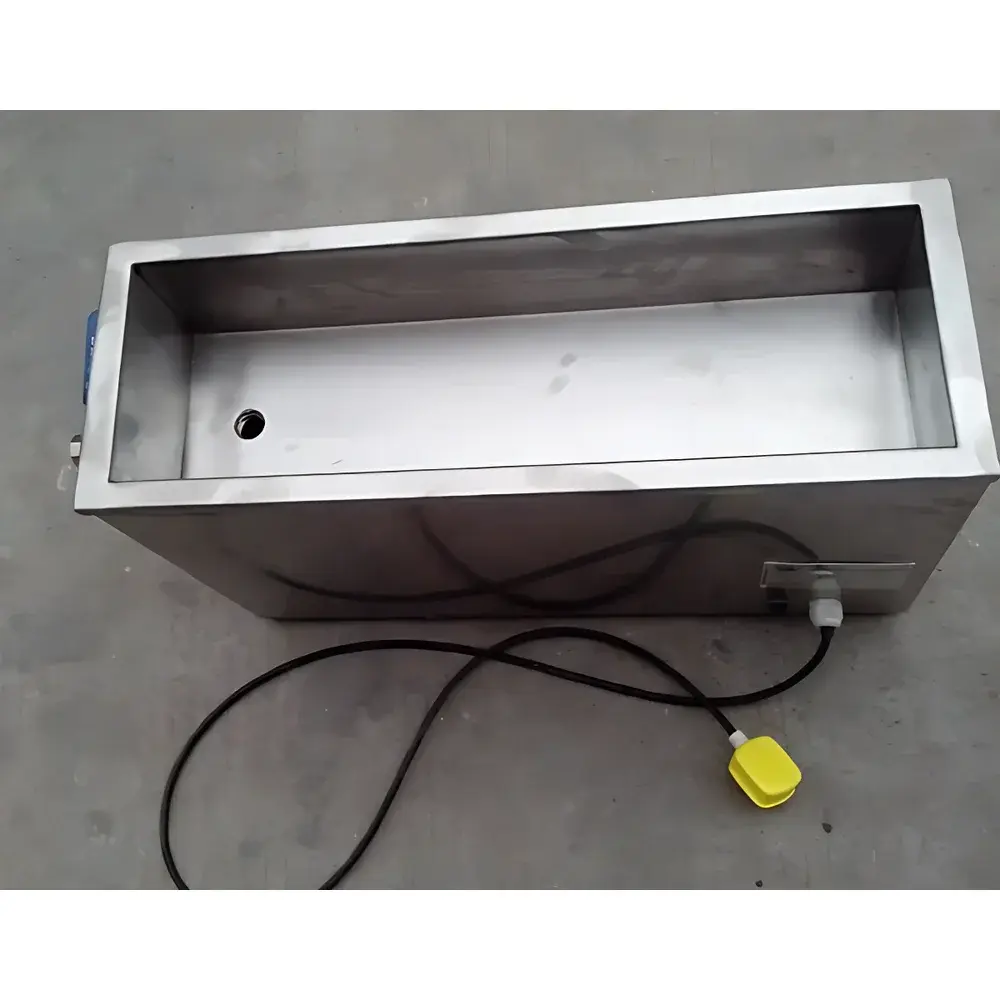
Lucky SCQ-4201 Benchtop Ultrasonic Cleaner
| Brand | Lucky (Shengyan Ultrasonics) |
|---|---|
| Origin | Shanghai, China |
| Model | SCQ-4201 |
| Capacity | 8 L |
| Ultrasonic Frequency Options | 25 / 28 / 40 / 60 / 80 kHz |
| Ultrasonic Power | 250 W |
| Power Adjustment | Not adjustable |
| Temperature Control | Not available |
| Timer Range | 1–60 min |
| Sound-Dampening Lid | Included |
| Drain Valve | Manual |
| Tank Dimensions (L×W×H) | 500 × 135 × 100 mm |
| Construction | 304 Stainless Steel Interior & Exterior |
| Input Power | 220 VAC, 50 Hz |
| Compliance | Designed for general laboratory and industrial cleaning per ISO 13485-aligned manufacturing practices |
Overview
The Lucky SCQ-4201 is a benchtop ultrasonic cleaner engineered for precision cleaning of delicate and complex components in research laboratories, quality control environments, and light industrial maintenance settings. It operates on the principle of ultrasonic cavitation—where high-frequency sound waves (25–80 kHz) generate microscopic vacuum bubbles in a liquid medium that implode with localized energy, dislodging contaminants from surfaces without mechanical abrasion. This non-contact, isotropic cleaning mechanism ensures effective removal of particulates, oils, oxides, flux residues, and biological debris—even from recessed features such as blind holes, microchannels, threaded surfaces, and porous substrates. The SCQ-4201 is designed for use with aqueous or mild solvent-based cleaning solutions and conforms to standard laboratory safety protocols for low-voltage, sealed-tank operation.
Key Features
- Robust 304 stainless steel tank and housing—resistant to corrosion from water, alcohols, and common aqueous detergents.
- Five selectable ultrasonic frequencies (25 / 28 / 40 / 60 / 80 kHz) to optimize cleaning efficacy across diverse sample geometries and contaminant types: lower frequencies (25–40 kHz) deliver higher cavitation intensity for heavy particulate or rust removal; higher frequencies (60–80 kHz) provide gentler, high-resolution cleaning ideal for optical lenses, semiconductor wafers, and MEMS devices.
- Digital timer with 1–60 minute programmable range enables reproducible process control and prevents overexposure to ultrasonic energy.
- Integrated sound-dampening lid reduces ambient noise to ≤55 dB(A) at 1 m distance, meeting occupational health guidelines for continuous lab use.
- Manual drain valve facilitates safe, controlled solution disposal without tilting or lifting the unit.
- Stainless steel mesh basket included for secure part placement and uniform acoustic coupling.
- Thermally protected transducer array and solid-state generator ensure stable output and extended service life under routine operational loads.
Sample Compatibility & Compliance
The SCQ-4201 supports a broad spectrum of sample types including glassware (vials, cuvettes, pipettes), metal components (surgical instruments, bearings, fuel injectors), optical elements (lenses, prisms, fiber optic connectors), electronic assemblies (PCBs, SMT components), and polymer-based labware. Its design adheres to internationally recognized material compatibility standards for stainless steel tanks (ASTM A240/A276) and electrical safety (IEC 61010-1). While not certified for sterile processing or regulated GMP environments out-of-the-box, the unit may be integrated into validated cleaning workflows when paired with documented cleaning agents, temperature-monitored baths (via external probe), and periodic performance verification per ISO 13485 or ASTM F3127 guidance. No internal heating element is present; external thermostatic baths may be used if elevated temperature cleaning is required.
Software & Data Management
The SCQ-4201 is a stand-alone analog/digital hybrid instrument with no embedded software, network interface, or data logging capability. All operational parameters are set via front-panel push-button controls with LED digital display. For laboratories requiring auditability and traceability, integration with external process recorders or PLC-based control systems is feasible using the unit’s dry-contact timer output (optional accessory). The absence of firmware eliminates cybersecurity concerns and simplifies qualification under FDA 21 CFR Part 11 when used in non-critical support roles (e.g., pre-analytical glassware preparation). Maintenance logs, calibration records, and cleaning validation reports must be maintained manually or within institutional LIMS platforms.
Applications
- Pre-analytical preparation of HPLC vials, GC syringes, and spectrophotometer cells to eliminate carryover and baseline interference.
- Cleaning of surgical tools and dental instruments prior to sterilization—validated per AAMI ST79 and EN ISO 15883 requirements when combined with compatible enzymatic detergents.
- Removal of photoresist residue and etch byproducts from silicon wafers and mask blanks in microfabrication R&D.
- Decontamination of filtration membranes, hypodermic needles, and endoscope components in biomedical research.
- Supporting sample prep in environmental testing (e.g., extraction vessel cleaning prior to ICP-MS analysis) and pharmaceutical QC (e.g., dissolution apparatus component maintenance).
- Assisting in physical chemistry experiments involving sonication-assisted emulsification, nanoparticle dispersion, and cell lysis (at appropriate frequency/power settings).
FAQ
Is the SCQ-4201 suitable for cleaning delicate optics or coated lenses?
Yes—when operated at 60 or 80 kHz with a neutral pH aqueous detergent and appropriate immersion time (typically 3–10 min), it effectively removes fingerprints and dust without damaging anti-reflective or hydrophobic coatings.
Can this unit be used with flammable solvents?
No—this model lacks explosion-proof certification and should only be used with water-based or non-volatile, non-flammable cleaning solutions.
Does the unit include a heater or temperature control?
No—temperature regulation is not supported. External heated baths may be used, but direct immersion heating is not possible.
What is the expected transducer lifetime under normal lab usage?
With proper maintenance (regular descaling, avoidance of dry operation, and use of filtered water), the piezoelectric transducers typically exceed 5,000 operating hours before output degradation requires servicing.
Is technical documentation available in English for IQ/OQ validation?
Yes—factory test reports, dimensional drawings, material certifications (304 SS), and electrical safety summaries are provided upon request to support installation and operational qualification protocols.
Related Products



