
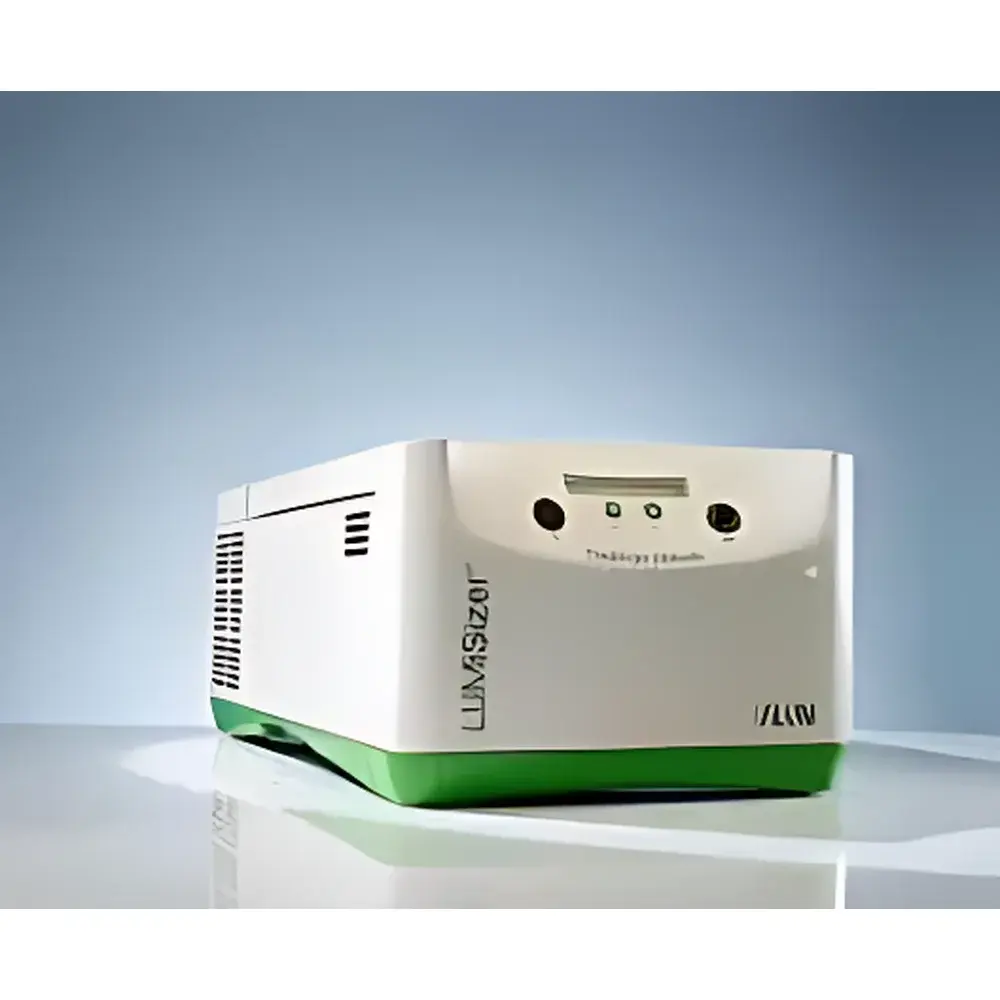
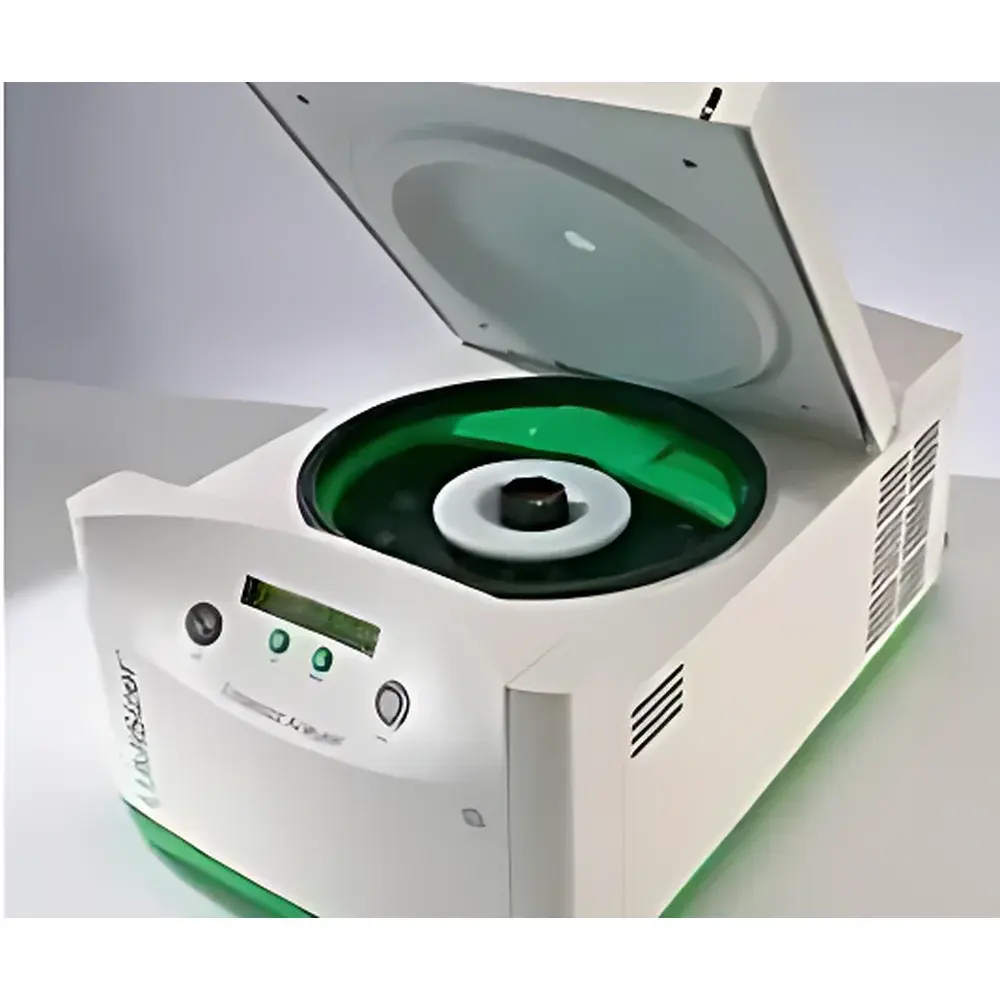
LUM LUMiSizer Stability Analyzer
| Brand | LUM |
|---|---|
| Origin | Germany |
| Manufacturer Type | Authorized Distributor |
| Origin Category | Imported |
| Model | LUMiSizer |
| Price Range | USD 68,000 – 95,000 |
| Sample Capacity | 12 positions |
| Measurement Principle | Spatially Resolved Extinction Profile Analysis (STEP Technology) |
| Temperature Control Range | 4 °C to 60 °C (±1 K) |
| Sample Volume per Cell | 0.05 mL to 2.0 mL |
| Concentration Range | 0.00015 wt% to 90 wt% |
| Viscosity Range | 0.8 mPa·s to 10⁸ mPa·s |
| Particle Size Range (Stability Mode) | 10 nm to 1000 μm |
| Particle Size Range (ISO 13318-2 Compliant Mode) | 20 nm to 100 μm |
| Density Range | up to 22 g/cm³ |
| Acceleration Range | 6×g to 2300×g |
| Optical Wavelengths | Multi-wavelength source (e.g., 870 nm, optionally 470 nm and/or 650 nm) |
| Compliance | ISO/TR 13097, ISO 13318-2, FDA 21 CFR Part 11 (audit trail, electronic signature, user access control), GLP/GMP-ready |
| Dimensions (W×H×D) | 37 cm × 27 cm × 60 cm |
| Weight | 40 kg |
| Power Supply | 100–240 V AC, 50/60 Hz |
Overview
The LUM LUMiSizer Stability Analyzer is a high-precision, multi-parameter analytical instrument engineered for the quantitative assessment of colloidal and particulate system stability under accelerated conditions. Based on Spatially and Temporally Resolved Extinction Profile (STEP) technology—a patented optical method—it records time-resolved transmission profiles across the entire sample height (from meniscus to bottom) during centrifugal stress. Unlike conventional light scattering or sedimentation techniques requiring assumptions about particle shape, density, or refractive index, the LUMiSizer directly measures particle migration velocity distributions without prior material constants. This enables model-free determination of destabilization mechanisms—including creaming, sedimentation, flocculation, coalescence, and Ostwald ripening—while simultaneously delivering ISO 13318-2 compliant particle size distribution (PSD) data in concentrated, opaque, or highly viscous dispersions (up to 90 wt%). Its dual-capability architecture integrates stability kinetics and granulometric analysis within a single platform, supporting R&D, formulation optimization, shelf-life prediction, and regulatory submission workflows in pharmaceuticals, cosmetics, food, coatings, and battery slurries.
Key Features
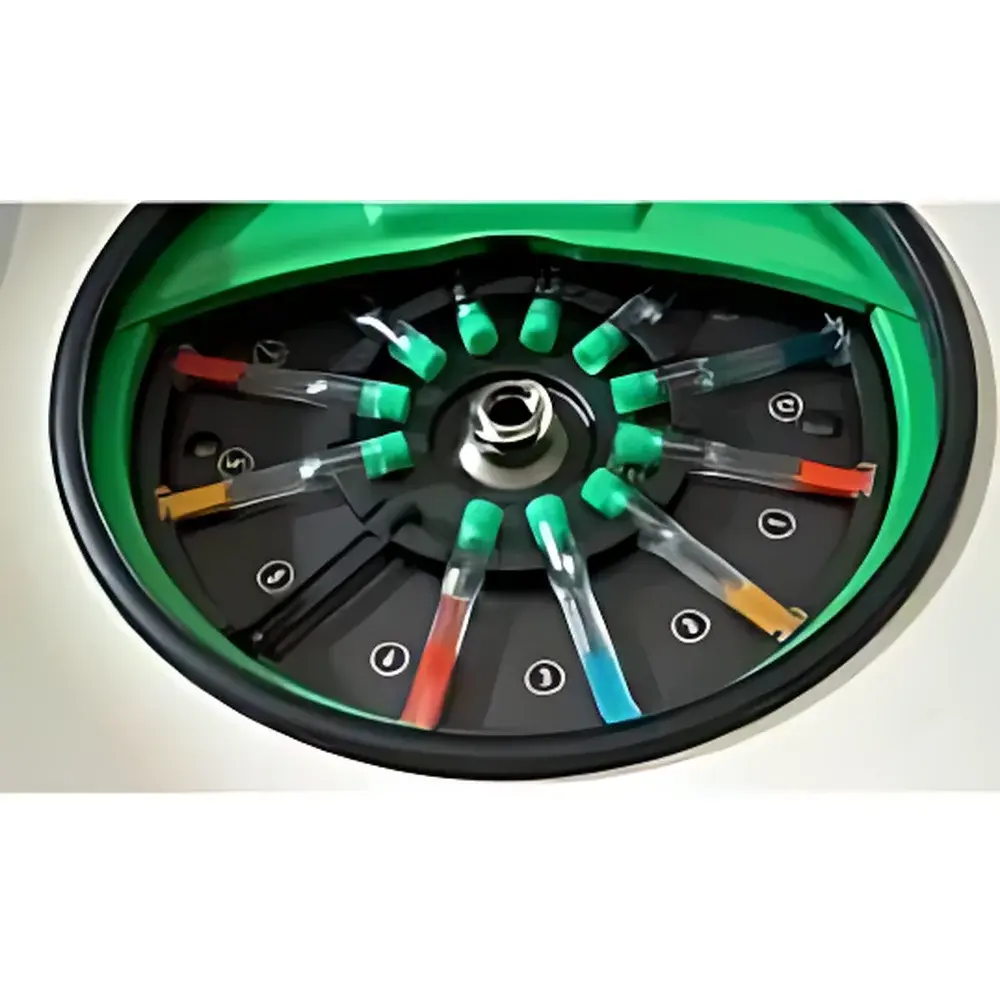
- Simultaneous analysis of up to 12 independent samples under identical or individually programmed temperature and acceleration conditions
- Multi-wavelength optical system (standard 870 nm; optional 470 nm and 650 nm) enabling discrimination of particle composition, refractive index contrast, and turbidity effects
- Programmable centrifugal acceleration from 6×g to 2300×g, allowing controlled acceleration of phase separation while preserving hydrodynamic integrity
- Real-time extinction profile acquisition with 1-second temporal resolution and sub-millimeter spatial resolution across full sample length (up to 2 mL)
- Integrated Peltier-based temperature control (4 °C to 60 °C, ±1 K accuracy) for thermally sensitive formulations and Arrhenius-based shelf-life modeling
- Direct calculation of particle density, z-average sedimentation velocity, and instability ranking indices (e.g., separation rate, interface sharpness, depletion zone formation)
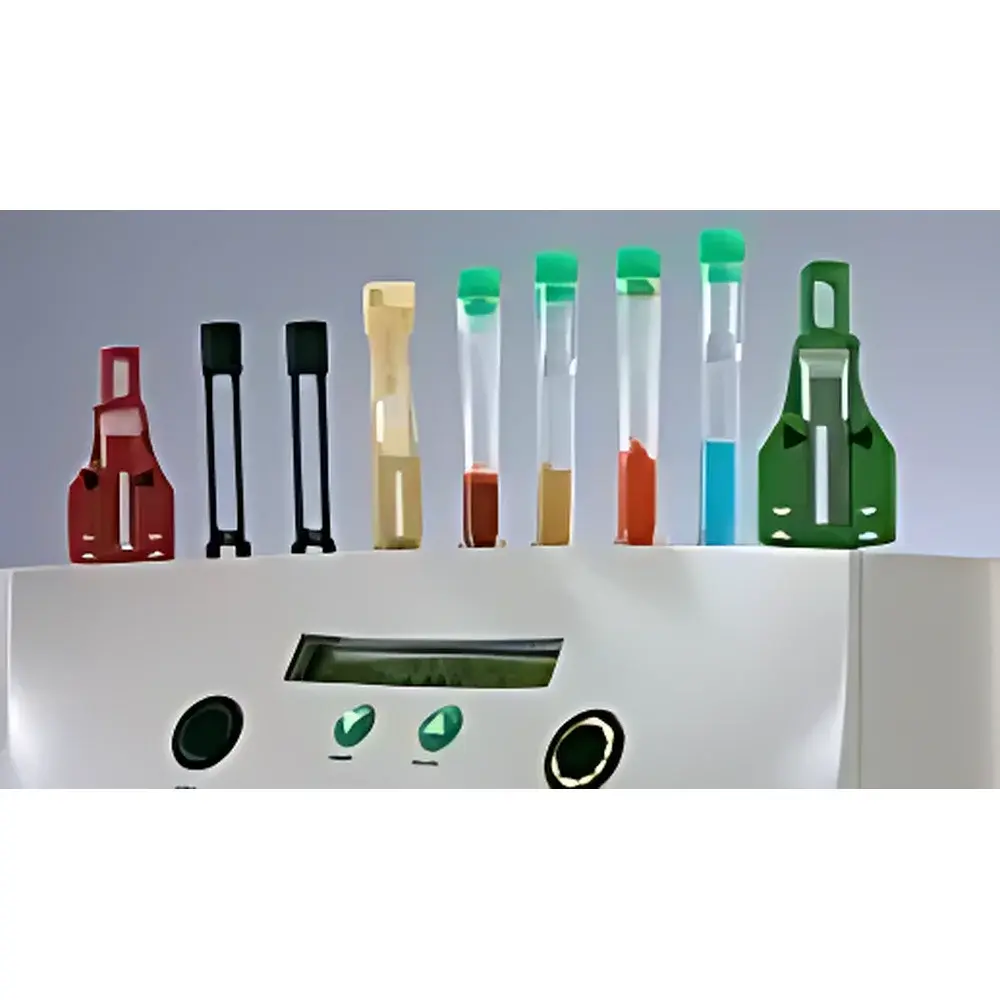
- Support for custom cell geometries—including quartz, glass, and polymer cuvettes—with optical path lengths optimized for low- and high-absorbance systems
Sample Compatibility & Compliance
The LUMiSizer accommodates a broad spectrum of dispersed systems: aqueous and non-aqueous suspensions, emulsions, pastes, gels, and nanoparticle colloids. It handles Newtonian and non-Newtonian fluids alike, with viscosity tolerance up to 10⁸ mPa·s and particle densities up to 22 g/cm³. Sample concentration ranges from trace-level (0.00015 wt%) to highly loaded industrial slurries (90 wt%). All measurement protocols adhere to internationally recognized standards: ISO/TR 13097 (colloidal stability assessment), ISO 13318-2 (centrifugal liquid sedimentation for PSD), and FDA 21 CFR Part 11 (electronic records and signatures). The system includes configurable audit trails, role-based user authentication, electronic signatures, and data integrity safeguards required for GLP and GMP environments. Exported datasets are structured in vendor-neutral formats (CSV, XML) compatible with LIMS and statistical process control platforms.
Software & Data Management
The proprietary SEPView software provides an integrated environment for experimental design, real-time monitoring, automated data reduction, and reporting. Users define multi-step protocols—including ramped acceleration, isothermal holds, and temperature sweeps—with full parameter logging. Raw extinction profiles undergo standardized deconvolution to generate velocity distribution histograms, stability maps, and time-resolved layer thickness metrics. Built-in algorithms compute quantifiable stability indicators (e.g., sedimentation volume fraction, creaming front velocity, flocculation index) and extrapolate shelf-life using power-law or exponential decay models. Data export supports batch processing, statistical comparison across sample sets, and generation of regulatory-compliant PDF reports with embedded metadata, timestamps, and instrument calibration history. Software validation documentation (IQ/OQ/PQ templates) and 21 CFR Part 11 configuration packages are provided for qualification in regulated laboratories.
Applications
- Accelerated stability screening of drug nanosuspensions, liposomal formulations, and biopolymer colloids
- Quantitative evaluation of emulsifier efficacy and surfactant performance in food and personal care emulsions
- Optimization of pigment dispersion stability in architectural paints and electrode slurries for lithium-ion batteries
- Detection and classification of destabilization pathways in protein aggregates, vaccine adjuvants, and ceramic suspensions
- Correlation of particle size distribution shifts with long-term storage behavior under variable thermal and mechanical stress
- Development of predictive models linking formulation parameters (pH, ionic strength, polymer concentration) to kinetic stability endpoints
FAQ
How does STEP technology differ from dynamic light scattering (DLS) or laser diffraction?
STEP analyzes macroscopic particle migration under centrifugal force via time-resolved transmission profiles, enabling direct observation of separation dynamics in concentrated, polydisperse, or absorbing systems where DLS fails and laser diffraction lacks resolution in layered structures.
Can the LUMiSizer measure particle size in samples with no prior knowledge of material properties?
Yes. STEP-derived velocity distributions are converted to size distributions using Stokes’ law only when density and viscosity are known; however, comparative stability ranking and relative size trends require no input parameters.
Is the system suitable for GMP-regulated pharmaceutical development?
Yes. With full 21 CFR Part 11 compliance, electronic audit trails, user access controls, and validated software modules, it meets requirements for stability-indicating methods in IND/NDA submissions.
What sample preparation is required?
Minimal preparation: samples are loaded into standardized disposable or reusable cells; no dilution, filtration, or degassing is necessary—even for opaque, high-viscosity, or air-sensitive systems.
How is shelf-life predicted from LUMiSizer data?
By correlating acceleration-induced separation rates with Arrhenius temperature dependence and applying empirical or mechanistic models (e.g., linear sedimentation rate extrapolation, exponential interface broadening), validated against real-time storage studies.



