
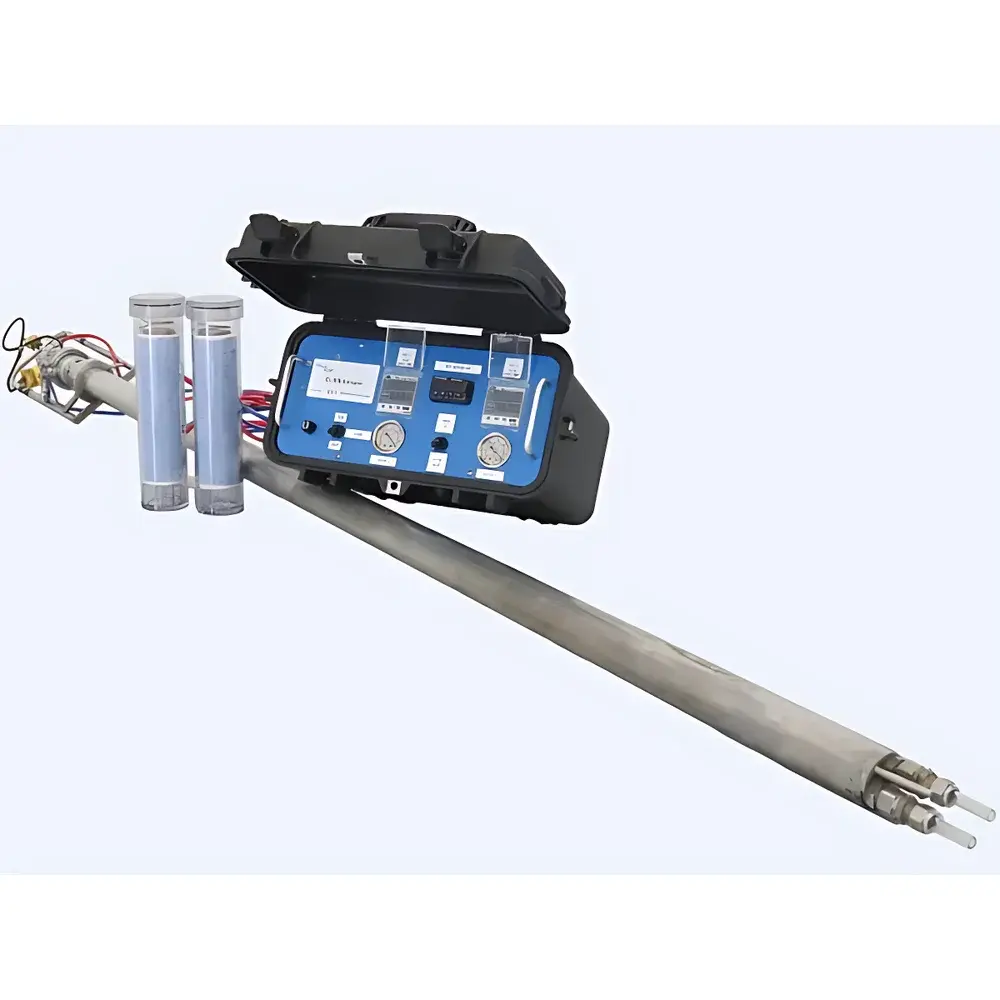
LUMEX OLM30B Portable Flue Gas Mercury Sampling System
| Brand | LUMEX |
|---|---|
| Origin | USA |
| Manufacturer Type | Authorized Distributor |
| Product Origin | Imported |
| Model | OLM30B Sampler |
| Sampling Flow Rate | 1 L/min |
| Flow Accuracy | ±1% of full scale |
| Sampling Temperature | Up to 150 °C |
| Sample Target | Elemental and Oxidized Mercury (Hg⁰, Hg²⁺) |
| Flow Resolution | 0.01 L/min |
| Repeatability | ±1% FS |
| Max Flow Rate | 2 L/min |
| Power Supply | 110/220 V AC |
| Power Consumption | 500 W |
| Operating Temperature Range | –10 °C to 50 °C |
| Weight | Air Pump Unit 6.8 kg, Probe 14 kg |
| Compliance | EPA Method 30B, 40 CFR Part 60, ASTM D6784-22 |
Overview
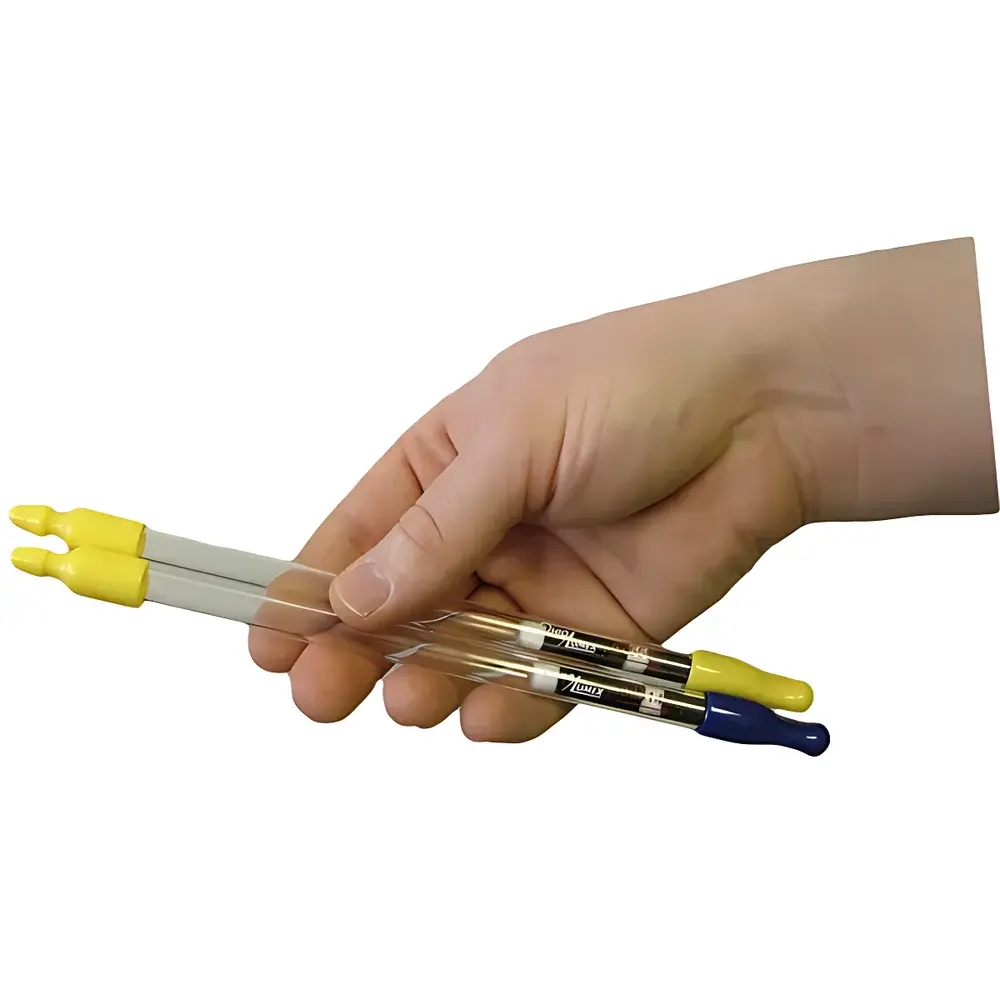
The LUMEX OLM30B Portable Flue Gas Mercury Sampling System is a field-deployable, EPA Method 30B-compliant instrument engineered for the quantitative collection of total gaseous mercury (TGM) and speciated mercury (elemental Hg⁰ and oxidized Hg²⁺) from industrial flue gas streams. It operates on the principle of isokinetic adsorption sampling using dual-channel, temperature-controlled sampling trains equipped with certified 10 mm OD sorbent traps (e.g., Au-coated quartz, KCl-impregnated carbon, or dual-bed configurations). The system maintains precise thermal management across the entire sampling path — from probe tip to trap inlet — ensuring quantitative retention without condensation, oxidation, or re-emission artifacts. Its robust architecture integrates high-stability mass flow control, real-time vacuum monitoring, and active thermal regulation, enabling reliable operation under variable stack conditions including high moisture, acidic gas content (SO₂, HCl), and fluctuating pressure gradients.
Key Features
- Dual independent sampling channels with synchronized flow control for parallel or sequential speciation studies
- Integrated heated probe (up to 150 °C) with 6-ft stainless steel construction and built-in cooling purge cycle to prevent trap breakthrough during hot-start or shutdown
- High-accuracy mass flow controller (MFC) with 0.01 L/min resolution and ±1% FS repeatability across 0–2 L/min range
- Onboard thermocouple-based temperature monitoring at probe tip, transfer line, and trap holder — all independently regulated
- Dedicated acid gas and moisture removal module featuring dual-stage impingers (e.g., H₂O-scrubbing with silica gel + acid gas neutralization with NaOH/KOH solution)
- Modular, ruggedized transport case (IP54-rated) housing pump, controller, power supply, and accessories — total system weight <21 kg for field mobility
- Non-volatile memory for user-defined method parameters (flow setpoint, duration, heating profile), eliminating recalibration between sampling events
Sample Compatibility & Compliance
The OLM30B supports standardized 10 mm OD sorbent tubes compliant with EPA Method 30B specifications, including single-bed (for TGM) and dual-bed (for Hg⁰/Hg²⁺ speciation) configurations. All wet chemistry components — impinger solutions, drying agents, and trap media — are compatible with subsequent cold vapor atomic fluorescence spectrometry (CVAFS) or thermal desorption–ICP-MS analysis per EPA Methods 29, 1631E, and ASTM D6784-22. The system meets full QA/QC requirements outlined in 40 CFR Part 60 Appendix A-8, including leak-check protocols, three-point MFC calibration verification, and documented isokinetic sampling validation. It is certified for use in regulatory compliance monitoring under NSPS, MATS, and state-level mercury emission reporting programs.
Software & Data Management
The OLM30B features an embedded microcontroller with LCD interface for real-time display of flow rate, temperature profiles, vacuum pressure, and elapsed sampling time. All operational parameters and event logs (start/stop timestamps, flow deviations >±2%, temperature excursions) are stored internally with UTC timestamping. Data export is supported via USB-C to CSV format for integration into LIMS or EPA-mandated electronic reporting platforms. While the device does not include cloud connectivity, its data structure aligns with 21 CFR Part 11 audit trail requirements when paired with validated third-party data acquisition software used in GLP/GMP environments.
Applications
- Regulatory stack testing for coal-fired power plants, waste incinerators, cement kilns, and metal smelters
- Mercury speciation profiling to support sorbent injection optimization and control technology evaluation
- Performance verification of activated carbon injection (ACI) and brominated carbon systems
- Field validation of continuous emission monitoring systems (CEMS) for mercury
- Research-grade mercury transformation studies under varying flue gas composition (O₂, SO₂, NOₓ, H₂O)
- Mobile source emissions characterization (e.g., marine diesel exhaust, biomass boilers)
FAQ
Does the OLM30B require external calibration gas or reference standards during routine operation?
No — the system relies on factory-calibrated MFCs and NIST-traceable thermocouples; only periodic verification (e.g., quarterly) using dry cal gas or electronic flow calibrators is required per QA procedures.
Can the OLM30B be used for sampling at temperatures above 150 °C?
No — the maximum rated probe temperature is 150 °C; extended exposure beyond this limit may compromise seal integrity and thermocouple accuracy.
Is the system compatible with EPA Method 29 sampling protocols?
Yes — when configured with appropriate impinger trains and trap media, the OLM30B satisfies the sampling hardware requirements of Method 29 for total mercury quantification in stationary sources.
What maintenance intervals are recommended for field deployment?
Daily visual inspection of tubing, desiccant color indicators, and impinger levels; monthly cleaning of probe filters and MFC inlet screens; annual recalibration of MFC and thermocouple assemblies by authorized service centers.
Does the OLM30B support remote monitoring or telemetry?
Not natively — it operates as a standalone, battery-independent AC-powered unit; however, analog voltage outputs (0–5 V) for flow and temperature signals can be interfaced with external SCADA or DAQ systems.
Related Products







