
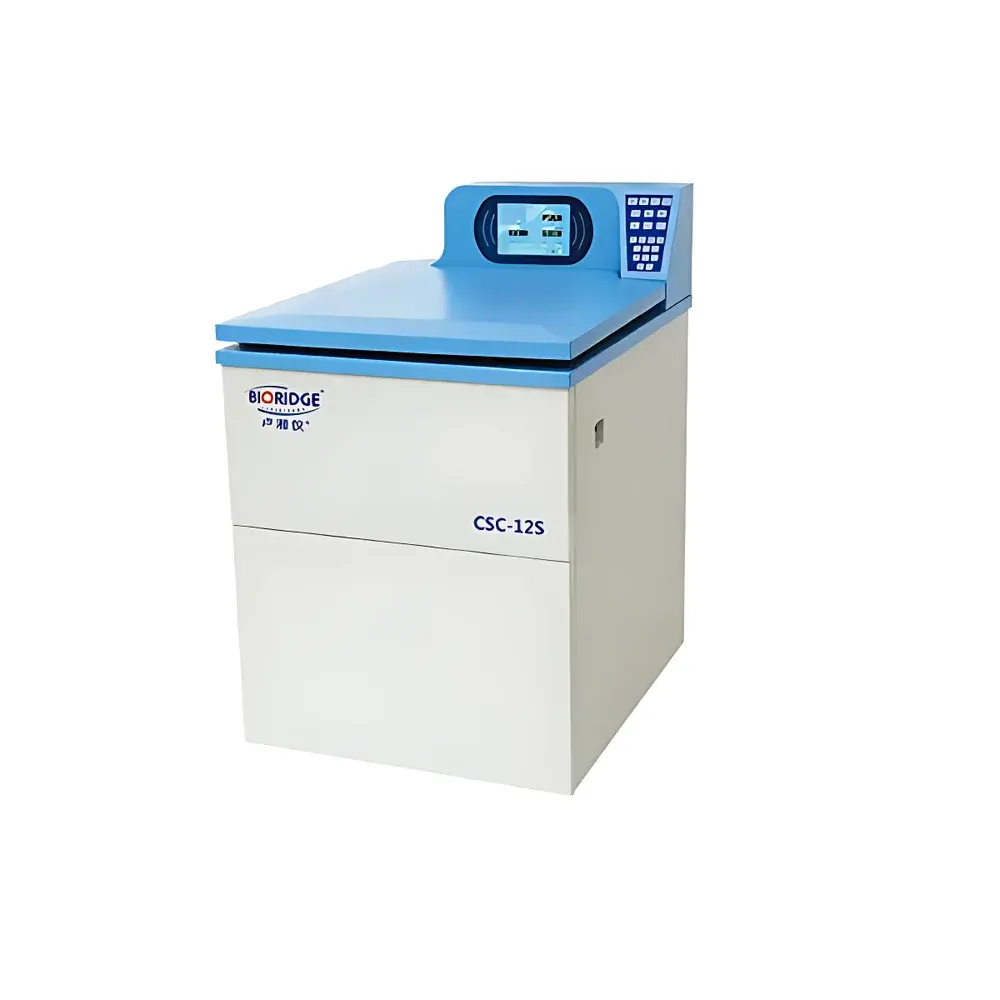
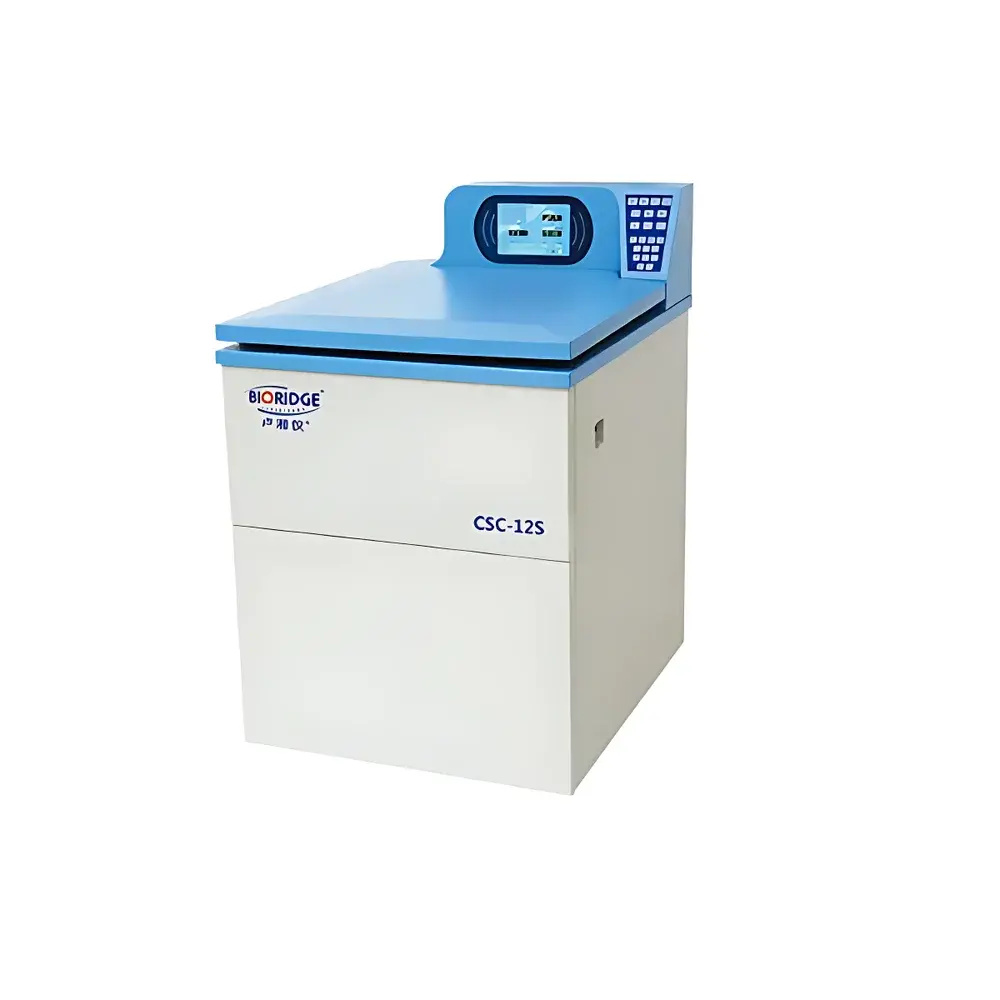
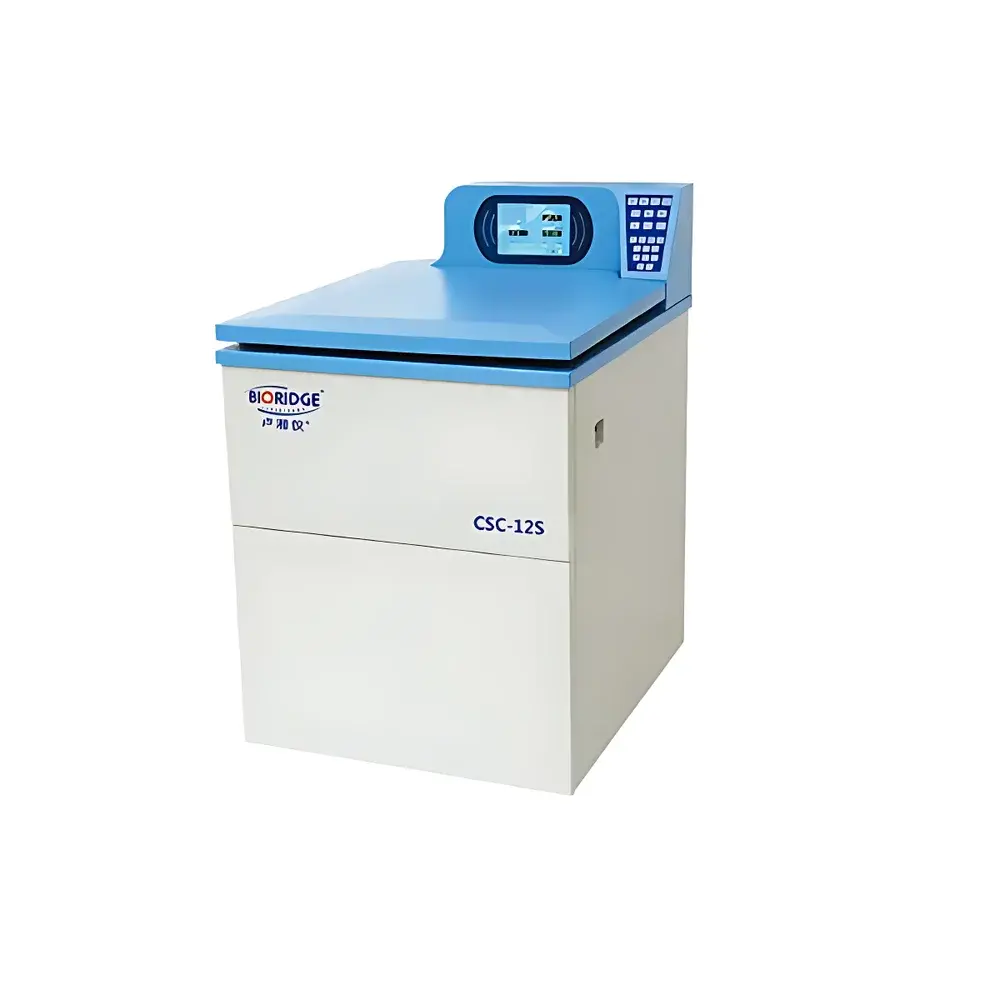
LUXIANGYI CSC-12S Super Core High-Speed Refrigerated Centrifuge
| Brand | LUXIANGYI / BIORIDGE |
|---|---|
| Origin | Shanghai, China |
| Model | CSC-12S |
| Instrument Type | Benchtop Centrifuge |
| Speed Range | 10,000 rpm |
| Max RCF | 21,250 × g |
| Sample Capacity | Standard 1″ and 1.5″ core plugs |
| Temperature Range | −20 °C to +40 °C |
| Temp. Accuracy | ±1 °C |
| Speed Accuracy | ±50 rpm |
| Ramp/Brake Profiles | 10 programmable curves |
| Noise Level | <65 dB(A) |
| Power Supply | AC 220 V, 50 Hz |
| Power Consumption | 5 kW |
| Dimensions (L×W×H) | 710 mm × 840 mm × 1200 mm |
| Net Weight | 290 kg |
| Refrigerant | R404a (non-ozone-depleting) |
| Compliance | FDA-registered, GMP-compliant sealing (food-grade silicone monolithic gasket) |
Overview
The LUXIANGYI CSC-12S Super Core High-Speed Refrigerated Centrifuge is an engineered solution for quantitative fluid displacement analysis in reservoir rock core samples. Designed specifically for petroleum geoscience laboratories, enhanced oil recovery (EOR) research, and core flooding simulation workflows, this benchtop centrifuge operates on the principle of controlled rotational acceleration to generate precise, reproducible centrifugal forces that drive immiscible fluid phases—such as air, water, oil, or brine—through porous media. Unlike general-purpose high-speed centrifuges, the CSC-12S integrates a thermally stabilized chamber, high-torque variable-frequency drive, and purpose-built core-specific rotors to support standardized core plug testing per industry protocols including API RP 40, ASTM D3967, and ISO 15148. Its refrigeration system maintains temperature stability across extended runs, enabling viscosity-sensitive displacement experiments under controlled thermal conditions.
Key Features
- High-precision microprocessor control with large LCD interface supporting real-time RPM/RCF conversion and dual-unit display.
- Brushless AC frequency-controlled motor delivering stable operation at up to 10,000 rpm with speed accuracy of ±50 rpm and low acoustic emission (<65 dB[A]).
- Imported high-efficiency compressor system using environmentally compliant R404a refrigerant; temperature control range spans −20 °C to +40 °C with ±1 °C uniformity across the chamber.
- Dedicated core rotor assembly accommodating standard 1-inch (25.4 mm) and 1.5-inch (38.1 mm) diameter cylindrical core plugs; optional custom rotor configurations available for non-standard geometries.
- Programmable acceleration/deceleration profiles—10 user-defined ramp/brake curves—to minimize mechanical stress on fragile core samples during spin-up and spin-down cycles.
- Integrated safety architecture featuring electronic lid lock, overspeed cutoff, real-time imbalance detection, overtemperature shutdown, and automatic rotor recognition.
- GMP-aligned construction: monolithic food-grade silicone sealing gasket ensures contamination-free chamber integrity and meets pharmaceutical-grade environmental containment requirements.
Sample Compatibility & Compliance
The CSC-12S is validated for use with consolidated and unconsolidated rock core specimens conforming to common upstream laboratory standards—including sandstone, carbonate, shale, and synthetic analog cores. Its rotor geometry supports axial orientation of core plugs to replicate vertical fluid flow paths encountered in reservoir simulations. The instrument complies with FDA registration requirements for analytical instrumentation used in regulated environments and incorporates design elements aligned with GLP documentation practices. While not certified to IEC 61010-1 or UL 61010-1 out-of-the-box, its electrical and mechanical architecture adheres to baseline safety principles referenced in those standards. All firmware operations retain audit-trail-capable parameter logging, supporting traceability in QA/QC workflows.
Software & Data Management
The CSC-12S operates via embedded firmware with no external PC dependency. All operational parameters—including run time (1 min to 99 h 59 min), target speed, setpoint temperature, and ramp/brake selection—are stored in non-volatile memory and recalled automatically upon power-up. Each program retains independent settings, allowing rapid switching between routine test methods (e.g., air-brine drainage vs. oil-water imbibition). Though the device lacks native Ethernet or USB data export, printed output via optional serial-connected thermal printer (RS-232 interface) enables hardcopy record generation suitable for lab notebooks and regulatory submissions. Future firmware updates may introduce SD-card logging capability for timestamped RCF, temperature, and elapsed time sequences.
Applications
- Capillary pressure curve determination via centrifuge method (API RP 40 Annex A).
- Relative permeability endpoint measurement using sequential fluid saturation and displacement steps.
- Core-scale evaluation of surfactant flooding, polymer flooding, and low-salinity waterflooding efficiency.
- Residual saturation quantification (Sorw, Sgc, Swc) under controlled thermal conditions relevant to deep reservoirs.
- Quality assurance of core preparation protocols—including cleaning, drying, and saturation history verification.
- Method development for unconventional resource characterization where pore-throat distribution influences centrifugal separation kinetics.
FAQ
What core plug dimensions does the CSC-12S accept?
Standard configurations support 1-inch (25.4 mm) and 1.5-inch (38.1 mm) diameter cylindrical core plugs with lengths up to 100 mm. Custom rotor inserts are available for specialized sample geometries upon request.
Is remote monitoring or network connectivity supported?
No native Ethernet, Wi-Fi, or cloud-based telemetry is integrated. Operation remains local via front-panel interface; data recording relies on manual entry or optional serial printer output.
Does the unit meet FDA 21 CFR Part 11 requirements?
While FDA-registered as analytical instrumentation, the CSC-12S does not provide electronic signature functionality, audit trails, or role-based access control required for full Part 11 compliance. It is suitable for non-GxP research environments or as a supporting tool within validated systems where procedural controls compensate for technical limitations.
Can the centrifuge operate continuously for >24 hours?
Yes—the thermal management system and motor cooling design permit uninterrupted operation across multi-day test sequences, provided ambient room temperature remains ≤25 °C and ventilation clearances are maintained.
What maintenance intervals are recommended?
Compressor performance verification and refrigerant pressure checks every 12 months; rotor inspection and balancing every 500 operating hours or annually, whichever occurs first; gasket replacement advised every 2 years under continuous use.



