
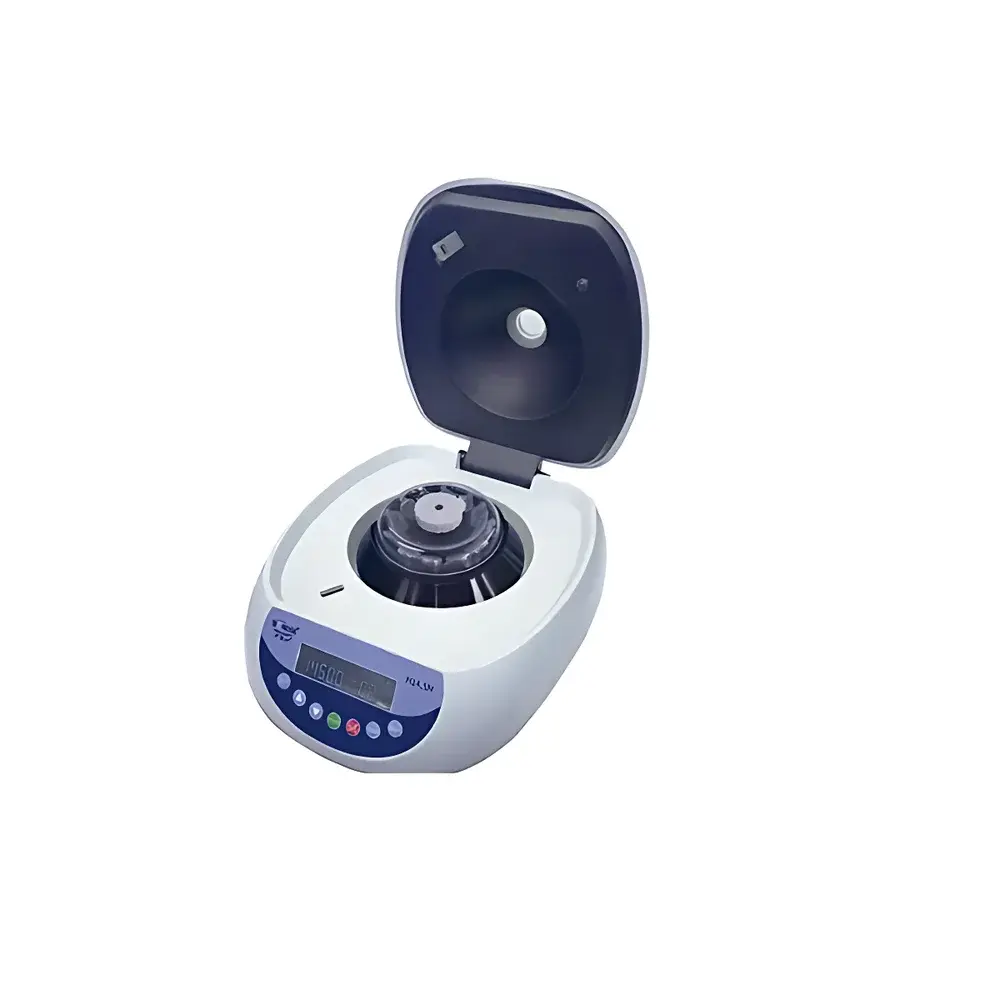
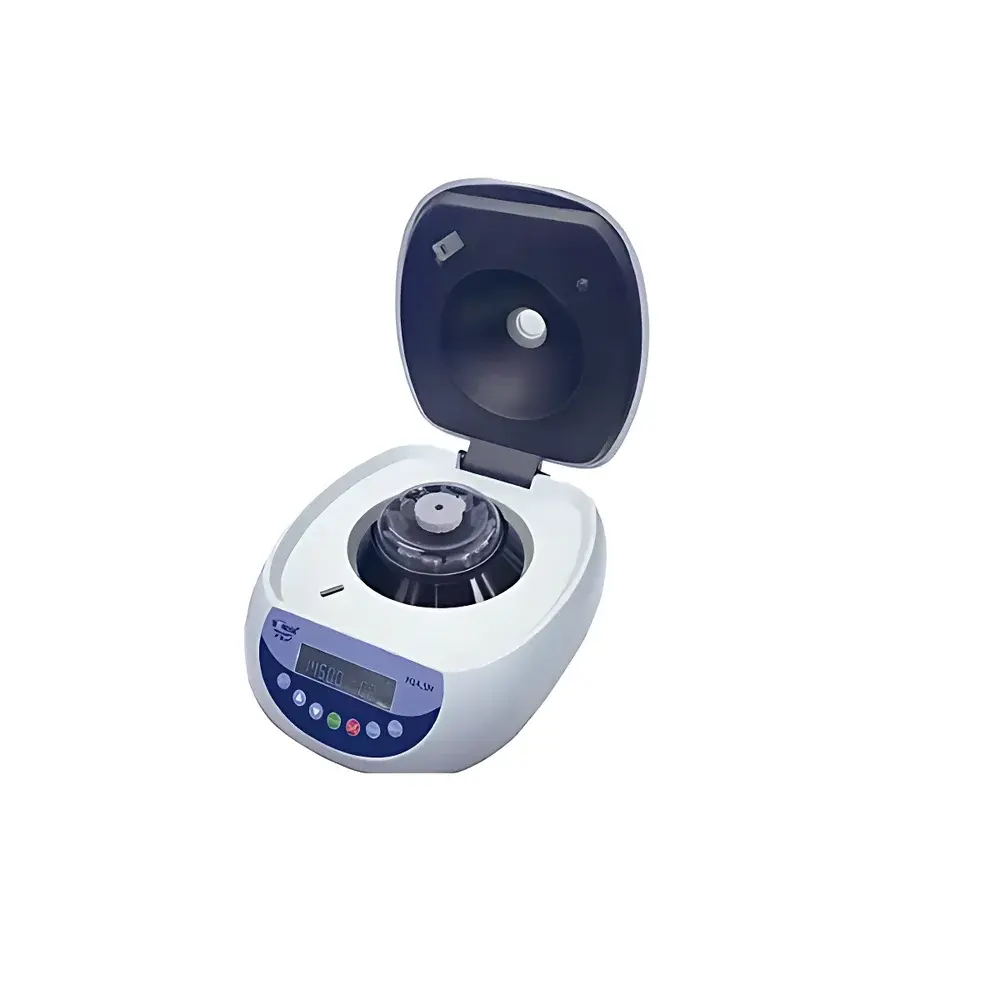
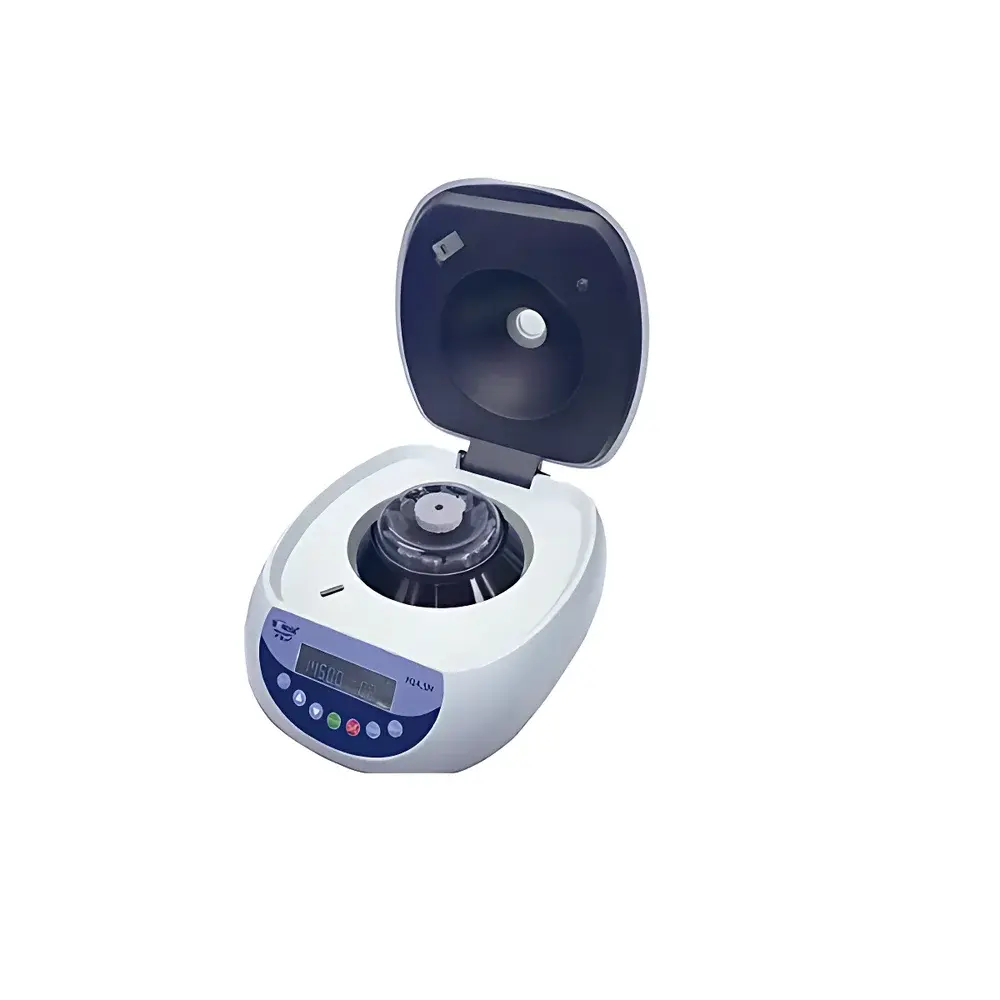
LUXIANGYI H14.5M Micro High-Speed Benchtop Centrifuge
| Brand | LUXIANGYI / BIORIDGE |
|---|---|
| Origin | Shanghai, China |
| Model | H14.5M |
| Instrument Type | Benchtop Centrifuge |
| Speed Range | 200–14,500 rpm |
| Max RCF | 14,000 × g |
| Max Capacity | 12 × 1.5 mL or 12 × 2.2 mL (angular rotor) |
| Rotor Options | Aluminum angular rotor (sealed, autoclavable), 0.2 mL 8-tube strip rotor (4 × 8 positions, max 6,000 rpm / 2,140 × g) |
| Speed Accuracy | ±30 rpm |
| Timer Range | 20 s – 99 min |
| Acceleration/Deceleration Time | ≤12 s (0 → max / max → 0) |
| Noise Level | <50 dB(A) |
| Dimensions (W×D×H) | 230 × 270 × 155 mm |
| Net Weight | 4.8 kg |
| Power Supply | AC 220 V, 50 Hz |
| Power Consumption | 100 W |
| Temperature Rise | ≤10 °C after 30 min at maximum speed |
| Safety Certification | CE compliant |
| Rotor Material | Anodized aluminum with hermetic sealing |
Overview
The LUXIANGYI H14.5M Micro High-Speed Benchtop Centrifuge is engineered for precision micro-volume separation in resource-constrained laboratory environments—including molecular biology workstations, clinical diagnostics benches, and academic teaching labs. It operates on the principle of sedimentation under controlled centrifugal force, utilizing rotational inertia to separate particles based on density, size, and shape within small-volume samples (e.g., nucleic acids, proteins, cell lysates, and PCR products). With a maximum speed of 14,500 rpm and an RCF of 14,000 × g, the H14.5M delivers sufficient force for rapid pelleting of bacterial cells, plasmid DNA, and microcentrifuge-compatible particulates—without requiring floor-standing infrastructure or complex cooling systems. Its compact footprint (230 × 270 × 155 mm) and low power draw (100 W) make it ideal for shared instrumentation spaces, biosafety cabinets, or mobile lab configurations where spatial efficiency and energy economy are prioritized.
Key Features
- Brushless DC motor with maintenance-free operation and extended service life; optimized airflow design minimizes thermal buildup during extended runs.
- Intuitive LCD interface with real-time display of speed (rpm), RCF (×g), time remaining, and acceleration/deceleration status.
- Fast ramp-up and coast-down kinetics: reaches full speed in ≤12 seconds and decelerates to standstill in ≤12 seconds—enabling efficient transient spin protocols (e.g., quick spin-down of column-based purification steps).
- Tool-free rotor exchange system: angular aluminum rotor detaches manually without wrenches or alignment tools, supporting rapid workflow transitions between sample types.
- Hermetically sealed angular rotor constructed from aerospace-grade anodized aluminum; withstands repeated autoclaving (121°C, 20 min, 1 bar) and resists aerosol leakage—critical for biosafety compliance in RNA/DNA handling and pathogen-related workflows.
- Dual rotor compatibility: standard 12-position angular rotor (1.5/2.2 mL tubes) and optional 4 × 8-strip rotor (0.2 mL PCR tubes, rated to 6,000 rpm / 2,140 × g) expand versatility across routine and high-throughput microplate preparation tasks.
- Integrated safety architecture: automatic lid lock detection, imbalance sensing, overspeed protection, and motor overheat monitoring—all validated to EN 61010-1 and CE directives for Class II laboratory equipment.
Sample Compatibility & Compliance
The H14.5M accommodates standard microcentrifuge tube formats (1.5 mL and 2.2 mL conical or round-bottom polypropylene tubes) as well as 0.2 mL PCR strips (with compatible rotor). Its sealed rotor design prevents cross-contamination between runs and satisfies containment requirements outlined in ISO 22174:2017 (molecular diagnostic laboratories) and CLSI EP17-A2 (evaluation of centrifuge performance). While not refrigerated, its thermally stable rotor housing and low-noise operation (<50 dB[A]) ensure minimal sample temperature drift—validated at ≤10 °C rise after 30 minutes at maximum speed—supporting protocols sensitive to thermal denaturation (e.g., enzyme storage, antibody recovery). The unit meets CE marking requirements for electromagnetic compatibility (EN 61326-1) and electrical safety (EN 61010-1), and is suitable for use in GLP-compliant environments when paired with documented operational qualification (OQ) and preventive maintenance logs.
Software & Data Management
The H14.5M operates via embedded firmware without external PC dependency. All parameters—including speed, time, and rotor identification—are stored locally with non-volatile memory retention. Though no proprietary software suite is provided, the device supports audit-ready manual recordkeeping through its built-in timer and repeat-cycle functionality (up to 99 cycles with auto-restart). For regulated environments, users may integrate run logs into LIMS or ELN platforms using standardized timestamped operator entries. The absence of network connectivity aligns with FDA 21 CFR Part 11 risk mitigation strategies for standalone analytical instruments, eliminating cybersecurity vulnerabilities associated with remote control interfaces.
Applications
- Routine pelleting of bacterial cultures (E. coli, Bacillus spp.) and yeast cells prior to lysis.
- Clarification of crude lysates and supernatant harvesting in plasmid prep and protein expression workflows.
- Spin-column membrane binding/wash steps in nucleic acid purification kits (e.g., silica-membrane spin columns).
- Micro-volume precipitation of oligonucleotides, synthetic peptides, or small-molecule compounds.
- Pre-analytical processing of clinical specimens (e.g., serum separation from capillary blood, PBMC pre-enrichment).
- High-frequency transient spins in qPCR setup, RT-PCR master mix assembly, and NGS library normalization steps.
FAQ
Is the H14.5M suitable for continuous operation at maximum speed?
Yes—thermal management and motor design support uninterrupted 30-minute runs at 14,500 rpm with ≤10 °C internal temperature increase, provided ambient conditions remain within 15–30 °C and adequate ventilation is maintained.
Can the angular rotor be sterilized in an autoclave?
Yes—the anodized aluminum rotor features a fully sealed construction and is rated for repeated autoclaving at 121 °C, 103 kPa (15 psi), 20 minutes per cycle.
Does the centrifuge support programmable multi-step protocols?
No—the H14.5M does not offer programmable ramp profiles or multi-segment timing; however, its fast acceleration/deceleration and instant-spin button enable manual emulation of short sequential protocols.
What safety certifications apply to this model?
The unit complies with CE marking under Directive 2014/30/EU (EMC) and 2014/35/EU (LVD), and conforms to EN 61010-1:2010 + A1:2019 for laboratory electrical equipment safety.
Is rotor imbalance detection active during acceleration?
Yes—imbalance sensing operates continuously from startup through deceleration, triggering immediate shutdown if vibration thresholds exceed ISO 1940-1 G2.5 class limits.



