
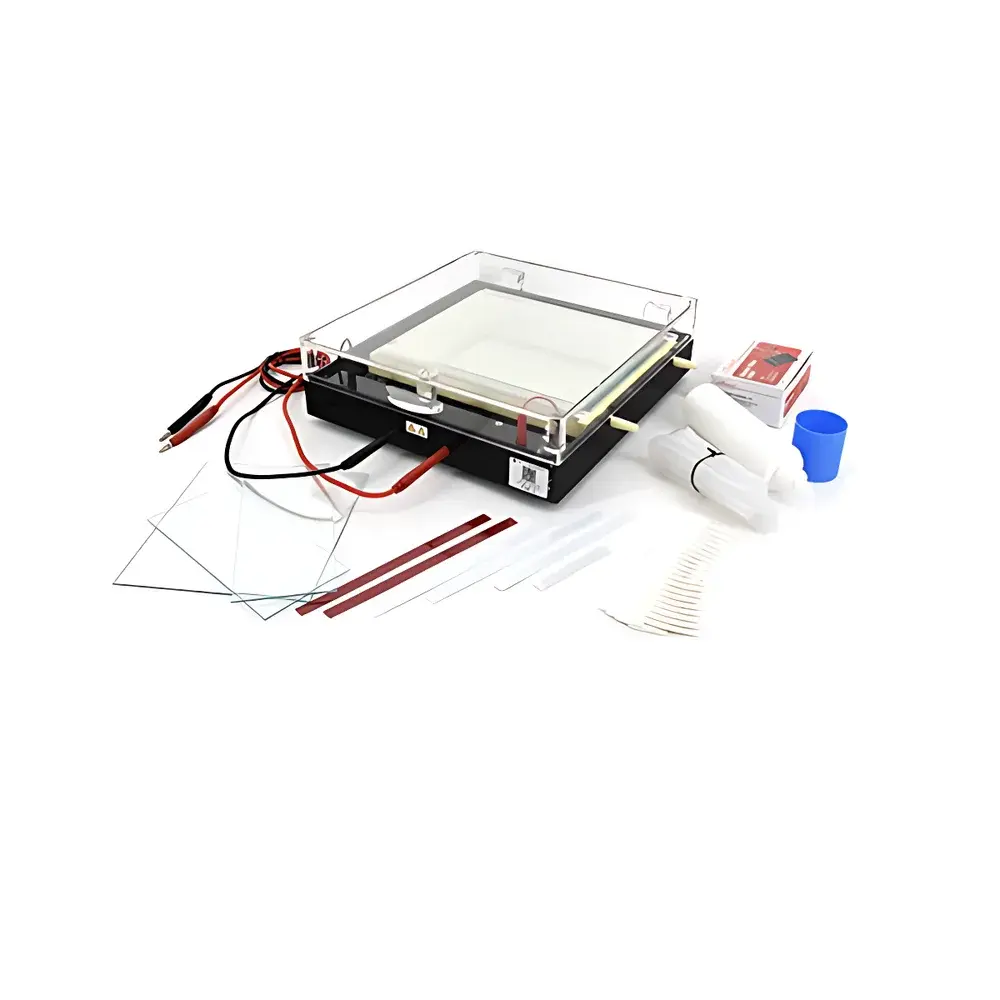
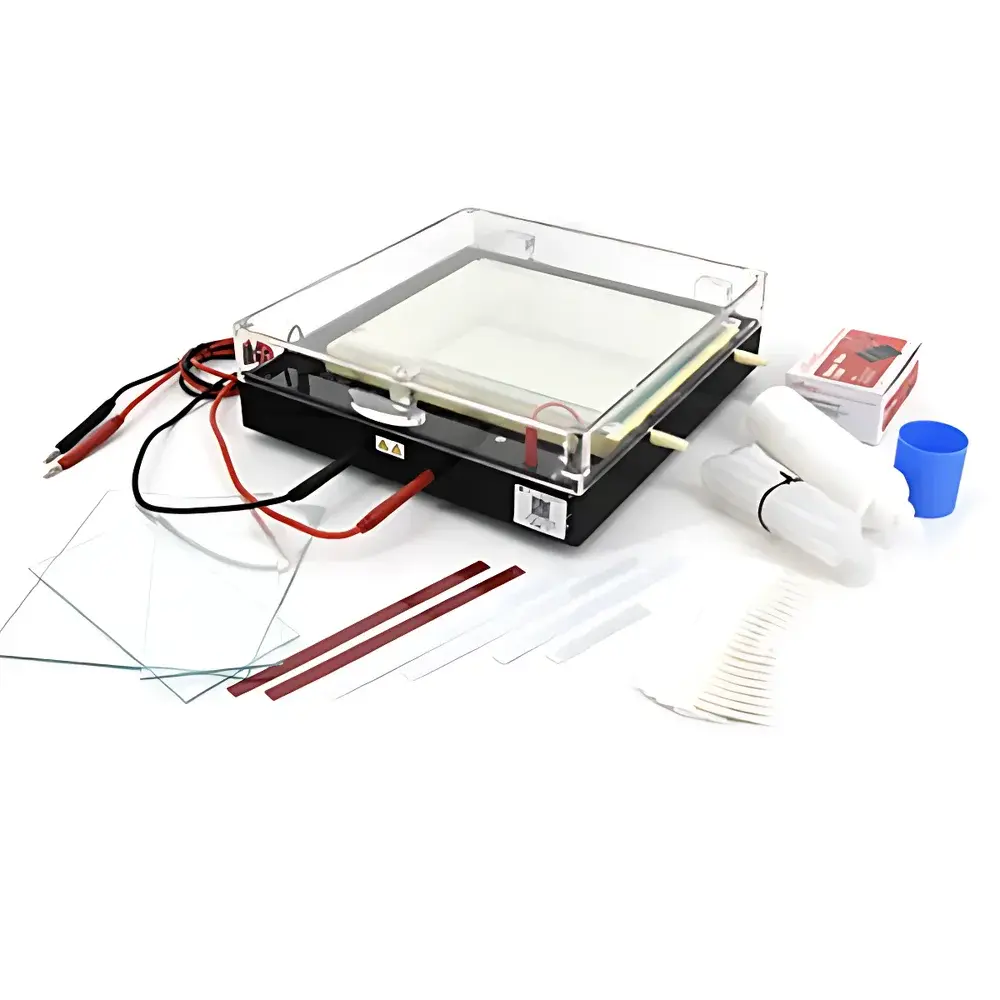
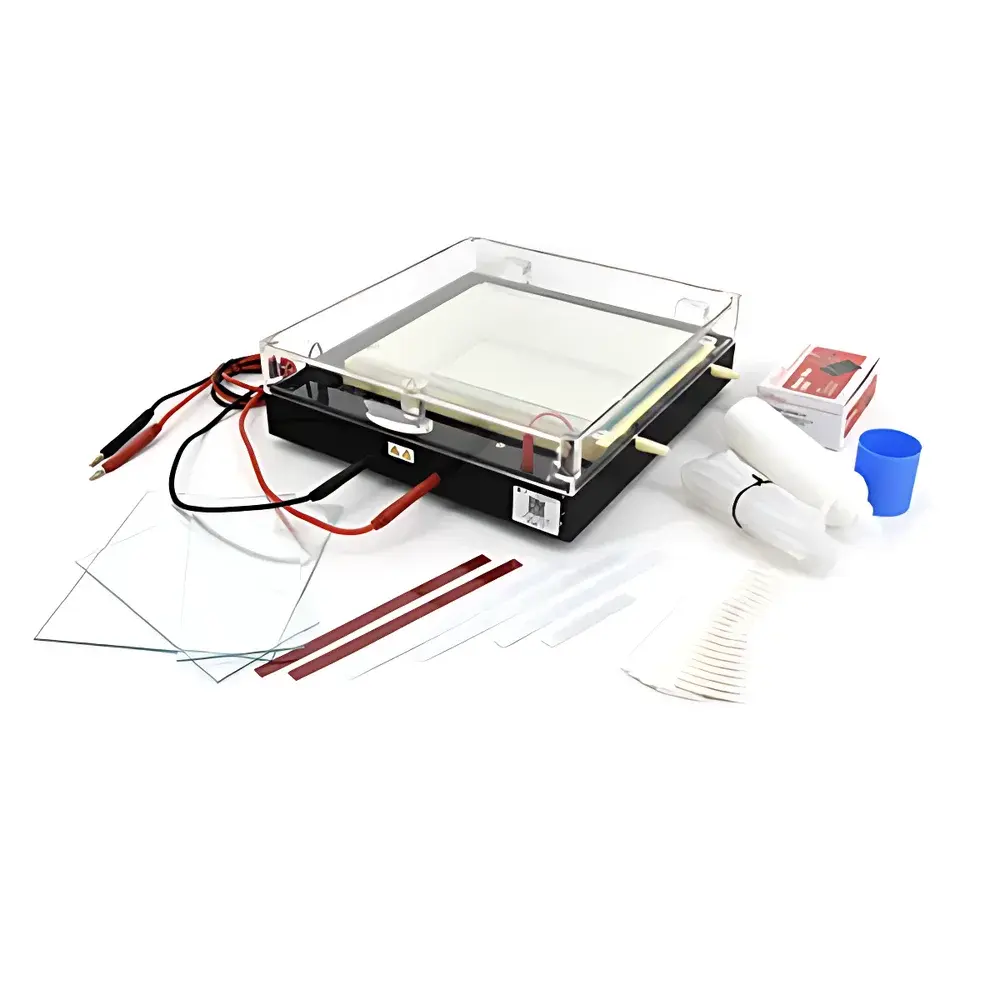
LY DYCP-37B Isoelectric Focusing Electrophoresis Apparatus
| Brand | LY |
|---|---|
| Origin | Beijing, China |
| Model | DYCP-37B |
| Instrument Type | Isoelectric Focusing (IEF) Electrophoresis Apparatus |
| Gel Plate Dimensions (L × W) | 140 × 190 mm and 60 × 190 mm |
| Thickness Options | 0.4 mm and 1.0 mm |
| External Dimensions (L × W × H) | 330 × 290 × 115 mm |
| Buffer Capacity | 750 mL |
| Weight | 3.5 kg |
Overview
The LY DYCP-37B Isoelectric Focusing Electrophoresis Apparatus is a benchtop electrophoretic system engineered for high-resolution separation of proteins based on their isoelectric points (pI). It operates on the principle of isoelectric focusing (IEF), where an immobilized pH gradient (IPG) is established across a polyacrylamide or agarose gel matrix under an applied electric field. Charged protein molecules migrate until they reach the pH position matching their intrinsic pI—where net charge becomes zero—and remain focused into sharp, discrete bands. Designed specifically for the first dimension of two-dimensional electrophoresis (2-DE), the DYCP-37B supports reproducible IEF runs with thermal stability critical for minimizing band diffusion and ensuring analytical precision. Its modular architecture allows integration with external temperature control systems—such as the WD-9412A constant-temperature circulating cooler—to maintain consistent gel temperature during extended focusing runs (typically 3–12 hours), thereby enhancing resolution and inter-run reproducibility.
Key Features
- Flexible operation modes: Supports both wet-cell and semi-dry electrophoresis configurations to accommodate varying experimental requirements and buffer consumption constraints.
- Integrated thermal management: Equipped with an aluminum cooling plate and precision-machined heat-dissipating surfaces to ensure uniform temperature distribution across the gel assembly—critical for preventing pH gradient distortion and current-induced overheating.
- Calibrated mechanical components: Upper lid and cooling plate feature engraved metric scales for accurate alignment of glass plates, comb positioning, and consistent gel thickness verification.
- Optimized gel casting system: Includes a dedicated gel-pouring bottle and standardized spacers (0.4 mm and 1.0 mm) to enable rapid, bubble-free polymerization of homogeneous gels with defined thicknesses.
- Stable pH gradient retention: Sealed chamber design minimizes electrolyte evaporation and buffer depletion, supporting long-duration focusing while preserving gradient integrity and electroosmotic stability.
- Comprehensive accessory kit: Supplied with 10 pre-cut filter paper sample applicators (soak-and-apply loading method), silicone sealing clamps, latex tubing, and matched glass plates for immediate deployment in routine IEF workflows.
Sample Compatibility & Compliance
The DYCP-37B accommodates standard IEF gel formats used in proteomic analysis, including slab gels cast from acrylamide monomers with carrier ampholytes or IPG strips (when adapted with compatible holders). It is compatible with common IEF buffers (e.g., Pharmalyte®, Ampholine®) and staining protocols (Coomassie Brilliant Blue, silver stain, fluorescent dyes). While not certified to ISO/IEC 17025 or FDA 21 CFR Part 11 out-of-the-box, the apparatus meets fundamental electrical safety requirements per GB 4793.1–2007 (Chinese equivalent of IEC 61010-1) and supports GLP-compliant documentation when paired with validated SOPs, manual logbooks, and external audit-ready cooling units. Its open-system design permits full traceability of gel preparation, voltage ramping profiles, and run duration—key elements for laboratory quality assurance frameworks.
Software & Data Management
The DYCP-37B is a hardware-only platform without embedded microprocessor control or digital interface. Voltage application, timing, and current monitoring must be performed using an external programmable power supply (e.g., 0–3000 V, 0–100 mA output range). Users are responsible for recording operational parameters—including initial and final current values, voltage ramping steps, and total focusing time—in accordance with internal quality procedures. For laboratories requiring electronic data capture, integration with third-party power supplies featuring RS-232/USB output and compliant logging software (supporting 21 CFR Part 11 audit trails) is recommended. All physical accessories—including calibrated glass plates and reusable sealing components—are serialized and compatible with standard lab inventory tracking systems.
Applications
- First-dimension separation in two-dimensional polyacrylamide gel electrophoresis (2D-PAGE) for comprehensive proteome profiling.
- Purification and characterization of post-translationally modified protein isoforms (e.g., phosphorylated, glycosylated variants).
- Quality control of recombinant therapeutic proteins, including assessment of charge heterogeneity and deamidation products.
- Comparative analysis of protein expression differences in clinical tissue lysates, microbial extracts, or plant subcellular fractions.
- Educational use in university biochemistry and molecular biology laboratories for teaching fundamental electrophoretic theory and technique.
FAQ
What gel thickness options does the DYCP-37B support?
The system accepts 0.4 mm and 1.0 mm spacers, enabling optimization between high-resolution focusing (thinner gels) and higher sample loading capacity (thicker gels).
Is the DYCP-37B compatible with IPG strips?
Yes—when used with optional strip-holding cassettes (not included), it supports horizontal IEF of commercially available IPG strips (11 cm or 18 cm length).
Does the unit include a built-in power supply?
No—the DYCP-37B is a passive electrophoresis chamber only. A separate high-voltage DC power supply capable of delivering up to 3000 V is required.
Can the cooling system operate independently of external chillers?
The integrated cooling plate provides passive heat dissipation but requires connection to a recirculating chiller (e.g., WD-9412A) for active temperature regulation during prolonged runs.
What maintenance is required for long-term reliability?
Routine cleaning of glass plates and sealing components with ethanol and distilled water; periodic inspection of electrode wires and clamps for corrosion or fatigue; replacement of latex tubing every 6–12 months depending on usage frequency.




