
LY DYCZ-40G Semi-Dry Electrophoretic Transfer Apparatus
| Brand | LY |
|---|---|
| Origin | Beijing, China |
| Model | DYCZ-40G |
| Instrument Type | Semi-Dry Electrophoretic Transfer Unit |
| Gel Dimensions | 95 × 110 mm |
| External Dimensions (L×W×H) | 175 × 163 × 165 mm |
| Buffer Capacity | 1350 mL |
| Weight | 2.5 kg |
| Compatible With | DYCZ-25D Power Supply (sold separately) |
| Transfer Time Range | 45–90 min |
| Housing Material | High-Transparency Polycarbonate |
| Electrode Configuration | Dual-Plate Parallel Electrode Assembly |
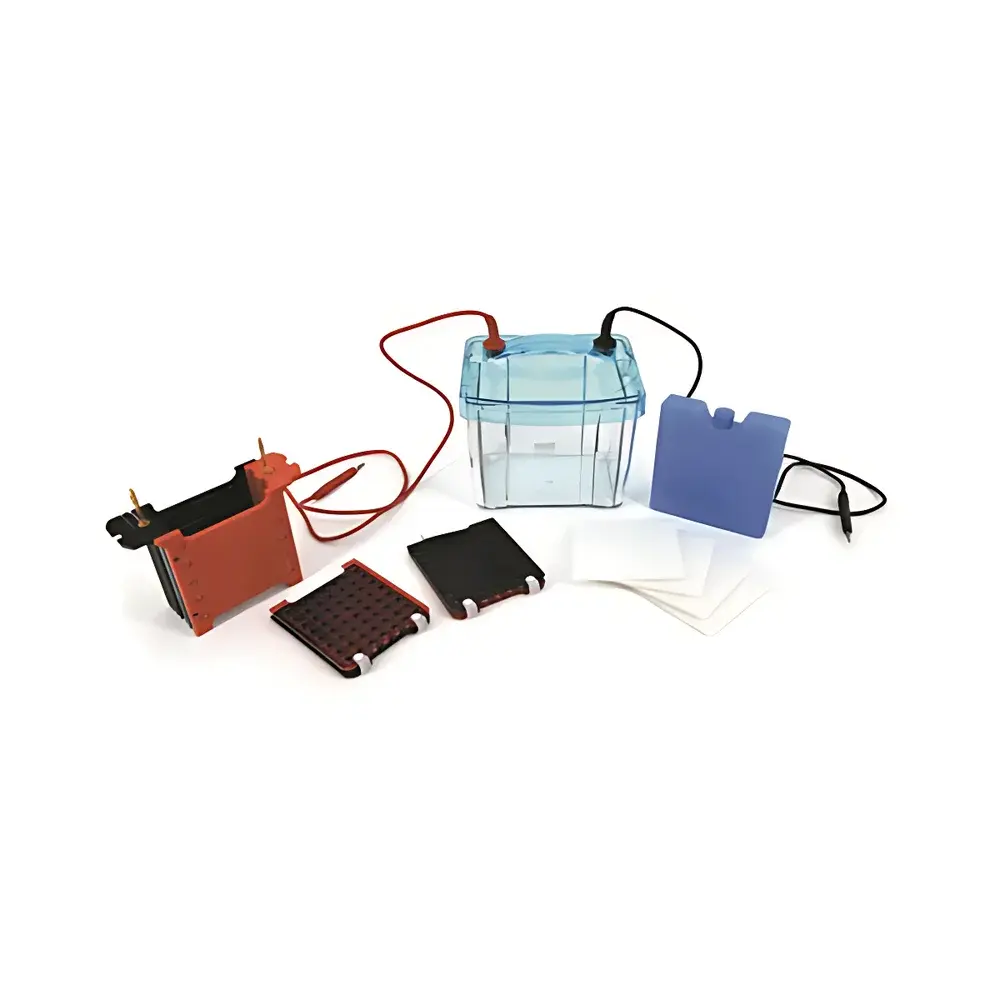
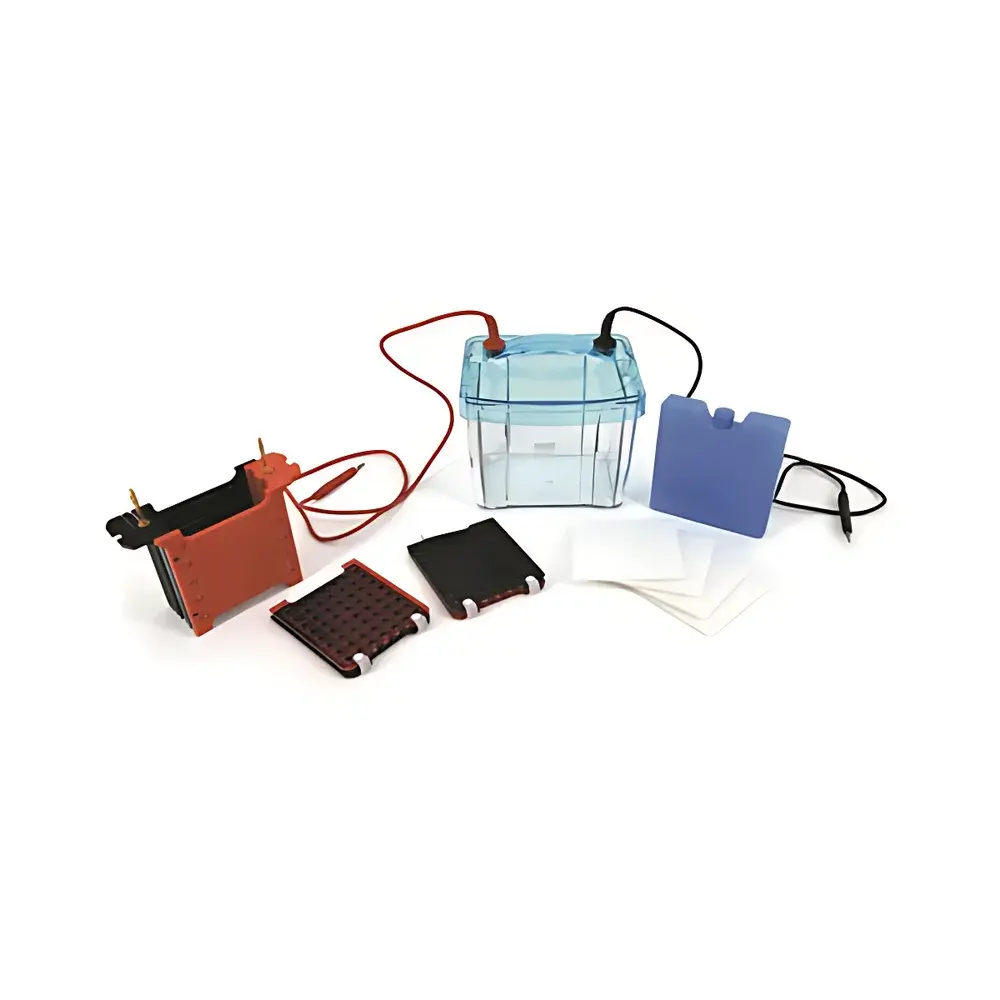
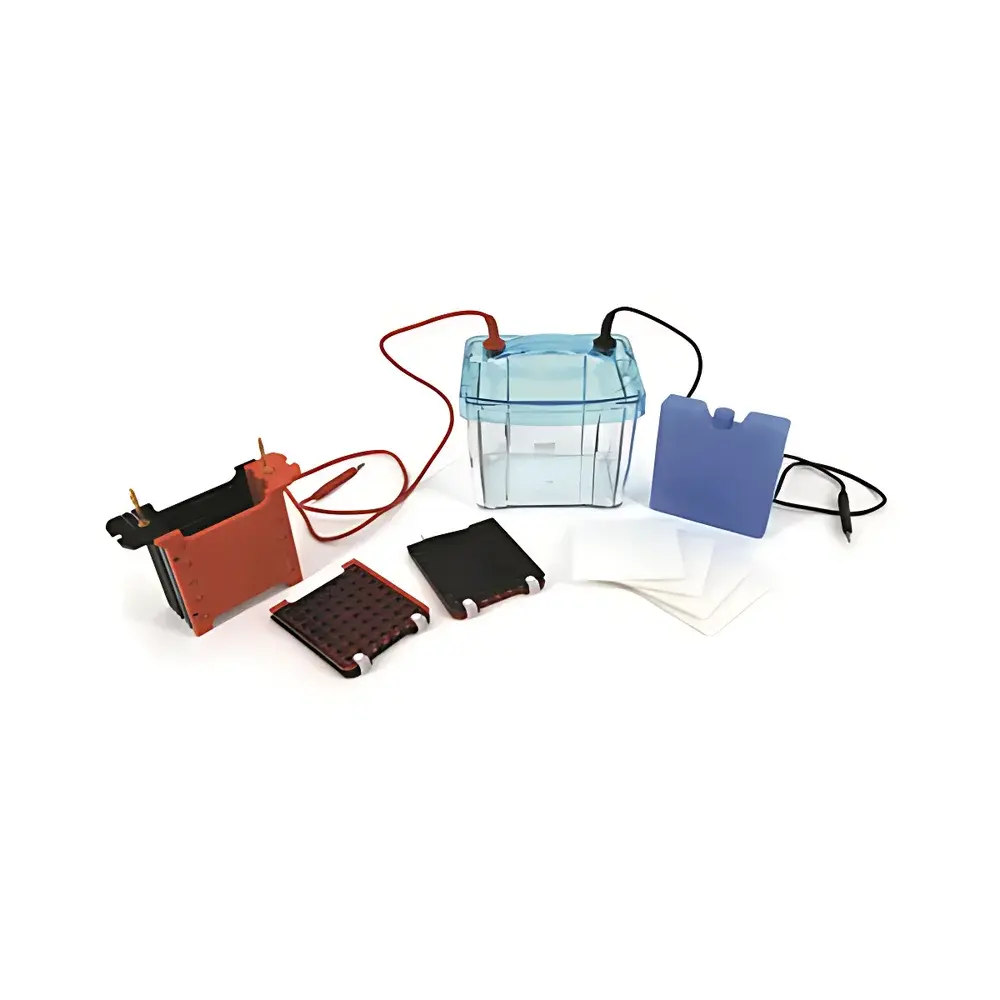
| Included Components | Transfer Support Plate (1), Transfer Hole Plate Assembly (2), Gel Support Fiber Pads (4), Upper Cover (1), Lower Tank (1), Electrophoresis Leads (1 pair), Cooling Ice Box (1) |
Overview
The LY DYCZ-40G is a compact, semi-dry electrophoretic transfer apparatus engineered for reliable and reproducible protein or nucleic acid blotting from polyacrylamide or agarose gels onto solid-phase membranes—including nitrocellulose (NC), polyvinylidene difluoride (PVDF), and nylon membranes. Unlike wet-transfer systems, the DYCZ-40G employs a semi-dry configuration in which filter papers saturated with transfer buffer serve as both conductive medium and thermal interface between gel/membrane sandwiches and parallel stainless-steel electrodes. This design enables rapid, low-resistance current flow with minimal joule heating—critical for preserving epitope integrity during Western blot workflows and minimizing diffusion artifacts common in prolonged wet transfers. The unit operates exclusively with an external DC power supply (e.g., LY DYCZ-25D, not included), supporting programmable voltage and current control to meet protocol-specific demands across molecular biology, immunology, and translational research laboratories.
Key Features
- Optimized semi-dry architecture with dual parallel electrode plates ensuring uniform electric field distribution across the entire 95 × 110 mm active transfer area.
- High-transparency polycarbonate housing injection-molded in color-coded segments—blue for cathode-side orientation and red for anode-side—to eliminate assembly errors and guarantee correct gel–membrane stacking polarity.
- Integrated cooling ice box compartment accommodates standard laboratory ice packs, enabling temperature stabilization during high-current transfers and reducing risk of protein denaturation or membrane wrinkling.
- Modular component layout: includes two transfer hole plate assemblies, four gel support fiber pads, and precision-machined upper/lower chambers that interlock via alignment pins for repeatable sandwich compression without clamps or screws.
- Low-profile footprint (175 × 163 × 165 mm) and lightweight construction (2.5 kg) facilitate benchtop integration and compatibility with laminar flow hoods or cold rooms.
- No internal electronics or display—designed strictly as a passive transfer chamber to maximize compatibility with regulated power supplies meeting IEC 61010-1 safety standards.
Sample Compatibility & Compliance
The DYCZ-40G supports standard slab-gel formats used in SDS-PAGE, native PAGE, and DNA/RNA electrophoresis. Its 95 × 110 mm gel support area aligns with common mini-gel cassettes and is compatible with pre-cast gradient gels up to 1.5 mm thickness. Membrane compatibility includes NC (0.2 µm and 0.45 µm pore sizes), PVDF (activated and non-activated), and charged nylon membranes. All structural materials comply with RoHS Directive 2011/65/EU and are free of phthalates and halogenated flame retardants. While the apparatus itself does not carry CE or UL certification, its mechanical design conforms to ISO 13485-aligned manufacturing practices and supports GLP-compliant documentation when paired with validated power supplies and calibrated multimeters per ASTM E29-23 guidelines for significant figures in analytical instrumentation.
Software & Data Management
As a hardware-only transfer module, the DYCZ-40G does not incorporate embedded firmware, microprocessors, or digital interfaces. It functions entirely as a passive electrochemical cell—eliminating data logging requirements and simplifying validation pathways under FDA 21 CFR Part 11. Experimental parameters (voltage, current, time) are set externally via the connected power supply, whose audit trail capabilities (if present) govern regulatory compliance. Users deploying this system in GMP environments routinely document transfer conditions using paper-based lab notebooks or LIMS-integrated electronic records linked to instrument-specific SOPs (e.g., SOP-BLOT-004). Calibration verification is performed quarterly using NIST-traceable digital multimeters to confirm open-circuit voltage accuracy within ±2% and current output linearity across 10–500 mA ranges.
Applications
- Western blotting for qualitative and semi-quantitative detection of target proteins following SDS-PAGE separation.
- Southern and Northern blotting for DNA and RNA hybridization studies requiring high-fidelity nucleic acid immobilization.
- Antibody validation workflows involving serial dilution blots and spike-in controls.
- Phosphoproteomics and post-translational modification analysis where low-heat transfer preserves labile modifications.
- Teaching laboratories emphasizing hands-on understanding of electroblotting principles, including field strength calculation (V/cm), buffer ion mobility, and Ohm’s law application in electrophoretic systems.
FAQ
Is the DYCZ-40G compatible with constant-current or constant-voltage transfer protocols?
Yes—the apparatus supports both modes, provided the external power supply offers independent current and voltage regulation. Constant-current (e.g., 0.8 mA/cm²) is recommended for consistent transfer efficiency across varying gel resistances.
What buffer systems are validated for use with this unit?
Standard Towbin buffer (25 mM Tris, 192 mM glycine, 20% methanol, pH ~8.3) and CAPS buffer (10 mM CAPS, 10% methanol, pH 11.0) are routinely employed. Methanol concentration must remain ≥10% to ensure membrane adhesion and prevent gel swelling.
Can the DYCZ-40G be used for high-molecular-weight protein transfer?
Yes—optimized semi-dry conditions (e.g., 25 V, 1.2 A, 60 min with pre-chilled buffer and ice pack) achieve efficient transfer of proteins >200 kDa when combined with 0.2 µm NC membranes and extended equilibration steps.
Does the unit include a built-in timer or display?
No—timing and parameter monitoring are managed entirely by the external power supply. This design enhances long-term reliability and eliminates single-point electronic failure modes.
How often should the fiber pads and hole plates be replaced?
Fiber pads should be discarded after each use to avoid cross-contamination. Hole plate assemblies may be reused indefinitely if cleaned with deionized water and air-dried; inspect regularly for warping or electrode pitting.




