
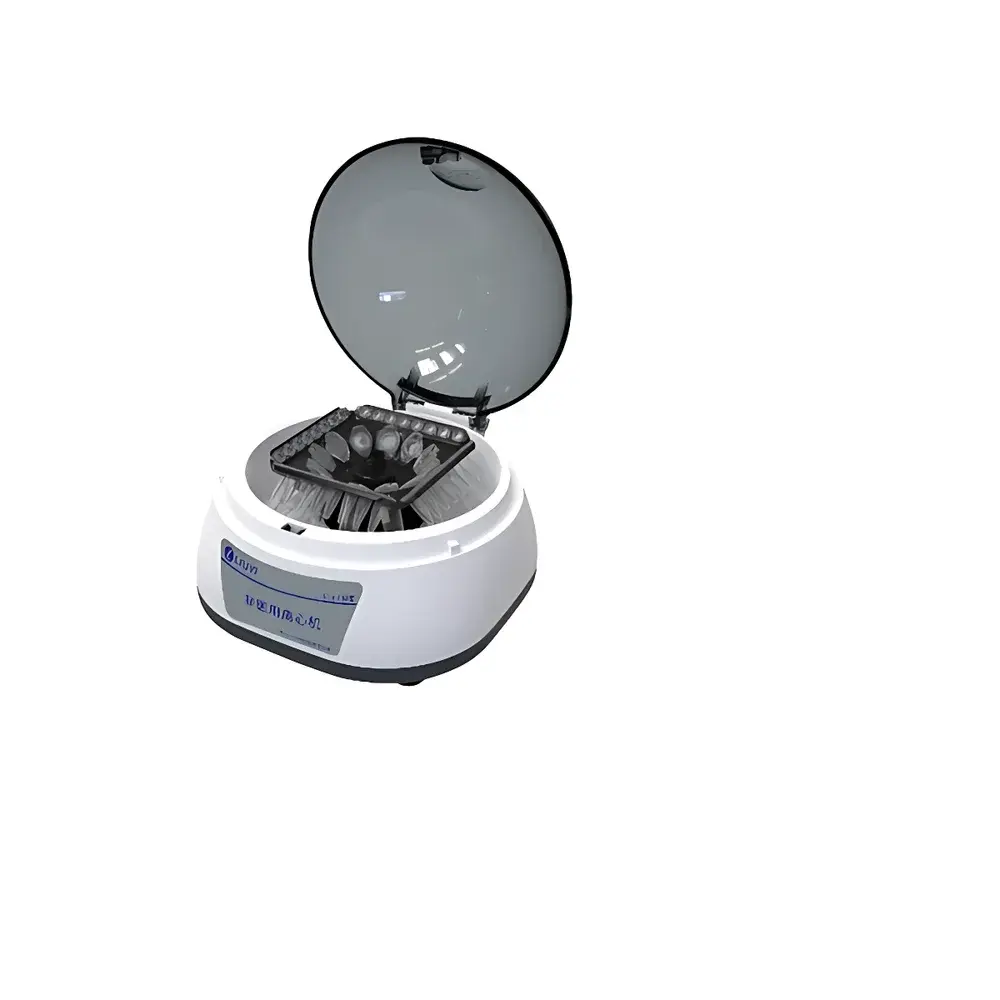
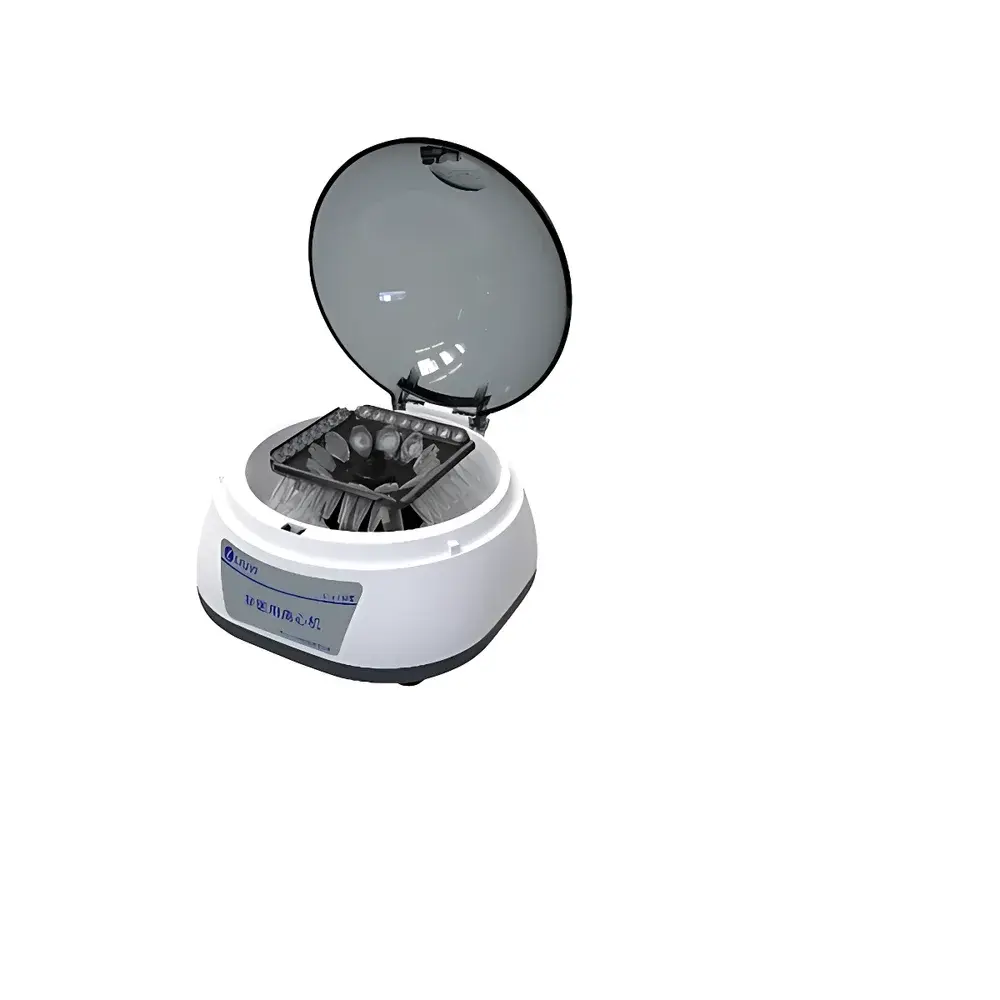
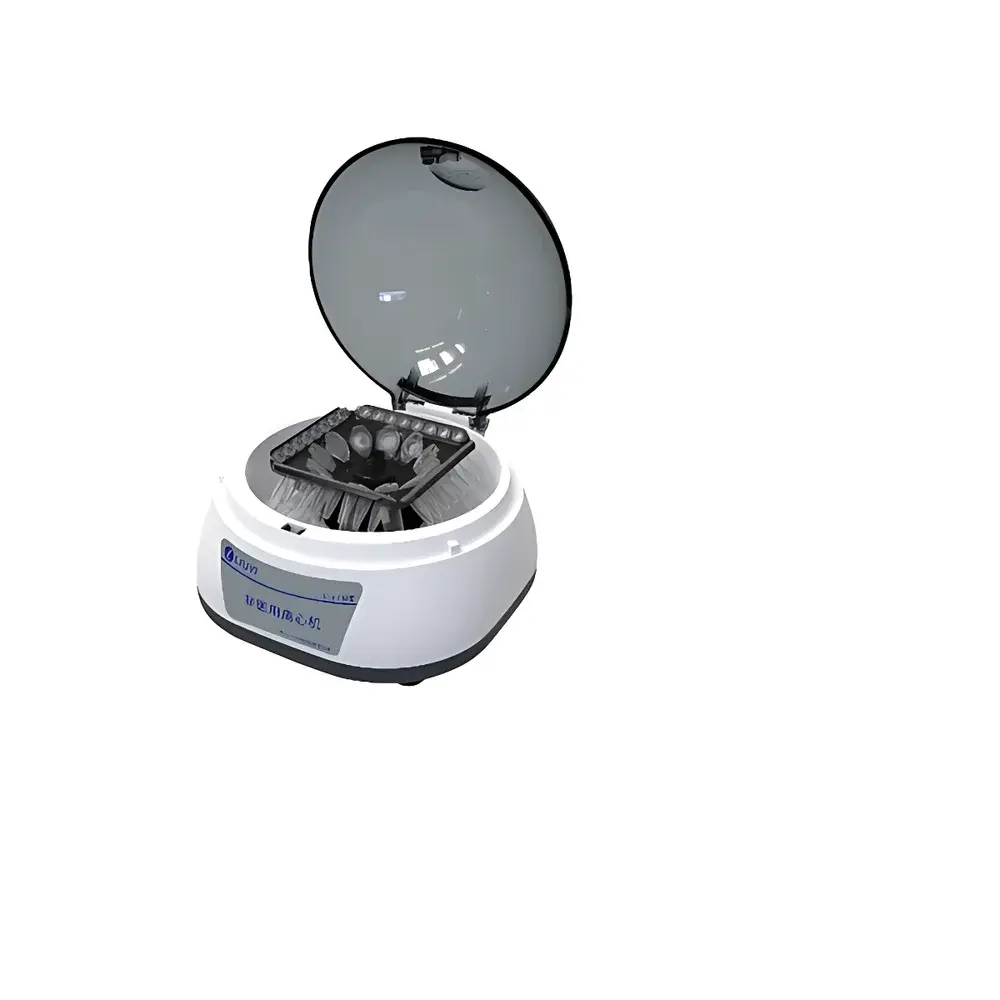
LY WD-2105D Benchtop Low-Speed Centrifuge (Model 131-0540)
| Brand | LY |
|---|---|
| Origin | Beijing, China |
| Manufacturer Type | Authorized Distributor |
| Instrument Type | Benchtop Centrifuge |
| Speed Range | Up to 7,000 rpm ±5% |
| Max RCF | 3,286 × g |
| Rotor Capacity | Dual-configuration rotor — 12 × (0.2/0.5/1.5/2.0 mL tubes) or 4 × 8-position PCR strip carriers (0.2 mL) + 12 × (0.5/1.0 mL tubes) |
| Dimensions (W×D×H) | 185 × 180 × 135 mm |
| Noise Level | <47 dB(A) at max speed |
| Acceleration/Deceleration Time | <12 s / <15 s |
| Input Power | 25 W |
| Voltage | AC 100–240 V / DC 24 V |
| Operating Environment | 5–40 °C, ≤80% RH |
| Display | Fixed-speed LCD |
| Compliance | Designed for non-medical laboratory use per IEC 61010-1 safety requirements |
Overview
The LY WD-2105D Benchtop Low-Speed Centrifuge (Model 131-0540) is an engineered solution for routine sedimentation-based separation in research and quality control laboratories. It operates on the principle of centrifugal force generation via controlled rotational acceleration, enabling differential sedimentation of suspended particles or immiscible liquid phases based on density, size, and shape. Unlike high-speed or ultracentrifuges designed for macromolecular fractionation, this instrument is optimized for robust, repeatable low-G separations—ideal for pelleting cells, precipitates, or particulates from aqueous suspensions without inducing shear-induced denaturation or aerosol generation. Its compact footprint and energy-efficient 25 W motor make it suitable for shared lab spaces, biosafety cabinets, and QC benches where space, noise, and thermal load are constrained.
Key Features
- Fixed-speed operation with intuitive LCD interface for rapid parameter verification—no programmable protocols required for standard applications.
- Dual-configuration rotor design supports heterogeneous tube formats in a single run: twelve positions accommodating 0.2–2.0 mL microcentrifuge tubes, plus four independent 8-well PCR strip carriers (0.2 mL), enabling parallel processing of diverse sample types without rotor swaps.
- Mechanically balanced rotor assembly with precision-machined aluminum construction ensures stable operation at 7,000 rpm ±5%, delivering consistent RCF of up to 3,286 × g across all loaded positions.
- Acoustically damped housing reduces operational noise to <47 dB(A) at maximum speed—critical for open-plan laboratories and teaching environments.
- Integrated safety interlock prevents lid opening during rotation; automatic rotor detection ensures only compatible rotors engage drive coupling.
- Fast acceleration (<12 s) and deceleration (<15 s) minimize total cycle time while maintaining mechanical longevity under repeated daily use.
Sample Compatibility & Compliance
The WD-2105D accepts standard conical-bottom polypropylene microcentrifuge tubes (0.2–2.0 mL) and rigid PCR strips, supporting common workflows in molecular biology, environmental testing, and raw material QC. It is explicitly designated for non-medical, non-diagnostic applications and does not comply with ISO 13485 or FDA 21 CFR Part 820 requirements for medical device manufacturing. However, its electrical safety conforms to IEC 61010-1:2010 (Ed. 3.0) for laboratory equipment, including protection against electric shock, mechanical hazards, and abnormal temperature rise. The unit meets RoHS Directive 2011/65/EU for restricted substances and is CE-marked for use within the European Economic Area under the Low Voltage Directive (2014/35/EU). It is not validated for GLP or GMP environments requiring full audit trails or electronic records per 21 CFR Part 11.
Software & Data Management
This model operates without embedded software or connectivity interfaces—consistent with its role as a dedicated, maintenance-light instrument for standardized protocols. All operational parameters are fixed at factory setting (7,000 rpm); no firmware updates, data logging, or USB export capabilities are included. Users record run conditions manually or integrate timing via external lab timers. The absence of digital control logic eliminates cybersecurity risks associated with networked instruments and simplifies validation documentation for regulated non-clinical labs performing routine particulate removal or phase separation.
Applications
- Cell harvesting: Pelleting mammalian or microbial cells from culture media at ≤3,286 × g without membrane disruption.
- Nucleic acid prep support: Clearing lysates prior to column-based or magnetic bead purification steps.
- Environmental analysis: Concentrating suspended solids from water samples for gravimetric or elemental analysis (e.g., ASTM D5907, ISO 11923).
- Food & beverage QC: Separating fat globules, starch granules, or insoluble additives from homogenized extracts.
- Reagent preparation: Clarifying antibody stocks, enzyme solutions, or buffer formulations containing trace aggregates.
FAQ
Is the WD-2105D suitable for clinical diagnostics?
No. This unit is explicitly classified as non-medical and lacks regulatory certification for diagnostic use (e.g., CLIA, IVDR, or FDA 510(k)).
Can I use it with 15 mL or 50 mL conical tubes?
No. The rotor geometry is limited to microcentrifuge tubes and PCR strips; larger formats require compatible swing-bucket or fixed-angle rotors not supplied with this model.
Does it support variable speed control?
No. It operates exclusively at a fixed 7,000 rpm ±5%; speed adjustment is not possible.
What maintenance is required?
Routine cleaning of rotor chamber and lid gasket with 70% ethanol; annual visual inspection of rotor integrity and drive shaft coupling is recommended.
Is rotor balancing mandatory?
Yes. Symmetrical loading is required—even-numbered tube placement with matched mass distribution—to prevent vibration-induced wear or premature bearing failure.



