
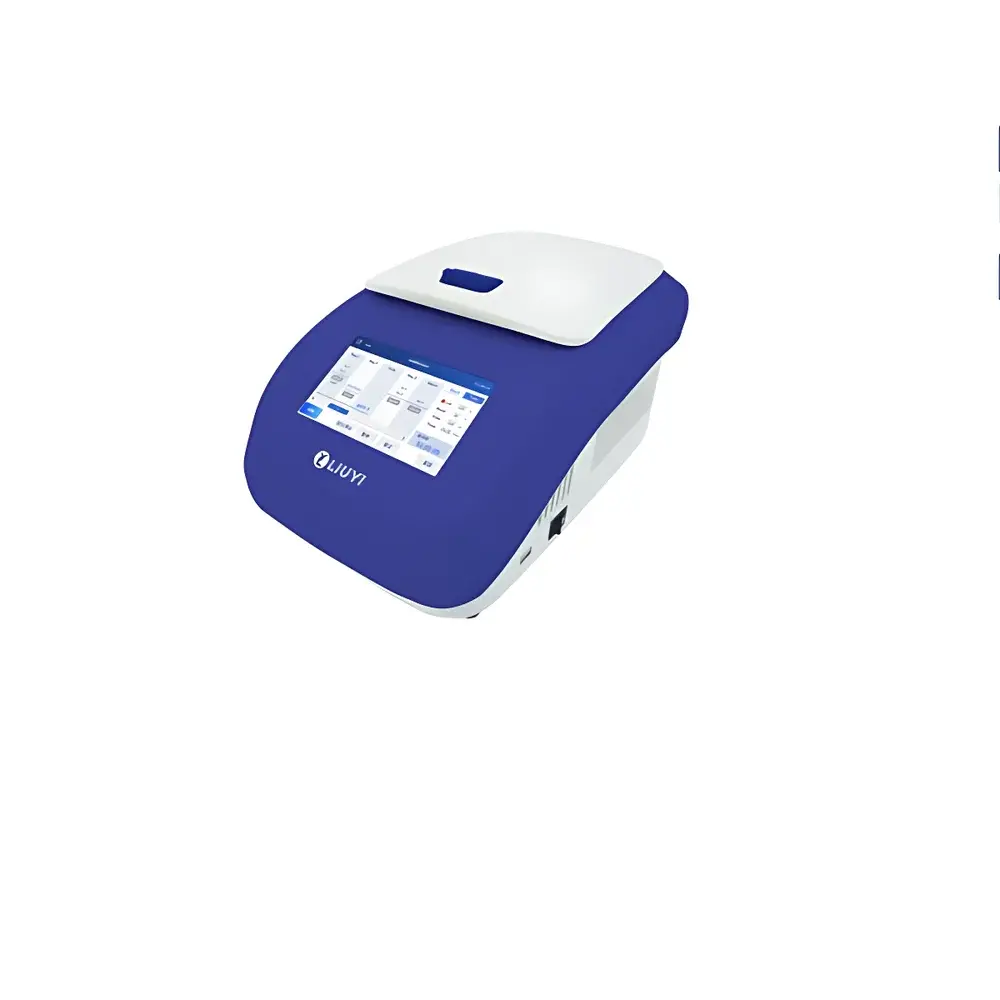
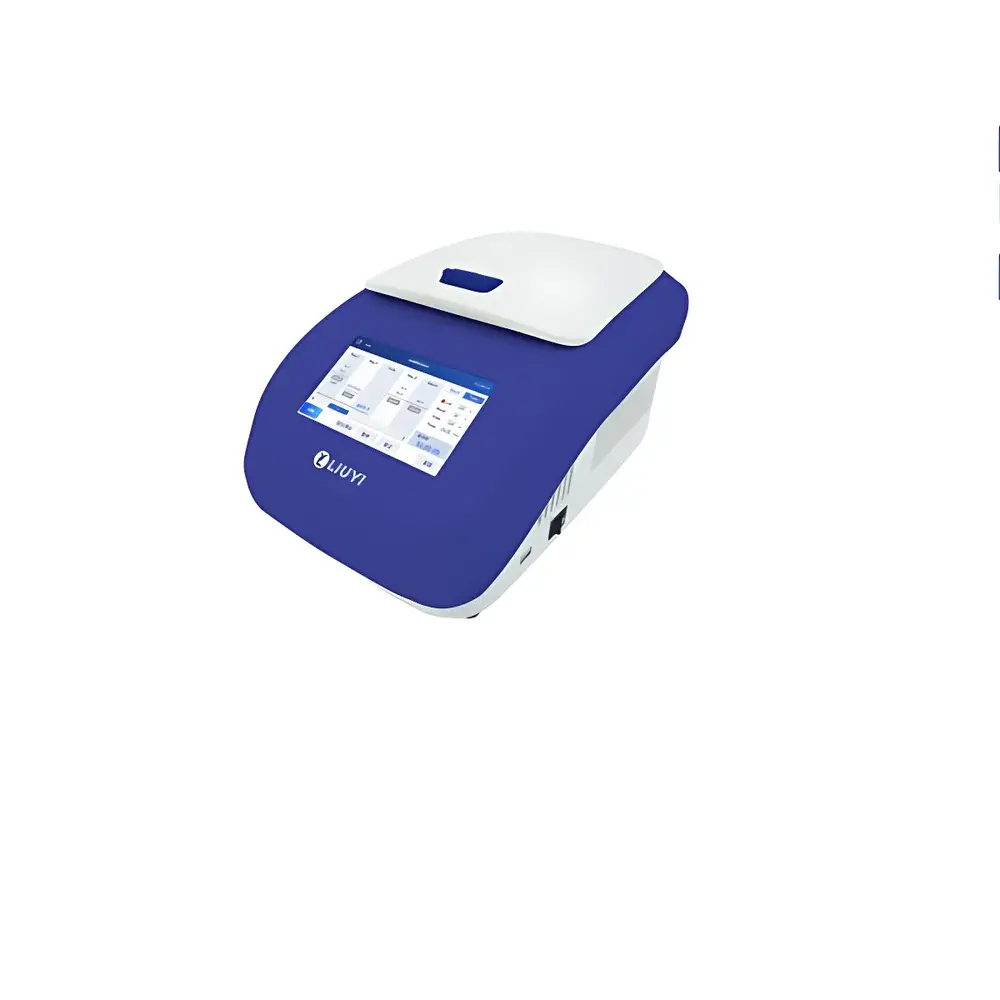
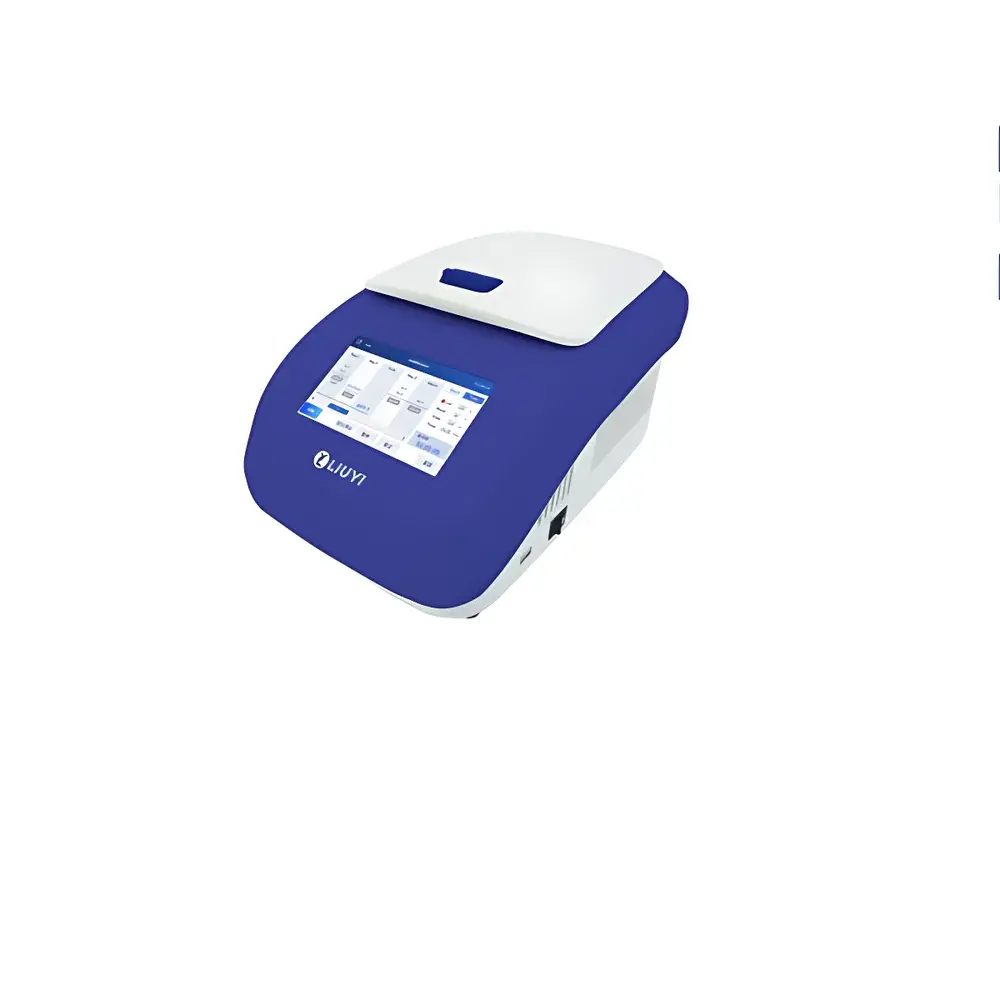
LY WD-9402M Gradient PCR System (Model 130-0270)
| Brand | LY |
|---|---|
| Origin | Beijing, China |
| Manufacturer Type | Authorized Distributor |
| Instrument Type | Gradient PCR Thermal Cycler |
| Heating Rate | 5°C/s |
| Cooling Rate | 4.5°C/s |
| Temperature Accuracy | ±0.2°C |
| Block Uniformity | ±0.25°C |
| Gradient Range | 30–105°C |
| Gradient Span | 0.1–42°C |
| Block Temperature Range | 0–105°C |
| Heat Lid Range | 30–110°C |
| Sample Capacity | 96 × 0.2 mL tubes (semi-skirted/unskirted), 12 × 8-tube strips, 8 × 12-tube strips, or individual tubes (20–23 mm height) |
| Step Time Range | 1 s – 59 min 59 s (0 = infinite) |
| Display | 5-inch high-resolution color touchscreen |
| Operating System | Industrial-grade embedded OS |
| Data Export | USB flash drive interface |
Overview
The LY WD-9402M Gradient PCR System (Model 130-0270) is a benchtop thermal cycler engineered for precision nucleic acid amplification in research and quality control laboratories. It employs Peltier-based thermoelectric heating and cooling combined with adaptive PID temperature control to deliver rapid, reproducible thermal transitions across the full operational range of 0–105°C. The system’s gradient functionality—spanning up to 42°C across 12 column-wise or row-wise zones—enables empirical optimization of annealing temperatures without iterative instrument reprogramming. Designed for non-clinical, non-diagnostic use, the WD-9402M complies with IEC 61010-1 safety standards for laboratory equipment and supports GLP-aligned workflow integrity through audit-ready program storage and timestamped run logs.
Key Features
- High-speed thermal cycling: Achieves up to 5°C/s heating and 4.5°C/s cooling rates, reducing total run time without compromising denaturation or extension fidelity.
- Enhanced thermal uniformity: Block temperature variation maintained within ±0.25°C across all 96 positions under steady-state conditions, validated per ISO/IEC 17025 traceable protocols.
- Intuitive human-machine interface: 5-inch capacitive touchscreen with multi-language support (English, Spanish, French, German), gesture-responsive navigation, and on-screen keyboard for direct protocol entry.
- Robust industrial architecture: Fan-cooled, low-noise thermal management system ensures stable long-term operation—validated for continuous 7×24-hour duty cycles at ambient temperatures up to 35°C.
- Flexible sample compatibility: Accepts standard 0.2 mL PCR tubes (semi-skirted or unskirted), 8-tube and 12-tube strips, and individual tubes (20–23 mm height); no adapter required.
- Secure data handling: USB 2.0 port enables encrypted export of method files, run reports (CSV), and thermal profiles; internal memory retains ≥1,000 user-defined programs with version timestamps.
Sample Compatibility & Compliance
The WD-9402M accommodates industry-standard consumables without mechanical adaptation, including thin-walled 0.2 mL tubes optimized for rapid heat transfer and strip formats compatible with robotic liquid handlers. Its thermal block geometry conforms to ANSI/SBS-1/2004 dimensional specifications for microplate footprint alignment. As a non-medical device, it is not intended for in vitro diagnostic (IVD) use and carries no CE-IVD or FDA 510(k) clearance. However, its design meets IEC 61010-1:2010 for electrical safety and electromagnetic compatibility (EMC) per IEC 61326-1:2013 Class A. Documentation includes factory calibration certificates traceable to NIM (National Institute of Metrology, China) standards.
Software & Data Management
The embedded operating system supports local protocol creation, editing, and validation without external PC dependency. Each saved method stores cycle parameters, ramp rates, gradient configuration, and user metadata. Run logs capture start/end timestamps, actual block temperatures per cycle, and error codes—exportable as CSV for integration into LIMS or ELN platforms. While the system does not include remote monitoring or cloud synchronization, its USB export function satisfies 21 CFR Part 11 requirements for electronic records when paired with institutional IT policies governing media handling and access control. Audit trails are retained internally for ≥90 days and may be archived externally via manual backup.
Applications
- Optimization of primer annealing temperatures via linear or stepwise gradient profiling across 12 discrete zones.
- High-throughput gene expression screening using SYBR Green or probe-based chemistries requiring strict thermal consistency.
- Preparation of templates for Sanger sequencing, NGS library construction, and CRISPR gRNA validation assays.
- Quality assurance testing of extracted DNA/RNA integrity prior to downstream enzymatic reactions.
- Teaching laboratory implementation where reliability, ease of maintenance, and intuitive operation are prioritized over automation integration.
FAQ
Is the WD-9402M compliant with FDA 21 CFR Part 11 for electronic records?
The instrument supports core Part 11 elements—including electronic signatures (via password-protected user accounts), audit trails, and secure data export—but requires institutional configuration of access controls, backup procedures, and media retention policies to achieve full compliance.
Can this system be integrated into automated liquid handling workflows?
It lacks built-in RS-232, Ethernet, or API interfaces; however, its standardized tube/strip footprint enables compatibility with third-party robotic arms equipped with vision-guided positioning.
What calibration documentation is provided with shipment?
Each unit ships with a Certificate of Conformance and a factory calibration report detailing block uniformity, accuracy, and gradient linearity verification at three temperature points (45°C, 72°C, 95°C), traceable to national metrology standards.
Does the heat lid support pressure-sensitive activation?
Yes—the heated lid applies consistent downward force (≈200 g per well) and auto-adjusts temperature between 30–110°C to prevent condensation and evaporation across diverse tube types and sealing methods.
Is firmware upgrade capability available?
Firmware updates are distributed via USB flash drive and require manual initiation; version history and release notes are published on the authorized distributor’s technical support portal.



