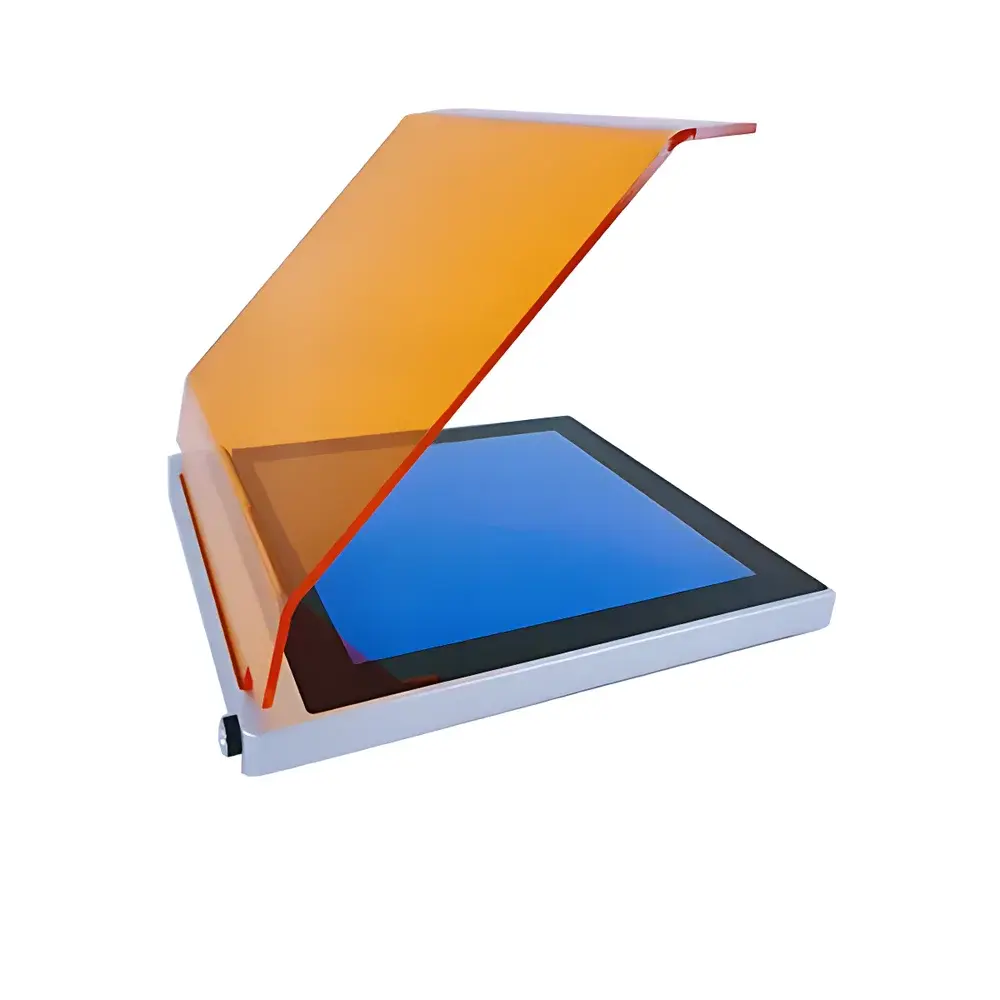
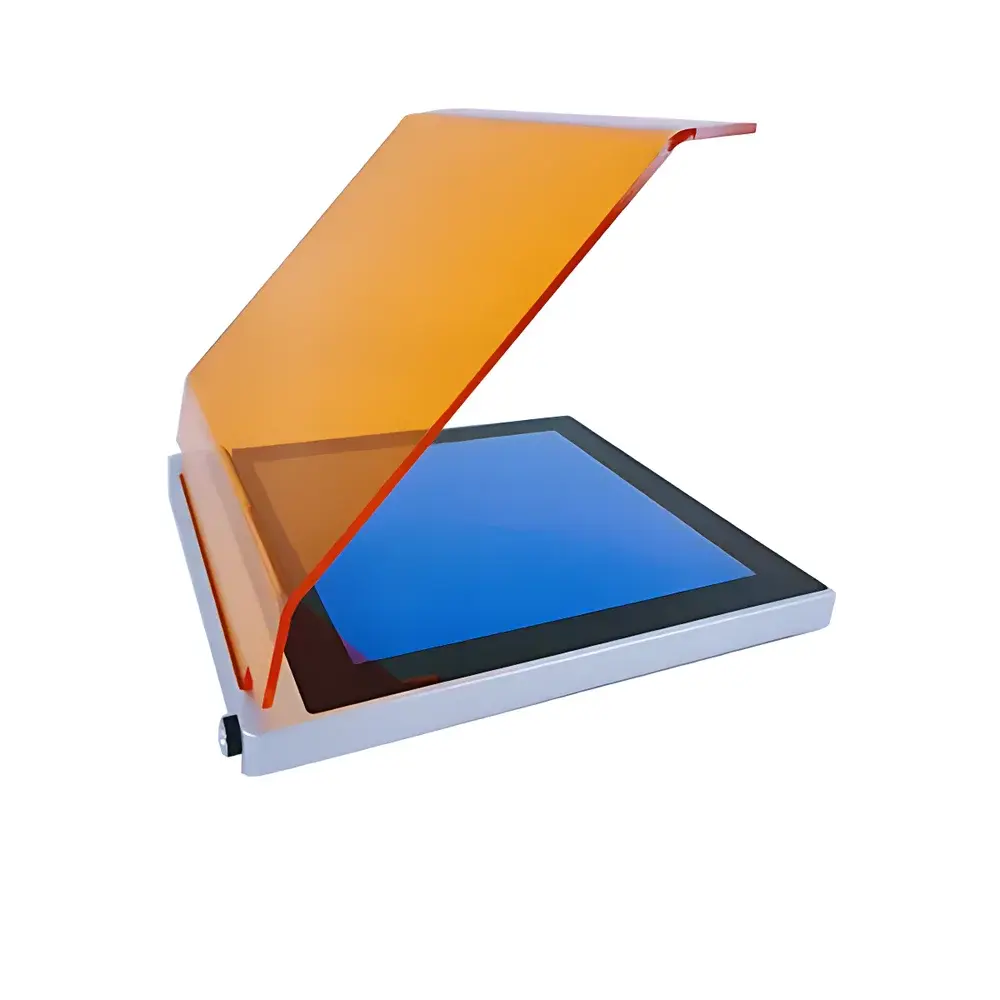
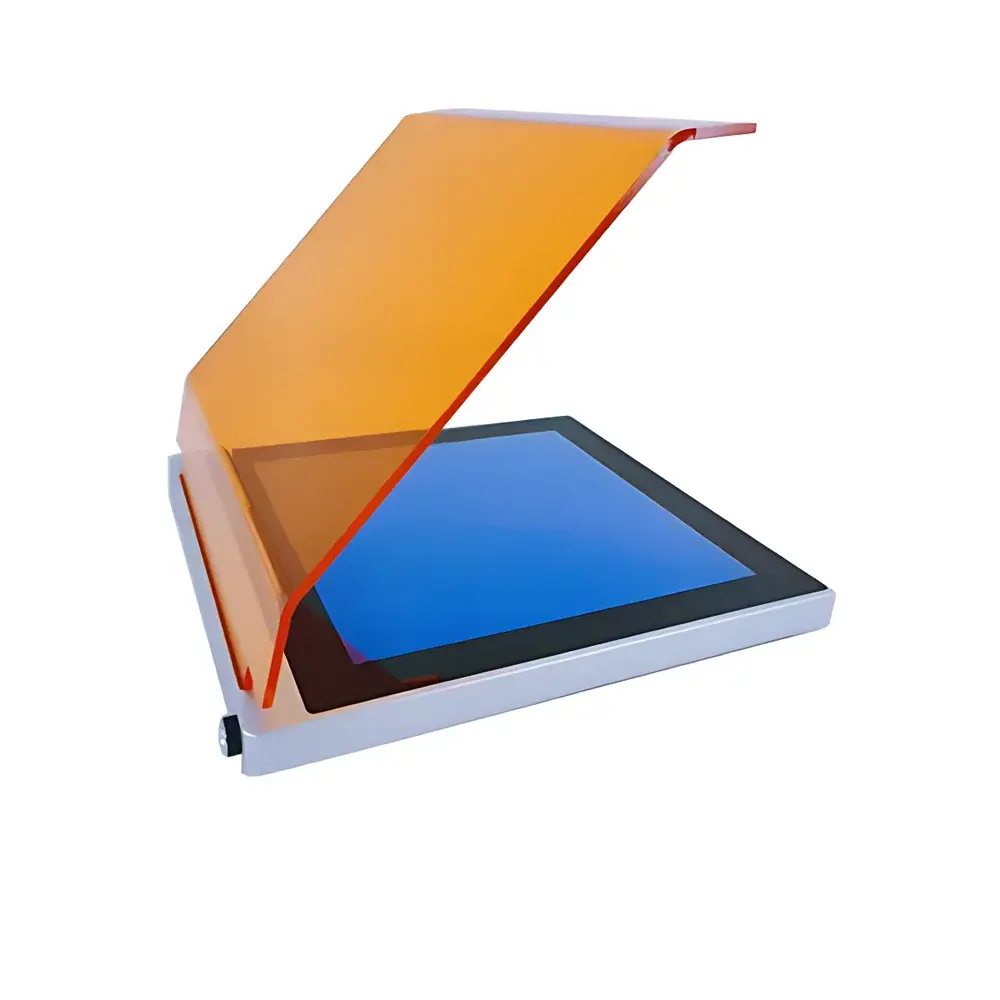
LY WD-9403X LED Blue Light Transilluminator and Gel Cutter (Model 130-0362)
| Brand | LY |
|---|---|
| Origin | Beijing, China |
| Instrument Type | Benchtop |
| Blue Light Wavelength | 470 nm |
| Filter Type | Magnetic Amber Filter |
| UV Filter Dimensions | 18 × 20.5 × 2.2 cm |
| Transillumination Area | 15 × 15 cm |
| Power Consumption | 20 W |
| LED Lifetime | ≥30,000 h |
| Uniformity | ≥90% |
| Brightness Control | Continuous Rotary Adjustment |
| Input Voltage | AC 200–240 V |
| Housing Dimensions (L×W×H) | 19 × 20.5 × 1.5 cm |
| Max Gel Cutting Area | 15 × 15 cm |
| Filter–Housing Design | Removable for Cleaning |
Overview
The LY WD-9403X LED Blue Light Transilluminator and Gel Cutter (Model 130-0362) is a compact, benchtop instrument engineered for safe, high-fidelity visualization and precise excision of nucleic acid and protein bands in agarose or polyacrylamide gels. Unlike conventional UV transilluminators, this system employs narrow-band 470 nm blue LED illumination to excite commercially available blue-light–compatible nucleic acid stains (e.g., SYBR Safe, GelGreen, BlueView, and other non-mutagenic alternatives), eliminating exposure to hazardous short-wave UV radiation (254 nm or 302 nm). Its optical architecture is based on collimated, edge-lit LED arrays with engineered light diffusion to achieve ≥90% intensity uniformity across the 15 × 15 cm active transillumination area—critical for quantitative band comparison and reproducible gel documentation. The device operates without requiring UV-blocking eyewear or face shields, significantly reducing occupational safety overhead while maintaining compliance with laboratory biosafety guidelines for routine molecular biology workflows.
Key Features
- High-uniformity 470 nm blue LED array delivering stable, flicker-free illumination—optimized for consistent band contrast and digital image capture.
- Magnetic amber filter assembly (18 × 20.5 × 2.2 cm) designed for rapid attachment/detachment; enables efficient cleaning and prevents residue buildup that could compromise optical clarity.
- Ultra-slim housing (19 × 20.5 × 1.5 cm; ~15 mm profile) minimizing benchtop footprint while accommodating standard mini-gel formats up to 15 × 15 cm.
- Continuous rotary brightness control allows real-time optimization of signal-to-noise ratio for diverse stain concentrations and gel thicknesses.
- Passive thermal management architecture ensures stable output over extended operation (>8 hours continuous use), with no audible fan noise or airflow disturbance near sensitive samples.
- LED lifetime rated at ≥30,000 hours under nominal operating conditions—equivalent to >10 years of typical academic or QC lab usage at 8 h/day.
Sample Compatibility & Compliance
The WD-9403X is validated for use with all major blue-light–excitable nucleic acid dyes compliant with ISO 15190:2020 (Laboratory safety) and CLSI EP25-A (Evaluation of reagent stability and performance). It supports standard electrophoretic formats including Mini-PROTEAN®, Bio-Rad Criterion™, and Invitrogen NuPAGE™ gels. No UV-C or UV-B emission is generated; therefore, it does not require UV-rated enclosures, interlock systems, or annual radiation safety audits per IEC 61000-4-3 or ANSI Z136.1. The unit meets CE marking requirements for electromagnetic compatibility (EN 61326-1) and low-voltage directive (2014/35/EU). Its design aligns with GLP principles for traceable, operator-safe documentation workflows where visual inspection precedes downstream applications such as cloning, sequencing library prep, or mass spectrometry sample recovery.
Software & Data Management
While the WD-9403X operates as a standalone hardware module, its optical consistency and uniform illumination profile make it fully compatible with third-party gel documentation systems—including Bio-Rad ChemiDoc™, Azure Biosystems cSeries, and UVP VisionWorks® LS software—enabling automated band quantification, molecular weight estimation, and export of TIFF/PNG files with embedded EXIF metadata (exposure time, brightness setting, date/time stamp). When integrated into LIMS environments, the instrument’s predictable performance supports audit-ready records under FDA 21 CFR Part 11 when paired with electronic lab notebooks (ELNs) that enforce user authentication and change tracking.
Applications
- Visualization and excision of DNA/RNA fragments stained with SYBR Safe, GelRed (blue-light mode), or GreenView after agarose or native PAGE.
- Preparative gel purification for Sanger sequencing templates, CRISPR guide RNA validation, and RT-qPCR amplicon verification.
- Protein gel screening using blue-light–compatible fluorescent tags (e.g., CF™ dyes conjugated to antibodies or affinity probes).
- Teaching laboratory implementation—ideal for undergraduate molecular biology courses due to inherent safety, low power draw, and intuitive manual controls.
- QC release testing in biomanufacturing settings where UV-induced DNA damage must be avoided during plasmid or viral vector analysis.
FAQ
Is the 470 nm output suitable for all blue-light–compatible dyes?
Yes—this wavelength falls within the optimal excitation range (450–490 nm) for SYBR Safe, GelGreen, BlueView, and similar dyes certified for blue-light transillumination.
Can the magnetic filter be replaced with a custom optical filter?
The filter mount is standardized to accept 18 × 20.5 cm optical substrates with 2.2 cm thickness; users may install alternative bandpass or longpass filters provided mechanical and thermal tolerances are maintained.
Does the device support timed exposure for documentation systems?
No built-in timer is included; however, external shutter triggers or software-controlled exposure synchronization is fully supported via TTL or USB-based camera interfaces.
What maintenance is required beyond filter cleaning?
None—no consumables, lamps, or alignment procedures are needed. The solid-state LED array requires only periodic surface wipe-down with ethanol-dampened lint-free cloth.
Is the unit compatible with 110 V input?
No—it is configured exclusively for AC 200–240 V, 50/60 Hz operation. A step-up transformer is required for use in North America or Japan.