
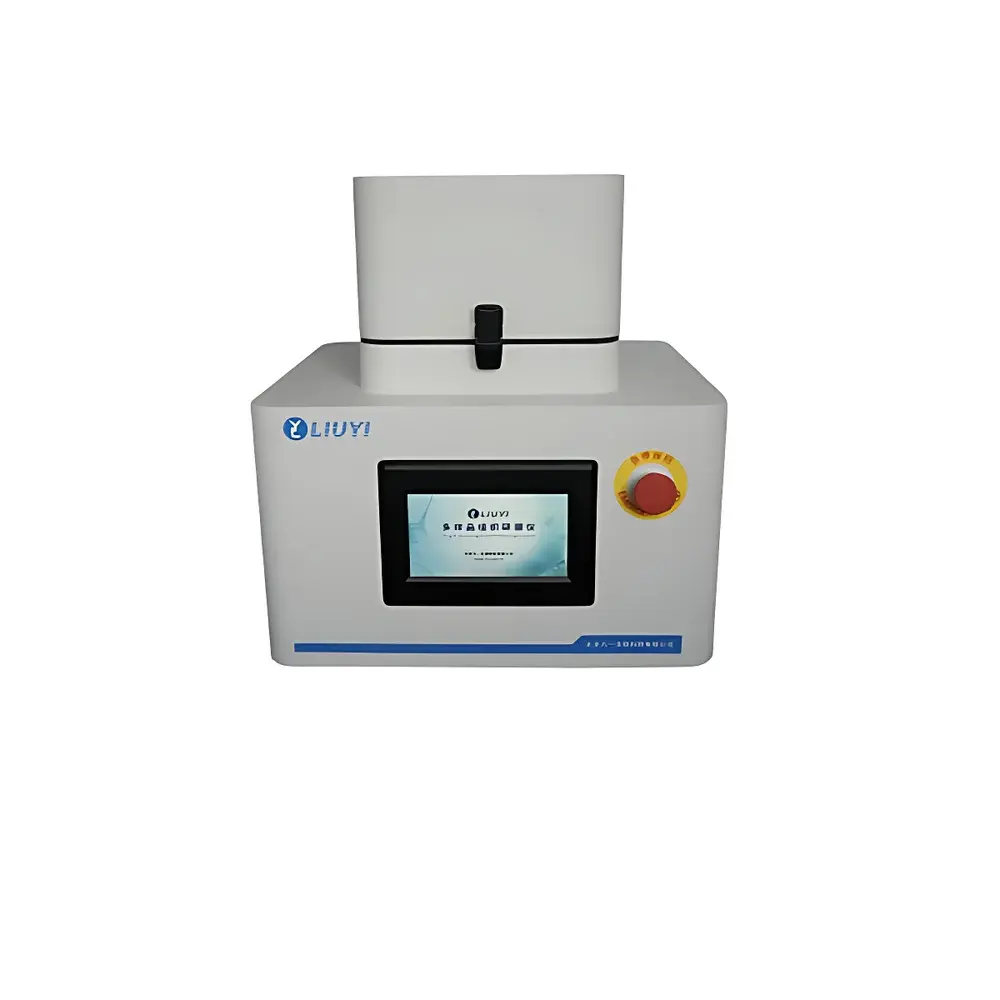
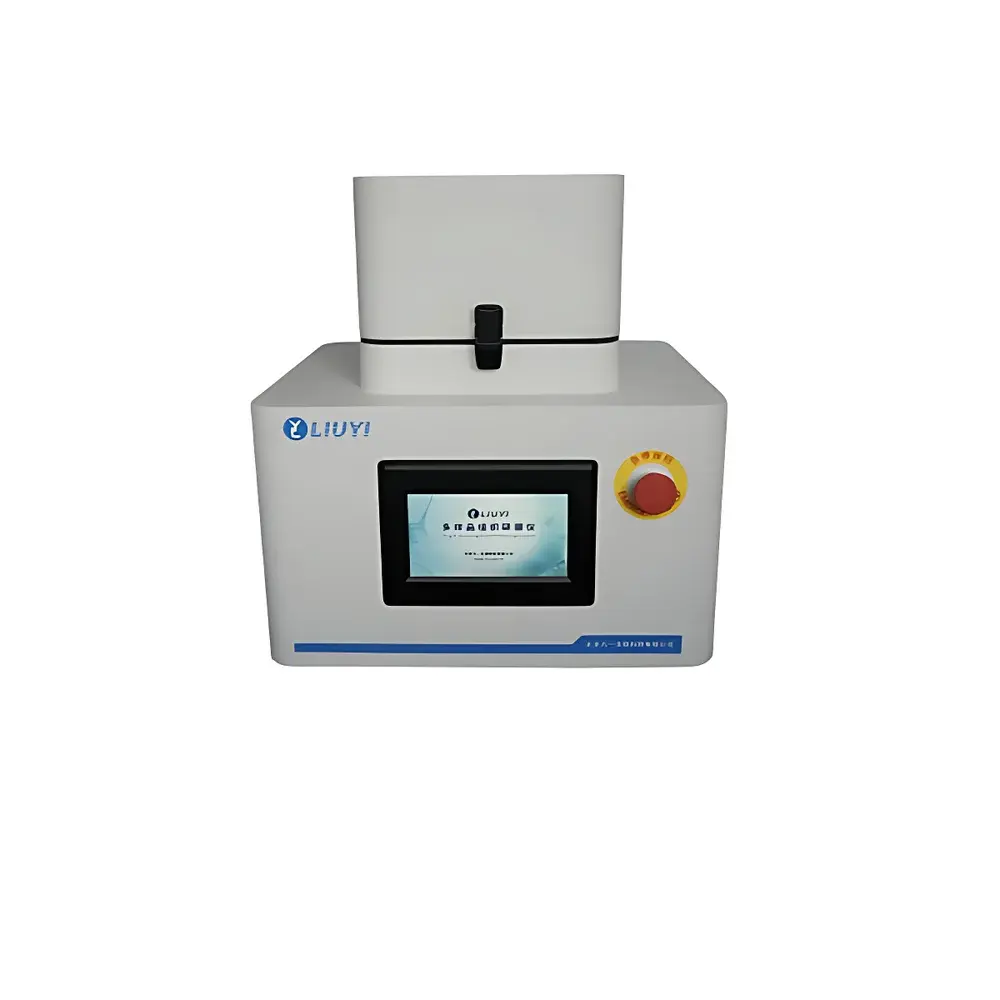
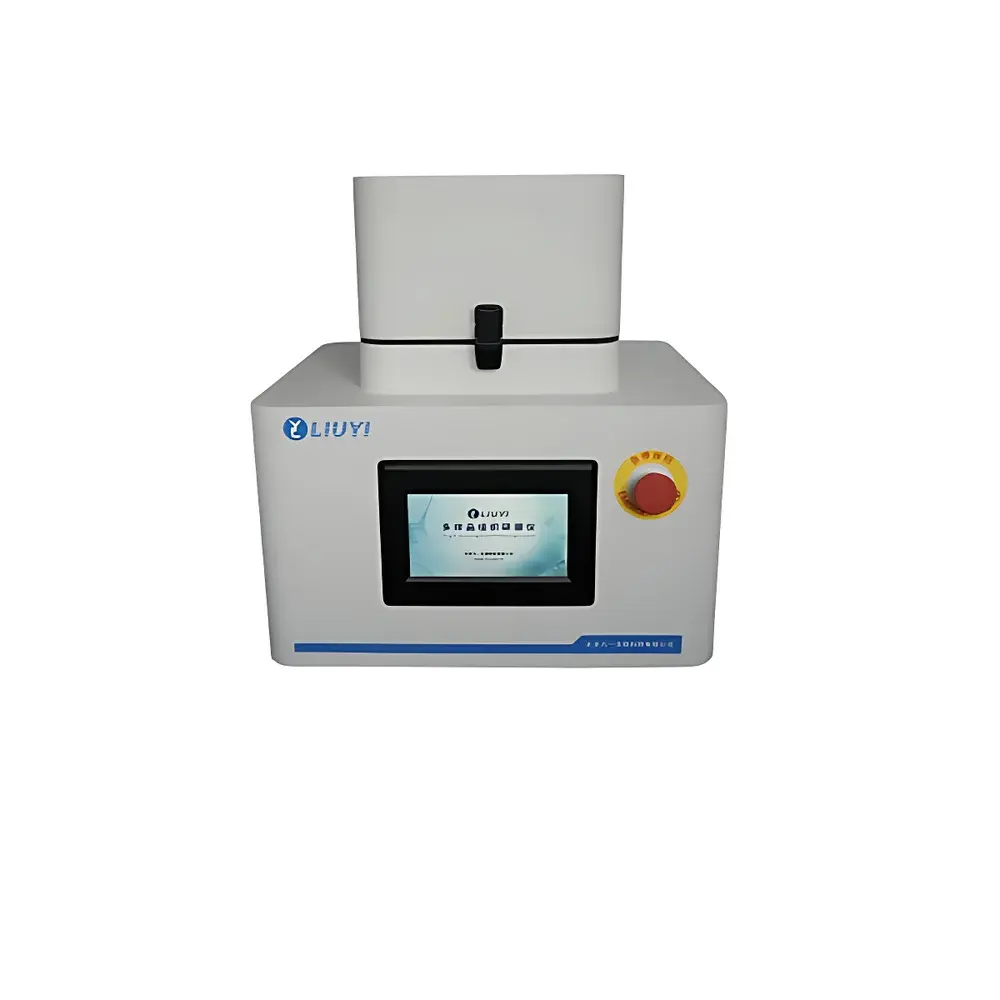
LY WD-9419A Multi-Sample Tissue Grinder
| Brand | LY |
|---|---|
| Origin | Beijing, China |
| Model | WD-9419A |
| Frequency Range | 30–70 Hz |
| Acceleration Time | ≤2 s |
| Deceleration Time | ≤2 s |
| Sample Capacity | 32×2 mL / 24×2 mL / 48×2 mL / 64×2 mL / 96×2 mL / 24×5 mL / 8×15 mL / 4×25 mL / 2×50 mL |
| Grinding Ball Diameter | 0.1–30 mm |
| Grinding Media Materials | Stainless Steel, Chrome Steel, Zirconia, Tungsten Carbide, Quartz Sand |
| Adapter Materials | PTFE, Alloy Steel, High-Strength Aluminum Alloy |
| Final Particle Size | ~5 µm |
| Cooling Mode | Optional Cryogenic or Ambient-Temperature Operation |
| Power Supply | AC 100–120 V / 200–240 V, 50/60 Hz |
| Dimensions (W×D×H) | 460 × 410 × 520 mm |
| Weight | 52 kg |
| Noise Level | <55 dB(A) |
| Safety Features | Emergency Stop Button, Lid Interlock, Overload Protection |
Overview
The LY WD-9419A Multi-Sample Tissue Grinder is a high-throughput, benchtop planetary ball mill engineered for rapid, reproducible mechanical lysis of biological tissues and cells under controlled conditions. It operates on the principle of high-frequency oscillatory impact grinding—where samples sealed in cryo-resistant tubes are subjected to intense, multi-directional collisions between grinding balls and tube walls, facilitated by a vertically oscillating platform driven by a brushless motor. This mechanism ensures efficient cell membrane disruption, subcellular organelle release, and homogenization without significant thermal degradation—particularly when used with pre-chilled adapters or liquid nitrogen-cooled sample blocks. Designed for routine use in molecular biology, clinical diagnostics, and pharmaceutical R&D laboratories, the WD-9419A supports parallel processing of up to 96 samples (2 mL format), significantly reducing hands-on time while maintaining inter-sample consistency required for downstream applications such as nucleic acid extraction, proteomics workflows, and metabolite profiling.
Key Features
- High-Frequency Oscillation Drive: Adjustable frequency range (30–70 Hz) enables precise control over impact energy, allowing optimization for soft tissues (e.g., liver, brain), fibrous plant material, or resilient microbial pellets.
- Modular Adapter System: Interchangeable adapter plates fabricated from PTFE, alloy steel, or high-strength aluminum accommodate diverse tube formats—from 2 mL microcentrifuge tubes to 50 mL conical tubes—ensuring compatibility across standard labware without cross-contamination risk.
- Thermal Management Integration: Supports dry grinding, wet grinding (with lysis buffers), and low-temperature grinding using optional cryo-adapters or external cooling jackets—critical for preserving labile biomolecules including RNA, phosphoproteins, and volatile metabolites.
- Intuitive Touchscreen Interface: Features programmable protocols with memory storage for up to 20 user-defined methods, including ramp-up/down profiles, dwell times, and pause intervals—facilitating GLP-compliant documentation and method transfer between instruments.
- Robust Mechanical Architecture: Reinforced motor housing, maintenance-free brushless DC motor, and precision-balanced oscillation shaft deliver long-term stability and noise reduction (<55 dB(A)), suitable for shared core facilities and ISO 17025-accredited laboratories.
Sample Compatibility & Compliance
The WD-9419A accommodates a broad spectrum of biological matrices—including mammalian and avian tissues, plant leaves and seeds, bacterial and yeast cultures, fungal mycelia, and frozen blood clots—without requiring enzymatic pretreatment. All contact surfaces comply with USP Class VI biocompatibility standards for polymeric components (PTFE adapters), while stainless steel and zirconia grinding media meet ASTM F899 specifications for corrosion resistance and particle shedding limits. The instrument’s safety architecture includes lid-integrated microswitches, real-time motor current monitoring, and an emergency stop button conforming to IEC 60204-1. Though not certified to FDA 21 CFR Part 11 out-of-the-box, its protocol logging capability supports audit-ready data capture when integrated with validated LIMS or ELN systems meeting GxP requirements.
Software & Data Management
The built-in controller records timestamped operational logs—including frequency setpoint, run duration, acceleration/deceleration events, and error codes—for each executed program. While the device does not feature network connectivity or cloud-based software, exported CSV logs can be imported into laboratory informatics platforms supporting IQ/OQ/PQ validation frameworks. Users may configure pass/fail criteria for post-run verification (e.g., deviation >±1 Hz from target frequency triggers alert), aligning with ISO/IEC 17025 clause 7.7 on equipment performance monitoring. Firmware updates are performed via USB interface with version-controlled release notes traceable to internal change control procedures.
Applications
- Molecular biology: High-yield DNA/RNA isolation from fibrous or lipid-rich tissues prior to qPCR, NGS library prep, or methylation analysis.
- Clinical pathology: Homogenization of formalin-fixed paraffin-embedded (FFPE) tissue sections and fresh biopsy specimens for companion diagnostic assay development.
- Pharmaceutical research: Cell lysis for host-cell protein (HCP) quantification in biologics manufacturing and excipient dispersion studies in solid dosage form development.
- Food safety testing: Rapid comminution of heterogeneous food matrices (e.g., meat products, dairy powders, spices) for pathogen enrichment or pesticide residue extraction per AOAC 2012.01 and EN 15662 methodologies.
- Environmental analysis: Grinding of soil, sediment, and biofilm samples for heavy metal speciation (EPA Method 6020B) or microbial community DNA recovery.
FAQ
What types of grinding media are compatible with the WD-9419A?
Stainless steel, chrome steel, zirconium oxide, tungsten carbide, and quartz sand grinding balls (0.1–30 mm diameter) are supported—selection depends on sample hardness, required purity (e.g., zirconia for metal-free proteomics), and chemical resistance needs.
Can the instrument operate continuously for extended periods?
Yes, with appropriate duty-cycle management: maximum recommended continuous runtime is 30 minutes per cycle, followed by ≥10-minute cooling interval to maintain motor thermal stability and bearing longevity.
Is the WD-9419A suitable for regulated GMP environments?
It meets foundational mechanical and electrical safety standards (IEC 61010-1); full GMP compliance requires site-specific IQ/OQ validation, integration with electronic signatures, and audit trail configuration through third-party LIMS.
How is cross-contamination prevented between samples?
By using single-use, disposable tubes and sterilizable adapters; all metal components withstand autoclaving at 121°C for 20 minutes, and PTFE adapters tolerate repeated ethanol immersion and UV irradiation.
Does the system support remote monitoring or IoT integration?
No native Ethernet/Wi-Fi capability exists; however, analog output signals (0–10 V) for frequency and status indication are available via optional I/O module for SCADA interfacing.



