
Lytid RIGI Terahertz Imaging System – 120 GHz FMCW 3D Depth-Resolved Scanning Imager
| Brand | Lytid |
|---|---|
| Origin | France |
| Model | RIGI Terahertz Camera |
| Imaging Principle | Frequency-Modulated Continuous-Wave (FMCW) Radar at 120 GHz |
| Frequency Bandwidth | 20 GHz |
| Spatial Resolution (x-y) | 1.8 mm |
| Depth Resolution | ≤300 µm (typical, dependent on material dispersion) |
| Scan Area | 300 × 300 mm² |
| Minimum Pixel Step | 0.5 mm |
| Acquisition Rate | Up to 10 Hz (per pixel) |
| Dynamic Range | >60 dB (single-shot, 100 ms integration) |
| Detector Array Format | 16 × 16 pixels (256 total) |
| Active Sensing Area | 1.5 × 1.5 mm² |
| Pixel Pitch | ~94 µm (calculated from active area and count) |
| Working Distance Options | 40–150 mm (via interchangeable f = 40 / 75 / 100 / 150 mm THz optics) |
| Z-Axis Motorized Adjustment | ±25 mm travel, 1 µm repeatability |
| Software Suite | TeraScan Easy© (acquisition control), TeraVisio3D© (3D volumetric reconstruction & visualization) |
| Compliance | CE-marked |
Overview
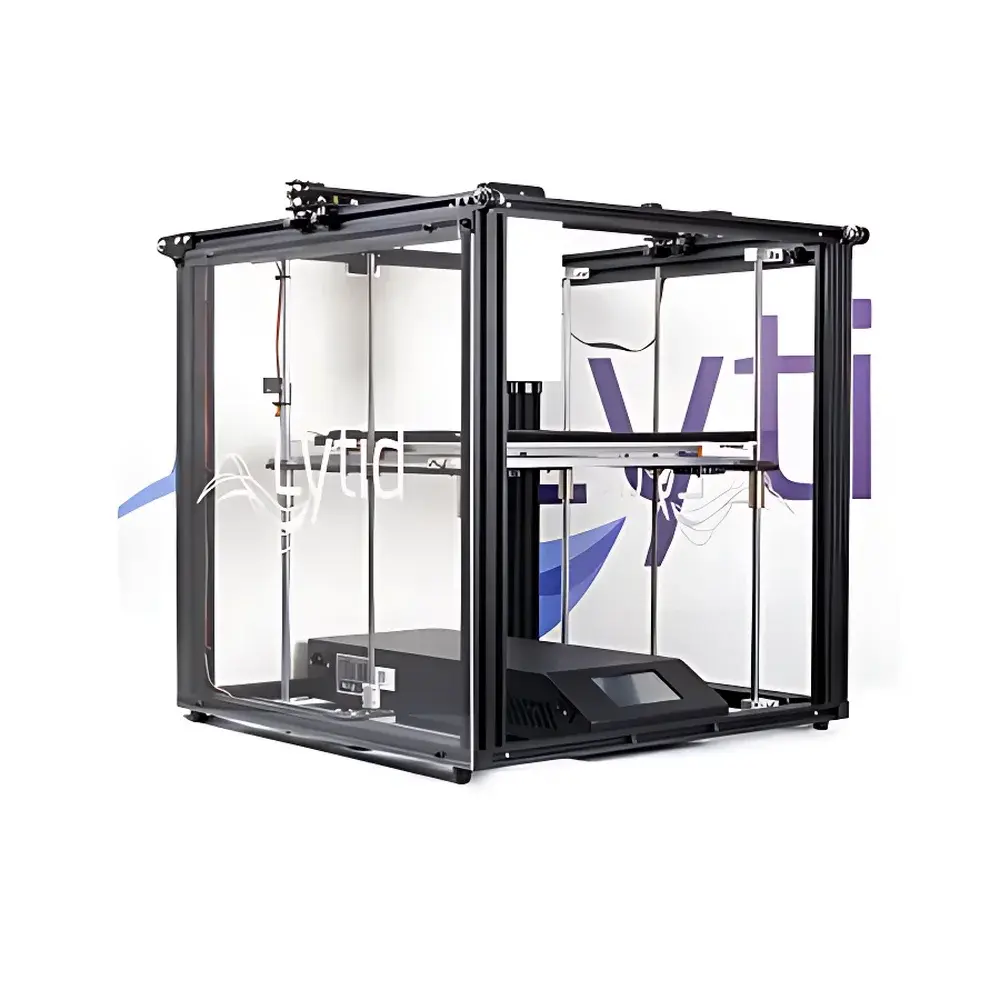
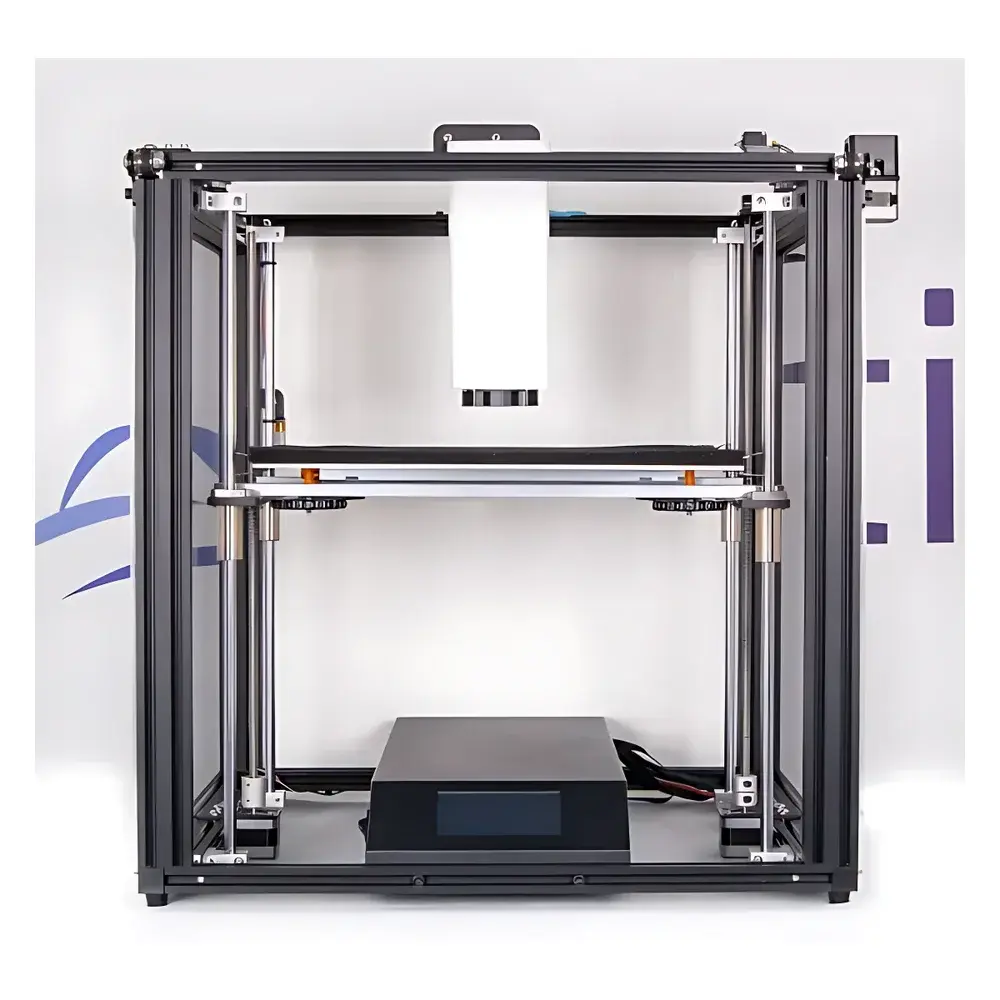
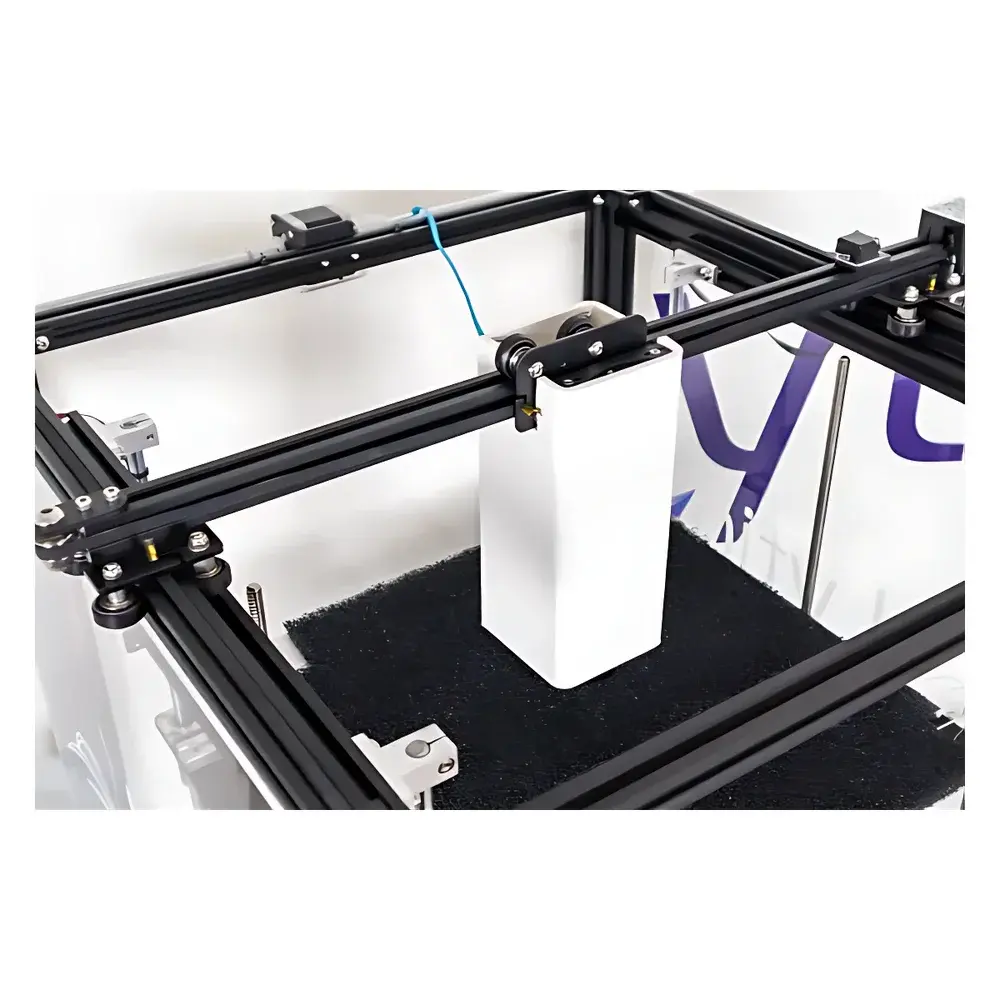
The Lytid RIGI Terahertz Imaging System is a turnkey, depth-resolved 3D scanning imager engineered for laboratory-based terahertz time-of-flight (ToF) and frequency-modulated continuous-wave (FMCW) characterization of dielectric and non-conductive materials. Unlike pulsed THz-TDS systems, the RIGI platform employs a 120 GHz FMCW radar transceiver with 20 GHz instantaneous bandwidth, enabling coherent phase-sensitive detection and high-precision depth profiling without optical delay lines. Its core architecture integrates a motorized x-y-z translation stage (300 × 300 mm travel), a modular THz optical path with user-swappable focusing lenses (f = 40–150 mm), and proprietary real-time signal processing firmware that delivers >60 dB dynamic range in 100 ms per measurement point. Designed explicitly for offline industrial and academic NDT applications, the system operates in reflection geometry and reconstructs full 3D volumetric datasets (x, y, z) with sub-millimeter axial resolution—ideal for thickness mapping, delamination detection, and multi-layer interface analysis in polymers, composites, ceramics, and pharmaceutical tablets.
Key Features
- Integrated FMCW radar engine operating at 120 GHz center frequency with 20 GHz linear sweep bandwidth—optimized for robust signal-to-noise ratio (SNR) in ambient environments.
- Motorized 3-axis scanning stage with 0.5 mm minimum step resolution and closed-loop positional feedback, supporting programmable raster, spiral, or region-of-interest (ROI) scan patterns.
- Interchangeable THz optics suite enabling trade-offs between spatial resolution (1.8 mm at f = 40 mm) and working distance (up to 150 mm at f = 150 mm), all with motorized z-focus compensation.
- Real-time FPGA-accelerated signal processing pipeline delivering calibrated amplitude/phase outputs and time-domain impulse responses for each pixel.
- Built-in thermal stabilization and RF shielding reduce drift and external EMI interference—critical for long-duration (>2 h) A4- and A3-format scans.
- No external cryogenic cooling required; operates at ambient temperature with thermally compensated detector biasing for stable baseline performance over 8+ hour sessions.
Sample Compatibility & Compliance
The RIGI system is validated for non-metallic, low-conductivity samples including polymeric packaging, carbon-fiber-reinforced plastics (CFRP), epoxy laminates, paperboard, ceramic coatings, and hydrated biological tissues (ex vivo). It complies with IEC 61000-6-3 (EMC emission limits) and carries CE marking for use within the European Economic Area. Data acquisition workflows are structured to support GLP-compliant documentation: TeraScan Easy© logs timestamped metadata (stage position, RF gain, sweep parameters, environmental temperature/humidity via optional sensor input), while TeraVisio3D© generates traceable HDF5 files containing raw IQ data, processed B-scan/C-scan matrices, and geometric calibration maps. The software architecture allows integration into LIMS environments and satisfies basic requirements for ISO/IEC 17025 accreditation in materials testing laboratories—particularly for ASTM E2983 (Standard Guide for Terahertz Nondestructive Evaluation) and EN 1330-4 (NDT terminology—volumetric methods).
Software & Data Management
TeraScan Easy© provides intuitive GUI-driven control of hardware parameters—including sweep rate, IF gain, averaging count, and ROI definition—with scriptable Python API (PyTeraSDK) for automated batch acquisition. All raw complex IQ data is stored in vendor-neutral HDF5 format with embedded SI-unit metadata and CF-compliant georeferencing tags. TeraVisio3D© performs GPU-accelerated 3D reconstruction, including time-to-depth conversion using material-specific group velocity models (user-definable refractive index n(ω)), surface topography correction via z-stage feedback, and volumetric rendering with adjustable opacity transfer functions. Export options include orthoslice TIFF stacks, STL mesh exports for CAD comparison, and CSV reports with statistical summaries (mean thickness, variance, defect count per layer). Audit trails record operator ID, software version, calibration certificate expiry, and parameter change history—aligning with FDA 21 CFR Part 11 principles for electronic records where local validation protocols are implemented.
Applications
- Industrial NDT: Detection of disbonds, porosity, and fiber misalignment in aerospace composites; thickness uniformity mapping of polymer films and battery separator layers.
- Pharmaceutical QA: Coating thickness verification and core-shell integrity assessment of coated tablets without sample destruction.
- Conservation Science: Stratigraphic imaging of paint layers, varnish degradation, and underdrawing recovery in historical artworks.
- Academic Research: Time-resolved THz reflectometry of hydration dynamics in hydrogels; permittivity spectroscopy of metamaterial absorbers in the 100–140 GHz band.
- Education: Hands-on demonstration of coherent radar principles, Fourier-domain depth sectioning, and inverse scattering fundamentals in undergraduate and graduate physics labs.
FAQ
What is the maximum sample thickness this system can resolve in depth?
Depth penetration is material-dependent; for low-loss polymers (e.g., HDPE, εr ≈ 2.3), usable depth exceeds 25 mm with ≥20 dB SNR. For lossy materials like wet paper or carbon-loaded rubber, effective depth reduces to 2–5 mm.
Does the system require external laser sources or ultrafast optics?
No. The RIGI is a fully self-contained electronic THz source—no femtosecond lasers, photoconductive antennas, or optical alignment are needed.
Can I integrate custom algorithms for material classification?
Yes. PyTeraSDK provides access to raw IQ time-series and calibrated depth profiles; users may implement machine learning models (e.g., SVM, CNN) for automated defect classification or refractive index inversion.
Is calibration traceable to national standards?
Lytid provides factory calibration against NIST-traceable THz power meters and dimensional standards; annual recalibration services include uncertainty budgets compliant with ISO/IEC 17025 Annex A.
What environmental conditions are recommended for optimal operation?
Ambient temperature: 15–25 °C, humidity: <60% RH non-condensing; vibration isolation table recommended for sub-100 µm z-resolution stability.




