
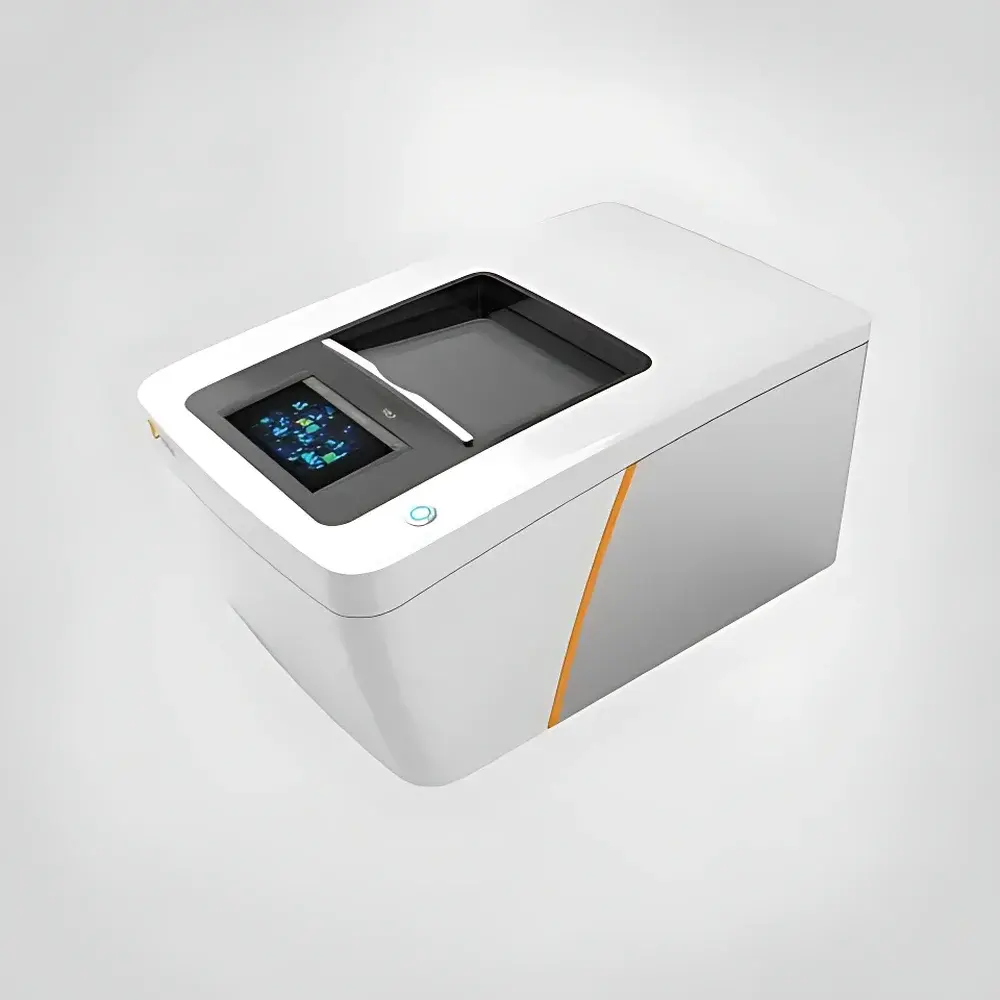
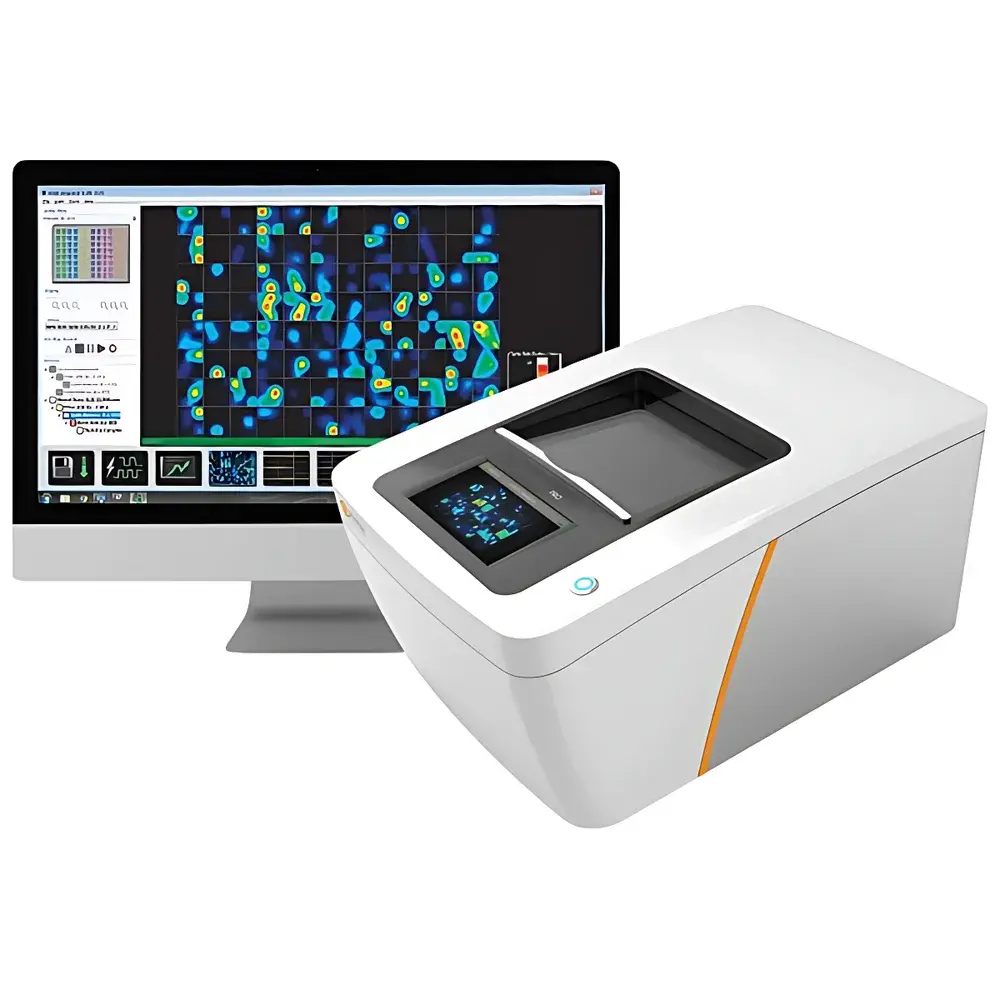
Maestro PRO/EDGE High-Throughput Microelectrode Array (MEA) System for In Vitro Electrophysiological Phenotyping of Neurological Disease Models
| Brand | Axion BioSystems |
|---|---|
| Origin | USA |
| Manufacturer | Axion BioSystems, Inc. |
| Product Type | Multiwell MEA Platform |
| Application | In Vitro Electrophysiology |
| Electrode Count | 384 or 768 per well |
| Model Variants | Maestro PRO, Maestro EDGE |
Overview
The Maestro PRO/EDGE is a fully integrated, label-free, high-throughput microelectrode array (MEA) platform engineered for long-term, real-time, noninvasive electrophysiological monitoring of functional neural networks in vitro. It operates on the principle of extracellular field potential recording—detecting spontaneous and evoked action potentials and local field potentials (LFPs) across dense arrays of embedded titanium-nitride microelectrodes (384 or 768 electrodes per well). Unlike indirect surrogate assays (e.g., calcium imaging or immunoblotting), the Maestro system directly measures millisecond-resolution electrical activity from intact, adherent, networked neuronal cultures—including iPSC-derived neurons, primary dissociated neurons, brain slices, and 3D neural organoids. Its closed-loop environmental control (37 °C, 5% CO₂, humidity stabilization) enables stable, multi-week recordings under physiologically relevant conditions—critical for modeling progressive neurodegenerative and neurodevelopmental disorders such as Parkinson’s disease (PD), epilepsy, Alzheimer’s disease (AD), autism spectrum disorder (ASD), and schizophrenia.
Key Features
- High-Density Electrode Architecture: Each well integrates either 384 or 768 biocompatible, low-impedance TiN electrodes arranged in a precise grid, enabling spatially resolved mapping of spike timing, propagation direction, and network topology.
- Multi-Level Functional Quantification: Simultaneously quantifies three core neurophysiological dimensions: (1) Activity (spike rate, burst frequency, inter-spike interval), (2) Synchrony (cross-correlation coefficients, pairwise phase consistency, network burst participation), and (3) Oscillation (power spectral density in theta, alpha, beta, gamma bands; coherence analysis across electrode pairs).
- Label-Free & Noninvasive Operation: Eliminates reliance on fluorescent dyes, voltage-sensitive probes, or genetic reporters—preserving native cellular physiology and enabling longitudinal studies over days to months without signal decay or phototoxicity.
- In Situ Network Integrity Preservation: Records from adherent, morphologically intact neuronal monolayers or 3D structures—avoiding enzymatic dissociation, centrifugation, or suspension-based handling that disrupts synaptic architecture and functional connectivity.
- Integrated Environmental Control: On-board temperature regulation (±0.2 °C), CO₂ control (±0.1%), and humidity management ensure stable culture conditions during extended acquisitions—essential for developmental phenotyping and chronic drug exposure studies.
Sample Compatibility & Compliance
The Maestro PRO/EDGE supports a broad range of excitable cell models validated under GLP-aligned experimental workflows: human iPSC-derived dopaminergic neurons (for PD modeling), cortical glutamatergic/GABAergic co-cultures (for epilepsy and ASD), hippocampal organoids (for AD-related network hyperexcitability), spinal cord explants (for neuromuscular junction studies), and primary rodent brain slices (for pharmacological validation). All hardware and software components comply with IEC 61000-4 electromagnetic compatibility standards. The AxIS Navigator software supports audit trails, user access controls, electronic signatures, and data export formats compatible with FDA 21 CFR Part 11 requirements—facilitating regulatory submissions for preclinical neurotoxicity screening and mechanistic safety pharmacology studies.
Software & Data Management
AxIS Navigator—the proprietary acquisition and analysis suite—provides automated spike detection, template matching, and hierarchical clustering of electrophysiological events. It computes >25 secondary metrics per well—including mean firing rate, burst duration, synchrony index, oscillatory power ratios, and network graph parameters (e.g., node degree, clustering coefficient, path length). Raw data are stored in HDF5 format with embedded metadata (time stamps, environmental logs, protocol annotations). Batch processing pipelines support cross-well normalization, dose–response curve fitting, and statistical comparison across experimental groups. Export options include CSV, MATLAB .mat, and publication-ready SVG/PDF figures compliant with journal formatting guidelines (e.g., Nature Neuroscience, Neuron).
Applications
- Neurodegenerative Disease Modeling: Longitudinal tracking of network dysfunction in isogenic iPSC lines—e.g., LRRK2-mutant neurons exhibiting reduced synchrony at Day 52 despite partial recovery in spike rate post-DAY 30.
- Antiepileptic Drug Screening: Quantification of seizure-like bursting dynamics and pharmacological suppression kinetics in human cortical spheroids exposed to proconvulsants (e.g., 4-AP, bicuculline).
- Neurotoxicity Assessment: Detection of subtle excitability shifts induced by environmental toxins (e.g., rotenone, MPP⁺) or pharmaceutical compounds prior to overt cytotoxicity.
- Optogenetic Integration: Seamless synchronization with Axion’s Lumos optical stimulation module—enabling wavelength-specific (470 nm, 590 nm, etc.), millisecond-precise photostimulation across up to 96 wells for cell-type-selective interrogation in mixed cultures.
- Stem Cell Quality Control: Objective, functional benchmarking of neuronal differentiation efficiency and network maturation timelines across iPSC batches—supporting GMP-compliant manufacturing of therapeutic cell products.
FAQ
What distinguishes Maestro MEA from traditional patch-clamp or calcium imaging?
Maestro provides population-level, long-term, noninvasive electrophysiology—whereas patch-clamp is single-cell, low-throughput, and invasive, and calcium imaging infers electrical activity indirectly via slow, nonlinear indicators with limited temporal resolution.
Can Maestro detect inhibitory synaptic transmission?
Yes—through analysis of inhibitory postsynaptic potentials (IPSPs) embedded in field potentials, burst suppression patterns, and gamma-band oscillatory desynchronization following GABAergic modulation.
Is the system compatible with 3D organoid cultures?
Yes—optimized protocols exist for recording from cerebral organoids ≥500 µm in diameter using elevated baseline gain settings and adaptive noise filtering algorithms.
How is data reproducibility ensured across instruments and labs?
Axion provides standardized MEA plates with traceable electrode impedance calibration, reference cell lines (e.g., hESC-derived neurons), and inter-laboratory validation datasets published in peer-reviewed benchmarks.
Does the software support custom algorithm integration?
Yes—AxIS Navigator exposes a Python API (via RESTful endpoints) for integrating user-defined feature extraction, machine learning classifiers, or network simulation outputs into automated analysis workflows.
Related Products




