
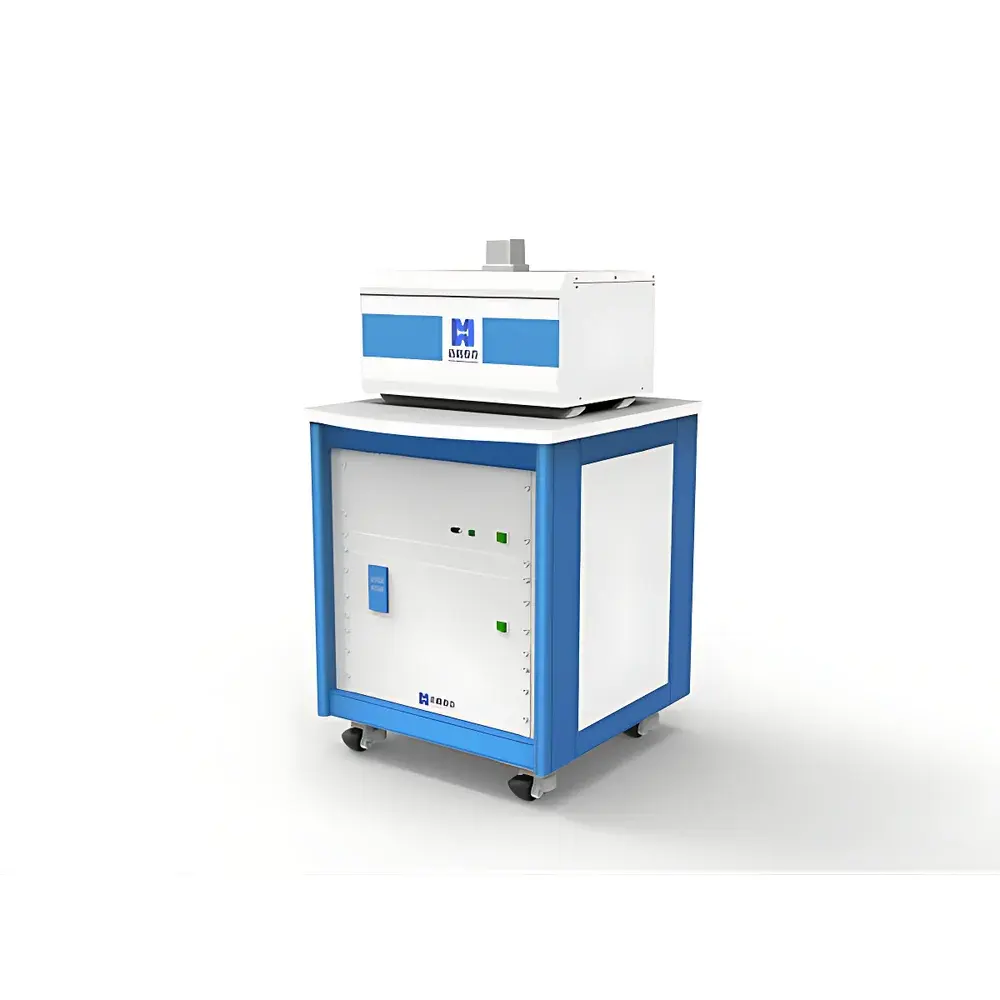
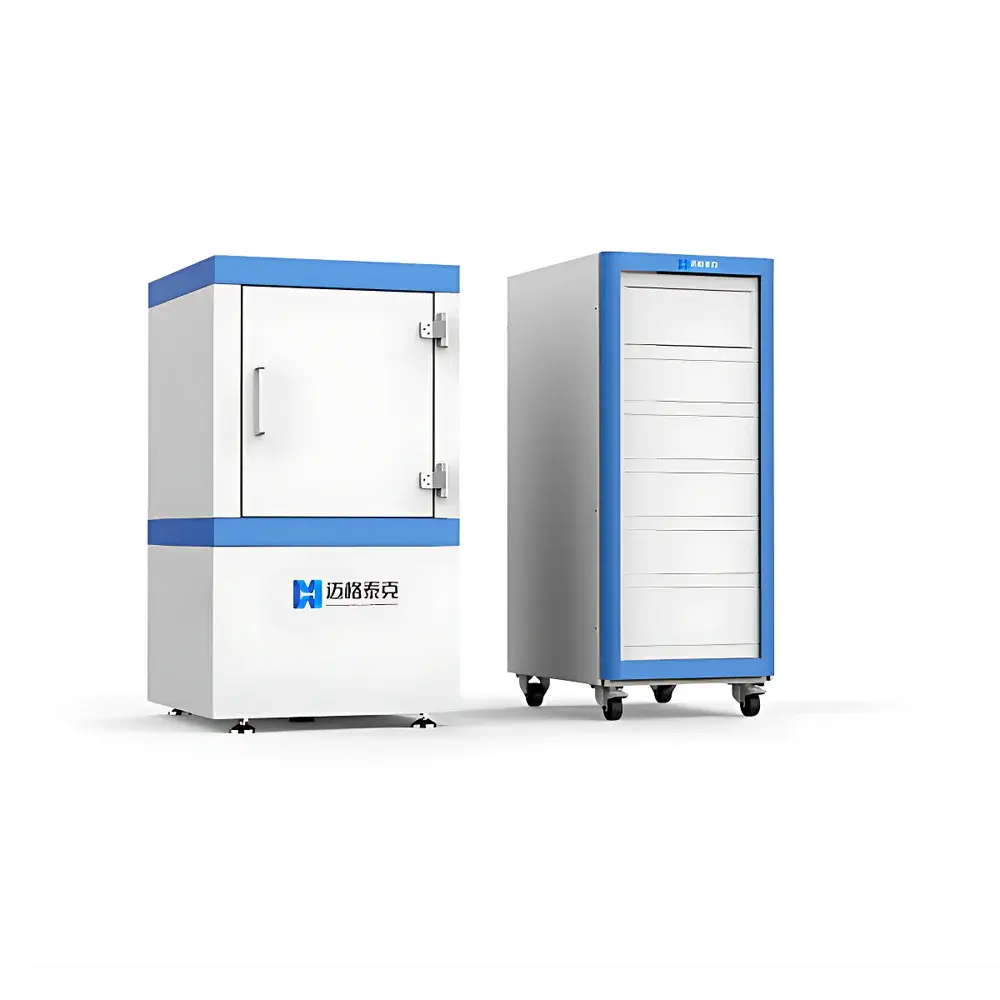
Magtech MTRMI Series Benchtop NMR Imaging Teaching System
| Brand | Magtech |
|---|---|
| Origin | Beijing, China |
| Manufacturer Type | Direct Manufacturer |
| Country of Origin | China |
| Model | MTRMI Series |
| Pricing | Available Upon Request |
Overview
The Magtech MTRMI Series Benchtop NMR Imaging Teaching System is a compact, low-field nuclear magnetic resonance (NMR) imaging platform engineered specifically for pedagogical use in undergraduate and graduate laboratory instruction. Unlike clinical MRI systems operating at 1.5–3 T, this instrument utilizes a permanent magnet configuration generating a stable, homogeneous static magnetic field of approximately 0.3–0.5 T—sufficient to demonstrate fundamental NMR principles including spin excitation, RF pulse sequencing, free induction decay (FID), spin echo formation, k-space acquisition, and Fourier-based image reconstruction. The system operates on the core physics of magnetic resonance: alignment of proton spins in a static B₀ field, selective excitation via resonant radiofrequency (RF) pulses at the Larmor frequency, and spatial encoding using gradient magnetic fields (Gx, Gy, Gz). Designed for safety, accessibility, and repeatability, it enables hands-on exploration of pulse sequence timing, slice selection, phase encoding, frequency encoding, and contrast mechanisms (T₁, T₂, and proton density weighting) without cryogenic infrastructure or ionizing radiation.
Key Features
- Benchtop permanent magnet architecture with passive shimming—no liquid helium or external cooling required
- Integrated RF transceiver module supporting standard pulse sequences: Spin Echo (SE), Inversion Recovery (IR), Gradient Echo (GRE), and basic diffusion-weighted imaging (DWI)
- Dedicated teaching console with real-time parameter adjustment (TR, TE, flip angle, FOV, matrix size, number of averages)
- Modular sample chamber accommodating cylindrical phantoms (up to Ø50 mm × 80 mm) with adjustable positioning stage
- Preloaded educational modules covering Bloch equation simulation, k-space traversal visualization, and artifact analysis (e.g., chemical shift, magnetic susceptibility, motion)
- Compliance with IEC 61000-6-3 (EMC emission standards) and IEC 61000-6-2 (immunity), certified for academic lab environments
Sample Compatibility & Compliance
The MTRMI system accepts non-metallic, non-ferromagnetic samples—including aqueous phantoms doped with paramagnetic agents (e.g., CuSO₄, MnCl₂), polymer gels, plant tissues, and small biological specimens (e.g., excised rodent organs under institutional biosafety approval). Sample holders are constructed from PTFE and acrylic to minimize RF interference and eddy current generation. All hardware and firmware comply with ISO/IEC 17025 requirements for calibration traceability in educational measurement systems. While not intended for diagnostic use, the platform adheres to essential safety provisions outlined in IEC 62464-1 (MRI equipment for non-clinical applications) and supports GLP-aligned documentation workflows for student experiment records.
Software & Data Management
The proprietary Magtech NMR LabSuite software provides a dual-mode interface: Instructor Mode (with password-protected sequence editing, calibration tools, and audit log export) and Student Mode (guided workflow with preset protocols and real-time feedback). Raw FID data, k-space matrices, and reconstructed DICOM-compatible images (including NIfTI export) are stored with embedded metadata (operator ID, timestamp, pulse sequence ID, hardware configuration hash). Software supports 21 CFR Part 11–compliant electronic signatures and audit trails when deployed on Windows domain-joined workstations. Data export options include MATLAB (.mat), Python NumPy (.npy), and CSV formats—facilitating integration into computational physics and signal processing curricula.
Applications
- Undergraduate laboratories in Modern Physics and Applied Electromagnetism: visualizing spin dynamics and resonance conditions
- Electronics and RF Engineering courses: characterizing transmitter/receiver chain performance, SNR measurement, and RF coil Q-factor analysis
- Biomedical Engineering programs: comparing relaxation times across tissue-mimicking materials and correlating with histological properties
- Chemical Engineering labs: monitoring polymerization kinetics and phase separation via time-resolved T₂ mapping
- Graduate research support: pilot studies for novel pulse sequence development, coil design validation, and motion correction algorithm testing
FAQ
Is this system suitable for human or animal in vivo imaging?
No. The MTRMI Series is strictly a phantom- and ex vivo tissue–based teaching platform. It does not meet regulatory requirements for in vivo biomedical use.
Can third-party pulse sequences be imported?
Yes—via ASCII-based sequence definition files compatible with the Open Pulse Sequence Format (OPSF) specification v2.1.
What maintenance is required?
Annual field homogeneity verification and RF power calibration are recommended; no cryogen refills or vacuum pump servicing is needed.
Does the system support remote access for hybrid lab instruction?
Yes—through secure RDP or VNC sessions configured per institutional IT policies, with optional integration into LMS platforms (e.g., Moodle, Canvas) via REST API endpoints.
Are teaching manuals and lab guides included?
Yes—comprehensive English-language documentation includes 12 structured lab exercises, instructor answer keys, safety protocols, and troubleshooting flowcharts aligned with ABET-accredited curriculum outcomes.





