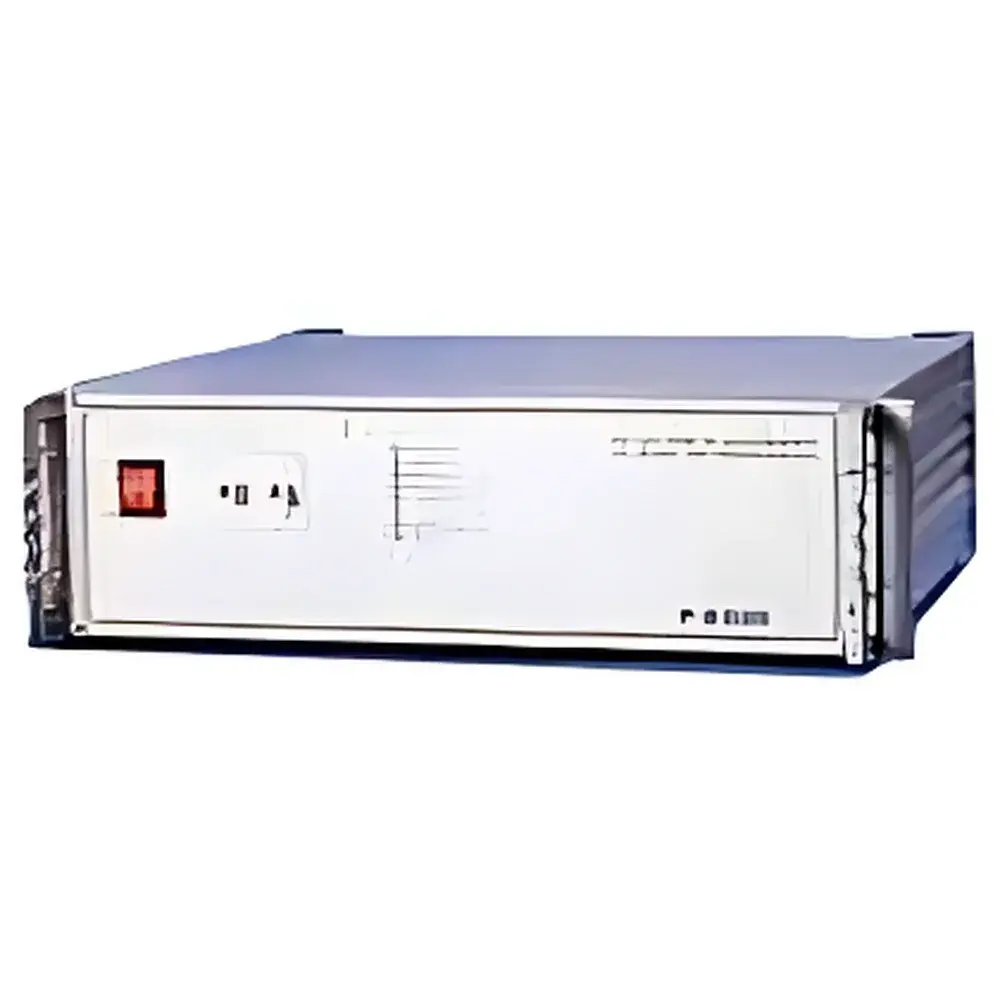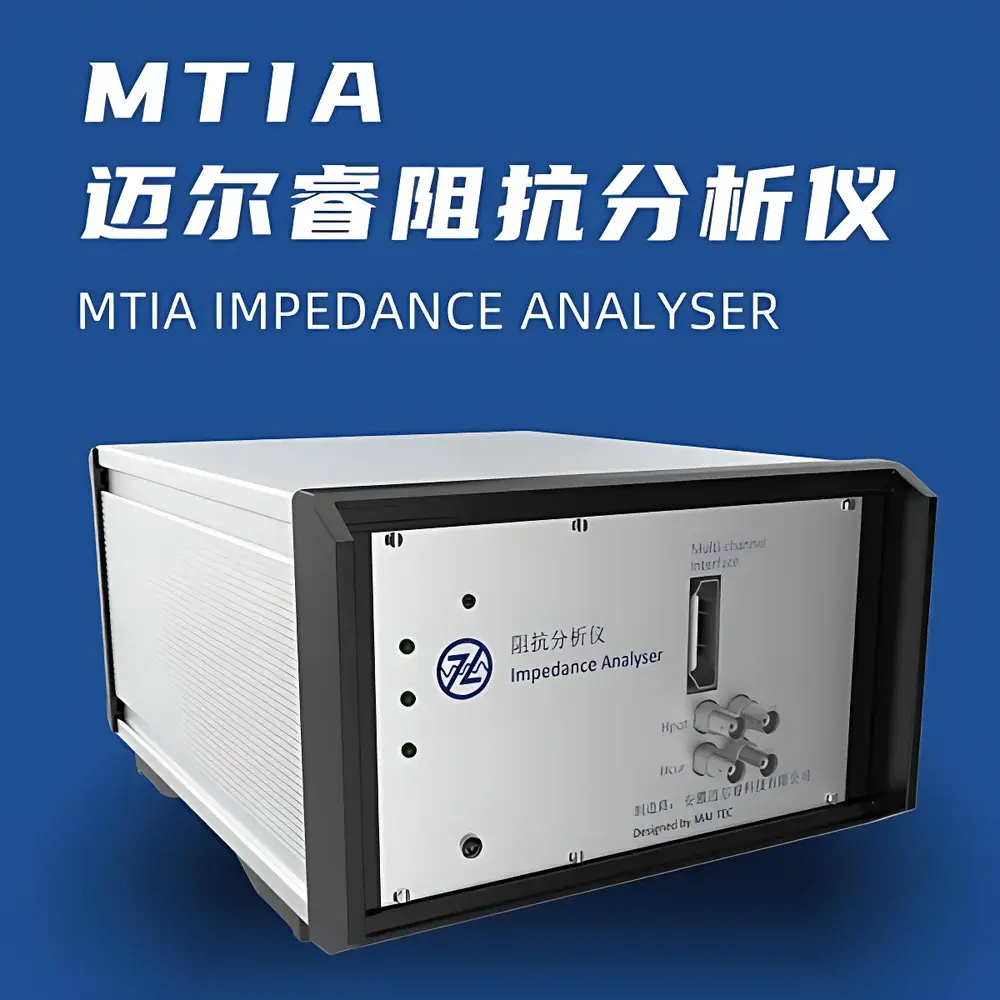

MAIERIC MTIA Precision Impedance Analyzer
| Brand | MAIERIC |
|---|---|
| Origin | Anhui, China |
| Model | MTIA |
| Instrument Type | Mid-Frequency Impedance Analyzer |
| Frequency Range | 0.05 Hz – 10 MHz |
| Frequency Resolution | 0.05% of set frequency |
| Basic Measurement Accuracy | ±0.05% |
| Impedance Range | 20 mΩ – 1 GΩ |
| Measurement Speed | 10,000 samples/s |
| Measurement Modes | Four-Terminal (Kelvin), Multi-Channel (up to 128 channels) |
| Excitation Voltage Range | 0.02 V – 2.0 V (10 mV resolution) |
| Compensation Methods | Open-Short-Load, Open-Load, Short-Load, Load-only |
| Supported Parameters | Z, θ, R, X, Ls/Lp, Cs/Cp, D, Q, Y, G, B |
| Equivalent Circuit Modeling | Yes |
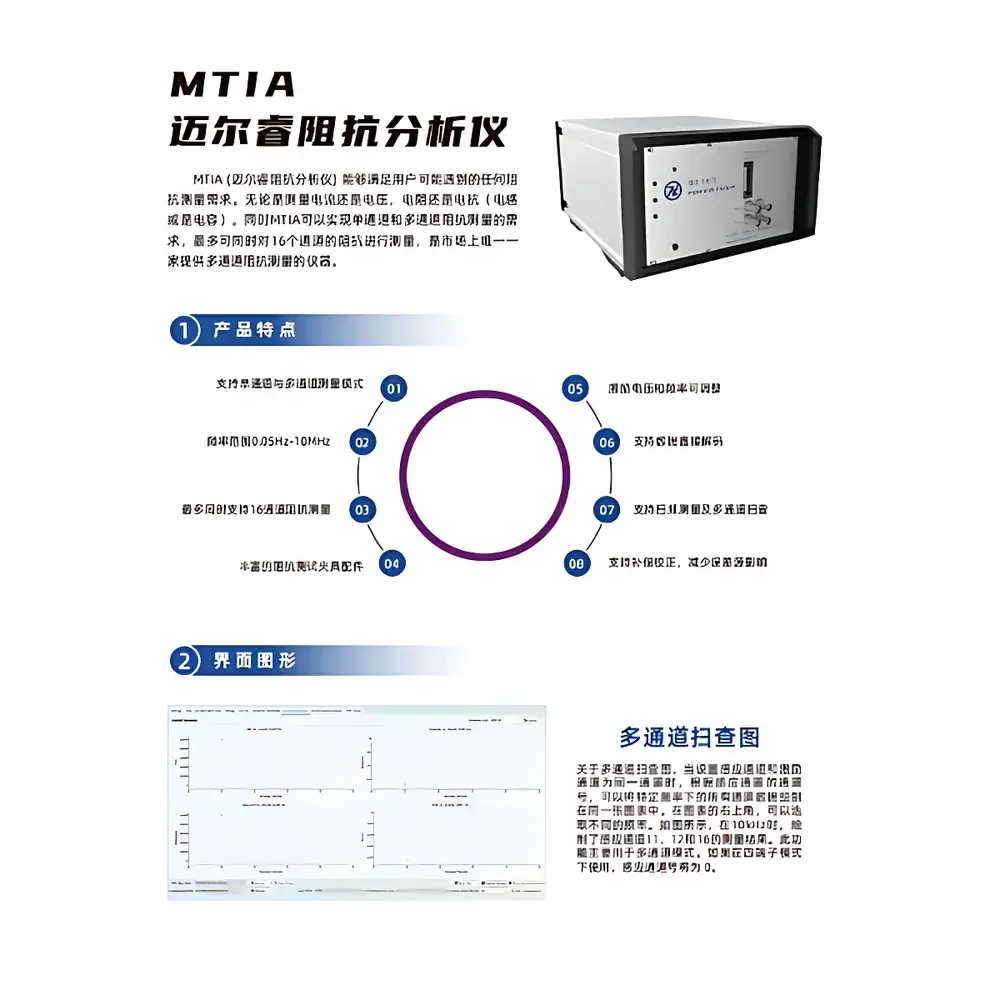
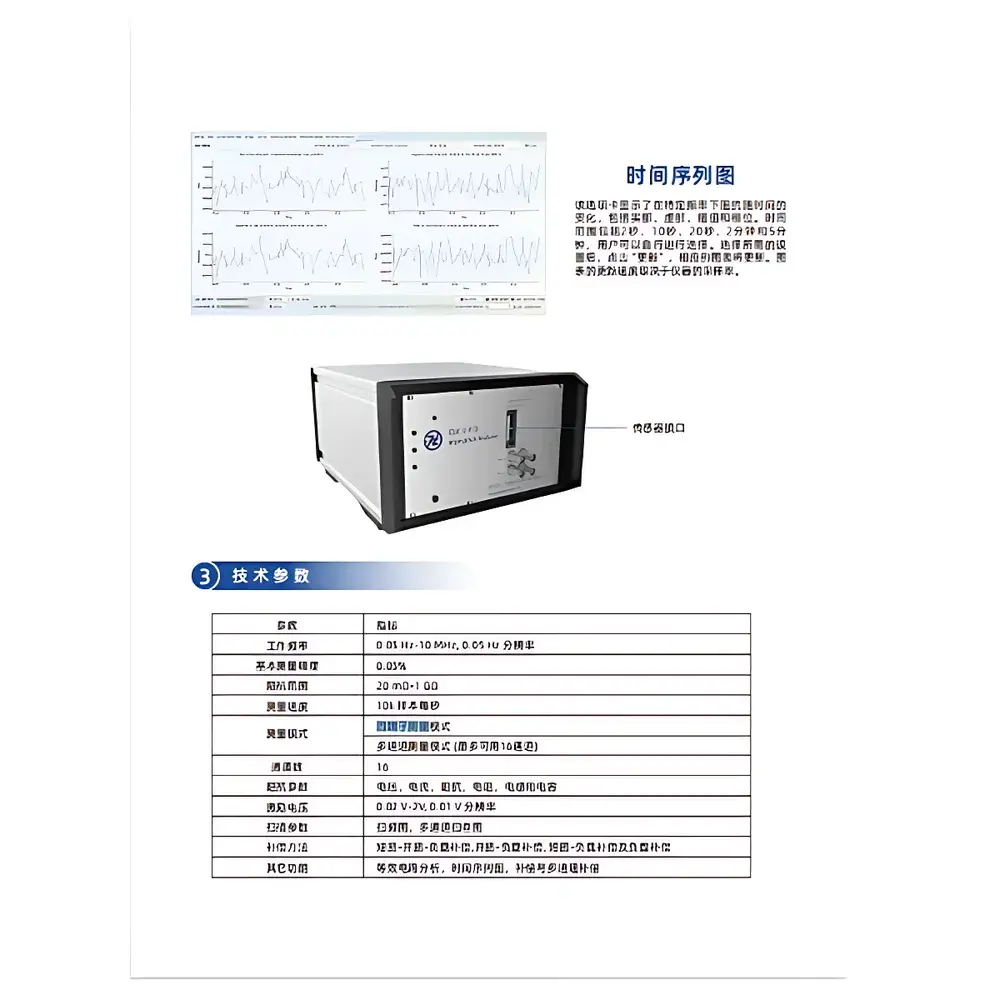
| Data Visualization | Sweep plots, multi-channel mapping, time-series traces |
| Compliance | Designed for GLP-compliant lab environments |
Overview
The MAIERIC MTIA Precision Impedance Analyzer is an engineered mid-frequency impedance measurement platform designed for high-reproducibility characterization of passive and electrochemical components across research, quality control, and production environments. Based on precision AC bridge architecture with digital signal synthesis and synchronous demodulation, the MTIA delivers stable, low-noise impedance measurements from ultra-low frequencies (0.05 Hz) up to 10 MHz—spanning critical ranges for capacitor dielectric relaxation, inductor core loss analysis, battery electrode impedance spectroscopy (EIS), and PCB trace impedance validation. Its dual-domain capability—simultaneous time-domain sampling and frequency-domain sweep—enables both transient response capture and broadband spectral profiling without hardware reconfiguration.
Key Features
- Wide dynamic impedance range: 20 mΩ to 1 GΩ with <0.05% basic accuracy at 1 kHz, traceable to NIST-calibrated reference standards
- High-speed acquisition engine: Sustained throughput of 10,000 complex impedance samples per second, supporting real-time monitoring of aging, thermal drift, or process-induced variations
- Modular multi-channel architecture: Native support for up to 128 independently configurable measurement channels via optional expansion modules—ideal for parallel testing of arrays (e.g., MEMS sensors, battery cell stacks, or printed electronics)
- Four-terminal (Kelvin) sensing as standard: Eliminates lead and contact resistance errors, critical for low-impedance measurements below 1 Ω
- Programmable excitation: Adjustable sinusoidal voltage output from 20 mVRMS to 2.0 VRMS in 10 mV steps, with harmonic distortion <–60 dBc
- Comprehensive compensation suite: Open-Short-Load, Open-Load, Short-Load, and Load-only calibration routines—each stored with metadata (date, operator, fixture ID) for full traceability
Sample Compatibility & Compliance
The MTIA accommodates a broad spectrum of sample geometries and interfaces—including SMD chip components (0201 to 2512), axial/radial electrolytics, coaxial RF connectors, probe stations, and custom electrochemical cells—via interchangeable test fixtures (4-wire banana, Kelvin clips, SMA, and micro-probe adapters). All firmware and data handling comply with ISO/IEC 17025 requirements for calibration laboratories, including secure user access levels (admin/operator/technician), electronic signature support, and immutable audit logs. While not FDA 21 CFR Part 11 certified out-of-the-box, the system’s data export structure (CSV, HDF5, and XML) and timestamped metadata enable straightforward integration into validated GxP workflows under site-specific SOPs.
Software & Data Management
Bundled MTIA Control Suite v3.x provides intuitive instrument control, automated sequence scripting (Python API included), and advanced post-processing tools. Key capabilities include: real-time Nyquist/Bode plot overlays; automatic equivalent circuit fitting (Randles, Voigt, transmission line models) with χ² convergence reporting; multi-channel correlation analysis; and time-series trending with statistical process control (SPC) limits. Raw measurement data—including phase, magnitude, and instrument status flags—is stored with embedded calibration history and environmental metadata (temperature, humidity if external sensor connected). Export formats meet FAIR data principles: machine-readable, interoperable, and archive-ready.
Applications
- Electronics R&D: Characterization of high-frequency capacitors (MLCC aging), ferrite bead impedance vs. DC bias, and EMI filter insertion loss modeling
- Battery & Energy Storage: Electrochemical impedance spectroscopy (EIS) of Li-ion cells at variable SoC/SoH states; SEI layer growth quantification
- Materials Science: Dielectric spectroscopy of polymer films, conductive inks, and piezoelectric ceramics across temperature-controlled stages
- Automotive Electronics: In-line verification of ignition coil windings, EV motor stator impedance balance, and sensor element drift detection
- Medical Device QA: Impedance validation of bioelectrodes, RF ablation tip performance, and implantable capacitor longevity testing
FAQ
What is the minimum measurable impedance with guaranteed accuracy?
The MTIA maintains ±0.05% basic accuracy down to 20 mΩ using four-terminal configuration and proper short-compensation—validated per IEC 60444-5 guidelines.
Can the MTIA perform impedance sweeps while applying DC bias?
Yes—optional DC bias unit (MTIA-BIAS-100) integrates seamlessly, enabling superimposed DC voltages from –10 V to +10 V during AC sweep, critical for semiconductor junction and varistor characterization.
Is remote operation supported?
Full SCPI command set over LAN (TCP/IP) and USB-TMC is provided; LabVIEW, MATLAB, and Python drivers are included in the SDK bundle.
How is calibration traceability documented?
Each factory calibration certificate includes uncertainty budgets per ISO/IEC 17025 Annex A, referencing primary standards maintained by CNAS-accredited labs in China; users may append field calibration records directly in the software’s Calibration History tab.
Does the system support custom fixture compensation for non-standard probes?
Yes—user-defined fixture models (S-parameter files or analytical expressions) can be imported and applied during measurement, preserving accuracy across bespoke test configurations.