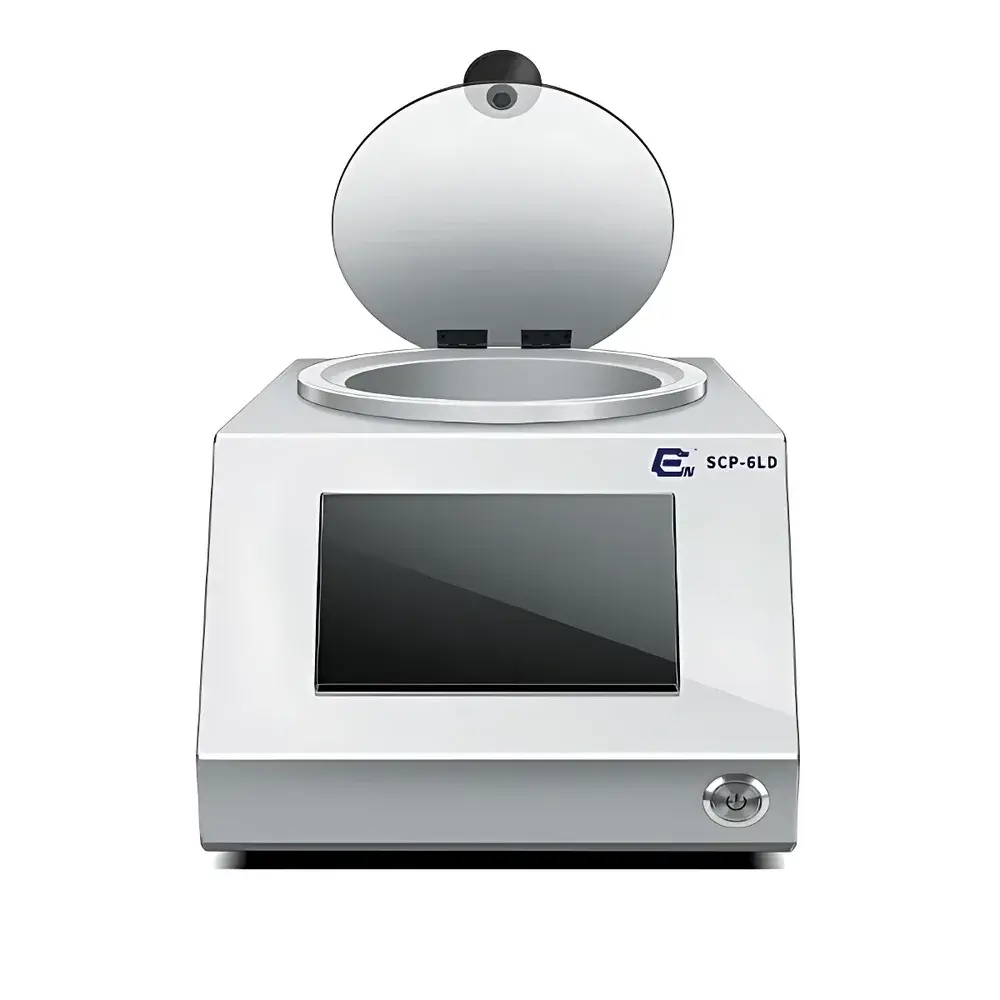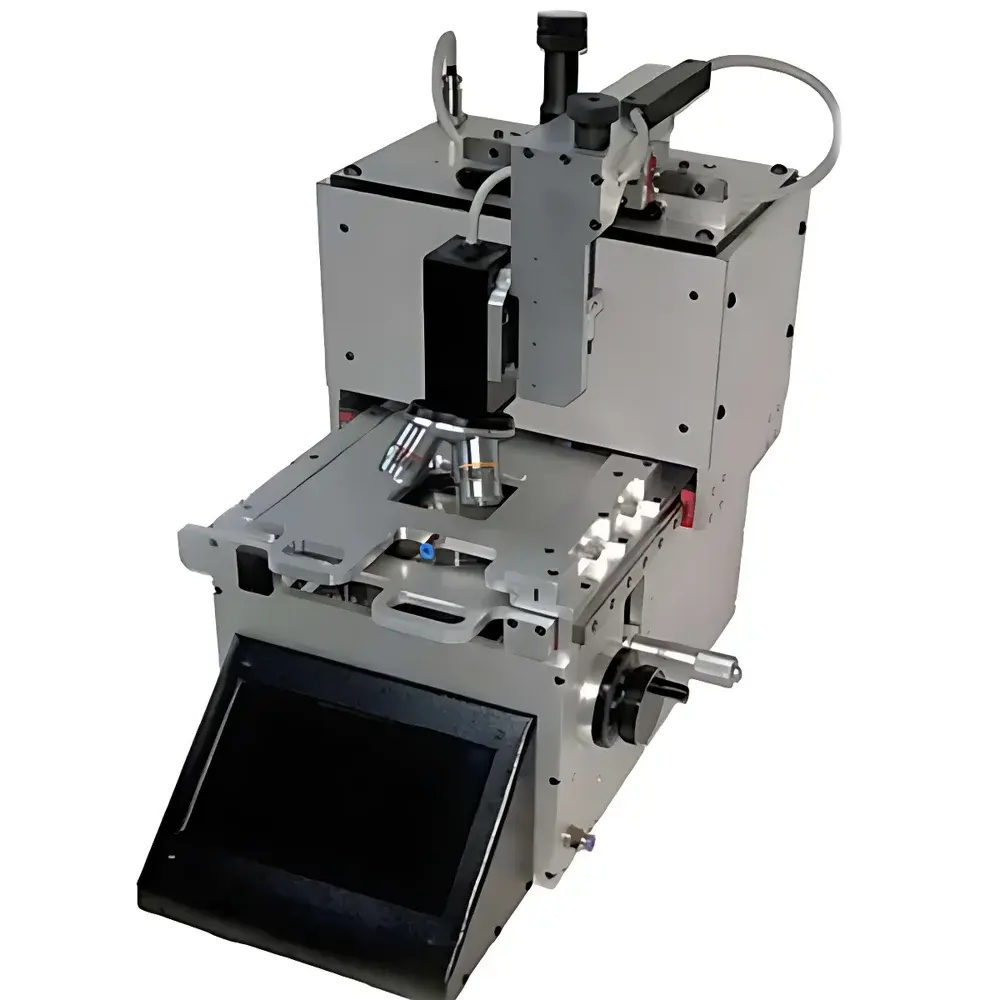
Makeway MKW-280 Desktop Mask Aligner
| Brand | Makeway |
|---|---|
| Origin | USA |
| Model | MKW-280 |
| Mask Size | 5 in |
| Wafer/Substrate Size | 5 in |
| Alignment Accuracy | 1 µm (Vacuum Contact), 1.5 µm (Hard Contact), 3 µm (Soft Contact), 5 µm (Proximity Mode) |
| UV Source | 350 W, 365 nm, uniformity ±3%, irradiance 30 mW/cm² |
| Exposure Time Range | 0.1–999 s |
| Chuck Motion | Manual X/Y/Z/θ with wedge compensation leveling |
| Microscopy | Dual CCD-based system, 80×–400× standard, up to 1000× with optional lenses, working distance 50–150 mm |
| Display | 20" LCD monitor |
| Contact Modes | Vacuum contact (adjustable force), hard contact, soft contact, proximity (gap adjustable) |
| Power Supply | 220 V, single-phase, 15 A |
| Optional | Deep UV source, IR alignment mode, custom substrate chucks |
Overview
The Makeway MKW-280 Desktop Mask Aligner is a precision-engineered photolithography tool designed for high-fidelity mask-to-wafer alignment and UV exposure in R&D and low-volume fabrication environments. Operating on the principle of contact and proximity lithography, the system enables pattern transfer from a photomask onto photosensitive resist-coated substrates using collimated or near-collimated 365 nm ultraviolet radiation. Unlike projection steppers or scanners, the MKW-280 maintains direct optical coupling between mask and substrate—making it ideal for rapid prototyping, MEMS development, microfluidic device fabrication, and academic semiconductor process validation. Its compact desktop footprint, combined with robust mechanical architecture and vacuum-assisted chucking, ensures repeatable sub-micron registration across 5-inch wafers or equivalent planar substrates—including silicon, glass, quartz, and flexible polymer films.
Key Features
- Triple-mode alignment and exposure: vacuum contact (with adjustable clamping force), hard/soft contact, and proximity gap control (10–500 µm range)
- Dual independent CCD microscope system with motorized X/Y/Z manual positioning, 80×–400× standard magnification, extendable to 1000× for critical feature inspection
- Integrated 20″ LCD display enabling real-time image overlay, crosshair alignment, and digital focus adjustment—eliminating reliance on ocular eyepieces
- Manually actuated X/Y/Z/θ stage with integrated wedge compensation for automatic substrate tilt correction during leveling
- High-uniformity 6.25″ × 6.25″ UV illumination field (±3% intensity variation), delivering stable 30 mW/cm² irradiance at 365 nm via a 350 W mercury-vapor lamp
- Programmable exposure timer (0.1–999 s resolution) compatible with both standard g-line and optional deep-UV (254 nm) lamp configurations
- Patented dual-side alignment capability supporting through-wafer infrared (IR) alignment and simultaneous front/backside patterning workflows
- Modular chuck design accommodating custom substrate geometries and thermal management requirements (e.g., heated/cooled chucks available upon request)
Sample Compatibility & Compliance
The MKW-280 accommodates rigid and semi-rigid substrates up to 5 inches (127 mm) in diameter or square format, including Si, GaAs, SOI, fused silica, ITO-coated glass, and polyimide-based flexible circuits. Substrate thickness ranges from 0.1 mm to 5 mm are supported via adjustable Z-stage travel and vacuum port configuration. The system meets essential safety and electromagnetic compatibility requirements per IEC 61000-6-3 (EMI emission) and IEC 61000-6-2 (immunity), and complies with Class 1 laser product standards under FDA 21 CFR 1040.10 when equipped with optional IR alignment modules. While not classified as GMP-grade production equipment, its mechanical repeatability and documented alignment traceability support GLP-compliant process development in university cleanrooms, government labs (e.g., NIST-traceable calibration paths), and ISO 14644-1 Class 5–7 environments.
Software & Data Management
The MKW-280 operates via an embedded industrial controller with intuitive touchscreen interface and dedicated alignment software suite. All exposure parameters—including time, lamp intensity setpoint, gap distance, and stage coordinates—are logged automatically with timestamp and user ID. Audit trails conform to ALCOA+ principles (Attributable, Legible, Contemporaneous, Original, Accurate, Complete, Consistent, Enduring, Available) and may be exported in CSV or XML formats for integration into LIMS or MES platforms. Optional firmware upgrade supports 21 CFR Part 11-compliant electronic signatures and role-based access control (RBAC), enabling secure operation in regulated QC/QA settings where SOP adherence and change control are mandated.
Applications
- Rapid prototyping of semiconductor devices, including diodes, transistors, and passive interconnect structures
- Fabrication of microelectromechanical systems (MEMS), such as accelerometers, pressure sensors, and RF switches
- Development of lab-on-a-chip (LoC) and microfluidic platforms requiring multi-layer resist patterning
- Nanotechnology research involving plasmonic arrays, photonic crystals, and quantum dot registration
- Biomedical device manufacturing, including biosensor electrodes, neural probe metallization, and micro-patterned cell culture substrates
- Education and training in microfabrication laboratories, supporting hands-on instruction in photolithography fundamentals and process integration
FAQ
What substrates can be processed on the MKW-280?
Standard operation supports 5-inch round or square substrates ranging from 0.1 mm to 5 mm thickness, including silicon, glass, quartz, and polymer films. Custom chucks are available for non-standard shapes or thermal requirements.
Is the system compatible with deep-UV (254 nm) exposure?
Yes—deep-UV capability is offered as a factory-installed option, including a filtered lamp housing and quartz optical train components rated for extended DUV transmission.
How is alignment accuracy verified and maintained?
Alignment performance is validated using NIST-traceable reticles and verified quarterly via in-house interferometric stage calibration; users receive a certificate of conformance with each system shipment.
Can the MKW-280 perform double-sided lithography?
Yes—the system includes IR-transparent substrate handling and dual-axis alignment optics enabling precise front-to-back registration within ±1 µm tolerance.
Does the system support automated recipe management?
Basic recipe storage (up to 99 profiles) is included; full automation with PLC integration and remote monitoring requires the optional Ethernet-enabled control module.