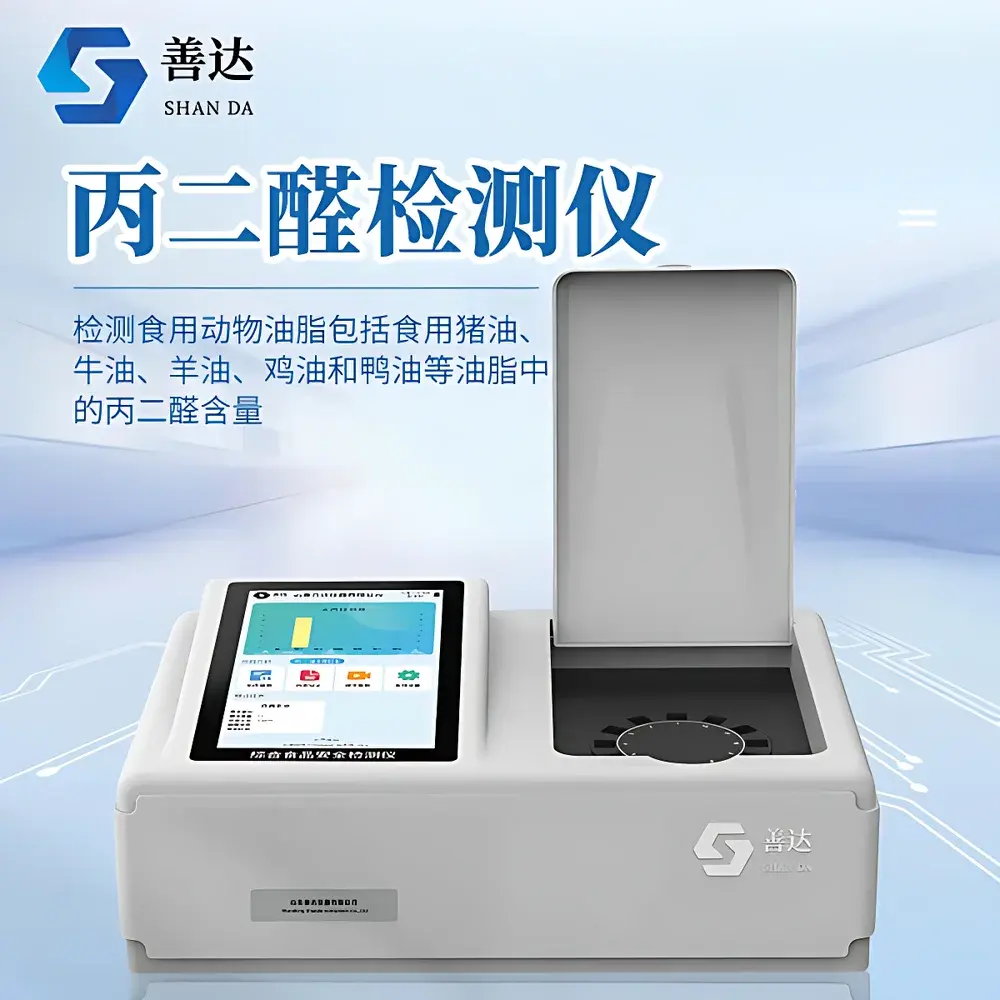
Malondialdehyde (MDA) Analyzer SD-BQ12T by Shanda Instruments
| Brand | Shanda Instruments |
|---|---|
| Model | SD-BQ12T |
| Origin | Shandong, China |
| Instrument Type | Benchtop Integrated Spectrophotometric Analyzer for MDA Quantification in Edible Animal Fats |
| Detection Principle | Colorimetric Assay (Thiobarbituric Acid Reactive Substances, TBARS) |
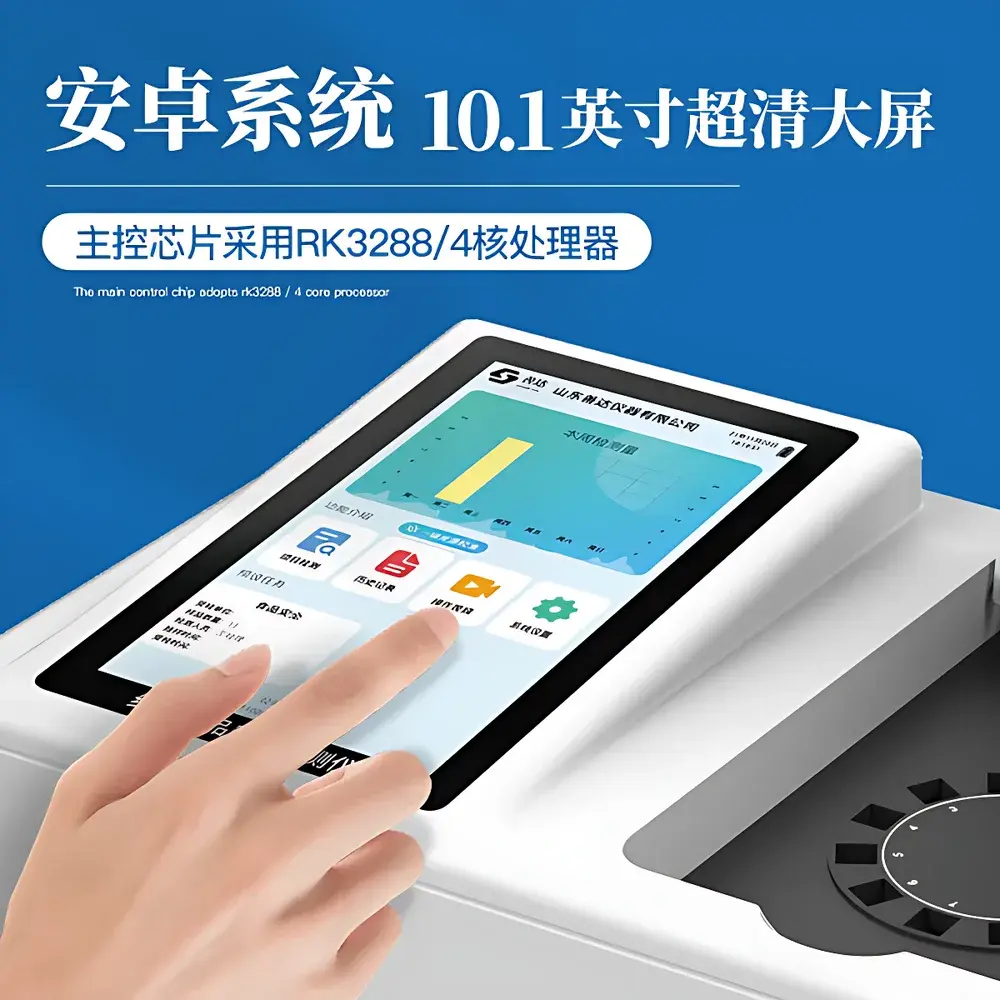
| Display | 10.1-inch Vertical Touchscreen (Android OS, ARM Cortex-A7 RK3288 Quad-Core @ 1.88 GHz) |
| Optical System | Four-Wavelength Cold Light Source per Channel (410 / 520 / 590 / 630 nm), Patented Optical Path Switching Enabling Up to 64 Wavelengths |
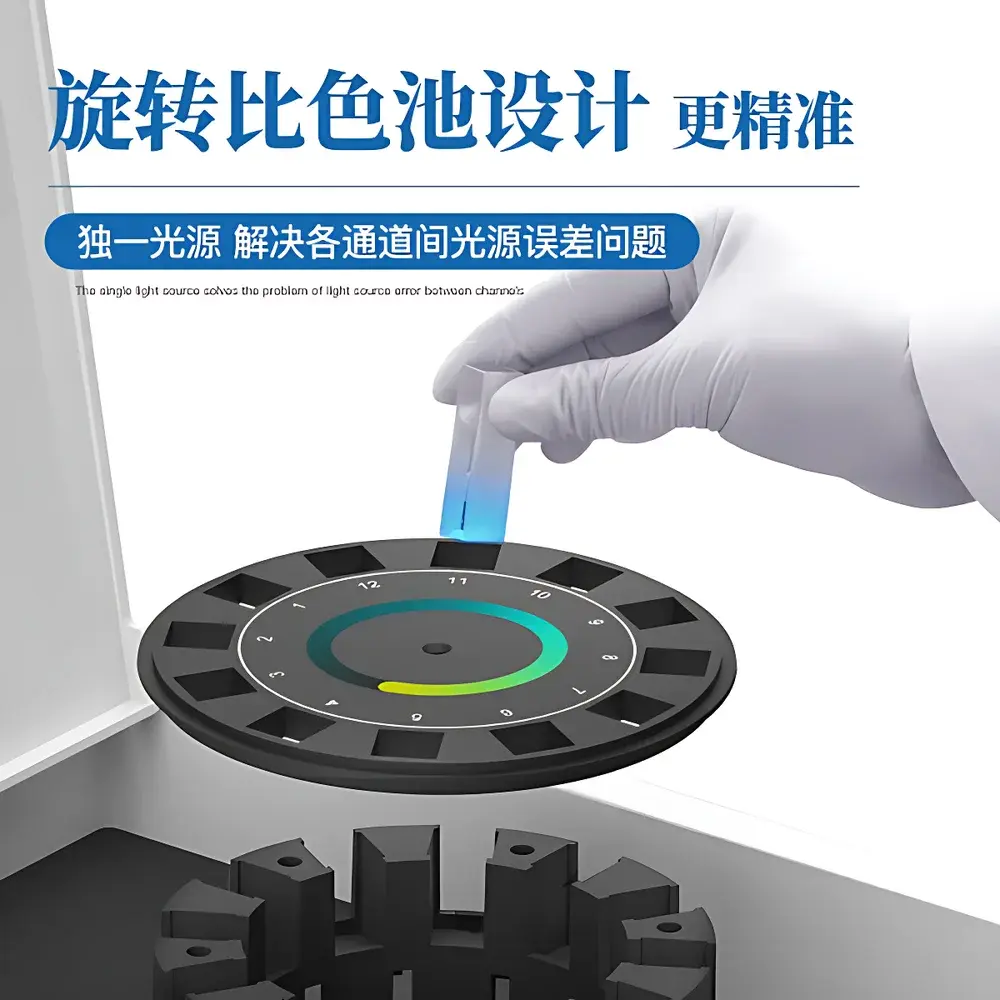
| Detection Channels | ≥12 Simultaneous Channels with Precision Rotating Cuvette Holder |
| Calibration | One-Touch Auto-Calibration with Persistent SP Storage of Light Source Parameters |
| Data Storage | ≥200,000 Records, USB Exportable as Excel Files, Password-Protected Access |
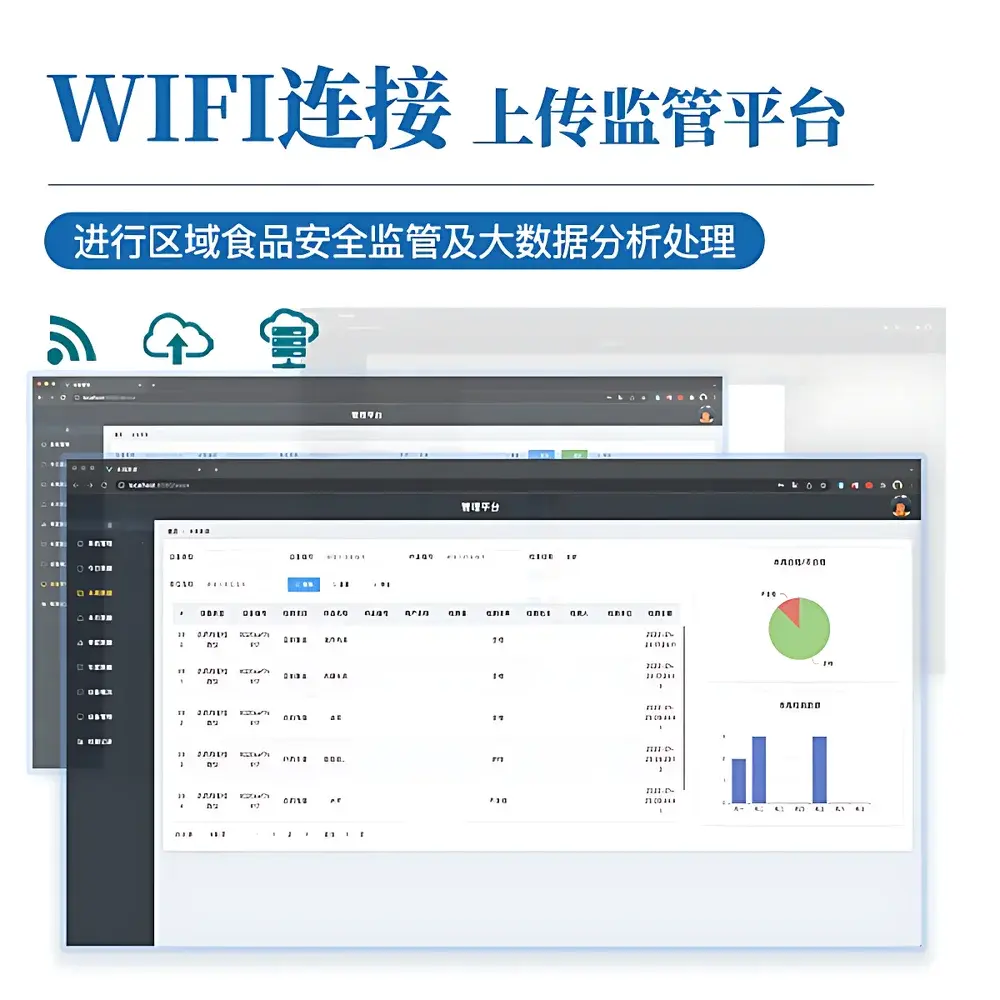
| Connectivity | Dual USB, RJ45 Ethernet, Bluetooth 4.2, 4G APN Module, Wi-Fi |
| Software Expandability | Pre-Configured for 60+ Food Safety Assays |
| Compliance Framework | Designed for Routine Use in GLP-Compliant Food Quality Control Environments |
Overview
The Shanda SD-BQ12T Malondialdehyde (MDA) Analyzer is a benchtop-integrated spectrophotometric platform engineered for rapid, quantitative determination of malondialdehyde — a key secondary lipid oxidation marker — in edible animal fats including lard, tallow, mutton fat, chicken fat, and duck fat. It implements the standardized thiobarbituric acid reactive substances (TBARS) assay, wherein MDA reacts with thiobarbituric acid under acidic conditions and elevated temperature to form a pink chromogen measurable at 532 nm (or alternative wavelengths within its 410–630 nm range). Unlike conventional single-channel spectrophotometers, the SD-BQ12T employs a multi-channel rotating cuvette system with synchronized four-wavelength cold light sources per channel, eliminating inter-channel optical drift and enabling simultaneous, high-reproducibility analysis of up to 12 samples. Its architecture integrates photometric detection, embedded data management, and wireless telemetry into a single unit, reducing footprint and operational complexity while maintaining traceability standards required in food safety laboratories.
Key Features
- Benchtop all-in-one design with 10.1-inch vertical capacitive touchscreen running Android OS on RK3288 quad-core ARM Cortex-A7 processor (1.88 GHz), ensuring responsive navigation and stable multitasking during parallel assay workflows.
- ≥12 independent optical channels featuring precision-machined rotating cuvette holders; each channel equipped with calibrated 410 nm, 520 nm, 590 nm, and 630 nm cold LED sources and patented optical path switching — supporting up to 64 discrete wavelengths without mechanical filter wheels.
- One-touch auto-calibration routine that captures and stores reference intensity values per wavelength and channel in secure SP memory; calibration parameters persist across power cycles and firmware updates, guaranteeing long-term photometric stability.
- Dual-mode data retention: local storage capacity exceeding 200,000 test records with timestamp, operator ID, sample ID, and raw absorbance values; exportable via standard USB-A port directly to Excel-compatible CSV files without driver installation.
- Full connectivity stack: dual USB 2.0 ports, RJ45 Gigabit Ethernet, Bluetooth 4.2 for peripheral pairing (e.g., barcode scanners), and embedded 4G APN module for secure cloud synchronization in distributed quality control networks.
Sample Compatibility & Compliance
The SD-BQ12T is validated for use with extracted lipid phases from thermally processed or aged animal-derived edible oils. Sample preparation follows AOAC Official Method 971.33 and ISO 12228-2 (2019) guidelines for TBARS-based MDA quantification. Its modular detection architecture allows method-specific configuration — e.g., adjusting incubation time, reagent volume, and wavelength selection — to accommodate matrix-specific interferences (e.g., heme pigments in meat-derived fats). The system supports user-defined SOPs with role-based access control, electronic signature capture, and immutable audit logs — aligning with FDA 21 CFR Part 11 requirements for regulated food testing environments. It is routinely deployed in municipal market supervision bureaus, edible oil refineries, central kitchen QA labs, and third-party certification laboratories operating under GB/T 22427.8–2008 and SN/T 0803–2012 frameworks.
Software & Data Management
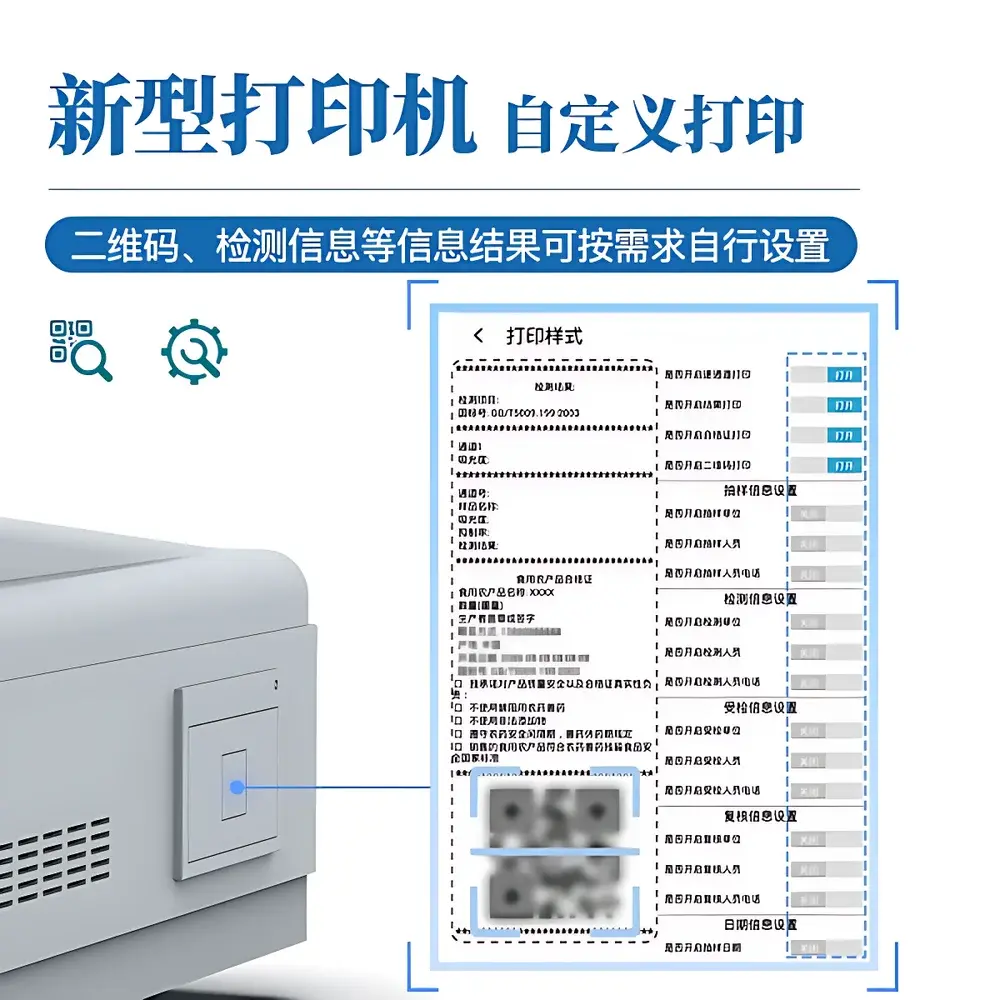
The embedded Android application provides unified interface control across all 12 channels: users assign sample names, batch IDs, and testing protocols in a single session without exiting the measurement screen. Each channel’s metadata — including analyst name, sampling location, instrument calibration status, and environmental temperature — is editable pre-analysis and embeddable in printed reports. Data encryption at rest (AES-256) and TLS 1.2–secured transmission ensure integrity during remote upload to LIMS or cloud-hosted dashboards. Firmware updates and new assay modules (e.g., peroxide value, p-anisidine value, carbonyl value) are delivered over-the-air via authenticated HTTPS endpoints, preserving version-controlled method validation history.
Applications
- Routine shelf-life monitoring of rendered animal fats during storage and distribution.
- Quality gate screening at receiving docks of meat processing plants and frying oil recycling facilities.
- Regulatory compliance verification for national edible oil safety standards (e.g., China GB 2716–2018 limits MDA ≤ 0.25 mg/kg in refined edible oils).
- Research applications in lipid oxidation kinetics, antioxidant efficacy studies, and thermal degradation modeling of complex triglyceride systems.
- Cross-functional deployment in university food science labs, vocational training centers, and regional food safety inspection stations requiring portable, low-maintenance instrumentation.
FAQ
What extraction method is recommended prior to MDA analysis using the SD-BQ12T?
We recommend chloroform–methanol (2:1 v/v) lipid extraction followed by TBA derivatization at 95 °C for 45 minutes, per AOAC 971.33. Crude extracts must be clarified by centrifugation before loading into cuvettes.
Can the SD-BQ12T quantify MDA in plant-based oils?
While optimized for animal fats, the instrument supports modified TBARS protocols for soybean, palm, and sunflower oils; however, background interference from natural phenolics may require blank correction or HPLC-UV confirmation for regulatory submissions.
Is remote software update capability validated for GMP environments?
Yes — all OTA updates include SHA-256 checksum verification, rollback support, and change-log documentation compliant with Annex 11 and ISO/IEC 17025:2017 clause 5.9.2 for software validation.
Does the device meet electromagnetic compatibility (EMC) requirements for laboratory use?
It complies with IEC 61326-1:2013 Class B emission limits and EN 61326-2-1:2013 for in vitro diagnostic equipment, certified under CNAS-accredited testing per GB/T 18268.1–2010.
How is traceability maintained across multiple operators and shifts?
Each login requires unique credentials; all actions — from calibration initiation to result export — generate time-stamped, digitally signed entries in an encrypted audit trail accessible only to authorized supervisors.