
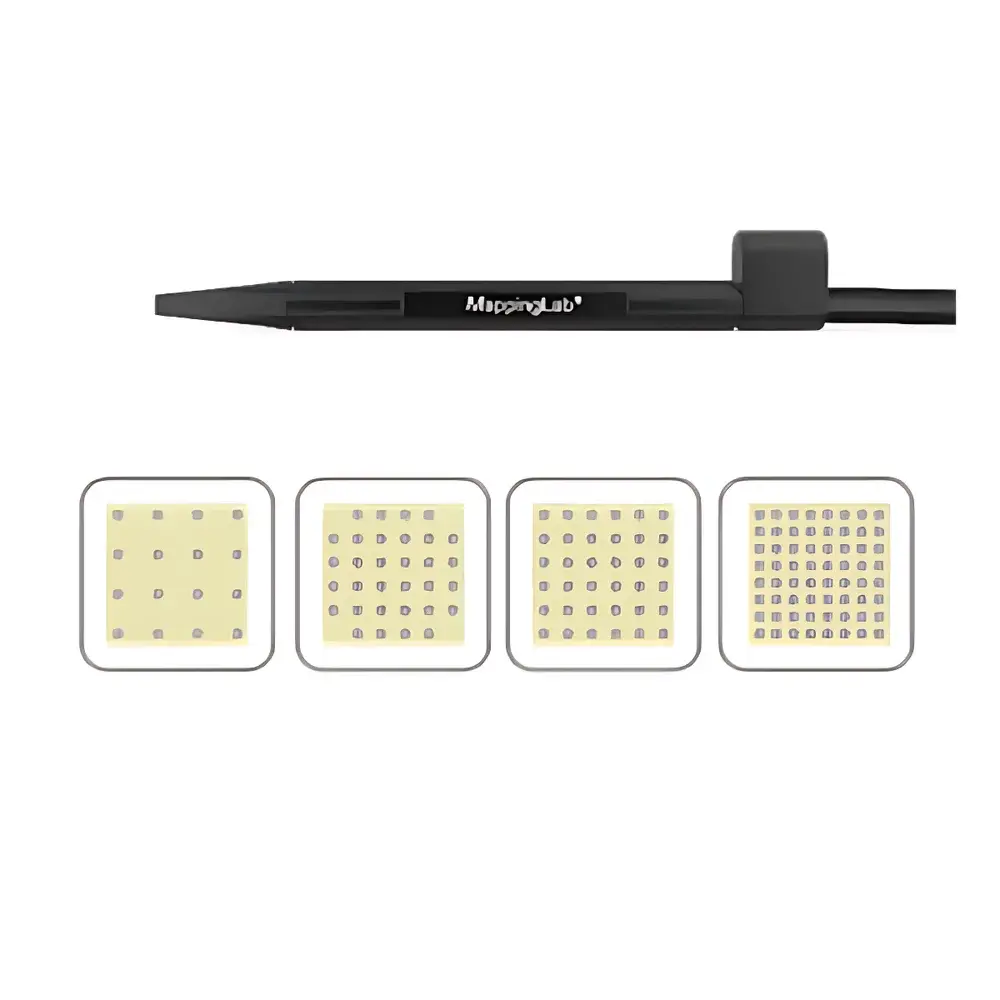
MappingLab MEA Microelectrode Array System for In Vitro Electrophysiological Recording
| Brand | MappingLab |
|---|---|
| Origin | Beijing, China |
| Manufacturer Type | Authorized Distributor |
| Instrument Type | Single-Well Format |
| Application Domain | In Vitro Electrophysiology |
| Electrode Configurations | 32-, 64-, 128-, and 256-channel flexible or rigid substrates |
| Substrate Options | Polyimide-based flexible arrays (thickness down to 10 µm) and glass-based rigid arrays (50 × 50 × 1 mm base |
| electrode diameters | 20/30/50 µm |
| well inner diameter | 22 mm) |
| Compatibility | Langendorff-perfused hearts, open-chest in vivo preparations, tissue slices, monolayer cardiomyocyte cultures |
| Mechanical Integration | Compatible with MappingLab multi-axis micromanipulator (universal joint mount), perfusion chambers, Faraday cages, and humidified incubator environments |
| Regulatory Context | Designed for GLP-compliant preclinical cardiac electrophysiology studies |
Overview
The MappingLab MEA Microelectrode Array System is a modular, research-grade platform engineered for high-fidelity, multi-site extracellular electrophysiological recording from cardiac tissues and cultured cardiomyocytes. Operating on the principle of extracellular field potential (FP) detection, the system captures spatially resolved electrical activity across defined tissue regions without intracellular penetration—enabling non-invasive, long-term functional assessment under physiological or pharmacologically perturbed conditions. The core architecture comprises three interoperable subsystems: flexible polyimide-based MEA probes optimized for conformal contact with curved, dynamic cardiac surfaces; rigid glass-based MEA substrates designed for stable monolayer culture and acute slice recordings; and a suite of mechanical and signal-conditioning accessories—including low-noise preamplifiers, humidity-tolerant adapters, and precision-positioning universal manipulators—that collectively support both acute ex vivo and chronic in vitro experimental paradigms.
Key Features
- Scalable channel density: Configurable arrays with 32, 64, 128, or 256 recording sites, enabling granular spatial mapping of activation wavefronts and conduction velocity gradients.
- Substrate versatility: Ultra-thin (≤10 µm) flexible polyimide arrays for compliant interfacing with beating whole-heart preparations; optically transparent glass substrates (50 × 50 × 1 mm) with sputtered ITO, gold, or platinum electrodes for simultaneous optical-electrical interrogation in cultured systems.
- Electrode geometry control: Precisely defined microelectrode diameters (20 µm, 30 µm, 50 µm) and inter-electrode spacing to balance signal amplitude, spatial resolution, and impedance stability.
- Environmental robustness: IP-rated adapter modules rated for continuous operation inside humidified CO2 incubators (37 °C, >95% RH); EMI-shielded cabling and grounding provisions compatible with Faraday cage integration.
- Mechanical integration: Standardized mounting interface for MappingLab universal articulating manipulator, supporting repeatable orthogonal, oblique, and tangential probe positioning relative to tissue surface topography.
Sample Compatibility & Compliance
The system is validated for use with isolated rodent (mouse, rat, guinea pig), lagomorph (rabbit), and large mammalian (sheep, canine) cardiac preparations—including Langendorff-perfused hearts, open-chest in vivo models, and enzymatically dissociated or explanted tissue slices. Glass MEA substrates support adherence and maturation of human iPSC-derived cardiomyocytes over multi-week durations, facilitating longitudinal arrhythmia phenotyping. All hardware components comply with IEC 61000-4 electromagnetic compatibility standards and are constructed using USP Class VI-certified biocompatible polymers where applicable. Data acquisition workflows align with GLP documentation requirements, and timestamped raw signal files are structured to support retrospective validation per FDA 21 CFR Part 11 when used with compliant software environments.
Software & Data Management
MappingLab provides open-format binary data output (IEEE 754 floating-point, little-endian) synchronized with external triggers (TTL, analog). Raw traces are time-stamped at hardware level with ≤100 ns jitter. Optional MATLAB and Python SDKs enable custom preprocessing pipelines—including spike sorting, activation mapping, and conduction velocity vector field computation. Built-in stimulation modules support programmable biphasic current/voltage pulses (0.1–10 mA, ±5 V range) delivered through selected electrodes for closed-loop pacing and entrainment protocols. Audit trails record user-initiated parameter changes, session start/stop events, and calibration timestamps—ensuring traceability for regulatory submissions.
Applications
- Preclinical proarrhythmic risk assessment of novel therapeutics using human-relevant cardiac tissue models.
- Spatiotemporal characterization of reentrant circuits and focal drivers in ischemic or fibrotic myocardium.
- Functional validation of gene-edited or disease-model iPSC-cardiomyocyte lines under chronic pharmacological challenge.
- High-content screening of ion channel modulators via multi-parameter FP waveform analysis (upstroke velocity, repolarization duration, beat-to-beat variability).
- Development and benchmarking of computational electrophysiology models requiring experimentally constrained boundary conditions.
FAQ
What is the minimum recommended signal-to-noise ratio (SNR) for reliable action potential upstroke detection?
Typical SNR exceeds 12 dB for spontaneous beating cardiomyocyte monolayers when using 30 µm gold electrodes with 1 kΩ series resistance and standard low-noise amplification (gain = 1000, bandwidth = 1–5000 Hz).
Can the flexible MEA arrays be sterilized for repeated use?
Polyimide-based arrays are intended for single-use applications due to irreversible mechanical fatigue after repeated bending cycles; however, they may undergo ethanol wipe disinfection for short-term reuse in non-GLP exploratory studies.
Is the glass MEA substrate compatible with immunocytochemistry post-recording?
Yes—the ITO/gold-coated glass substrates permit standard paraformaldehyde fixation, permeabilization, and fluorescent antibody labeling without compromising electrode integrity or optical clarity.
How does the system handle motion artifact during whole-heart recordings?
Hardware-level common-mode rejection (CMRR > 100 dB at 60 Hz) combined with adaptive baseline subtraction algorithms minimizes respiration- and contraction-induced displacement artifacts in real time.
What data export formats are supported for third-party analysis tools?
Raw binary (.bin), MATLAB (.mat), and HDF5 (.h5) formats are natively generated; optional CSV export is available for spike timing and waveform metrics.





