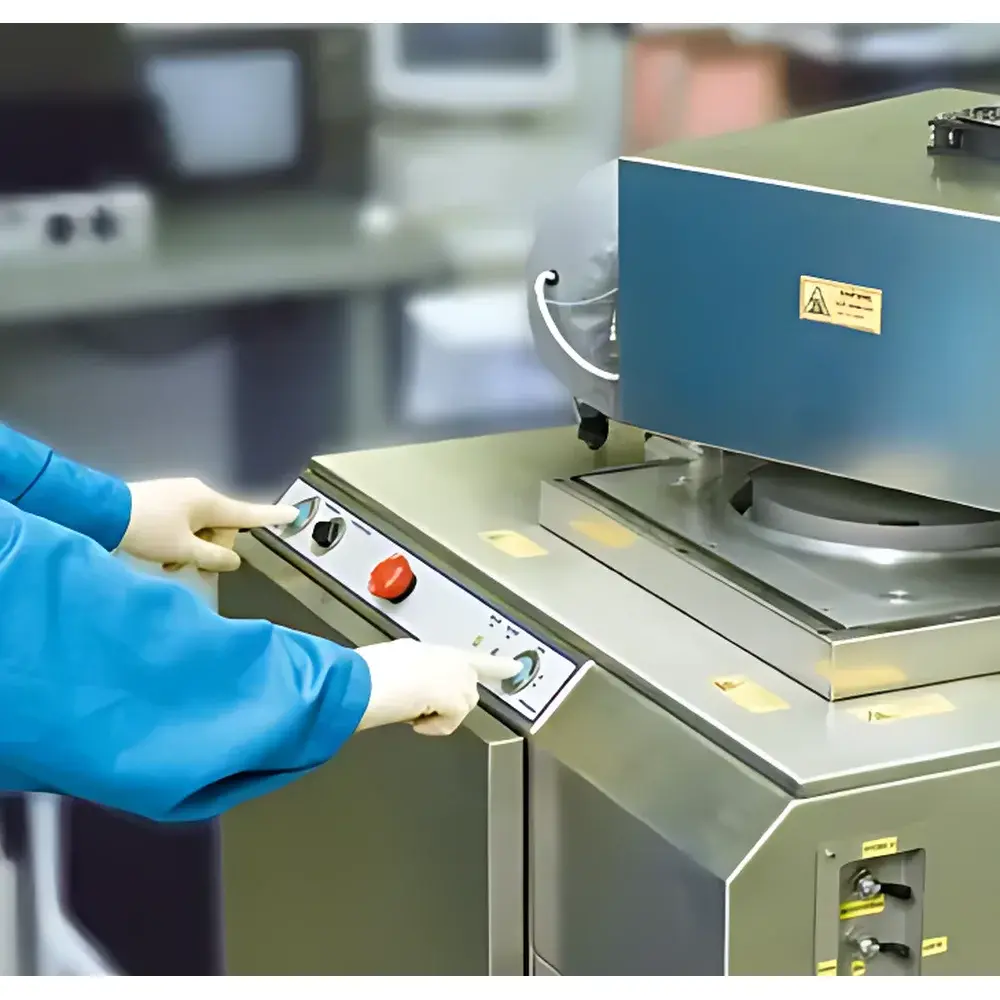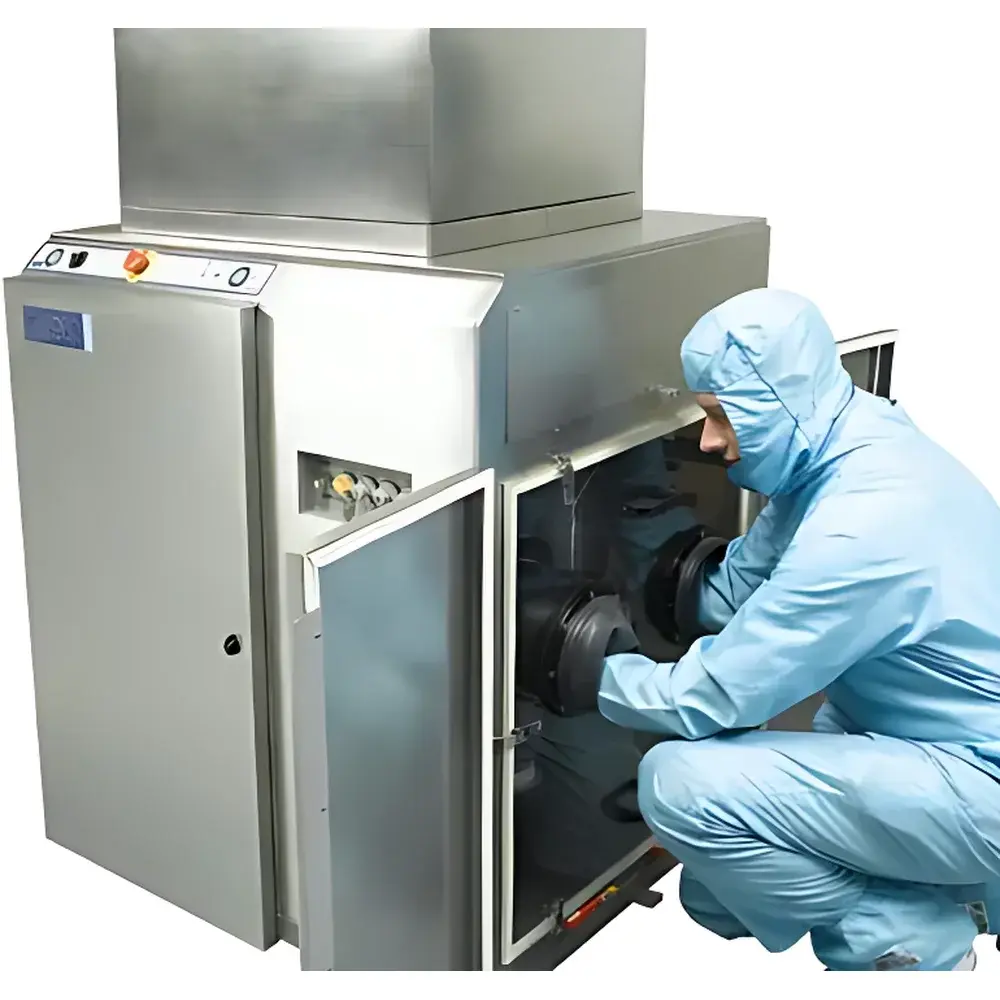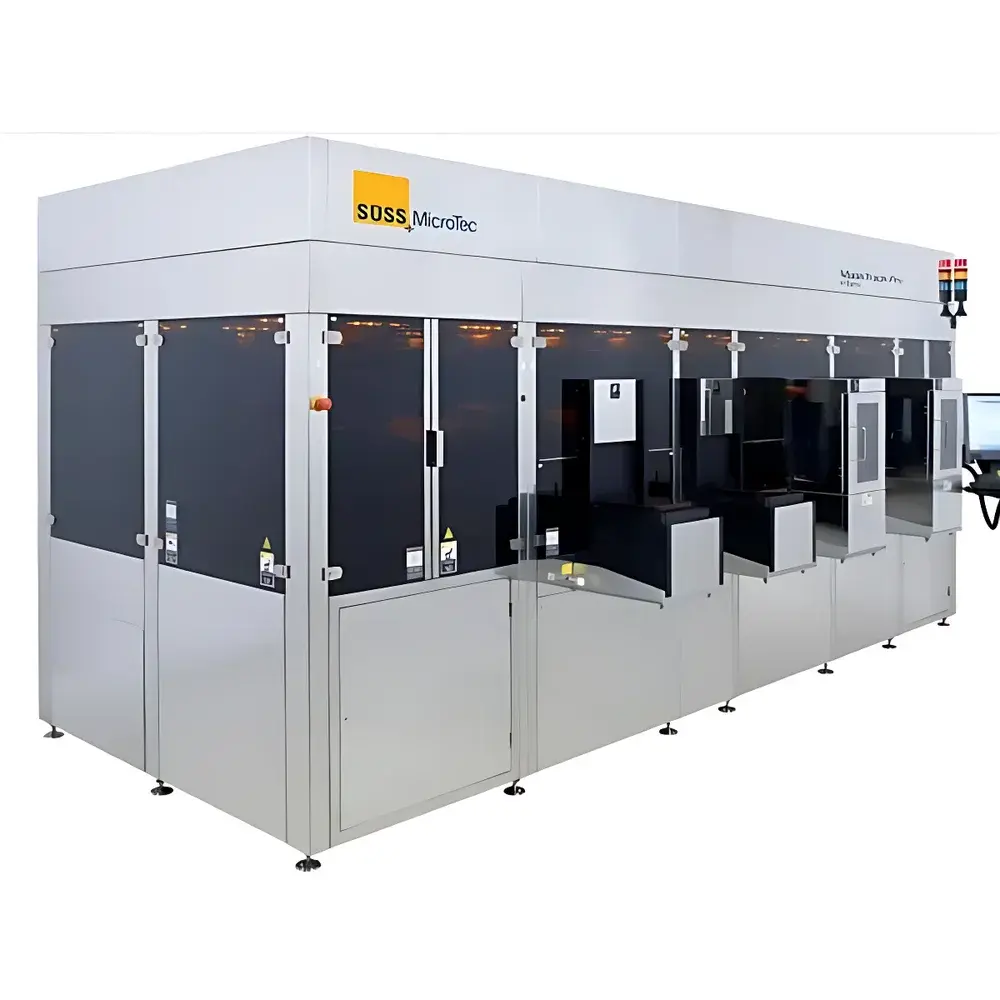
MaskTrack Pro Mask Cleaning System by SUSS MicroTec
| Brand | SUSS MicroTec |
|---|---|
| Origin | Germany |
| Model | MaskTrack Pro |
| Application Scope | Automated cleaning, bake, and develop for photomasks & reticles |
| Compatibility | 90 nm to sub-1x nm half-pitch nodes |
| Process Capabilities | Front-side & backside cleaning, sulfur-free chemistry option, integrated particle detection readiness |
| Architecture | Cluster-compatible platform (with InSync, backside particle inspection, EUV mask storage) |
| Regulatory Context | Designed for ISO Class 1–5 cleanroom integration, supports GLP/GMP-aligned process documentation |
Overview
The MaskTrack Pro is a fully automated, high-precision mask processing system engineered by SUSS MicroTec for the fabrication, reclamation, and maintenance of photomasks and reticles used in advanced lithography. It operates on a modular cluster architecture optimized for sub-32 nm technology nodes and validated for 193i immersion lithography, extreme ultraviolet lithography (EUVL), and nanoimprint lithography (NIL). The system implements a dual-path cleaning methodology—combining physical (e.g., megasonic agitation, nitrogen-assisted drying) and chemical (solvent-based, aqueous, and sulfur-free formulations) mechanisms—to remove sub-50 nm particles, organic residues (e.g., PR residuals, hydrocarbons), and inorganic contaminants (e.g., metal ions, native oxides) without compromising chrome or MoSi layer integrity. Its design adheres to stringent surface quality requirements defined by SEMI F47 and ISO 14644-1 Class 1–5 cleanroom standards, ensuring defect densities below 0.05 defects/cm² post-cleaning at 1x nm half-pitch critical dimensions.
Key Features
- Backside and frontside cleaning capability with independent process control, including dedicated modules for removing moisture spots and backside particulates—critical for scanner uptime and overlay stability.
- Sulfur-free cleaning configuration option, eliminating risk of sulfur-induced corrosion on chromium layers and enabling compatibility with EUV mask absorber stacks.
- Thermal bake and development modules integrated into the same platform, supporting resist reflow, post-apply stabilization, and TMAH-based development with ±0.3 °C temperature uniformity across 6-inch to 9-inch mask formats.
- Modular cluster architecture compatible with SUSS InSync metrology interface, backside particle inspection tools (e.g., KLA Surfscan SPx series), and EUV mask storage vaults—enabling end-to-end mask lifecycle management.
- Process recipe management with version-controlled parameter sets, audit-trail logging, and exportable run reports compliant with FDA 21 CFR Part 11 and ISO/IEC 17025 documentation frameworks.
Sample Compatibility & Compliance
The MaskTrack Pro accommodates standard quartz/chrome and low-thermal-expansion-material (LTEM) masks up to 9-inch square format, including EUV multilayer blanks (Mo/Si stack), high-transmission EUV masks (HT-EUV), and NIL quartz templates. It supports both production-grade masks and R&D substrates—including uncoated blanks, pellicle-mounted reticles, and patterned test wafers. All wet-processing modules meet SEMI S2-0201 safety guidelines and are constructed from electropolished 316L stainless steel and PFA-lined fluid paths to prevent metallic leaching. The system is certified for installation in ISO Class 4 cleanrooms and integrates with facility exhaust and DI water recirculation systems per SEMI F21-0203 specifications.
Software & Data Management
Controlled via SUSS’s proprietary CleanOS™ platform, the MaskTrack Pro provides real-time monitoring of bath chemistry concentration (via inline conductivity/pH sensors), megasonic power delivery (±2% RMS stability), and thermal ramp profiles. Process data—including soak times, rinse cycles, drying gas flow rates, and chamber pressure logs—are timestamped and stored in SQLite-based local databases with optional OPC UA connectivity for MES integration (e.g., CIM300, FactoryTalk). Audit trails record operator ID, recipe version, hardware state, and alarm history for full traceability—supporting GLP, GMP, and internal quality audits. Export formats include CSV, PDF summary reports, and XML-based SEMI E54-compliant equipment data files.
Applications
- Cleaning of production photomasks prior to inspection and scanner loading to reduce defect-initiated print failures in 193i DPT and EUVL exposure tools.
- Reclaim processing of used masks—including residual resist stripping, chrome oxide removal, and surface passivation—extending usable lifetime beyond 500 exposure cycles.
- R&D support for next-generation mask materials: low-k dielectric hard masks, TaN-based EUV absorbers, and carbon-based anti-reflective coatings (ARCs).
- Backside particle mitigation for high-NA EUV scanners, where >100 nm backside particles induce focus drift and image placement error (IPE) exceeding 1.2 nm.
- Integration into mask qualification workflows aligned with ITRS Roadmap requirements for defect adder < 0.01/cm² per cleaning cycle at k1 < 0.25.
FAQ
Is the MaskTrack Pro compatible with EUV mask cleaning protocols specified by IMEC or ASML?
Yes—the system meets IMEC’s EUV mask cleaning specification v3.2 for sulfur-free chemistries and supports ASML NXE-series mask handling interfaces via optional robotic load port integration.
Does it support automated recipe transfer between different MaskTrack Pro units in a multi-tool fab environment?
Yes—recipe libraries are synchronized via SUSS Central Control Server (SCCS), enabling cross-platform consistency and version-controlled deployment across distributed cleanroom bays.
Can the system be retrofitted with real-time particle monitoring during rinsing?
Yes—optional inline light-scatter sensors (e.g., TSI AeroTrak 9000 series) can be integrated into the final rinse manifold with signal output to CleanOS™ for dynamic endpoint detection.
What cleanroom classification is required for installation?
Minimum ISO Class 4 (equivalent to Federal Standard 209E Class 10) is recommended; all fluidic and exhaust subsystems comply with SEMI F21-0203 exhaust containment requirements.
How does the system ensure repeatability across multiple cleaning cycles?
Through closed-loop feedback control of bath temperature, megasonic frequency sweep patterns, and nitrogen purge velocity—validated per ISO 5725-2 precision testing across 100 consecutive runs.