
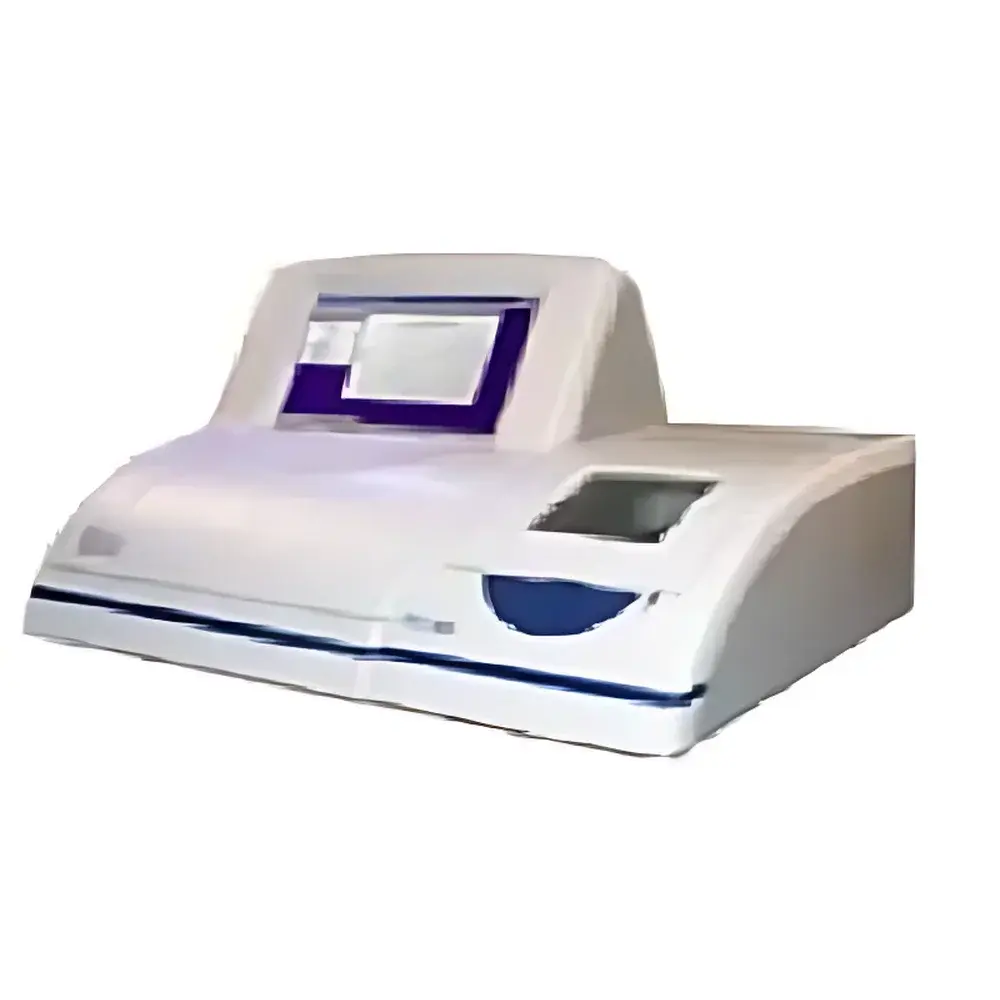
MATHIS TC-30 Thermal Conductivity Analyzer
| Brand | MATHIS |
|---|---|
| Origin | Canada |
| Model | TC-30 |
| Measurement Principle | Transient Plane Source (TPS) or Modified Transient Hot Wire (THW) |
| Sample Measurement Time | 1–60 s |
| Inter-Test Interval | 0–10 min (typ. 2 min) |
| Operating Temperature Range | –20 °C to +60 °C (external sensor) |
| Compliance | Designed for GLP/QC environments |
Overview
The MATHIS TC-30 Thermal Conductivity Analyzer is a benchtop, non-destructive thermal property measurement system engineered for rapid, high-reproducibility characterization of thermal conductivity (λ) and related thermal effusivity (e) across diverse solid, semi-solid, and layered materials. Unlike conventional steady-state or guarded-hot-plate methods requiring extended equilibration times and extensive sample preparation, the TC-30 employs a transient measurement principle—typically based on a modified transient hot wire (THW) or plane source (TPS) configuration—where a thin, resistively heated sensor element is placed in direct contact with the sample surface. The time-resolved temperature response during a short-duration pulse (1–60 seconds) is analyzed to extract thermal conductivity with minimal thermal perturbation. This enables true surface-localized measurement—critical for heterogeneous, anisotropic, or coated substrates—without dependence on bulk geometry or thickness assumptions. Its compact architecture, integrated external temperature monitoring (–20 °C to +60 °C), and automated test sequencing make it suitable for both R&D laboratories and inline QC stations where throughput, operator independence, and traceable data integrity are essential.
Key Features
- Non-destructive, surface-sensitive thermal conductivity measurement—no sample cutting, polishing, or embedding required
- Measurement duration per sample: 1–60 seconds, enabling >30 tests/hour under typical conditions
- Inter-test interval configurable from 0 to 10 minutes; default auto-cooling cycle ensures thermal stability between measurements
- External temperature-controlled environment support via optional Peltier stage or ambient sensor integration
- High spatial resolution: localized surface probing (not bulk-averaged), ideal for mapping thermal heterogeneity or interfacial layers
- Robust mechanical design with calibrated sensor alignment mechanism for repeatable contact pressure and thermal interface consistency
- Self-contained firmware with embedded calibration verification routines traceable to NIST-traceable reference standards
Sample Compatibility & Compliance
The TC-30 accommodates rigid, flexible, porous, and composite materials—including polymers, ceramics, thermal interface materials (TIMs), battery electrode coatings, foams, and food matrices—provided they offer sufficient surface planarity and thermal contact. Samples ranging from 10 mm × 10 mm to 100 mm × 100 mm (minimum thickness ≥1 mm) are routinely characterized. The instrument’s methodology aligns with internationally recognized thermal conductivity testing frameworks: ISO 22007-2 (plastics), ASTM D5470 (thermal transmission properties of thermally conductive electrical insulating materials), and IEC 60243-2 (dielectric strength testing contexts where thermal behavior influences breakdown). While not a certified GMP device, its audit-ready data logging, user-access-level permissions, and timestamped measurement records support compliance with GLP requirements and internal quality management systems aligned with ISO/IEC 17025 principles.
Software & Data Management
The TC-30 operates via MATHIS ThermalSuite™ v3.x—a Windows-based application supporting real-time acquisition, curve fitting, and parameter extraction using proprietary inverse modeling algorithms. All raw voltage/time datasets are stored in HDF5 format with embedded metadata (operator ID, timestamp, sensor serial, environmental conditions). Export options include CSV, Excel, and PDF reports compliant with internal QA documentation protocols. Audit trail functionality logs all parameter changes, calibration events, and report generation actions—supporting regulatory readiness for FDA 21 CFR Part 11–aligned environments when deployed with validated IT infrastructure and electronic signature controls. Batch processing, statistical trend analysis (X-bar/R charts), and pass/fail threshold assignment are natively supported for production-line deployment.
Applications
- Quality control of thermal interface materials (TIMs) in electronics packaging and EV battery module assembly
- Rapid screening of polymer composites during formulation development (e.g., filler loading vs. λ optimization)
- In-process monitoring of coating uniformity and curing state in roll-to-roll manufacturing
- Thermal mapping of multilayer structures (e.g., PCB substrates, aerospace laminates) to detect delamination or voids
- Stability assessment of phase-change materials (PCMs) and hydrogels under controlled thermal cycling
- Academic research in soft matter physics, food science (moisture-dependent thermal behavior), and sustainable building material characterization
FAQ
What measurement principle does the TC-30 use?
It utilizes a transient thermal method—either modified transient hot wire (THW) or plane source (TPS)—based on controlled Joule heating and dynamic temperature response analysis.
Can the TC-30 measure anisotropic materials?
Yes; its surface-localized contact geometry allows directional probing, though full tensor characterization requires rotational sample mounting (optional accessory).
Is calibration required before each test?
No; factory calibration is retained across power cycles. A daily verification check using the included reference standard is recommended per GLP practice.
Does the system support automated sample handling?
Not natively; however, the RS-232/USB interface and command-line API enable integration with third-party robotic stages or conveyor-linked fixtures.
How is thermal contact resistance addressed?
The instrument incorporates a force-controlled sensor actuation mechanism and real-time contact resistance diagnostics within the acquisition algorithm to minimize interface uncertainty.



