
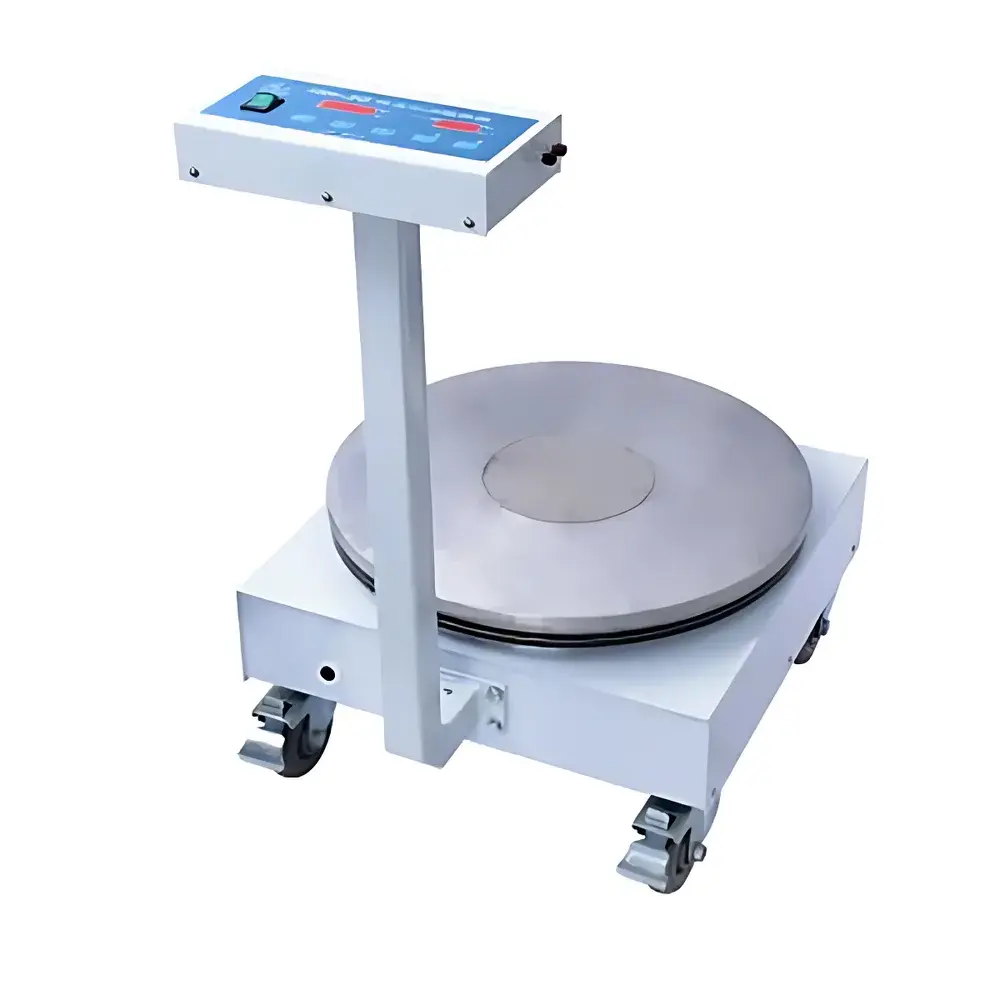
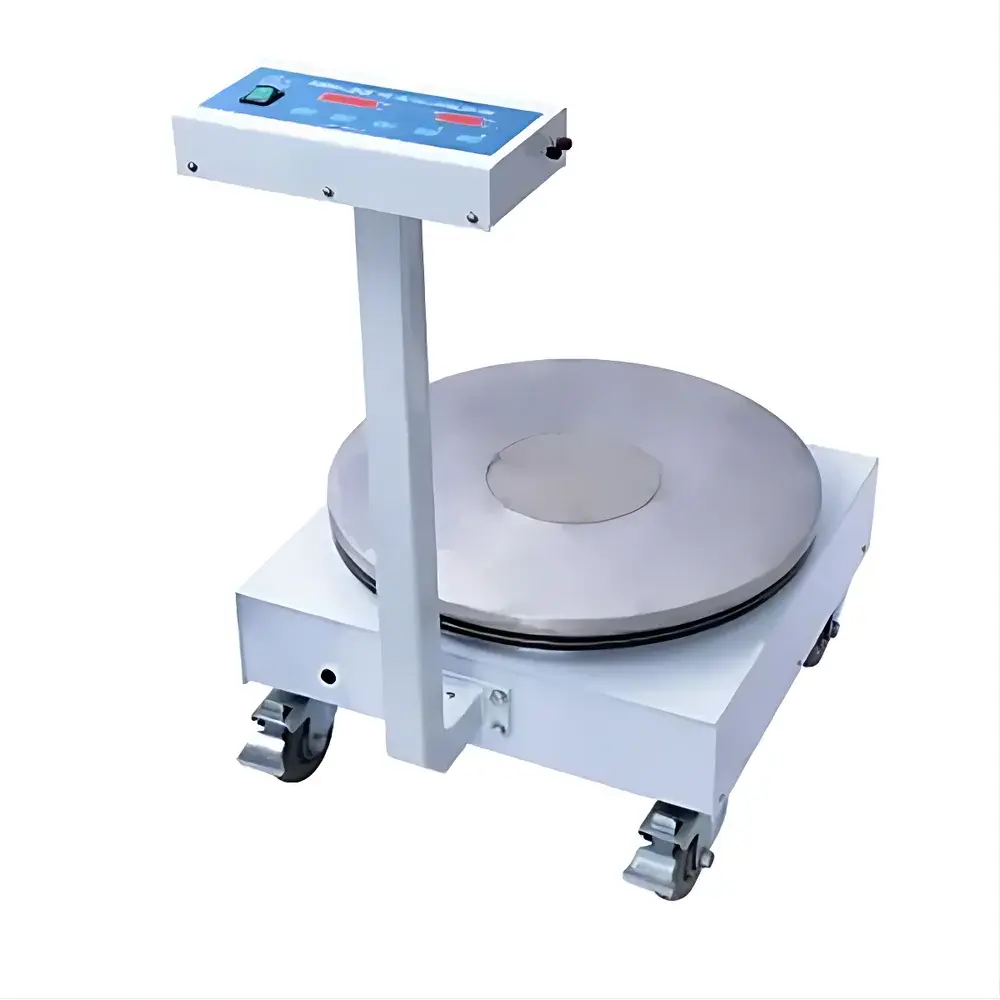
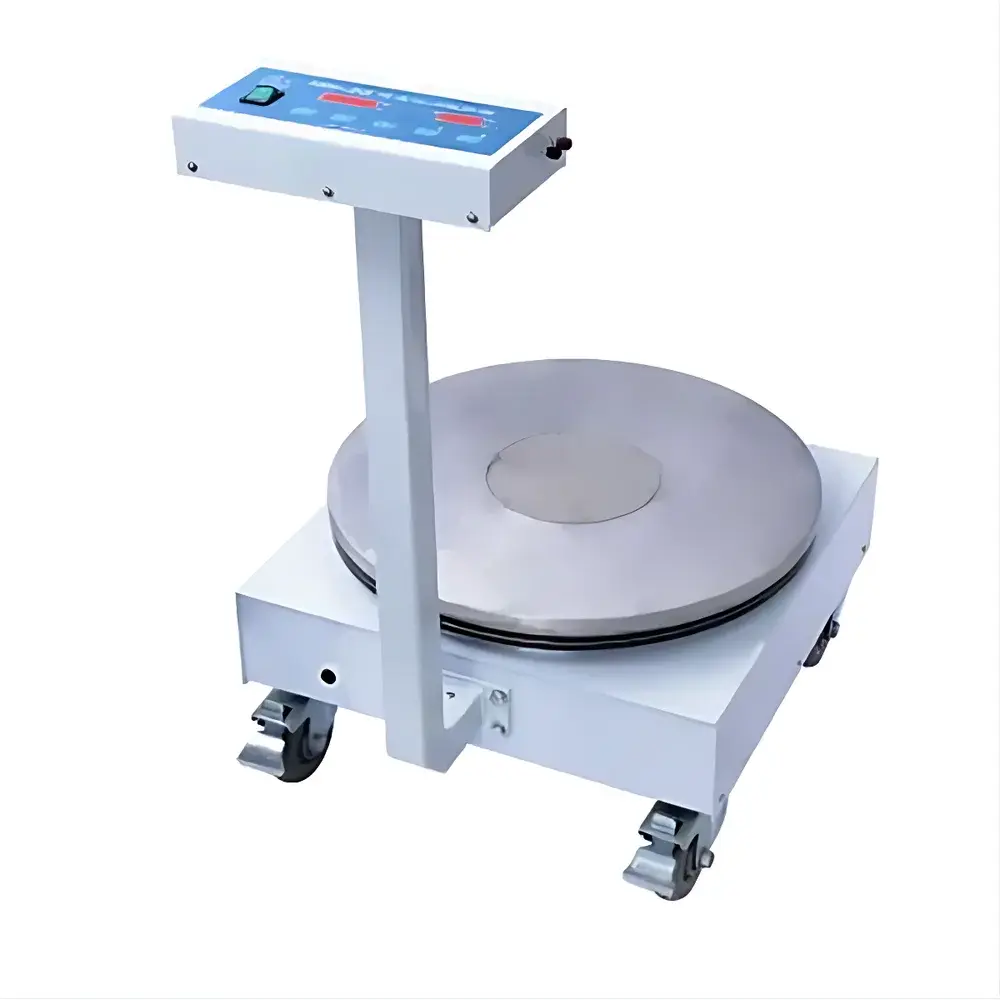
Mayingpu H01-2G High-Capacity Constant-Temperature Magnetic Stirrer
| Brand | Mayingpu |
|---|---|
| Origin | Beijing, China |
| Model | H01-2G |
| Instrument Type | Magnetic Stirrer |
| Max. Stirring Volume | 100 L |
| Speed Range | 60–1200 rpm |
| Temperature Control Range (Medium) | RT to 150 °C |
| Heating Plate Temp. Range | RT to 300 °C |
| Heating Power | 4.3 kW |
| Plate Diameter | 500 mm |
| Control Accuracy | ±1 °C |
| Motor Type | Brushless DC |
| Display | Dual LED (Speed & Temperature/Timer) |
| Power Supply | AC 220 V ±10%, 50/60 Hz |
| Dimensions (W×D×H) | 700 × 500 × 800 mm |
| Weight | Approx. 42 kg |
Overview
The Mayingpu H01-2G High-Capacity Constant-Temperature Magnetic Stirrer is an industrial-grade laboratory instrument engineered for demanding mixing and temperature-controlled reaction applications. Designed around a robust brushless DC motor and microprocessor-based control architecture, it delivers high-torque rotational motion and precise thermal regulation in a single integrated platform. Unlike conventional benchtop stirrers, the H01-2G employs a large-diameter (500 mm) ceramic-coated heating plate capable of reaching 300 °C surface temperature, enabling uniform heat distribution across voluminous vessels—critical for scalable synthesis, polymerization, dissolution testing, and long-duration stability studies. Its operating principle relies on magnetic coupling between the rotating stator field and a PTFE- or glass-coated stirring bar, eliminating mechanical shaft seals and minimizing contamination risk. The device operates continuously under load up to 100 L volume, making it suitable for pilot-scale preparation and process development workflows where reproducibility, thermal homogeneity, and operational stability are non-negotiable.
Key Features
- High-power brushless DC motor delivering consistent torque across full speed range (60–1200 rpm), with minimal heat generation and extended service life
- Dual independent LED displays: one for real-time stirring speed and timer, the other for medium temperature and heating plate surface temperature
- Microcomputer-controlled PID temperature regulation with ±1 °C accuracy over the medium temperature range (RT to 150 °C)
- 4.3 kW high-efficiency heating system with rapid thermal response and stable plateau maintenance
- Full-keypad interface with non-volatile memory—user-defined parameters (speed setpoint, target temperature, timer duration) persist after power interruption
- Heavy-duty aluminum alloy housing with reinforced structural frame and anti-slip rubber feet for vibration-dampened operation at high speeds
- Ceramic-coated heating plate (Ø500 mm) offering chemical resistance, thermal uniformity, and compatibility with glass, stainless steel, and borosilicate reaction vessels
Sample Compatibility & Compliance
The H01-2G accommodates standard laboratory containers including round-bottom flasks (up to 100 L), jacketed reactors, crystallization pans, and custom vessel geometries—provided magnetic coupling remains effective (i.e., vessel wall thickness ≤15 mm and non-ferromagnetic material). It supports common stirring bar configurations (e.g., cross-shaped, oval, and fleur-de-lis designs) up to 120 mm length. From a regulatory standpoint, the unit complies with IEC 61010-1:2010 for electrical safety in laboratory equipment and meets EMC requirements per EN 61326-1. While not certified for GMP environments out-of-the-box, its data retention capability, stable thermal output, and repeatable speed control support GLP-aligned documentation practices. Optional RS-232 or USB interfaces (available via firmware update) enable integration into validated systems requiring audit trails per FDA 21 CFR Part 11.
Software & Data Management
The H01-2G operates via embedded firmware without external PC dependency. All operational parameters—including speed, medium temperature, heating plate temperature, and countdown timer—are stored in EEPROM and retained during power cycling. For laboratories requiring centralized monitoring or protocol archiving, optional communication modules allow connection to LabVIEW, MATLAB, or custom SCADA platforms. Logged data (timestamped speed/temperature pairs) can be exported as CSV files for trend analysis, batch record generation, or quality assurance reporting. Firmware updates are performed via USB flash drive, ensuring traceability and version control in regulated settings.
Applications
- Large-volume buffer and reagent preparation in biopharmaceutical QC labs
- Controlled-temperature dissolution testing per USP and Ph. Eur. 2.9.3
- Polymer synthesis and crosslinking reactions requiring prolonged heating and agitation
- Environmental sample digestion (e.g., EPA Method 3050B) under reflux conditions
- Chemical kinetics studies where simultaneous temperature ramping and constant shear rate are required
- Preparation of homogeneous colloidal suspensions, nanoparticle dispersions, and emulsions
FAQ
What is the maximum recommended vessel height for optimal magnetic coupling?
For reliable stirring performance at full capacity (100 L), vessel height should not exceed 600 mm; taller vessels may require custom high-torque stirring bars or auxiliary support fixtures.
Can the H01-2G maintain temperature uniformity across a 100 L vessel?
Yes—when used with appropriate insulation (e.g., aluminum foil wrap or thermal jackets) and calibrated stirring bars, radial temperature gradients remain within ±2 °C across the liquid phase under steady-state conditions.
Is calibration documentation available for metrological traceability?
Factory calibration certificates (including speed and temperature verification at three points) are provided upon request; users may perform in-house verification using NIST-traceable tachometers and PT100 probes.
Does the unit support programmable ramp-and-hold temperature profiles?
No—the current firmware supports only single-setpoint temperature control; multi-step profiles require external programmable controllers interfaced via analog output (0–10 V) or relay signals.
What maintenance intervals are recommended for continuous operation?
Brushless motor requires no scheduled maintenance; annual inspection of heating plate integrity, thermal sensor contact, and keypad responsiveness is advised for 24/7 usage environments.



