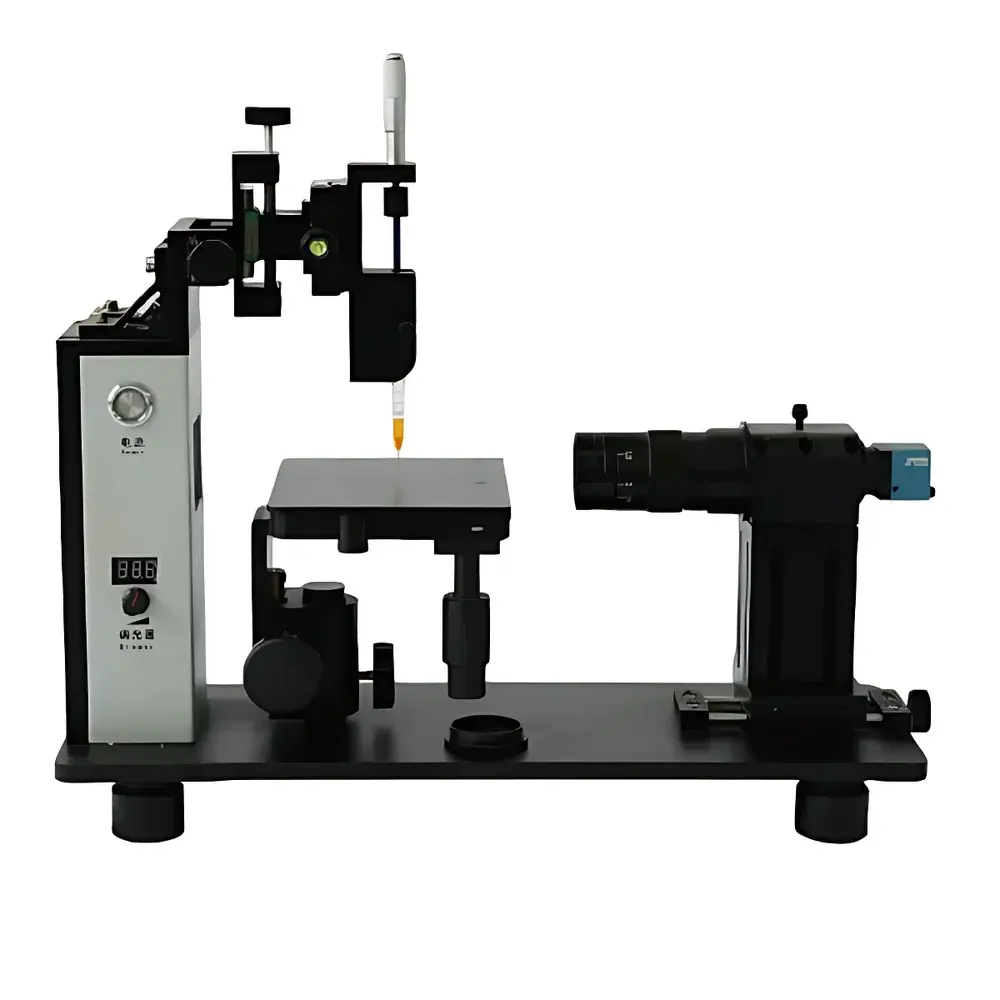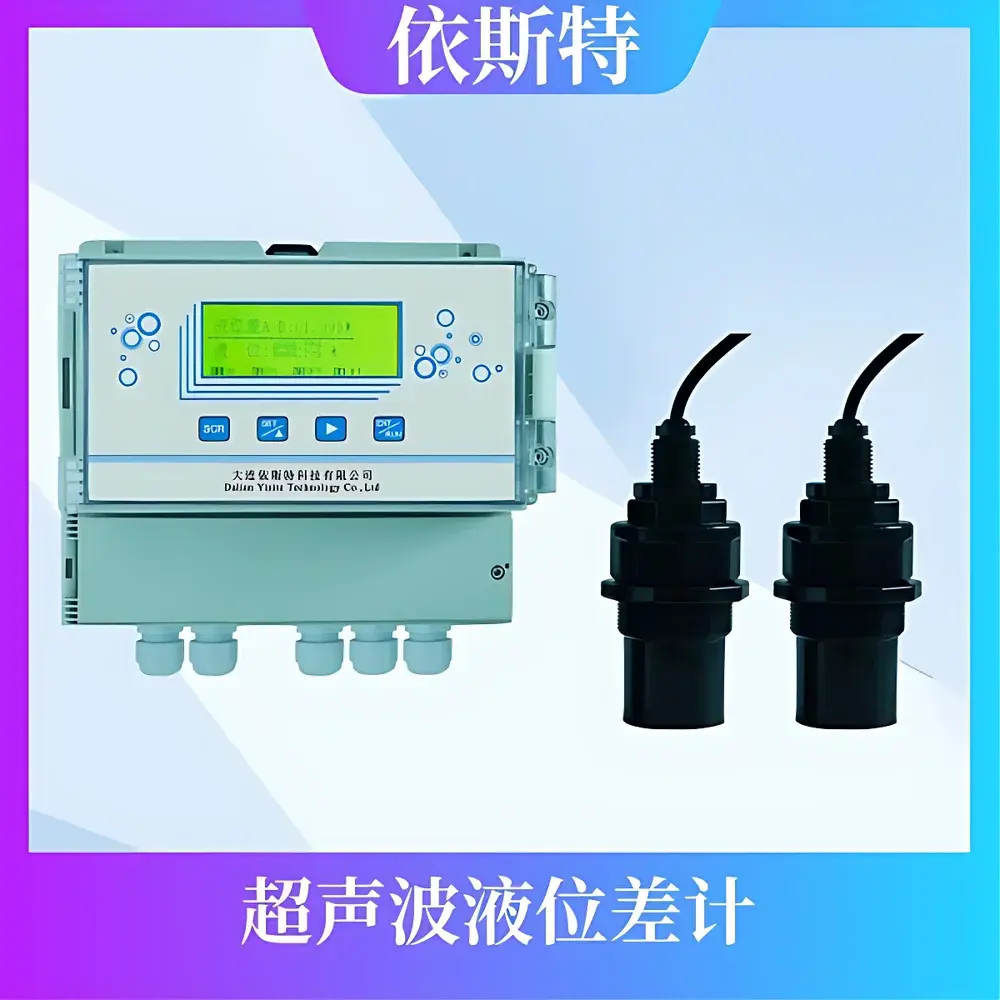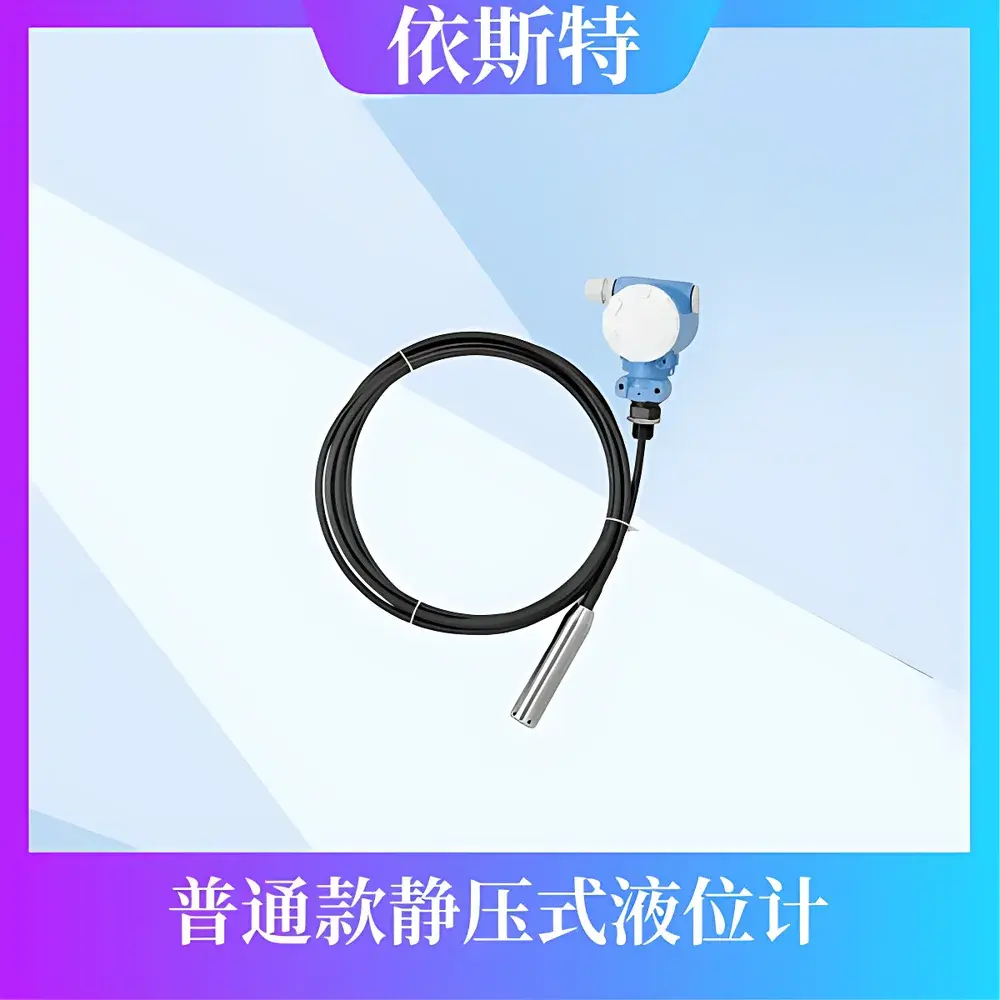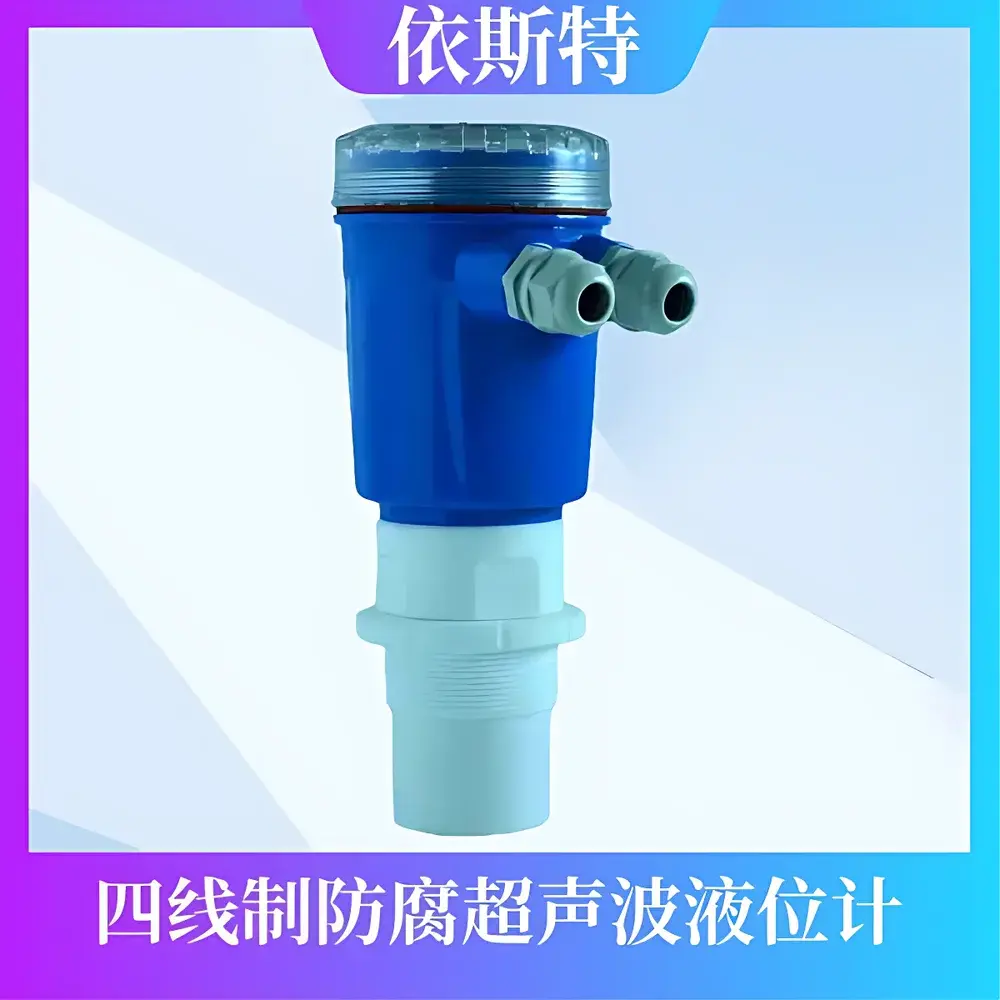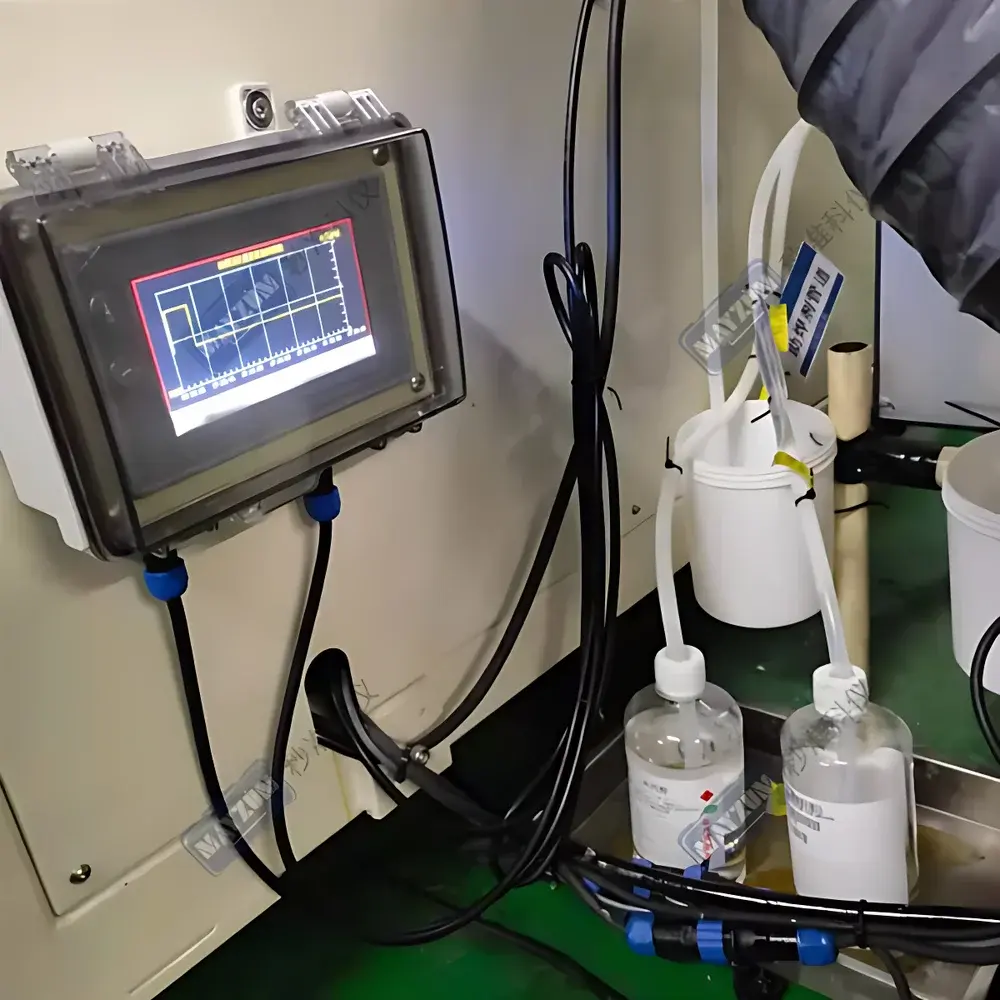
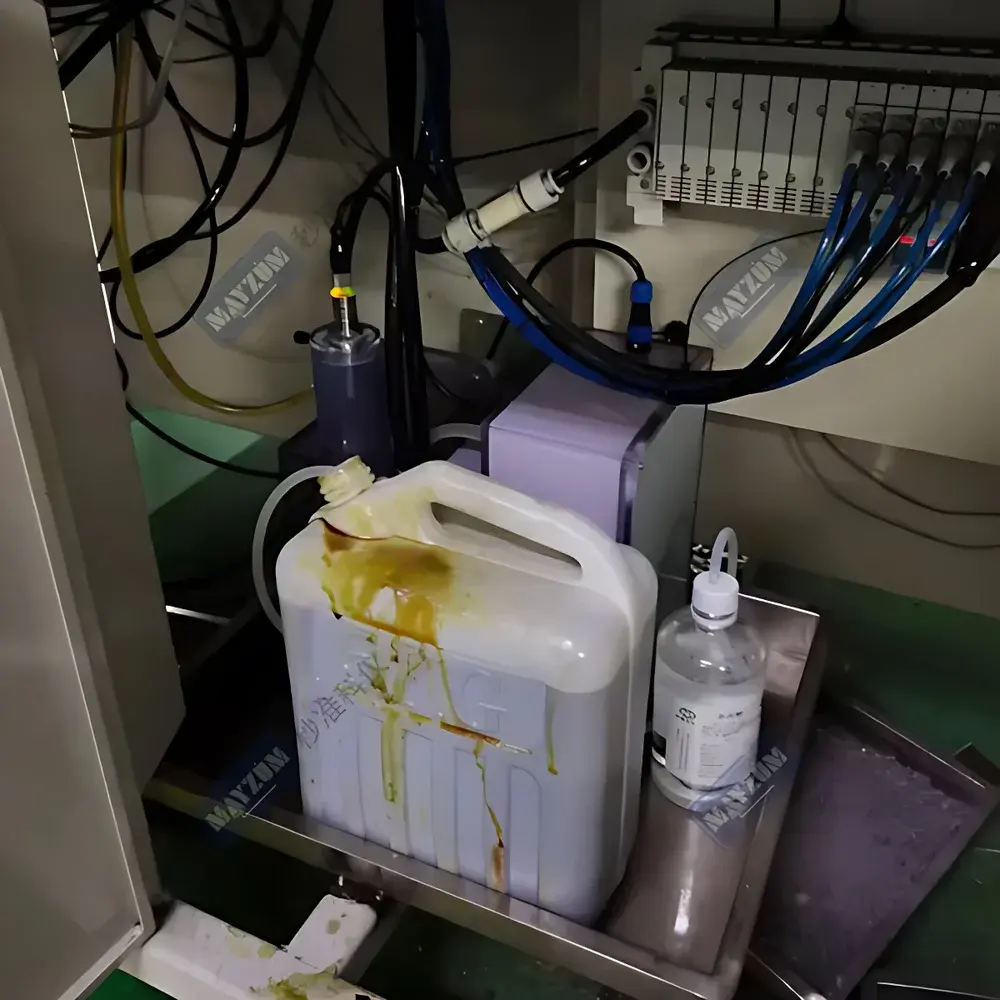
MAYZUM MAY-2001-V Online Density & Concentration Control System for Flux and Varnish
| Brand | MAYZUM |
|---|---|
| Origin | Guangdong, China |
| Manufacturer Type | OEM/ODM Manufacturer |
| Country of Origin | China |
| Model | MAY-2001-V |
| Pricing | Upon Request |
Overview
The MAYZUM MAY-2001-V is an industrial-grade online density and concentration control system engineered for continuous, real-time monitoring and automated adjustment of flux, varnish (e.g., insulating enamel or “varnish” in coil winding applications), and solvent-based process liquids—such as rosin-based fluxes, isopropyl alcohol (IPA) diluents, and lacquer solutions. Unlike conventional refractometers that infer concentration indirectly via refractive index (and thus suffer from interference by color, turbidity, or additive composition), the MAY-2001-V employs a high-stability oscillating U-tube densitometry principle compliant with ISO 12084 and ASTM D1298 standards. It directly measures mass density (g/cm³) at process temperature, enabling precise, matrix-independent quantification of active ingredient concentration in binary or pseudo-binary liquid systems. The system integrates seamlessly into wave soldering lines, dip soldering tanks, automatic coil winding machines, and PCB cleaning stations—where maintaining flux density within ±0.0005 g/cm³ of setpoint is critical to solder joint reliability, residue control, and IPC-A-610 Class 3 compliance.
Key Features
- Direct density measurement via temperature-compensated oscillating U-tube sensor—no optical path, no calibration drift due to discoloration or particulates
- Integrated Pt100 temperature sensor co-located with the measuring cell, delivering real-time thermal compensation across 0–80 °C per ISO 7500-1
- Automatic dual-fluid dosing control: independent proportional valves for flux concentrate and diluent (e.g., IPA or ethanol), triggered by programmable upper/lower density thresholds
- Embedded NAND Flash memory retains all configuration parameters, alarm limits, and calibration offsets—even after power loss
- Industrial-grade HMI: optional 4.3″ or 8″ capacitive touchscreen with customizable GUI; supports multilingual interface (English, Chinese, Vietnamese, Thai)
- Multi-protocol digital output: RS485 Modbus RTU (default), RS232, and configurable dry-contact alarms (4 channels: high/low density, flux low level, diluent low level)
- No consumables or reagents required; maintenance-free operation with <0.5% annual drift specification under continuous 24/7 duty cycle
- Compact form factor (<150 mm × 120 mm × 80 mm controller; probe length ≤300 mm) designed for panel-mount or in-line integration without mechanical retrofitting
Sample Compatibility & Compliance
The MAY-2001-V is validated for use with aqueous and organic solvent-based formulations commonly employed in electronics manufacturing, including rosin/rosin-amine fluxes (RMA, RA), water-soluble fluxes (WS), no-clean fluxes, polyurethane and polyester-based coil varnishes, and thinners such as IPA, ethanol, and xylene. It meets IP65 ingress protection rating and operates reliably in ambient temperatures from 0 °C to 80 °C. The system supports GLP/GMP-aligned data integrity through optional audit-trail-enabled firmware (MAY-LOT module), satisfying FDA 21 CFR Part 11 requirements for electronic records when paired with secure user authentication and time-stamped event logging. All analog outputs comply with IEC 61000-4 electromagnetic immunity standards for factory floor deployment.
Software & Data Management
Data acquisition and control logic are managed by an embedded Linux-based RTOS with SQLite v3.38 database engine. Standard configuration stores up to 30 GB of time-series data—including density (g/cm³), temperature (°C), liquid level (mm), valve actuation timestamps, and alarm events—with automatic rollover and compression. Historical datasets export via USB 2.0 to CSV or Excel-compatible formats. Optional MAY-LST module enables local web server access (HTTP/HTTPS) for remote browser-based monitoring; MAY-LOT adds MQTT/OPC UA support for direct integration into Siemens PCS7, Rockwell FactoryTalk, or cloud-based MES platforms (e.g., SAP ME, PTC ThingWorx). All communication layers implement TLS 1.2 encryption and role-based access control (RBAC) for operator, engineer, and administrator tiers.
Applications
- Wave soldering line flux management: maintaining optimal specific gravity (typically 0.82–0.86 g/cm³) to prevent bridging, icicles, and insufficient wetting
- Automated coil winding systems: real-time varnish concentration control during dip-coating to ensure uniform dielectric film thickness per IEC 60204-1
- In-line monitoring of cleaning bath solvents in post-soldering defluxing processes
- Continuous quality assurance in conformal coating preparation lines where solvent evaporation alters viscosity and solids content
- Process validation for ISO 9001:2015 Clause 8.5.1 and IPC J-STD-004B Annex B traceability requirements
FAQ
Does the MAY-2001-V require periodic recalibration?
No. The oscillating U-tube sensor is factory-calibrated against NIST-traceable density standards and exhibits long-term stability. Field verification using certified reference fluids (e.g., water at 20 °C = 0.99820 g/cm³) is recommended annually per ISO/IEC 17025 internal audit protocols—but full recalibration is not necessary under normal operating conditions.
Can it interface with legacy PLCs lacking Ethernet capability?
Yes. The standard RS485 Modbus RTU interface ensures compatibility with Allen-Bradley Micro800, Siemens S7-1200, Mitsubishi FX5U, and Omron CP1E series PLCs without requiring protocol gateways.
Is temperature compensation linear across the full 0–80 °C range?
Yes. The system applies a 128-point piecewise polynomial compensation curve derived from empirical fluid-specific thermal expansion models—not a single linear coefficient—ensuring <±0.0001 g/cm³ residual error after compensation.
What materials contact the process fluid?
The wetted parts consist of 316L stainless steel (sensor body), FKM (Viton®) O-rings, and borosilicate glass capillary—fully compatible with aggressive solvents and halogen-free flux chemistries per IPC-4552A.
How is alarm hysteresis handled to prevent relay chatter?
Each density threshold includes user-configurable hysteresis (0.0001–0.0050 g/cm³), and switch-on/switch-off delays (0–30 s) are independently assignable to all four digital outputs.