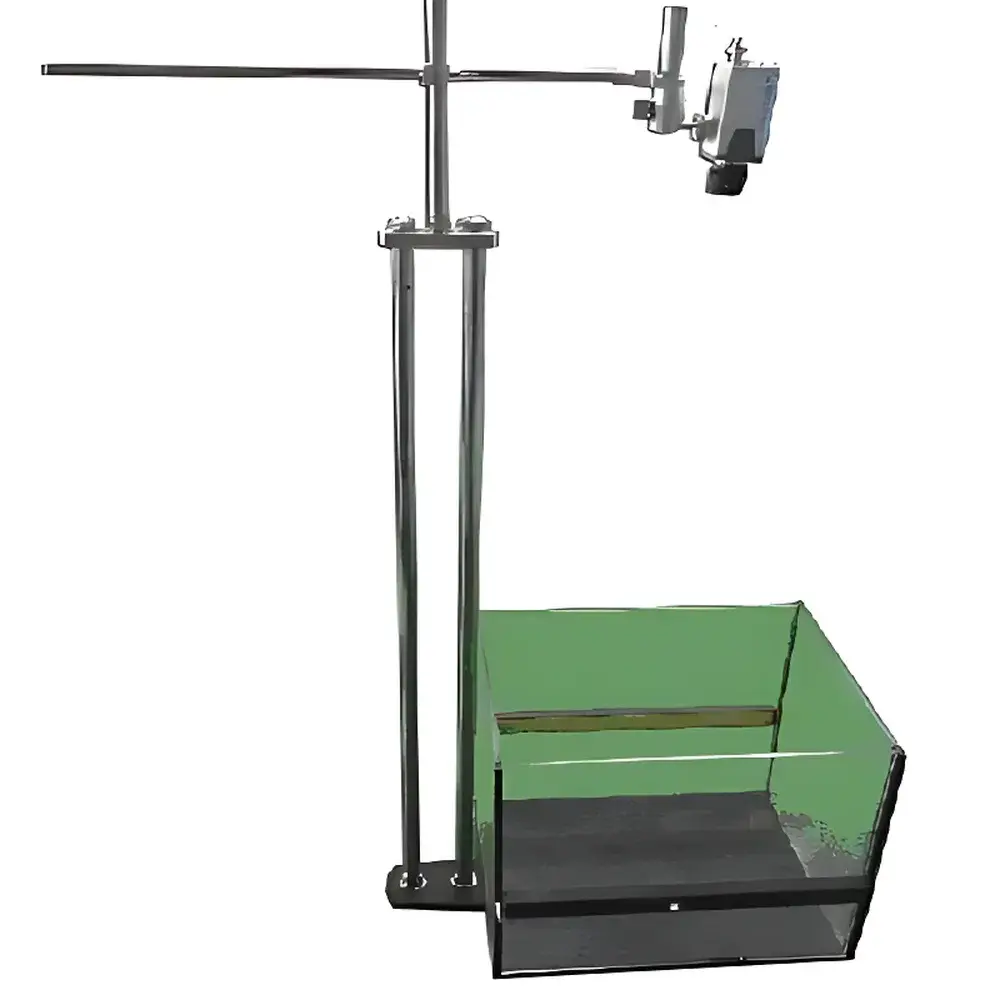
MDS-1 Multi-Color, Multi-Mouse Spontaneous Activity (Open Field) Video Tracking System
| Origin | Sichuan, China |
|---|---|
| Manufacturer Type | Distributor |
| Origin Category | Domestic |
| Model | MDS-1 |
| Pricing | Upon Request |
Overview
The MDS-1 Multi-Color, Multi-Mouse Spontaneous Activity (Open Field) Video Tracking System is a high-fidelity behavioral phenotyping platform engineered for quantitative, non-invasive assessment of spontaneous locomotor activity in rodent models. Based on real-time video-based motion tracking—compliant with established open-field test protocols—the system captures and analyzes spatial-temporal movement parameters under controlled environmental conditions. It operates on the principle of pixel-difference motion detection combined with adaptive color segmentation, enabling robust discrimination of multiple subjects without physical tagging or invasive markers. Designed to support preclinical neuroscience, psychopharmacology, toxicology, and circadian biology research, the MDS-1 delivers objective, reproducible metrics aligned with OECD TG 425, ASTM E2796, and NIH Behavioral Core Facility standards. Its architecture supports longitudinal monitoring across sessions, making it suitable for chronic intervention studies and cohort-level behavioral screening.
Key Features
- Simultaneous real-time tracking of up to four mice in a single open-field arena using multi-color segmentation algorithms—no dyeing, tattooing, or RFID implantation required.
- Configurable arena dimensions: standard internal chamber 400 × 400 × 400 mm; custom sizes available up to 1000 × 1000 × 1000 mm upon request.
- Interchangeable floor plates (black/white/gray) optimized for contrast-based detection across pigmented and albino strains (e.g., C57BL/6, BALB/c, Sprague-Dawley, Wistar).
- High-resolution monochrome CMOS camera (≥1280 × 1024 @ 30 fps) with synchronized IR illumination for low-noise imaging under dim-light or complete darkness conditions.
- Embedded behavioral controller with TTL-compatible I/O ports for integration with external stimuli (e.g., auditory cues, light pulses, drug delivery triggers).
- Hardware-accelerated video acquisition via PCIe frame grabber; supports lossless AVI export with embedded trajectory overlays and timestamped metadata.
- Modular grid definition: user-configurable zoning including 3×3, 5×5 (for multi-animal tracking), concentric rings, and custom polygonal regions of interest (ROIs).
Sample Compatibility & Compliance
The MDS-1 is validated for use with laboratory rodents—including mice (Mus musculus) and rats (Rattus norvegicus)—across diverse genetic backgrounds and age ranges (P21 to 18 months). It accommodates standard behavioral testing guidelines issued by the International Council for Laboratory Animal Science (ICLAS) and adheres to GLP-compliant data integrity requirements: all raw video, processed trajectories, and analytical outputs are stored with immutable timestamps, operator ID, and session metadata. The system supports audit trails per FDA 21 CFR Part 11 when deployed with optional electronic signature modules. Environmental control compatibility includes integration with temperature- and humidity-regulated chambers (±0.5°C, 40–60% RH), ensuring consistency across diurnal/circadian assays.
Software & Data Management
The proprietary analysis suite runs on Windows OS (XP SP3 or later) and employs a relational SQLite database backend for structured storage of experimental metadata, subject profiles, protocol templates, and result sets. All analyses generate standardized CSV and Excel-compatible reports compliant with MIAME and MINIMUM behavioral reporting standards. Software features include batch processing of multi-session datasets, inter-group statistical comparison (ANOVA, t-test, RM-ANOVA), automated outlier detection based on velocity variance thresholds, and customizable visualization dashboards (heatmaps, path plots, zone occupancy timelines). Data export supports FAIR principles: files retain provenance tags, version-controlled algorithm parameters, and machine-readable JSON sidecar files for interoperability with Python/R-based analysis pipelines (e.g., ethoPy, DeepLabCut).
Applications
- Neuropharmacology: Quantification of CNS depressant/stimulant effects (e.g., benzodiazepines, amphetamines, NMDA antagonists) via changes in total distance, center avoidance, and rearing frequency.
- Toxicology screening: Detection of subtle motor deficits following subchronic exposure to neurotoxicants (e.g., organophosphates, heavy metals) using velocity distribution profiling.
- Genetic phenotyping: High-throughput characterization of transgenic/knockout lines (e.g., APP/PS1, DAT-KO) for baseline hyperactivity, thigmotaxis, or circadian rhythm disruption.
- Microbiome–behavior axis studies: Longitudinal tracking of activity patterns before/after fecal microbiota transplantation or antibiotic treatment.
- Environmental enrichment validation: Objective assessment of locomotor complexity (e.g., path tortuosity, stop–start dynamics) in complex housing paradigms.
FAQ
What camera resolution and frame rate does the MDS-1 support?
The system uses a monochrome CMOS sensor capable of 1280 × 1024 resolution at ≥30 fps, with hardware-triggered synchronization to eliminate motion blur during rapid locomotion.
Can the software distinguish animals with similar coat colors?
Yes—via dynamic background subtraction and adaptive hue-saturation-value (HSV) thresholding calibrated to individual subject contrast profiles; performance is validated for C57BL/6 vs. DBA/2 co-housing scenarios.
Is the system compatible with third-party stimulus delivery systems?
Yes—TTL input/output ports enable precise alignment of behavioral events (e.g., freezing onset) with external triggers such as tone generators, LED arrays, or syringe pumps.
How is data security and traceability ensured?
All acquisitions are digitally signed and archived with SHA-256 checksums; database logs record user login, parameter changes, and export actions—fully auditable for regulatory submissions.
Does the system support automated rearing or grooming detection?
Rearing is detected via vertical posture classification using temporal height variance above baseline; grooming events require optional add-on module with trained CNN-based posture classifier (v2.1+).
Related Products