
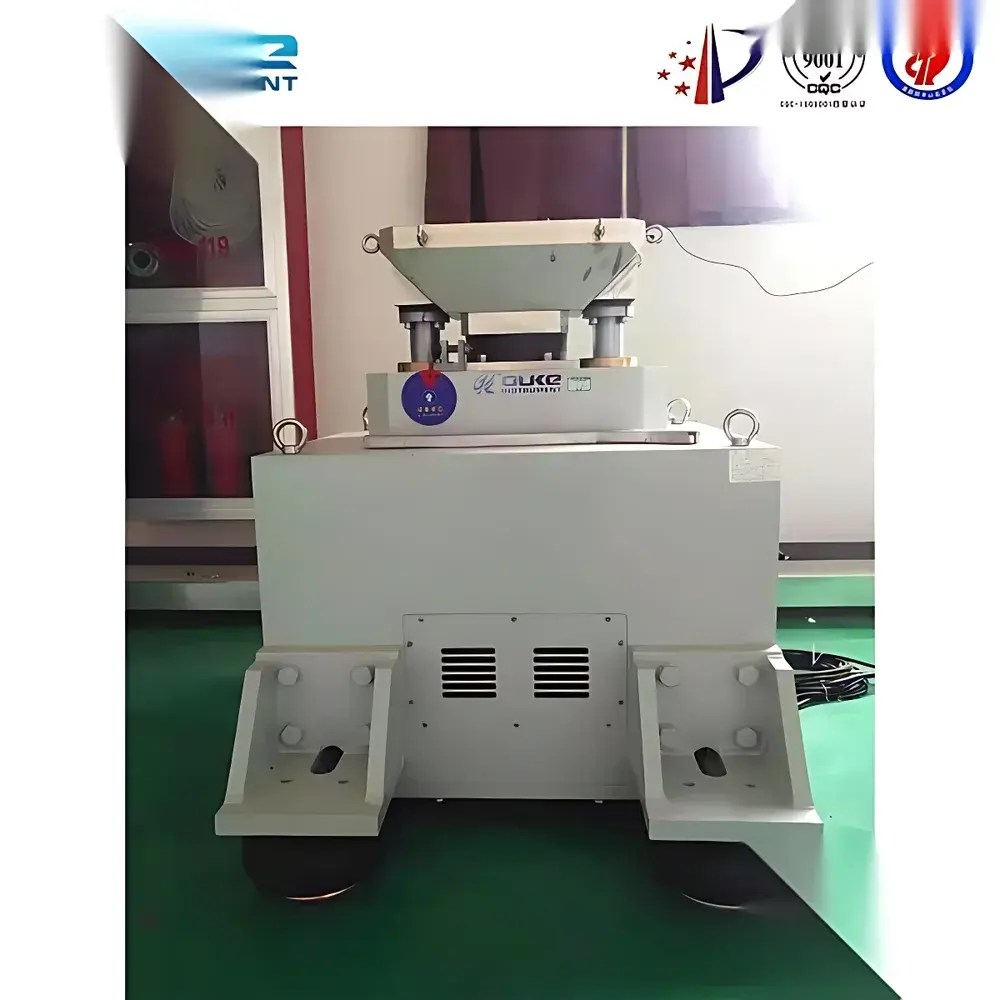
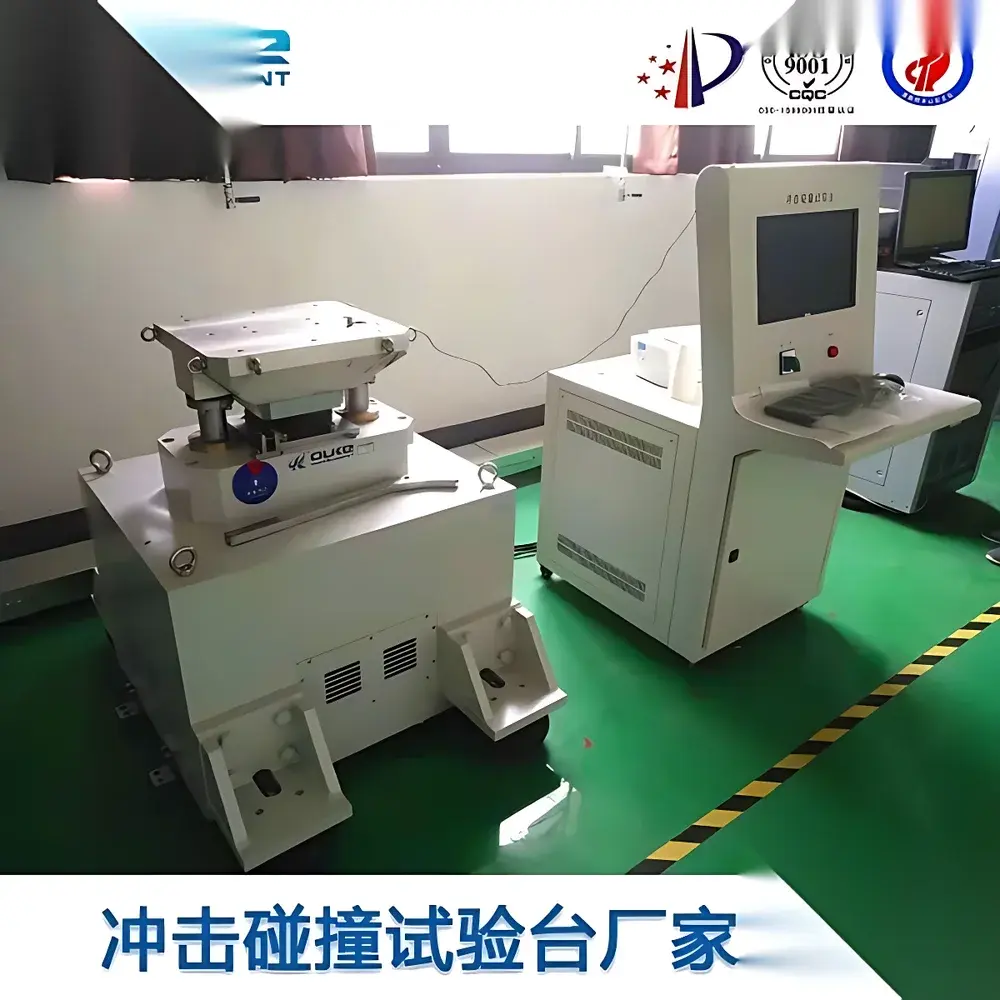
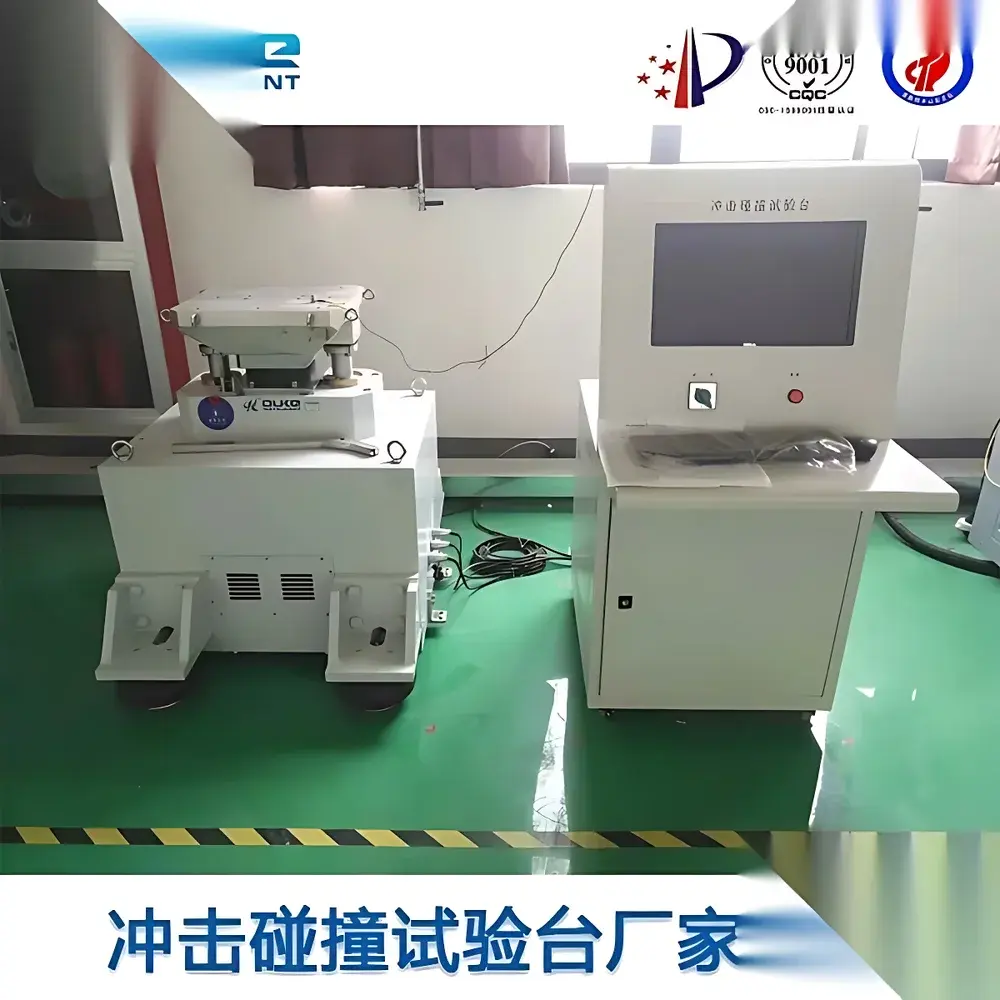
Mechanical Shock Test Table OKPZ-50
| Brand | Other Brands |
|---|---|
| Origin | Imported |
| Manufacturer Type | Authorized Distributor |
| Price | USD 16,800 (FOB) |
| Model | OKPZ-50 |
| Drop Height Range | 50–1000 mm (adjustable in 50 mm increments) |
| Impact Mass Options | 300 g, 500 g, 1000 g, 2000 g |
| Hammer Tip Radius | 7.9 mm (5/16″), 12.7 mm (1/2″), 6.35 mm (1/4″), 4.76 mm (3/16″), 3.18 mm (1/8″), 1.59 mm (1/16″) |
| Specimen Holder Radii | 8.1 mm (1/4″), 15 mm (approx. 9/16″) — flat and spherical configurations |
| Dimensions (L×W×H) | 580 × 450 × 1280 mm |
| Net Weight | ~60 kg |
| Waveform Generation | Half-sine, trapezoidal, and terminal-peak sawtooth shock pulses |
| Control Method | Digital height setting with optical feedback loop |
| Compliance | IEC 60068-2-27, MIL-STD-810H Method 516.8, GJB 150.18A, JIS C 0041, ASTM D3332 |
Overview
The OKPZ-50 Mechanical Shock Test Table is a precision-engineered drop-type shock testing system designed for laboratory- and production-line evaluation of product robustness under controlled mechanical impact conditions. It operates on the principle of free-fall impact dynamics, where a calibrated mass is elevated to a defined height and released onto a test specimen mounted on a rigid, damped platform. The resulting transient acceleration pulse—characterized by peak amplitude, duration, and waveform shape—is used to assess structural integrity, mounting reliability, and functional resilience of electronic assemblies, coatings, polymer components, and small mechanical subassemblies. Unlike servo-hydraulic or electrodynamic shakers, this system delivers high-energy, short-duration shocks without secondary rebound or residual vibration, ensuring repeatable boundary conditions essential for comparative qualification testing.
Key Features
- Digitally controlled drop height (50–1000 mm in 50 mm increments) with optical position feedback for traceable, repeatable energy input;
- Modular hammer assembly supporting six interchangeable tip radii (1.59–12.7 mm) to vary stress concentration and contact area per ISO 2041 and ASTM D3332 guidelines;
- Dual-specimen holder configuration accommodating both flat and spherical surfaces (8.1 mm and 15 mm radii) for standardized coating adhesion or impact resistance assessment;
- High-rigidity work surface engineered to maintain ±3% peak acceleration uniformity across the active test zone, minimizing spatial variability in response measurement;
- Integrated passive damping base isolates transmitted vibration, limiting floor-borne excitation to <0.05 g RMS at 1 m distance—meeting ISO 20283-2 requirements for adjacent equipment protection;
- Fail-safe interlock architecture with emergency stop, power-loss braking, and mechanical catch mechanisms ensuring operator and equipment safety during abnormal operation or unexpected power interruption;
- Expandable waveform capability: standard half-sine generation; optional firmware upgrade enables trapezoidal and terminal-peak sawtooth pulse synthesis per MIL-STD-810H Figure 516.8-1.
Sample Compatibility & Compliance
The OKPZ-50 is validated for use with rigid and semi-rigid specimens up to 200 mm × 200 mm footprint and 5 kg maximum mass—including painted metal panels, injection-molded plastic housings, PCB-mounted modules, and thin-film coated substrates. Its mechanical design conforms to the physical boundary conditions specified in IEC 60068-2-27 (Ed. 4.0, 2022) for shock testing of electrotechnical devices, and supports full compliance verification against MIL-STD-810H Method 516.8 (Shock), GJB 150.18A (China MIL), JIS C 0041 (Japanese Industrial Standard), and ASTM D3332 (Standard Test Methods for Mechanical Shock Fragility of Products). All hardware interfaces and control logic are designed to support GLP-compliant documentation workflows, including audit-trail-capable parameter logging and user-access-controlled calibration records.
Software & Data Management
While the OKPZ-50 operates as a standalone electromechanical system, it integrates with third-party data acquisition platforms via TTL-level trigger output and analog acceleration monitor port (±10 V, 100 mV/g sensitivity). Optional USB-connected digital controller module provides PC-based setup, test sequencing, and pass/fail reporting aligned with FDA 21 CFR Part 11 requirements—including electronic signatures, version-controlled test protocols, and immutable event logs. Raw shock pulse data may be exported in CSV or MATLAB-compatible MAT format for post-test spectral analysis (e.g., SRS, PSD) using industry-standard tools such as VibrationVIEW or ME’scope.
Applications
- Evaluation of paint chip resistance and coating delamination on automotive trim components per ASTM D2794;
- Functional survivability testing of consumer electronics enclosures subjected to accidental drop events;
- Qualification of MEMS sensor packaging under repetitive low-g, high-frequency impact exposure;
- Verification of solder joint integrity in lead-free PCB assemblies prior to thermal cycling;
- Material-level characterization of brittle polymer fracture thresholds under localized compressive loading;
- Pre-compliance screening for military-grade ruggedization requirements (MIL-STD-810H, Section 516.8).
FAQ
What standards does the OKPZ-50 directly support out-of-the-box?
It meets the mechanical implementation requirements of IEC 60068-2-27, MIL-STD-810H Method 516.8, and ASTM D3332 without modification. Calibration certificates include traceability to NIST-traceable force and displacement standards.
Can the system generate custom shock pulse profiles beyond half-sine?
Yes—optional firmware and external signal generator integration enable trapezoidal and terminal-peak sawtooth waveforms, consistent with MIL-STD-810H Annex G definitions.
Is the drop height resolution sufficient for ISO 2041-compliant repeatability?
With 50 mm incremental adjustment and optical position verification, the system achieves ≤±0.5% height uncertainty—well within ISO 2041 Class 2 repeatability tolerances for laboratory-grade shock testers.
Does the system include built-in data recording?
No internal storage is provided; however, synchronized analog output and TTL trigger signals ensure seamless integration with external oscilloscopes, DAQ systems, or high-speed cameras for time-correlated response capture.
What maintenance is required to sustain calibration validity?
Annual verification of drop height accuracy, hammer mass certification, and platform flatness (per ISO 10816-3) is recommended. No consumables or scheduled part replacements are required under normal operating conditions.



