
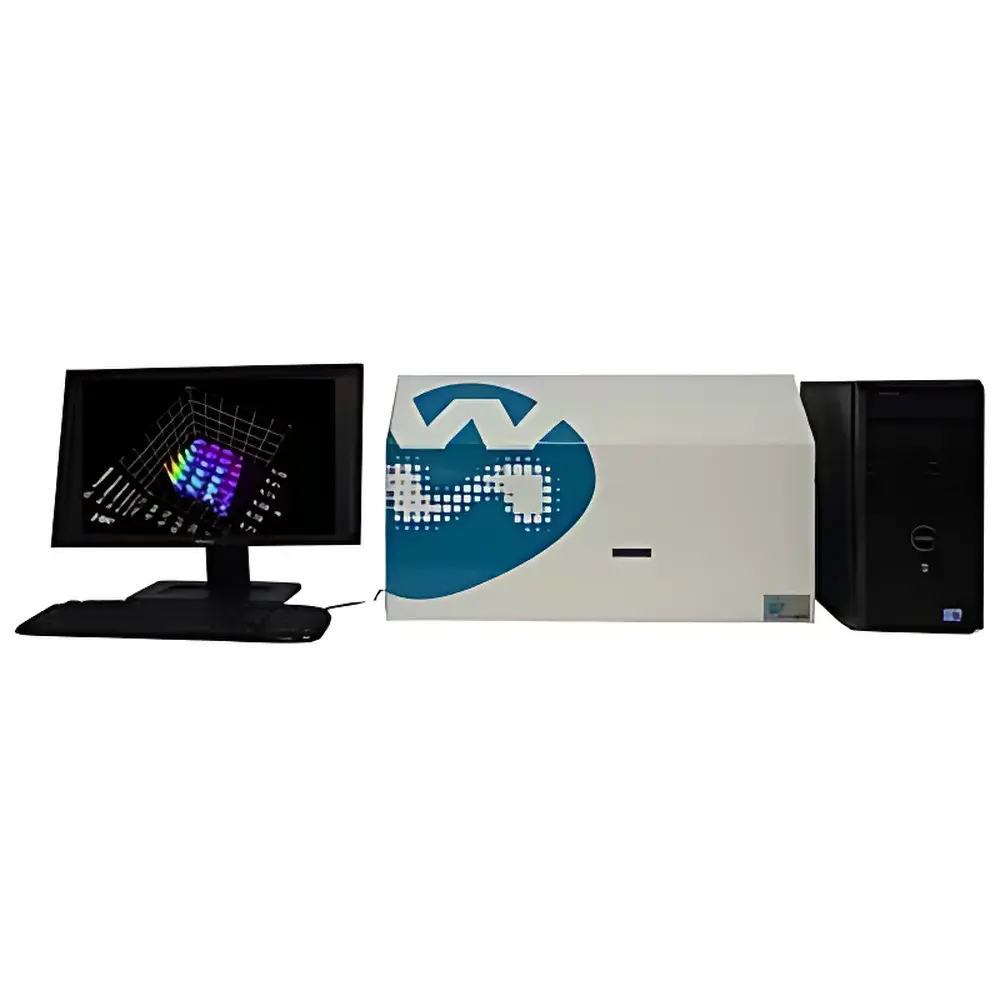
Mecwins SCALA Scanning Laser Profilometer
| Brand | Mecwins |
|---|---|
| Origin | Spain |
| Manufacturer Type | Authorized Distributor |
| Origin Category | Imported Instrument |
| Model | SCALA |
| Pricing | Available Upon Request |
Overview
The Mecwins SCALA Scanning Laser Profilometer is a modular, non-contact optical metrology system engineered for high-fidelity topographic and dynamic mechanical characterization of micro- and nano-scale structures. Operating on the principle of laser beam deflection detection—where a focused laser spot scans across a sample surface and reflected light is captured by a position-sensitive detector—the SCALA delivers quantitative height data without physical contact or optical focusing. Unlike interferometric or confocal techniques, it does not rely on surface reflectivity or coherence conditions, enabling robust measurements on low-reflectance, semi-transparent, or heterogeneous materials—including SU-8 photoresist, polymer films, hydrogels, and biological layers. Its core architecture integrates a precision galvanometric scanner housed within a temperature- and humidity-controlled environmental chamber, ensuring thermal stability and minimizing drift during long-duration acquisitions. The system supports both static profilometry (2D/3D topography) and dynamic mode operation (resonance frequency mapping, thermal noise analysis, and real-time deflection monitoring), making it uniquely suited for in situ and operando studies of microelectromechanical systems (MEMS), nanomechanical sensors, and soft matter interfaces.
Key Features
- Modular design with optional expansion modules: Dynamic Measurement Module, Liquid-Environment 3D Imaging Module, and Full-Field 3D Topography Module
- Non-contact, focus-free operation—enables measurement of highly irregular, tilted, or large-area surfaces (up to 100 mm × 100 mm standard stage)
- Sub-nanometer vertical resolution in Z-direction (comparable to AFM), with lateral resolution down to ~1 µm—optimized for high-throughput screening rather than atomic-scale imaging
- Real-time resonance frequency extraction via thermal noise spectrum analysis and forced oscillation sweeps up to 1 MHz
- Compatible with liquid cells for in situ measurements under aqueous or electrochemical environments, supporting integrated potentiostat coupling for electrochemically stimulated response tracking
- No requirement for surface metallization or reflective coating; validated performance on transparent polymers, silicon nitride membranes, and biofunctionalized cantilever arrays
Sample Compatibility & Compliance
The SCALA accommodates diverse sample geometries and material classes—including MEMS devices (cantilevers, bridges, diaphragms), biosensor arrays, thin-film coatings, pharmaceutical tablets, food packaging surfaces, and cultured cell monolayers. It complies with ISO 25178-2 (Geometrical product specifications — Surface texture: Areal — Part 2: Terms, definitions and surface texture parameters) for areal surface characterization. For regulated environments, raw data acquisition and processing workflows support audit-trail generation and user-access controls aligned with GLP and GMP documentation requirements. While not FDA-cleared as a diagnostic device, its measurement traceability adheres to NIST-traceable calibration protocols for displacement and frequency domains.
Software & Data Management
The proprietary SCALA Control Suite provides synchronized acquisition, real-time visualization, and post-processing tools for both static and dynamic datasets. It supports time-series profiling, frequency-domain spectral analysis (FFT-based resonance identification), and multi-parameter correlation (e.g., deflection vs. temperature or electrochemical potential). Export formats include ASCII, CSV, HDF5, and industry-standard .stp for CAD-integrated metrology validation. Software architecture conforms to FDA 21 CFR Part 11 guidelines for electronic records and signatures when deployed with role-based authentication and immutable log archiving enabled. Batch processing scripts allow automated analysis of multi-cantilever arrays—enabling high-throughput quantification of >100 individual resonators per run.
Applications
- MEMS/NEMS development: Static deformation mapping under thermal, mechanical, or chemical stimulus; resonance shift quantification for mass sensing (e.g., protein binding, gas adsorption)
- Biosensing: Label-free detection using functionalized microcantilever arrays—achieving detection limits up to 10× lower than conventional microarray platforms
- Pharmaceutical QA/QC: Tablet surface roughness (Ra, Rq, Rsk) and coating uniformity assessment per USP
- Materials science: Thin-film stress evolution, polymer swelling kinetics, and interfacial delamination dynamics in multilayer stacks
- Food science: Microstructural integrity evaluation of edible films, crumb structure analysis in baked goods, and contamination detection on packaging surfaces
- Academic research: Cross-platform validation against QCM-D, AFM, and LDV—particularly where large-area, liquid-phase, or dynamic-static dual-mode capability is required
FAQ
Can the SCALA operate inside a glovebox or controlled-atmosphere chamber?
Yes—its modular scanner head can be integrated into custom environmental enclosures with optical viewport access; full system calibration is recommended after reinstallation.
Does the system require periodic recalibration?
Annual verification using NIST-traceable step-height standards is recommended; onboard thermal drift compensation reduces need for frequent recalibration.
Is third-party software integration supported?
Python and MATLAB APIs are available for custom automation; LabVIEW drivers and OPC UA connectivity options are offered upon request.
What is the maximum scan area without stage movement?
Standard configuration supports 10 mm × 10 mm at highest lateral resolution; extended field-of-view up to 100 mm × 100 mm is achievable with motorized XY stage (optional).



