
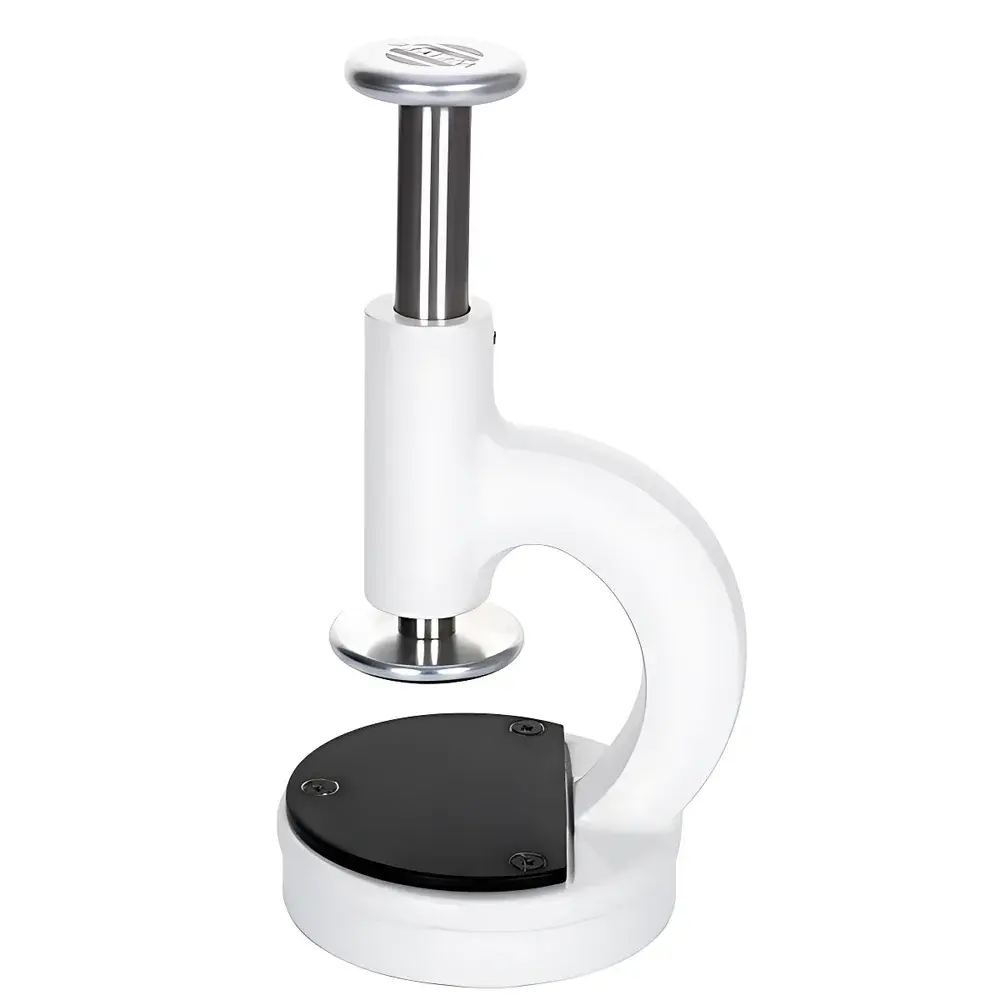
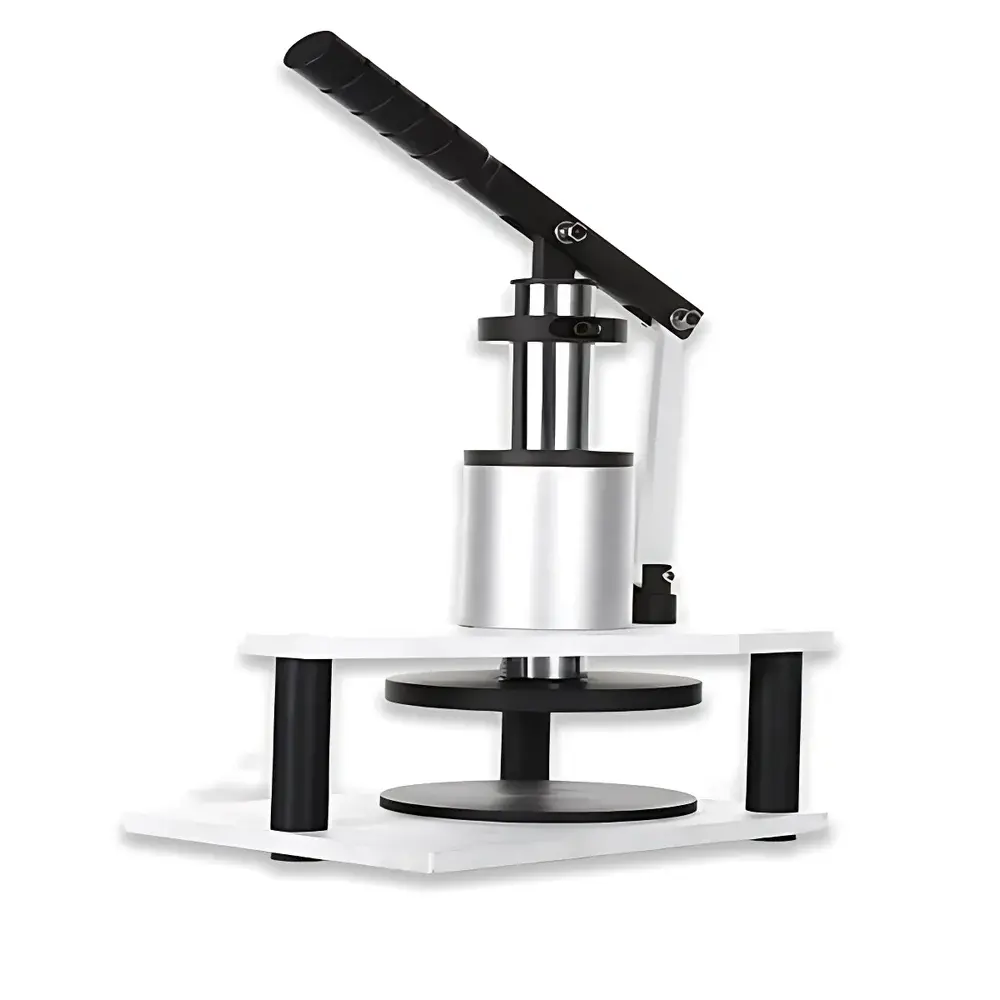
Metallographic Specimen Flattening Press WYP-1 & WYP-2 (WEIYEE)
| Brand | WEIYEE |
|---|---|
| Origin | Guangdong, China |
| Manufacturer Type | Authorized Distributor |
| Country of Origin | China |
| Model | WYP-1 (Direct-Pressure Type), WYP-2 (Lever-Arm Type) |
| Pricing | Available Upon Request |
Overview
The WEIYEE WYP-1 and WYP-2 Metallographic Specimen Flattening Presses are precision mechanical tools engineered for the controlled, uniform flattening of metallographic specimens prior to mounting, grinding, or polishing. Unlike hydraulic or motorized systems, these presses rely on purely mechanical force transmission—either direct vertical loading (WYP-1) or first-class lever amplification (WYP-2)—to generate consistent compressive stress across the specimen surface. This ensures minimal edge deformation, preservation of microstructural integrity at the specimen–holder interface, and reproducible thickness control essential for subsequent sectioning and quantitative image analysis. Designed specifically for laboratories adhering to ASTM E3, ISO 1463, and GB/T 13298 standards for metallographic specimen preparation, the WYP series supports routine QC workflows in foundries, heat treatment facilities, and materials R&D labs where dimensional stability and inter-laboratory comparability are critical.
Key Features
- Mechanical Force Integrity: Both models eliminate variability from pneumatic fluctuations or electrical drift; WYP-1 delivers direct-force application via calibrated screw-driven platen, while WYP-2 employs a precision-machined lever arm with fixed fulcrum geometry for repeatable 5:1 mechanical advantage.
- Specimen Compatibility: Accommodates standard metallographic mounts (25 mm, 30 mm, and 40 mm diameter phenolic, epoxy, or bakelite resins) and flat metallic samples up to 20 mm in height and 50 mm in maximum planar dimension.
- Adjustable Compression Limit: Integrated micrometer stop on the WYP-1 and vernier-scaled pressure indicator on the WYP-2 allow operators to set and reproduce target compression displacements within ±0.02 mm tolerance.
- Robust Architecture: Cast iron base and hardened steel platens ensure long-term dimensional stability and resistance to wear under repeated load cycling—critical for high-throughput lab environments.
- Ergonomic Operation: Lever-arm design (WYP-2) reduces operator effort by >80% compared to manual direct-pressure systems, minimizing fatigue during extended preparation sessions.
Sample Compatibility & Compliance
The WYP-1 and WYP-2 are validated for use with ferrous and non-ferrous alloys, sintered metals, ceramic composites, and coated substrates commonly analyzed per ASTM E3 (Standard Guide for Preparation of Metallographic Specimens), ISO 1463 (Metallic and oxide coatings — Measurement of coating thickness — Microscopical methods), and Chinese national standard GB/T 13298 (Metallographic examination of metals). Each unit ships with traceable calibration documentation aligned to ISO/IEC 17025 requirements for measurement equipment used in accredited testing laboratories. The absence of oil, electricity, or compressed air eliminates contamination risk to specimens and simplifies integration into cleanroom-adjacent prep areas compliant with ISO 14644-1 Class 8 environments.
Software & Data Management
As fully mechanical instruments, the WYP-1 and WYP-2 do not incorporate embedded electronics, firmware, or digital interfaces. All operational parameters—including applied load estimation (derived from lever ratio and input force), compression displacement, and cycle count—are recorded manually in laboratory notebooks or LIMS-integrated log sheets. This analog architecture ensures full compliance with GLP and GMP documentation requirements where audit trails must reflect operator action rather than automated data capture. For labs requiring electronic record retention, WEIYEE provides optional DIN A4-format printable calibration logs and SOP templates compatible with 21 CFR Part 11–compliant electronic signature workflows when used with validated document management systems.
Applications
- Pre-mounting flattening of irregularly shaped castings or forged components to ensure uniform resin flow and void-free encapsulation.
- Thickness equalization of multi-layered brazed or cladded specimens prior to cross-sectional analysis.
- Stress-relief flattening of thin foils (<0.5 mm) and wire sections to prevent curling during hot mounting.
- Standardization of specimen height across batches for automated grinding/polishing systems requiring precise Z-axis referencing.
- Preparation of reference standards for hardness testing (e.g., ASTM E10, E18) where parallelism and surface flatness directly affect indenter contact geometry.
FAQ
What is the maximum recommended specimen height for the WYP-2 lever-type press?
The WYP-2 accommodates specimens up to 20 mm in height when using the standard anvil configuration; taller samples require optional extended-height anvil kits (Part No. WYP-ANV-EXT).
Can the WYP-1 be used with thermosetting resins during hot mounting?
No—both WYP-1 and WYP-2 are intended for cold flattening only. Hot mounting must be performed separately in dedicated hot presses operating at ≥150 °C and ≥25 MPa pressure.
Is third-party calibration certification available?
Yes—WEIYEE partners with CNAS-accredited metrology laboratories in Guangdong to provide ISO/IEC 17025-compliant calibration certificates upon request, including uncertainty budgets for displacement measurement.
Do these presses meet requirements for ISO 9001 internal audit documentation?
Yes—the mechanical design, absence of software, and inclusion of calibration log templates satisfy Clause 7.1.5.2 (Monitoring and measuring resources) for non-automated equipment used in quality management systems.



