
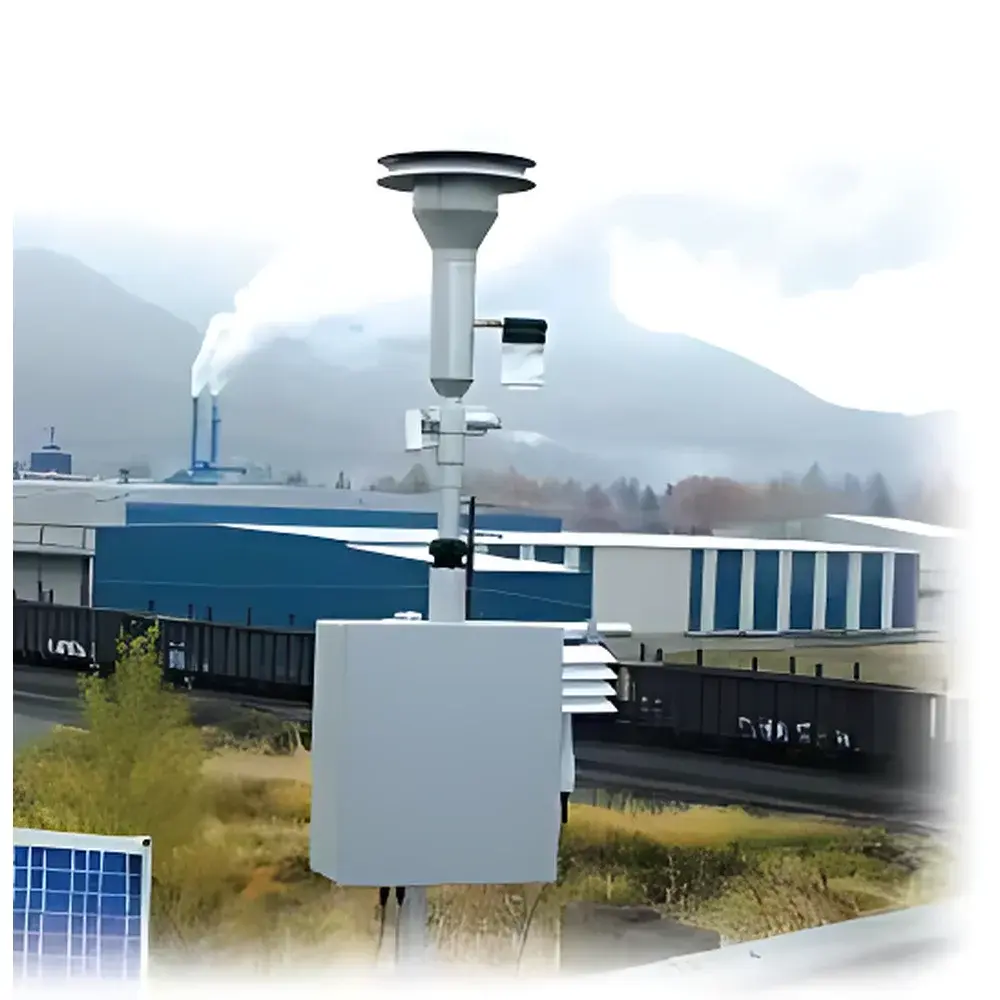
METONE E-BAM Portable Beta Attenuation PM2.5 Ambient Particulate Monitor
| Brand | METONE |
|---|---|
| Origin | USA |
| Manufacturer Type | Authorized Distributor |
| Origin Category | Imported |
| Model | E-BAM |
| Pricing | Available Upon Request |
Overview
The METONE E-BAM is a field-deployable, real-time ambient particulate matter monitor engineered for continuous, regulatory-grade measurement of PM₂.₅ mass concentration using the beta attenuation monitoring (BAM) principle. This method relies on the quantitative attenuation of beta radiation (from a 14C source) as aerosol-laden air is drawn through a precision-collected filter tape. The differential absorption of beta particles—directly proportional to deposited particle mass—is measured with high linearity and traceability to U.S. EPA Reference Method EQPM-0899 for PM₂.₅ and PM₁₀. Unlike gravimetric filter-based methods requiring manual handling, lab analysis, and extended turnaround times, the E-BAM performs fully automated, unattended sampling, real-time mass calculation, and data logging—enabling compliance with 40 CFR Part 53 requirements for Federal Equivalent Methods (FEM). Its design supports long-term deployment in unsheltered outdoor environments—including rooftops, roadside locations, industrial perimeters, and emergency response zones—without auxiliary enclosures or climate control.
Key Features
- Regulatory-compliant BAM technology certified to meet or exceed U.S. EPA PM₂.₅ Class III performance specifications (40 CFR Part 53)
- True portability: compact aluminum housing, integrated battery option, and <15-minute field installation without tools or external infrastructure
- Multi-fraction particle sizing: interchangeable inlet heads for TSP, PM₁₀, PM₂.₅, and PM₁ cutpoints—each meeting ISO 25243 and EPA-designated flow and aerodynamic separation criteria
- Real-time data resolution: second-by-second concentration updates with automatic 1-minute averaged records stored onboard
- Ruggedized environmental operation: IP65-rated enclosure; operational across –30 °C to +50 °C and 0–95% RH (non-condensing)
- Integrated metrology: calibrated mass flow controller, absolute pressure sensor, and NIST-traceable temperature sensor for real-time volumetric correction
- Self-diagnostic startup sequence: automated leak check, flow verification, and tape advance validation with on-screen error guidance
Sample Compatibility & Compliance
The E-BAM is validated for ambient air matrices containing semi-volatile organic compounds (SVOCs), ammonium nitrate, and other hygroscopic species that may volatilize during traditional filter weighing. Its continuous, low-flow (16.7 L/min) sampling preserves volatile components on the collection tape, eliminating underestimation bias common in gravimetric methods. Data outputs comply with U.S. EPA Data Quality Objectives (DQOs) for PM monitoring networks and support reporting under NAAQS (National Ambient Air Quality Standards). Instrument firmware and data handling protocols are structured to align with GLP principles, including audit-ready timestamps, operator ID tagging, and tamper-evident memory logs. While not inherently 21 CFR Part 11 compliant, optional MicroMet Plus software enables electronic signature capability, secure user authentication, and full audit trail generation for regulated QA/QC environments.
Software & Data Management
MicroMet Plus is the native configuration, visualization, and archival platform for the E-BAM. It provides bidirectional communication via RS-232, USB, or optional cellular/satellite telemetry modules (e.g., METONE CellMod or SAT-Link). The software supports scheduled data pulls, remote parameter reconfiguration, and simultaneous ingestion of up to six auxiliary analog inputs (e.g., meteorological sensors). Onboard memory retains ≥200 days of 1-minute average PM₂.₅ data plus co-located measurements (temperature, pressure, flow, relative humidity, and status flags). Export formats include CSV, ASCII, and XML—compatible with EPA’s AQS (Air Quality System), local GIS platforms, and third-party SCADA systems. All data files carry embedded metadata: instrument serial number, calibration history, inlet type, and environmental correction coefficients.
Applications
- Regulatory ambient air quality monitoring networks (state/local agencies, tribal programs)
- Industrial fence-line and community air monitoring (CAM) initiatives
- Emergency response and disaster assessment (wildfire smoke, chemical release, dust events)
- Research-grade exposure studies requiring spatially distributed, time-resolved PM₂.₅ data
- Verification of engineering controls and mitigation effectiveness (e.g., construction site dust suppression)
- Calibration reference for lower-cost optical sensors deployed in dense urban sensor grids
FAQ
Does the E-BAM require routine calibration with NIST-traceable standards?
Yes—annual field calibration using EPA-approved transfer standards (e.g., SRM 1648a Urban Dust) is required to maintain FEM equivalency. Zero/span checks are performed automatically every 24 hours using internal reference tape segments.
Can the E-BAM operate independently without external power?
It supports 12 VDC input and includes an optional rechargeable battery pack enabling up to 72 hours of continuous operation in off-grid deployments.
Is the PM₂.₅ inlet interchangeable with PM₁₀ or TSP configurations in the field?
Yes—all inlet assemblies are tool-free and hot-swappable; each includes its own impactor stage, flow straightener, and certified cutpoint performance documentation.
How does the E-BAM handle high-humidity conditions that might affect beta attenuation accuracy?
Integrated temperature and relative humidity sensors feed real-time corrections into the mass calculation algorithm per EPA guidance in Appendix L of 40 CFR Part 53.
What data security protocols apply to remote telemetry transmissions?
Cellular and satellite modules support TLS 1.2 encryption; MicroMet Plus enforces role-based access control and encrypted local database storage (AES-256).
Related Products







