
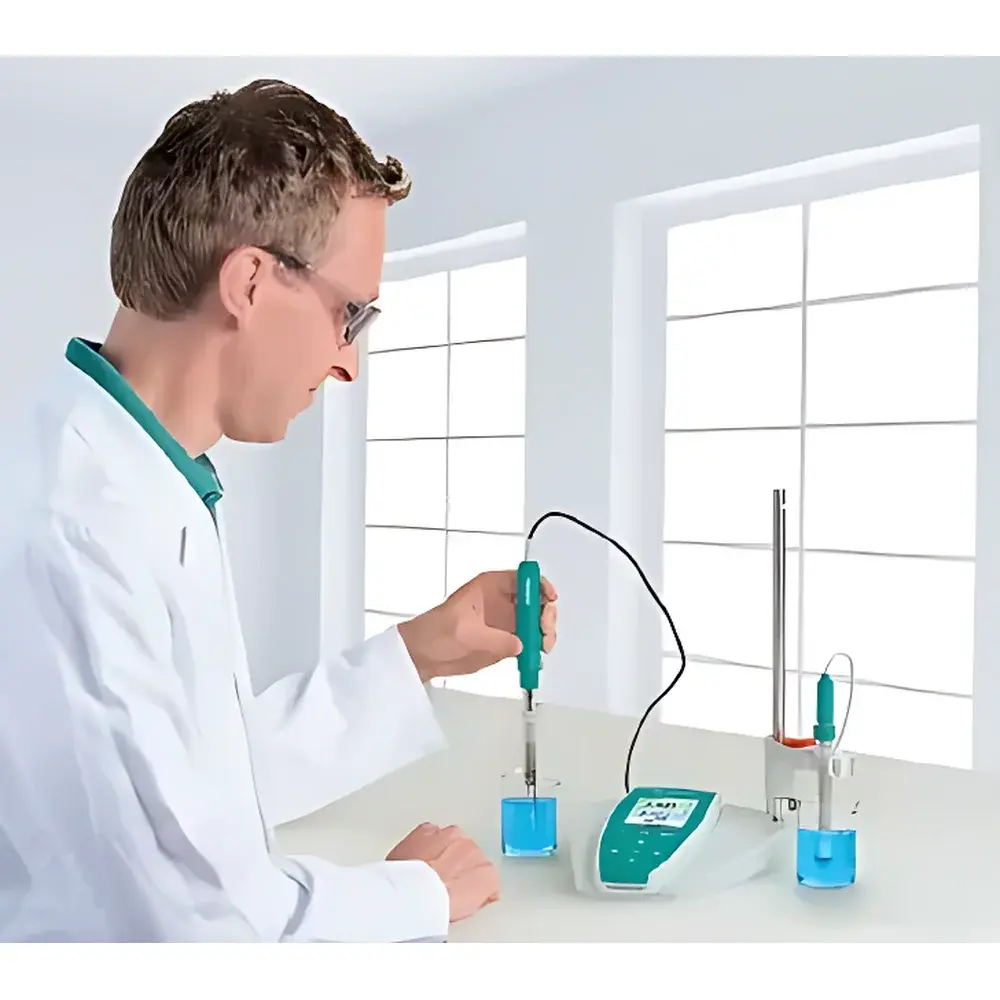
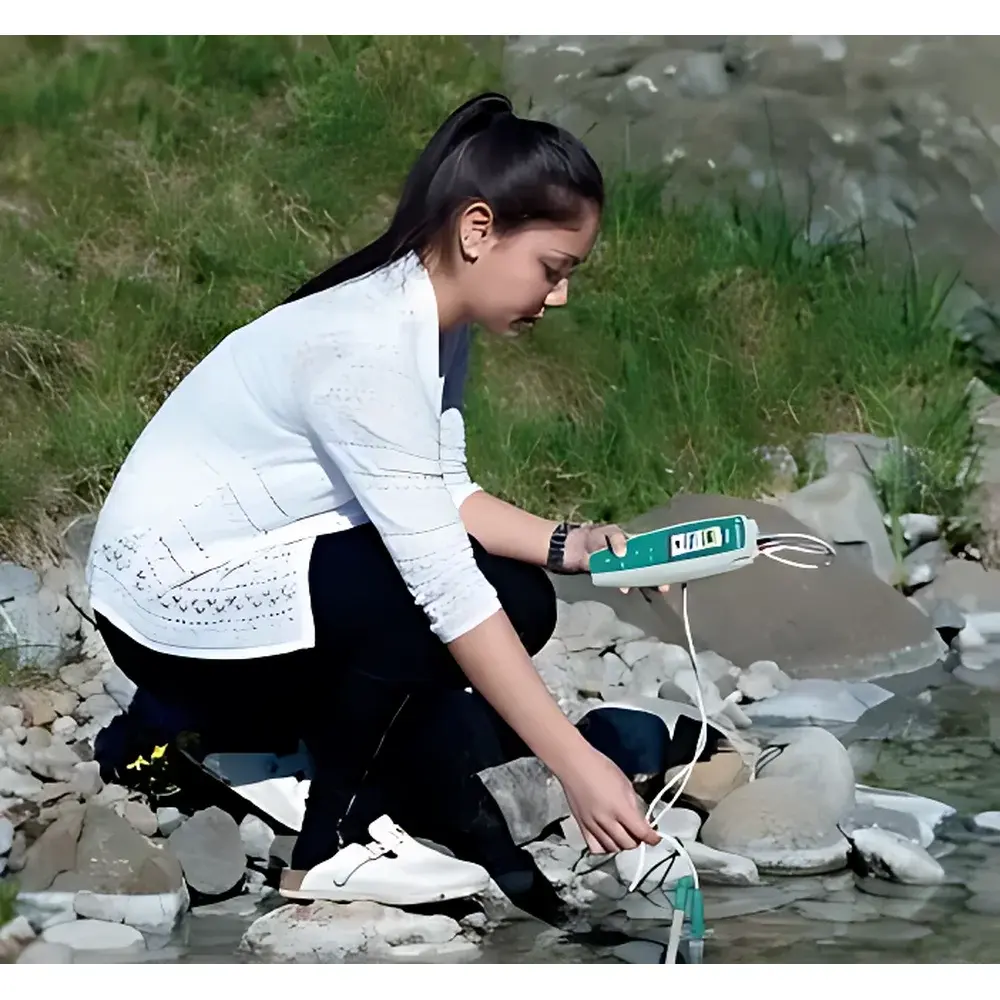
Metrohm 913 Portable pH Meter
| Brand | Metrohm |
|---|---|
| Origin | Switzerland |
| Manufacturer Type | Manufacturer |
| Origin Category | Imported |
| Model | 913 |
| Instrument Type | Portable |
| Parameter Type | Single-Parameter (pH) |
| Measurement Accuracy | ±0.001 pH |
| IP Rating | IP67 |
| Display | Color LCD with Multilingual Support |
| Data Management | GLP-Compliant Logging, tiBase Integration, LIMS/Excel Export Capability |
| Electrode Interface | Standard BNC + Optional Smart Electrode Adapters |
| Operating Modes | Field, Laboratory, and Process-Support Configurations |
Overview
The Metrohm 913 Portable pH Meter is a precision-engineered electrochemical instrument designed for high-fidelity pH measurement across diverse operational environments—from regulated laboratory workflows to demanding field applications. Built upon Metrohm’s decades-long heritage in potentiometric analysis, the 913 employs a high-impedance, low-drift analog front-end and temperature-compensated Nernst equation calculation to deliver traceable, reproducible pH results with ±0.001 pH accuracy. Its dual-channel architecture supports simultaneous pH and conductivity measurement when paired with compatible electrodes (e.g., iUnitrode or Primatrode), enabling comprehensive aqueous sample characterization without hardware interchange. The device operates under strict adherence to ISO 8655 (volumetric calibration principles), ASTM D1293 (standard test method for pH of water), and USP guidelines—ensuring metrological integrity for QC/QA, environmental monitoring, and process validation tasks.
Key Features
- IP67-rated rugged housing for dust- and water-immersion resistance—validated for continuous outdoor use in rain, humidity, and variable ambient temperatures.
- High-resolution color LCD display with intuitive icon-based navigation; supports English, German, French, Spanish, Chinese, and Japanese language overlays.
- Two-tier user interface: “Standard Mode” for routine measurements and “Expert Mode” enabling calibration curve editing, slope/offset diagnostics, and electrode status monitoring (including junction potential drift alerts and membrane hydration indicators).
- Integrated memory stores up to 1,000 measurement records with timestamps, temperature stamps, electrode ID tags, and operator codes—each entry compliant with GLP audit-trail requirements.
- Modular design accommodates three deployment configurations: handheld field unit (with carry case and battery pack), benchtop laboratory version (with integrated stand and power adapter), and process-ready variant (with mounting bracket and extended cable options).
Sample Compatibility & Compliance
The 913 is validated for aqueous and mildly buffered solutions including drinking water, wastewater effluents, soil extracts, fermentation broths, and pharmaceutical buffers. It interfaces seamlessly with Metrohm’s full range of pH electrodes—including refillable gel-junction, double-junction, and solid-state sensors—ensuring compatibility with aggressive matrices (e.g., high-salinity brines, low-ionic-strength deionized water, or protein-rich biological fluids). All firmware and data handling routines comply with FDA 21 CFR Part 11 requirements for electronic records and signatures when used with tiBase software and enabled audit-log settings. Calibration protocols support multi-point (2–5 point) standardization using NIST-traceable buffer sets (pH 4.01, 7.00, 9.21, 10.01), with automatic slope calculation and acceptance criteria per ISO/IEC 17025:2017 Clause 7.7.
Software & Data Management
Data export and traceability are implemented via Metrohm’s tiBase desktop application, which provides secure, encrypted transfer of measurement logs, calibration histories, and electrode performance metrics. tiBase generates PDF reports conforming to GLP templates—including instrument ID, operator signature fields, calibration verification stamps, and uncertainty estimates derived from electrode response time and repeatability testing. Raw CSV exports integrate natively with LIMS platforms (e.g., LabWare, STARLIMS) and Microsoft Excel for statistical process control (SPC) charting or trend analysis. All data files retain embedded metadata (UTC timestamps, firmware revision, sensor serial numbers) to satisfy ISO/IEC 17025 accreditation audits and internal quality system reviews.
Applications
- Environmental field surveys: On-site pH and conductivity profiling of surface water, groundwater wells, and sediment porewater.
- Pharmaceutical manufacturing: In-process monitoring of buffer preparation, cleaning validation rinse water, and bioreactor pH feedback loops.
- Food & beverage QA: Batch-to-batch consistency checks for dairy products, juices, and fermented foods per Codex Alimentarius standards.
- Academic research: Teaching labs requiring robust, student-proof instrumentation with configurable security levels and pedagogical calibration exercises.
- Wastewater treatment plants: Real-time compliance tracking against EPA 40 CFR Part 136 discharge limits and local regulatory thresholds.
FAQ
Does the 913 support automatic temperature compensation (ATC)?
Yes—the instrument accepts input from integrated or external Pt1000 temperature probes and applies NIST-referenced thermistor correction algorithms during pH calculation.
Can I use non-Metrohm electrodes with the 913?
BNC-compatible electrodes may be connected; however, smart features (e.g., auto-electrode recognition, lifetime tracking, and calibration history sync) require Metrohm iUnitrode or Primatrode series sensors.
Is firmware upgrade capability included?
Firmware updates are delivered via tiBase and applied through USB-C connection—no service contract required.
What is the battery life under continuous operation?
With alkaline AA batteries, typical runtime exceeds 200 hours; lithium AA variants extend this to >350 hours under standard measurement intervals.
How does the 913 meet GLP documentation requirements?
Each stored measurement includes immutable metadata: date/time stamp, operator ID, electrode serial number, calibration validity window, and environmental conditions—fully exportable in tamper-evident formats for regulatory submission.
Related Products





