
Metrohm 914 pH/Conductivity Meter
| Brand | Metrohm |
|---|---|
| Origin | Switzerland |
| Manufacturer Type | Manufacturer |
| Origin Category | Imported |
| Model | 914 |
| Detection Parameters | Multi-parameter |
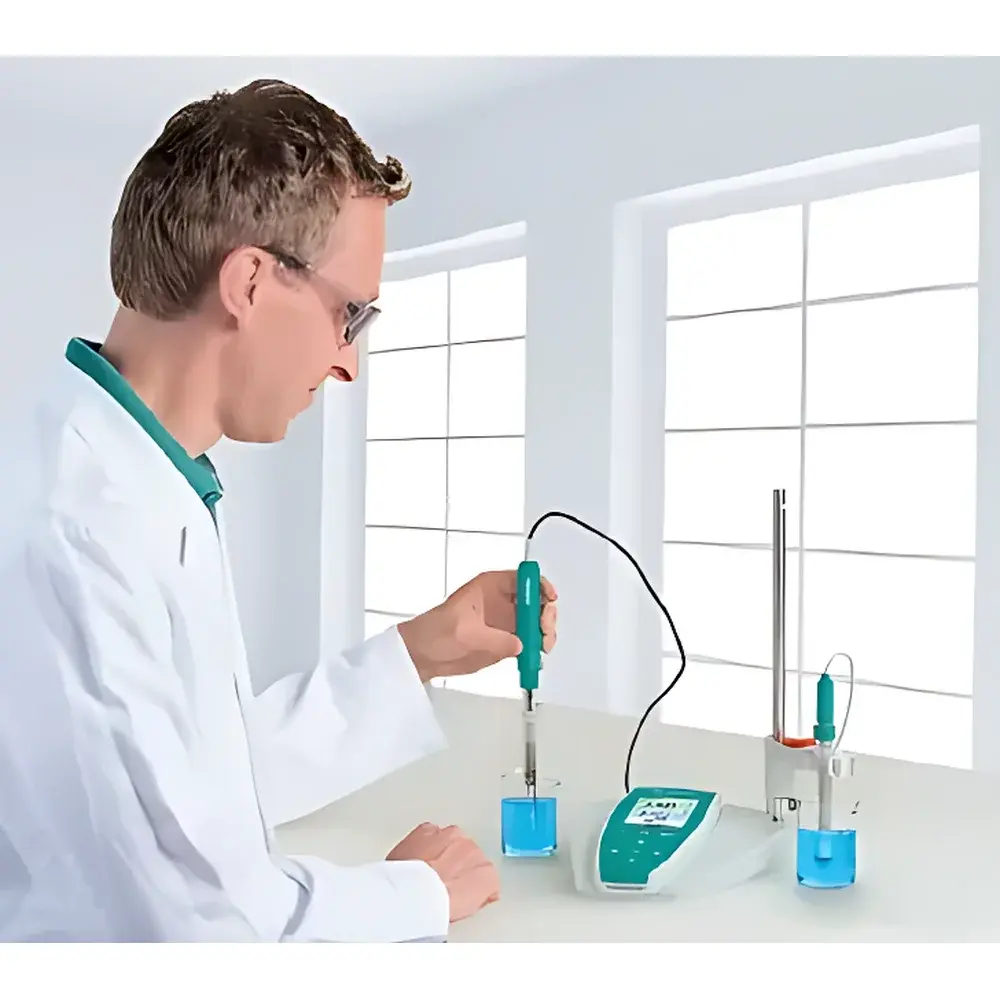
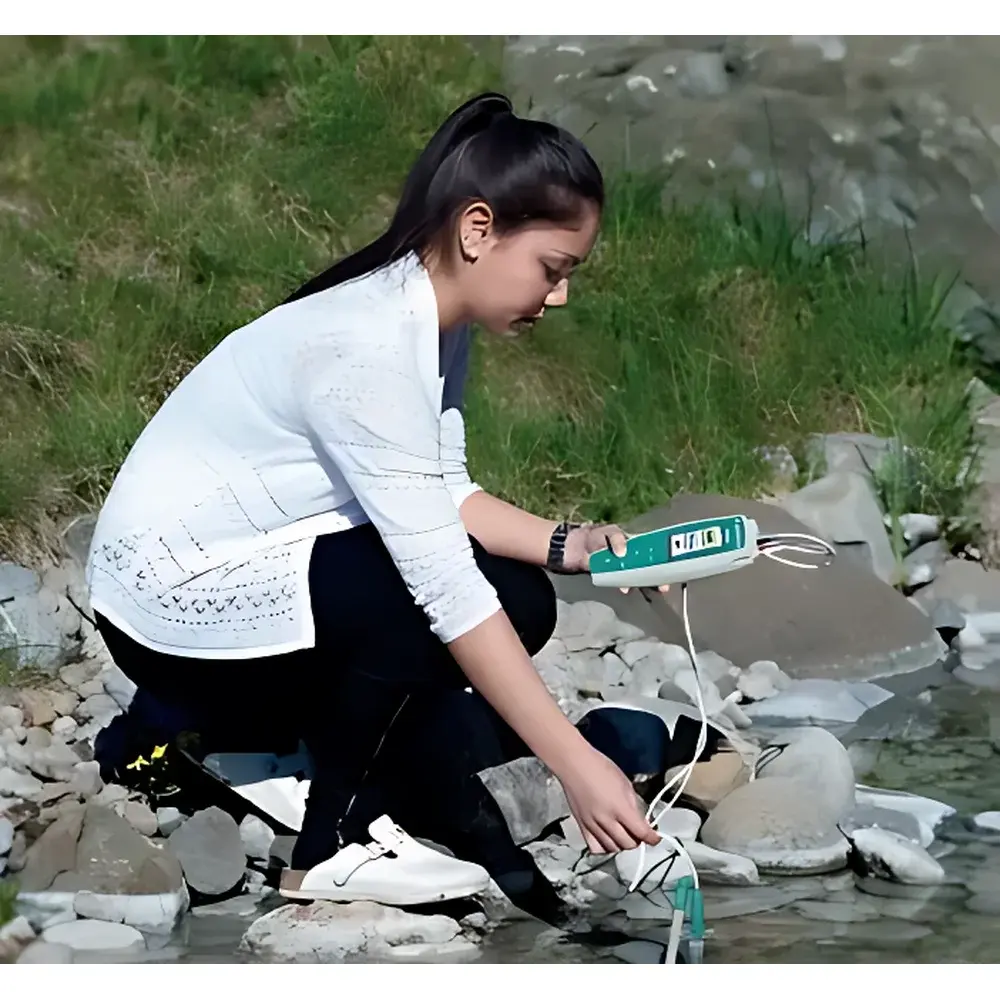
| Portability | Portable |
| Application Environment | Laboratory & Field |
| Conductivity Range | 0.1 µS/cm to 500 mS/cm |
| Temperature Range | −150 °C to +250 °C |
| Voltage Accuracy | ±0.2 mV |
| Voltage Resolution | 0.1 mV |
Overview
The Metrohm 914 pH/Conductivity Meter is a dual-channel, portable electrochemical analyzer engineered for high-reproducibility measurements in both laboratory and field environments. Based on potentiometric (pH) and conductometric (conductivity) principles, the instrument simultaneously acquires and displays pH and conductivity data with synchronized temperature compensation—ensuring thermodynamic consistency across diverse sample matrices. Its modular architecture integrates a smart electrode interface (iUnitrode-compatible), enabling automatic recognition and calibration parameter recall for pH and conductivity sensors. Designed to meet the operational demands of quality control labs, environmental monitoring teams, and process validation engineers, the 914 complies with fundamental metrological requirements for traceable electrochemical measurement under ISO/IEC 17025 and ASTM D1125 (conductivity) and ASTM E70 (pH).
Key Features
- Dual-channel real-time measurement: Independent pH and conductivity channels operate concurrently without cross-interference, supporting simultaneous multi-parameter analysis.
- Smart electrode interface: Auto-detects iUnitrode and Primatrode sensors; stores electrode-specific calibration history, slope, offset, and expiration dates directly in sensor memory.
- IP67-rated enclosure: Fully dust-tight and water-resistant up to 1 m for 30 minutes—enabling reliable operation in humid, outdoor, or industrial settings.
- High-contrast color display: 3.5-inch TFT screen with intuitive icon-based navigation; supports 12 languages and presents dual-channel values, temperature, electrode status, and calibration prompts simultaneously.
- GLP-compliant data handling: Timestamped measurements include operator ID, electrode serial number, calibration status, ambient temperature, and sensor diagnostics—automatically embedded in each record.
- Flexible power options: Operates via rechargeable Li-ion battery (up to 100 hours continuous use) or AC adapter; battery state-of-charge and estimated runtime displayed in real time.
Sample Compatibility & Compliance
The 914 accommodates a broad spectrum of aqueous and semi-aqueous samples—including drinking water, wastewater, pharmaceutical buffers, food extracts, and chemical process streams—without requiring dilution or pretreatment in most cases. Its wide conductivity range (0.1 µS/cm to 500 mS/cm) covers ultra-pure water applications (e.g., USP purified water testing) through to concentrated brines and aggressive electrolytes. The extended temperature range (−150 °C to +250 °C) supports cryogenic storage validation and high-temperature sterilization monitoring when used with compatible Pt1000 or NTC temperature probes. All firmware and data logging functions comply with FDA 21 CFR Part 11 requirements for electronic records and signatures, including audit trail generation, user access control, and immutable data archiving.
Software & Data Management
Data export and integration are implemented via USB-C and Bluetooth 5.0 interfaces. Measurement files (.csv and .mtd formats) are structured to retain full metadata per ICH M7 and GLP Annex 11 specifications. The included tiBase software enables centralized instrument configuration, method deployment, and batch-level report generation compliant with ISO 17025 clause 7.8. Direct LIMS integration is supported through ODBC drivers and RESTful API endpoints, allowing seamless transfer into enterprise systems such as LabWare, STARLIMS, or Thermo Fisher SampleManager. Excel export preserves all calibration curves, raw voltage readings (±0.2 mV accuracy), temperature-compensated conductivity values, and electrode health indicators—including impedance monitoring for pH glass electrodes and cell constant verification for conductivity cells.
Applications
- Environmental field testing: On-site monitoring of surface water, groundwater, and effluent streams per EPA Method 120.1 and ISO 7888.
- Pharmaceutical water system qualification: Purified water (PW) and water-for-injection (WFI) conductivity verification aligned with USP and EU Ph. Eur. 2.2.38.
- Food & beverage QC: Salt content estimation via conductivity correlation, acid-base titration endpoint verification, and cleaning-in-place (CIP) rinse water validation.
- Academic research: Teaching labs requiring robust, low-maintenance instrumentation for electrochemistry fundamentals and sensor characterization studies.
- Industrial process support: Real-time pH and conductivity trending during fermentation, electroplating bath management, and boiler feedwater control.
FAQ
Does the 914 support automatic temperature compensation (ATC) for both pH and conductivity measurements?
Yes—integrated Pt1000 or NTC temperature sensors provide real-time ATC using industry-standard algorithms (DIN EN 27888 for conductivity; NIST SRM-based pH temperature coefficients).
Can calibration data be transferred between instruments within a lab network?
Yes—calibration profiles, including multi-point pH buffers and KCl standard series, are stored in encrypted .cal files and can be deployed across multiple 914 units via tiBase or USB drive.
Is the instrument suitable for hazardous area use (e.g., Zone 1/21)?
No—the 914 is not ATEX or IECEx certified; however, it may be operated outside classified zones with appropriate cable routing and barrier configurations.
What electrode types are natively supported?
The smart interface supports Metrohm iUnitrode (pH/conductivity combo), Primatrode (pH-only), and standard DIN/BNC conductivity cells with built-in cell constant storage.
How is measurement traceability ensured for regulatory audits?
Each measurement includes embedded timestamps, user credentials, sensor identification, calibration validity flags, and raw mV/µS readings—fully auditable via tiBase’s GLP report module with digital signature capability.




