
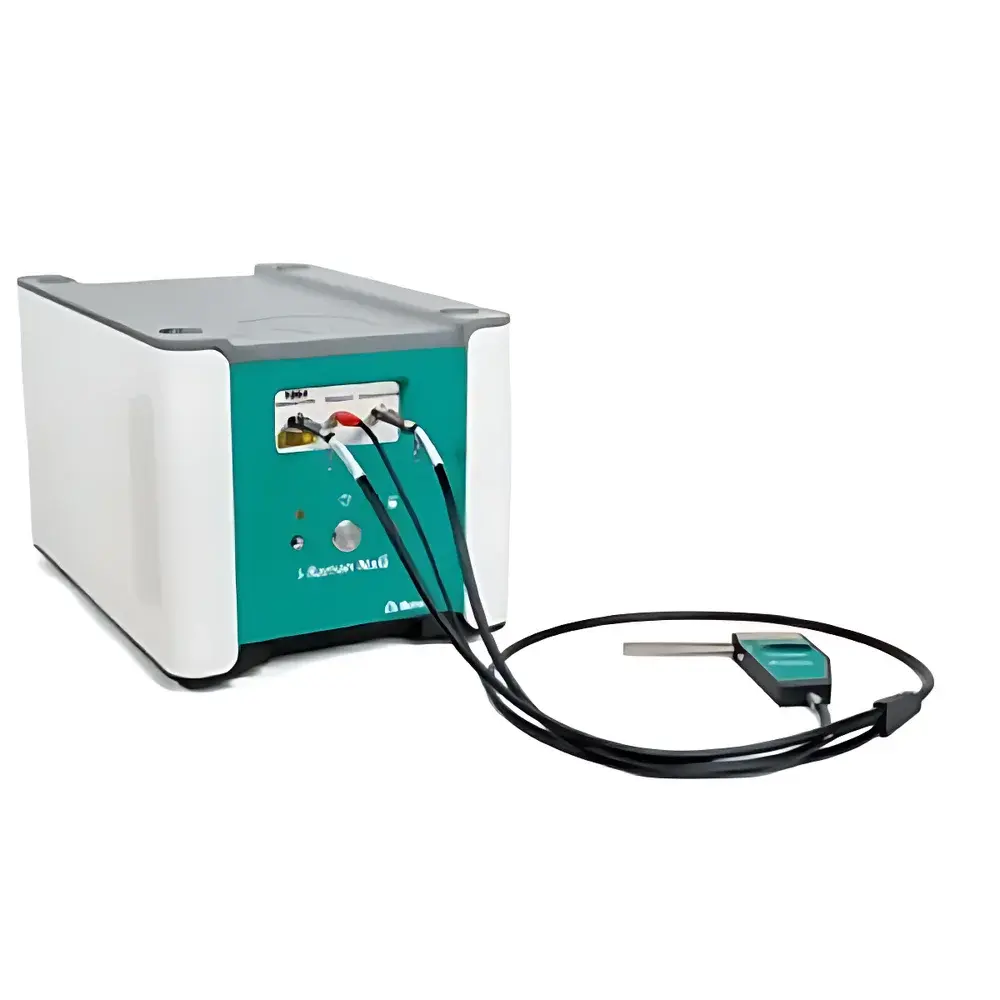
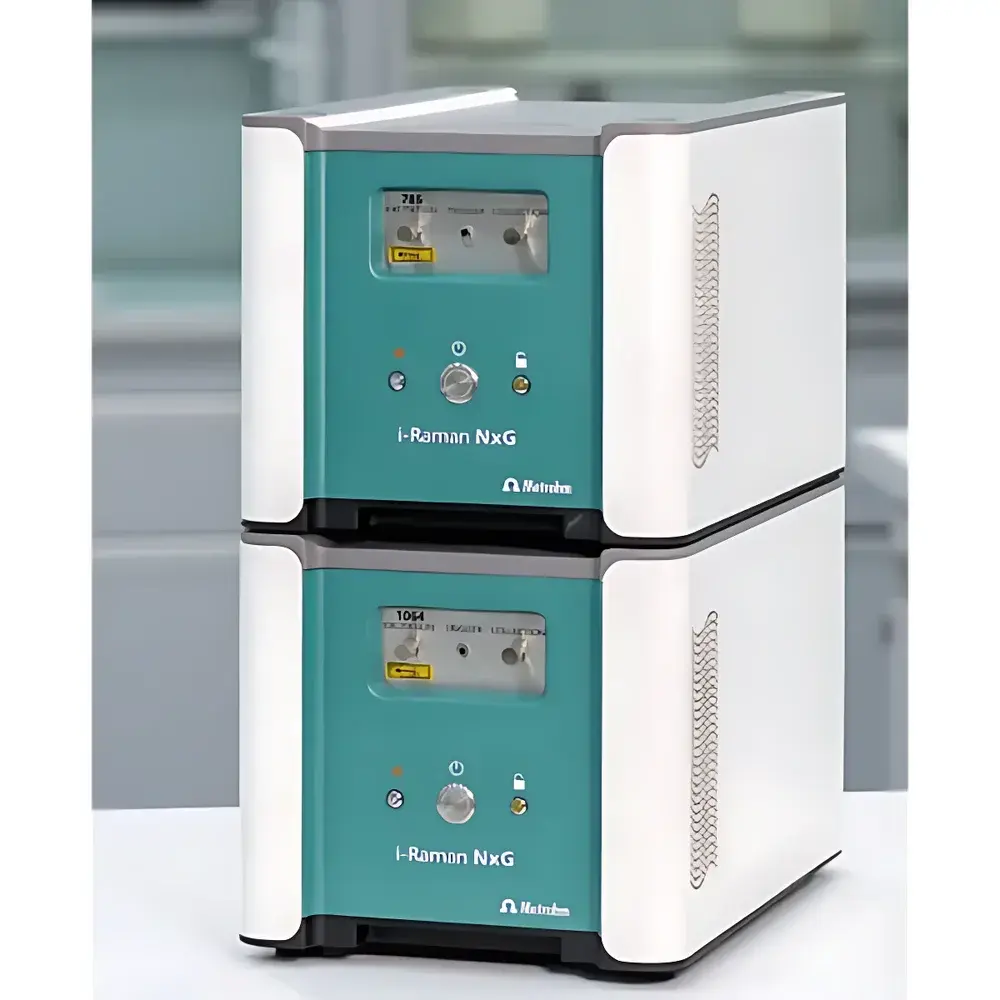
Metrohm i-Raman NxG Portable Raman Spectrometer
| Brand | Metrohm |
|---|---|
| Origin | USA |
| Manufacturer | Metrohm |
| Product Type | Portable/Handheld Raman Spectrometer |
| Model | i-Raman NxG |
| Laser Options | 532 nm, 785 nm, or 1064 nm |
| Dual-Laser Configuration Available (i-Raman Duo) | 1064 nm + 860 nm |
| Software Platform | SpecSuite™ |
| Sample Interface | Fiber-optic probe compatible with vials, cuvettes, immersion probes, and fixed-stage holders |
| Compliance | Designed for GLP/GMP-aligned workflows, supports audit-trail-enabled data management per FDA 21 CFR Part 11 requirements |
Overview
The Metrohm i-Raman NxG is a purpose-engineered portable Raman spectrometer designed for routine quality control (QC) laboratories operating under regulated environments. It employs laser-based inelastic light scattering to generate molecular vibrational fingerprints—enabling rapid, non-destructive identification and quantification of chemical species without sample preparation, solvent use, or consumables. Unlike benchtop systems requiring controlled optical tables and environmental stabilization, the i-Raman NxG delivers laboratory-grade spectral fidelity in field-deployable form. Its modular architecture integrates high-stability diode lasers (532 nm, 785 nm, or 1064 nm), thermoelectrically cooled CCD detectors, and fiber-coupled optics optimized for signal-to-noise ratio across diverse matrices—including opaque solids, turbid suspensions, and sealed containers. The system operates on fundamental Raman scattering principles: incident monochromatic light interacts with molecular bonds, producing frequency-shifted photons corresponding to symmetric/asymmetric stretching, bending, and rocking modes. These shifts—expressed in wavenumbers (cm⁻¹)—are chemically specific and reproducible under consistent acquisition parameters.
Key Features
- Field-deployable design with ruggedized housing rated for ISO 14644-1 Class 8 cleanroom-compatible operation
- Interchangeable laser modules enabling method-specific excitation: 532 nm for high-sensitivity inorganic analysis; 785 nm for balanced fluorescence suppression and signal intensity in organic pharmaceuticals; 1064 nm for minimal fluorescence interference in highly fluorescent or dark-colored samples
- i-Raman Duo configuration: simultaneous dual-laser capability (1064 nm + 860 nm) extending measurable spectral range into the first overtone region (2500–4600 cm⁻¹), critical for O–H, N–H, and C–H stretch detection in hydrous compounds, biofuels, and biomolecules
- Fiber-optic probe compatibility with standardized accessories—including screw-cap vial adapters, cuvette holders, immersion probes, and XYZ-adjustable probe mounts—ensuring measurement consistency across solid, liquid, powder, and gel formats without recalibration
- Real-time spectral acquisition with exposure times configurable from 10 ms to 60 s, supporting both rapid pass/fail screening and high-SNR quantitative modeling
Sample Compatibility & Compliance
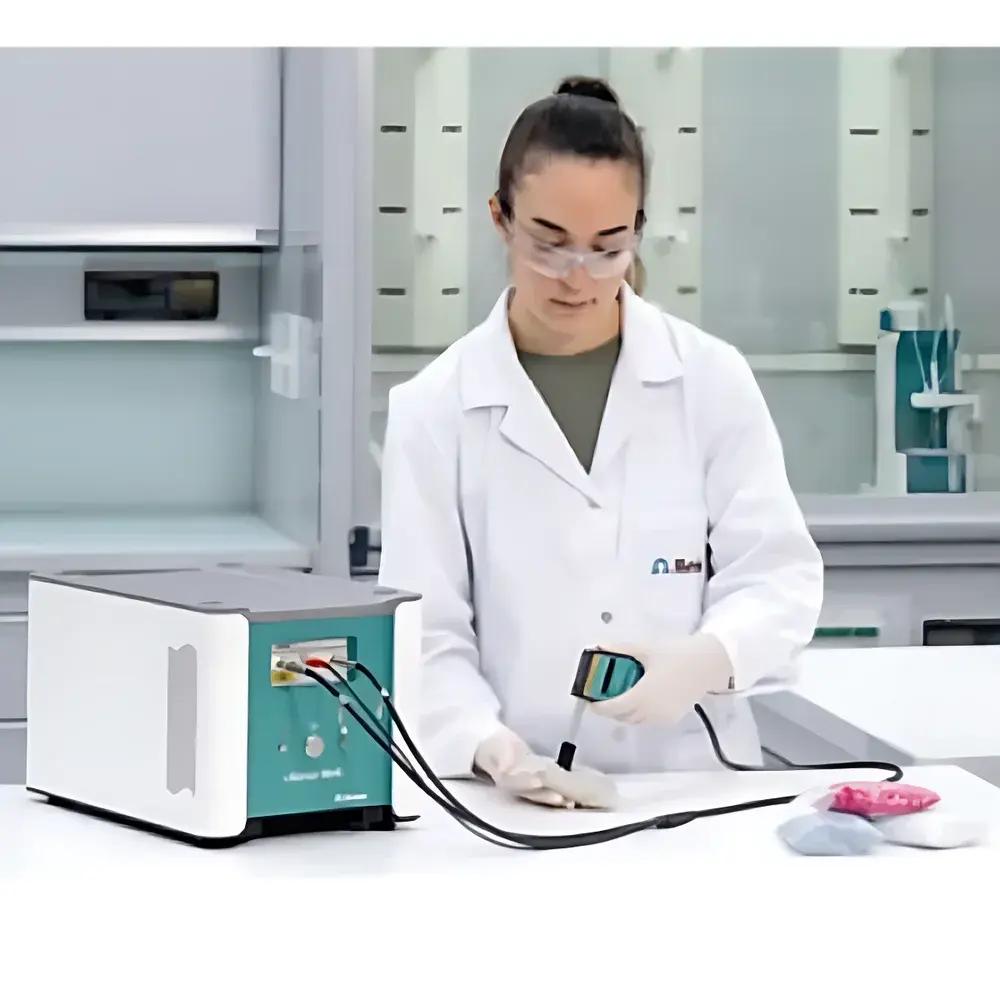
The i-Raman NxG accommodates direct analysis through transparent, translucent, or semi-opaque packaging (e.g., glass vials, plastic pouches, blister packs) without opening—reducing contamination risk and preserving sample integrity. It meets ASTM E1840-22 guidelines for Raman instrument performance verification and supports method validation per ICH Q2(R2) for qualitative and quantitative applications. Data integrity is maintained via SpecSuite’s embedded electronic signature workflow, time-stamped audit trails, and user-access controls compliant with FDA 21 CFR Part 11 and EU Annex 11. System suitability testing (SST) protocols—including peak position stability, intensity repeatability, and spectral resolution verification—are programmable and reportable within the software environment.
Software & Data Management
SpecSuite™ serves as the unified software platform for end-to-end Raman data handling: from instrument control and spectral acquisition to multivariate calibration (PLS, PCA, SIMCA), library matching (NIST, PharmaID, PolymerDB), and report generation. Its wizard-driven interface enables QC technicians to build validated identification methods without scripting expertise, while advanced users access Python API integration for custom algorithm deployment. All raw spectra, processing parameters, metadata (operator ID, timestamp, instrument serial number), and decision logic are stored in encrypted SQLite databases with immutable logging. Export options include ASTM E1346-compliant .spc files, CSV for LIMS ingestion, and PDF analytical reports with embedded spectral overlays and statistical confidence metrics.
Applications
- Pharmaceutical QC: Raw material identity verification (RMIV), counterfeit drug detection, blend uniformity monitoring, and polymorph screening in lyophilized powders
- Chemical manufacturing: In-line reaction endpoint determination, catalyst degradation assessment, and impurity profiling in batch reactors
- Food & agriculture: Adulterant detection (e.g., melamine in milk powder), moisture content estimation in grains, and authenticity verification of olive oil or honey
- Forensics & security: Non-invasive explosive residue identification through sealed evidence bags, illicit substance classification in street samples
- Academic & applied research: Time-resolved kinetic studies, temperature-dependent phase transitions, and micro-domain mapping using motorized stage integration
FAQ
Does the i-Raman NxG require routine wavelength calibration with external standards?
No—each unit undergoes factory calibration using NIST-traceable rare-earth oxide references; onboard hardware self-checks ensure long-term spectral axis stability without user intervention.
Can SpecSuite support multi-instrument fleet management?
Yes—centralized license server architecture allows concurrent deployment across up to 32 networked instruments with role-based permission tiers and consolidated compliance reporting.
Is the 860 nm laser in the i-Raman Duo system FDA-cleared for clinical use?
The 860 nm module is CE-marked for in vitro diagnostic (IVD) support applications; clinical deployment requires site-specific validation per CLIA and local regulatory authority requirements.
How does the system handle fluorescence background in challenging samples like biological tissues?
The 1064 nm excitation significantly reduces fluorescence emission; additionally, SpecSuite includes adaptive polynomial baseline correction and morphological filtering algorithms optimized for autofluorescent matrix subtraction.
What is the typical spectral acquisition time for a pass/fail identity test?
Under standard conditions (1064 nm, 1 s integration, 16 co-adds), full-spectrum acquisition completes in ≤3 seconds—enabling throughput of >1,200 samples per 8-hour shift.






