
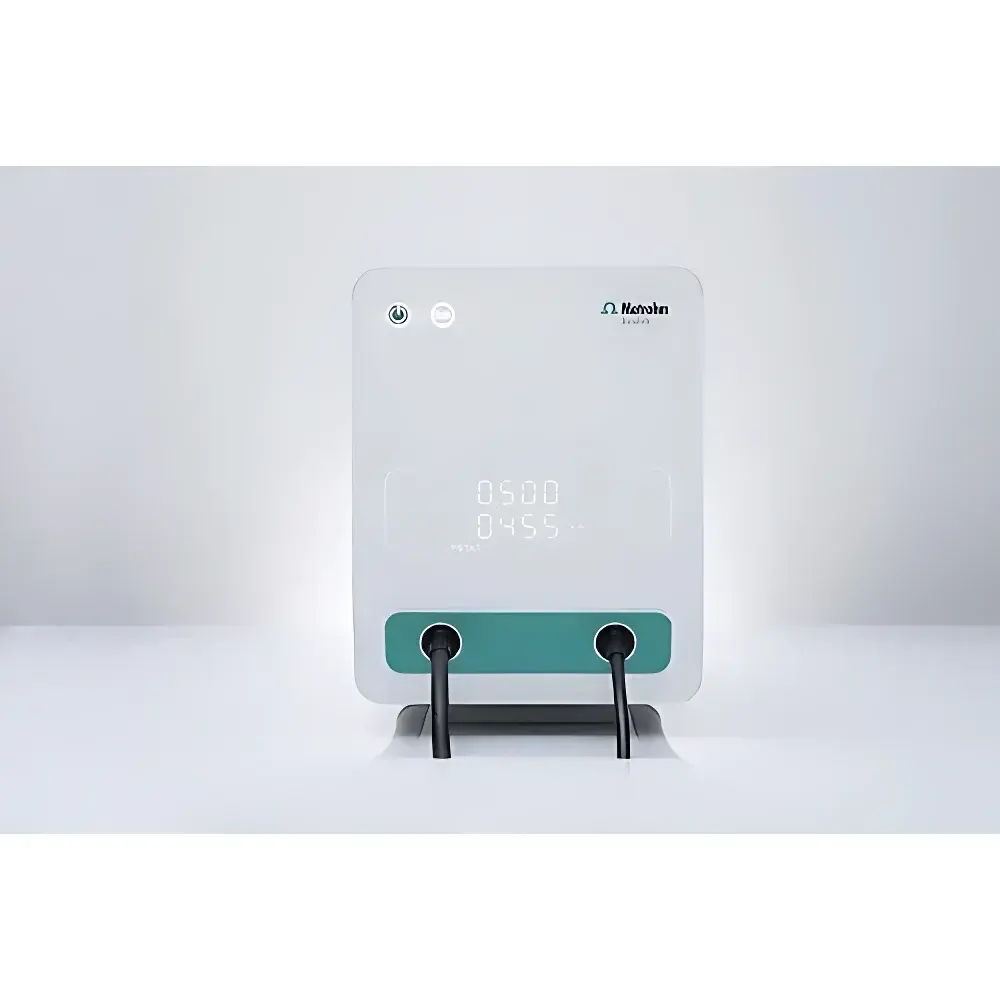
Metrohm VIONIC Advanced Electrochemical Workstation
| Brand | Metrohm |
|---|---|
| Origin | Netherlands |
| Manufacturer | Metrohm Autolab |
| Type | Electrochemical Workstation |
| Model | VIONIC |
| Current Range | ±6 A |
| Current Accuracy | ±0.2% |
| Potential Accuracy | ±0.2% |
| Potentiostatic Range | ±10 V |
| Galvanostatic Range | ±6 A |
| EIS Frequency Range | 10 µHz – 10 MHz |
| Compliance Voltage | ±50 V |
| Minimum Sampling Interval | 1 µs |
| Floating Mode | Optional |
| Dual Reference Electrode Support (S2) | Yes |
| Electrochemical Cell Isolation | Yes |
| Oscillation Protection | Yes |
| Independent Cell Switch | Yes |
Overview
The Metrohm VIONIC Advanced Electrochemical Workstation is a high-performance, research-grade potentiostat/galvanostat system engineered for precision electrochemical characterization across academic, industrial, and regulatory environments. Built upon Metrohm Autolab’s legacy in electroanalytical instrumentation, the VIONIC platform implements true four-quadrant operation with galvanostatic, potentiostatic, and zero-resistance ammeter (ZRA) modes, enabling rigorous control of electrode potential and current under dynamic or steady-state conditions. Its core architecture supports fundamental techniques including cyclic voltammetry (CV), linear sweep voltammetry (LSV), chronoamperometry (CA), chronopotentiometry (CP), pulse techniques (DPV, SWV, NPV), and full-frequency-domain electrochemical impedance spectroscopy (EIS) from ultra-low frequencies (10 µHz) up to 10 MHz—facilitating both interfacial kinetic analysis and bulk solution transport modeling. Designed for reproducibility and long-term stability, the system features low-noise analog front-end circuitry, hardware-synchronized digital signal acquisition, and real-time feedback loops that maintain fidelity during fast transient measurements.
Key Features
- High-current capability: ±6 A maximum current output with ±0.2% accuracy across the full range, suitable for battery cycling, fuel cell testing, and large-area electrode studies.
- Extended compliance voltage: ±50 V compliance range ensures stable control even with high-impedance cells or resistive electrolytes.
- Broad EIS bandwidth: 10 µHz–10 MHz frequency coverage enables resolution of multiple time constants—from double-layer charging to diffusion-limited processes and solid-state ion conduction.
- Floating mode operation: Electrically isolates the working electrode from ground, permitting measurements in non-aqueous, high-resistivity, or multi-compartment cells without reference electrode drift.
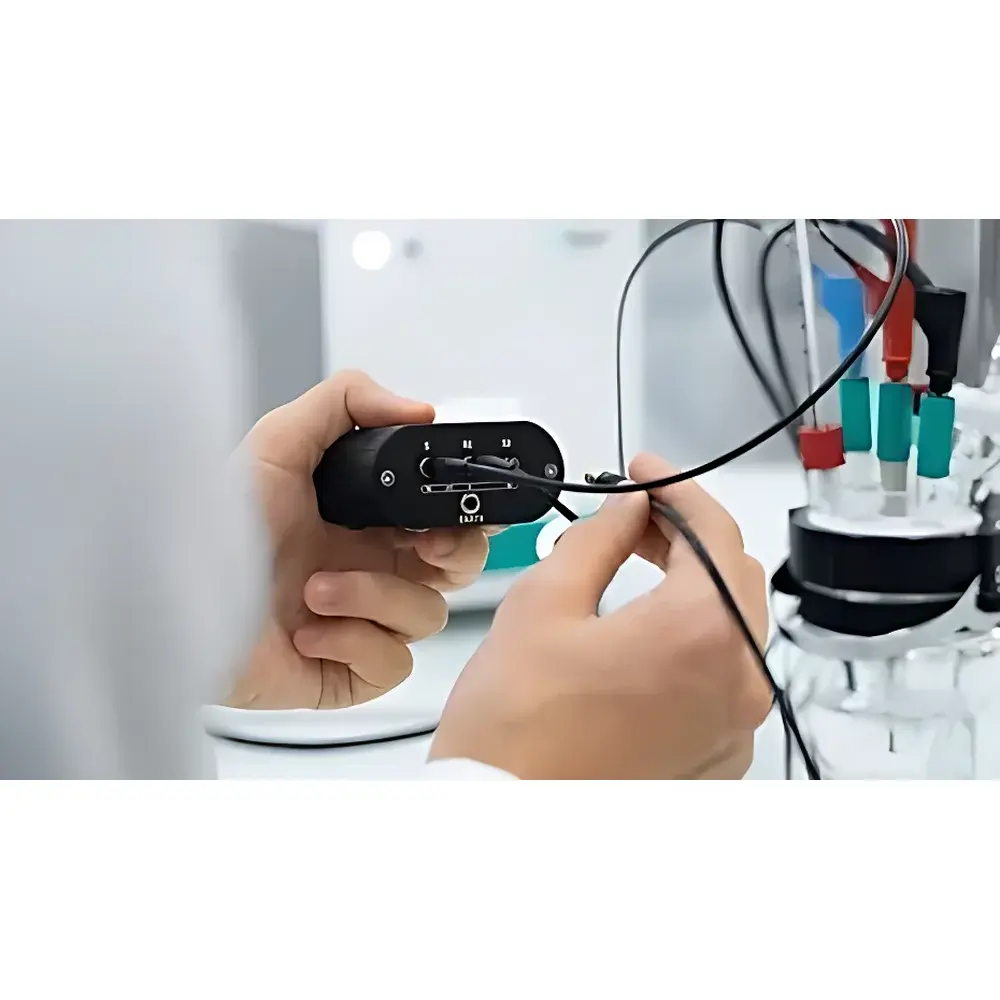
- Dual sense electrode (S2) input: Enables simultaneous monitoring of two independent potentials—critical for three-electrode configurations with auxiliary reference electrodes or differential sensing applications.
- Sub-microsecond timing resolution: 1 µs minimum sampling interval supports nanosecond-scale transient capture when paired with appropriate analog filtering and digitization settings.
- Hardware-based safety layer: Integrated cell switch, oscillation detection, and galvanic isolation protect both sample integrity and instrument longevity during overpotential, short-circuit, or thermal runaway events.
Sample Compatibility & Compliance
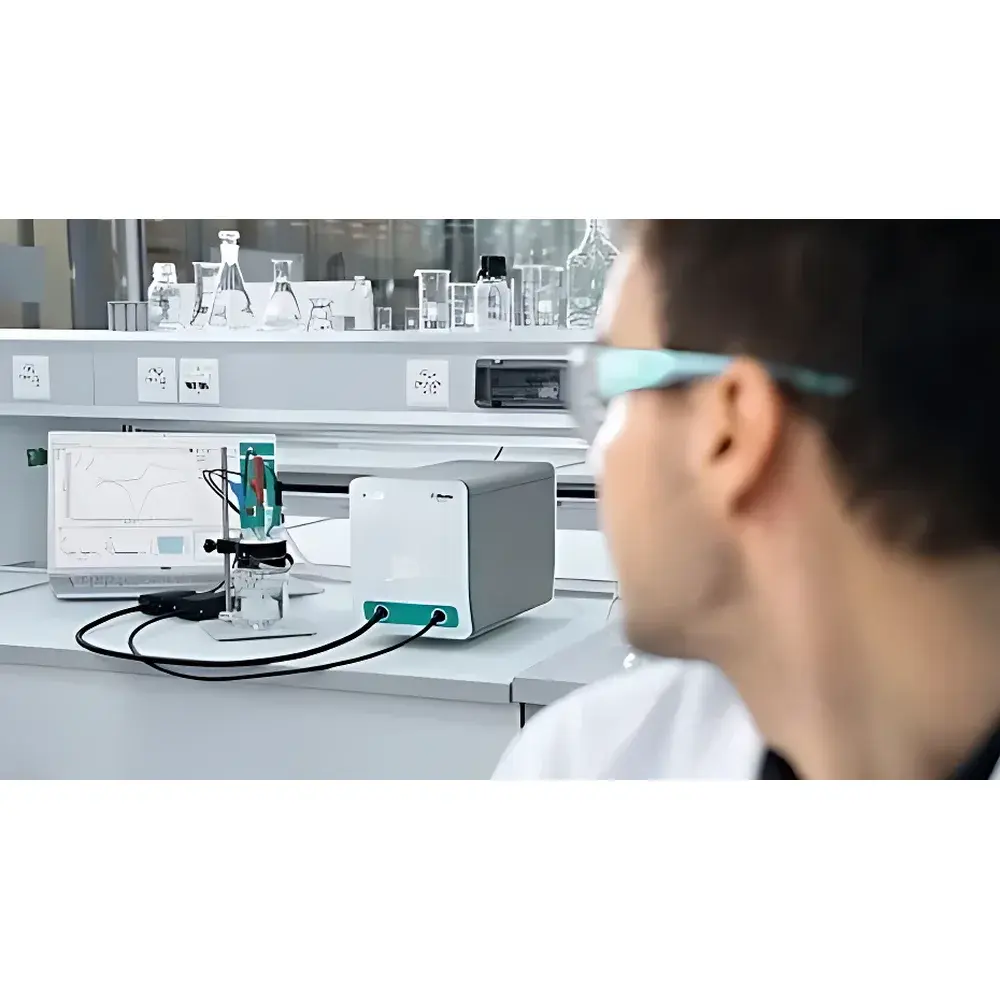
The VIONIC workstation accommodates standard three-electrode electrochemical cells (working, counter, reference), rotating disk electrodes (RDE), rotating ring-disk electrodes (RRDE), microelectrodes, and custom flow cells. It supports aqueous, non-aqueous, ionic liquid, and molten salt electrolytes. The system complies with IEC 61010-1 for electrical safety in laboratory equipment and meets electromagnetic compatibility (EMC) requirements per EN 61326-1. When operated with Metrohm NOVA software configured for audit trail, electronic signatures, and data integrity controls, the platform supports GLP, GMP, and FDA 21 CFR Part 11 compliance for regulated quality control and pharmaceutical development workflows.
Software & Data Management
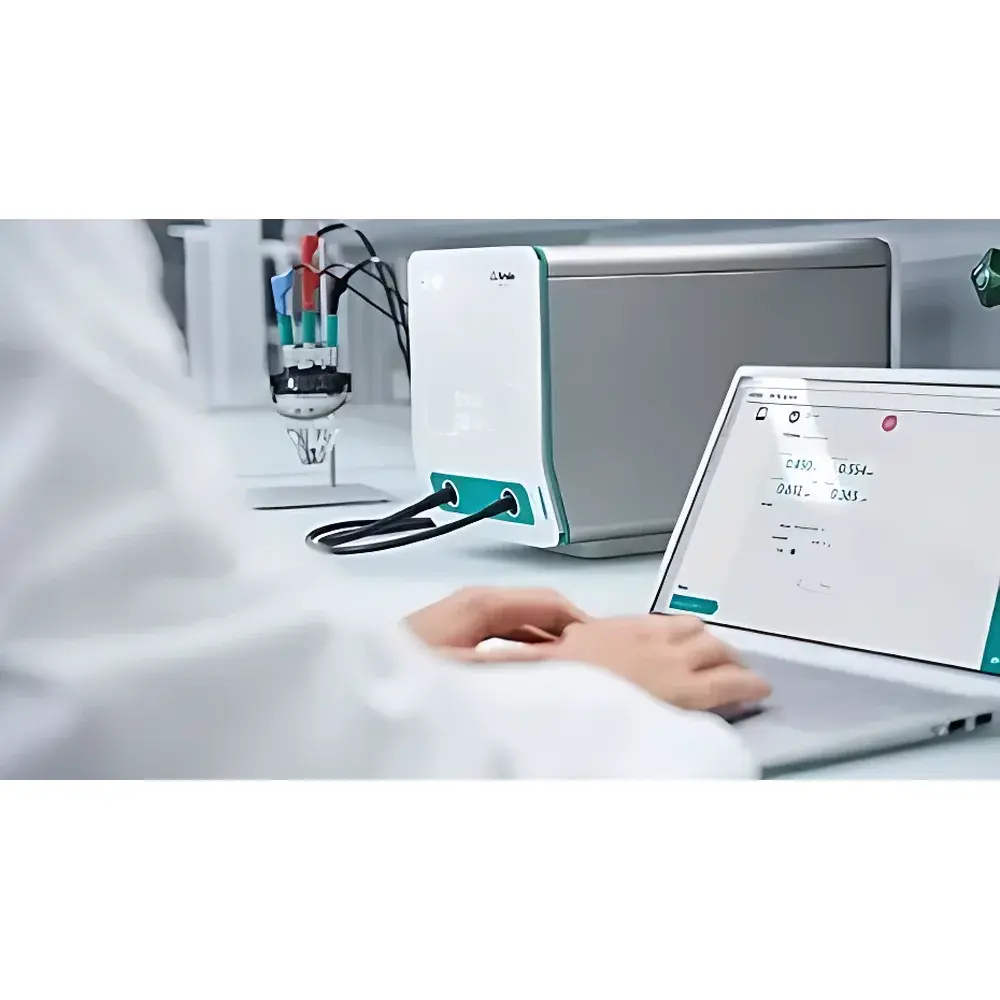
Controlled exclusively via Metrohm NOVA software (v2.2+), the VIONIC workstation offers an intuitive, modular interface built on a deterministic real-time kernel. Experimental protocols are constructed using drag-and-drop instruction tiles in the Sequence Editor—enabling rapid assembly of multi-step methods such as hybrid EIS-CV scans, relaxation sequences, or accelerated aging profiles. All raw data—including time-stamped current, potential, impedance modulus/phase, and auxiliary sensor inputs—are stored in open-format .mpt files with embedded metadata (instrument ID, user, timestamp, method parameters). NOVA supports batch processing, FFT-based noise analysis, Kramers–Kronig validation, and equivalent circuit fitting using nonlinear least-squares algorithms with confidence interval estimation. Export options include CSV, MATLAB (.mat), and standardized ASTM E2971-compliant formats for inter-laboratory data exchange.
Applications
- Battery R&D: Half-cell and full-cell cycling, SEI formation analysis, Li-ion degradation mapping, solid-state electrolyte impedance profiling.
- Corrosion science: Polarization resistance, electrochemical noise analysis (ENA), localized corrosion monitoring under simulated service conditions.
- Electrocatalysis: Turnover frequency (TOF) determination, Tafel slope analysis, CO stripping, oxygen reduction reaction (ORR) kinetics.
- Sensors & biosensors: Amperometric detection limits, enzyme kinetics modeling, redox polymer characterization.
- Materials electrochemistry: Conducting polymer doping/dedoping, metal oxide charge storage mechanisms, quantum dot surface state probing.
- Industrial QC: Coating porosity assessment, plating bath monitoring, passivation verification per ASTM B117 or ISO 9223.
FAQ
Does the VIONIC support true bipotentiostatic operation for RRDE experiments?
Yes—the dual sense electrode (S2) channel allows independent potential control and measurement at the ring electrode while maintaining precise bias at the disk, enabling quantitative collection efficiency calibration and kinetic deconvolution.
Can the system perform EIS on high-impedance samples such as ceramic coatings or biological membranes?
Yes—its ±50 V compliance voltage, ultra-low current detection limit (<1 pA typical), and adaptive current ranging ensure stable excitation and accurate phase-sensitive detection even at GΩ-level impedances.
Is remote operation and automated sequencing supported?
Yes—NOVA software includes TCP/IP and LabVIEW-compatible drivers, allowing integration into automated test benches, robotic sample handlers, and centralized lab management systems.
What level of cybersecurity and data traceability does the system provide?
When deployed with NOVA’s optional Compliance Pack, the system enforces role-based access control, immutable audit trails, electronic signatures, and encrypted local/cloud backups aligned with ALCOA+ principles.
How is hardware calibration maintained over time?
The VIONIC includes onboard self-calibration routines for gain, offset, and phase response, traceable to NIST-certified references; annual verification using Metrohm’s certified calibration kit is recommended for ISO/IEC 17025-accredited labs.
Related Products






