
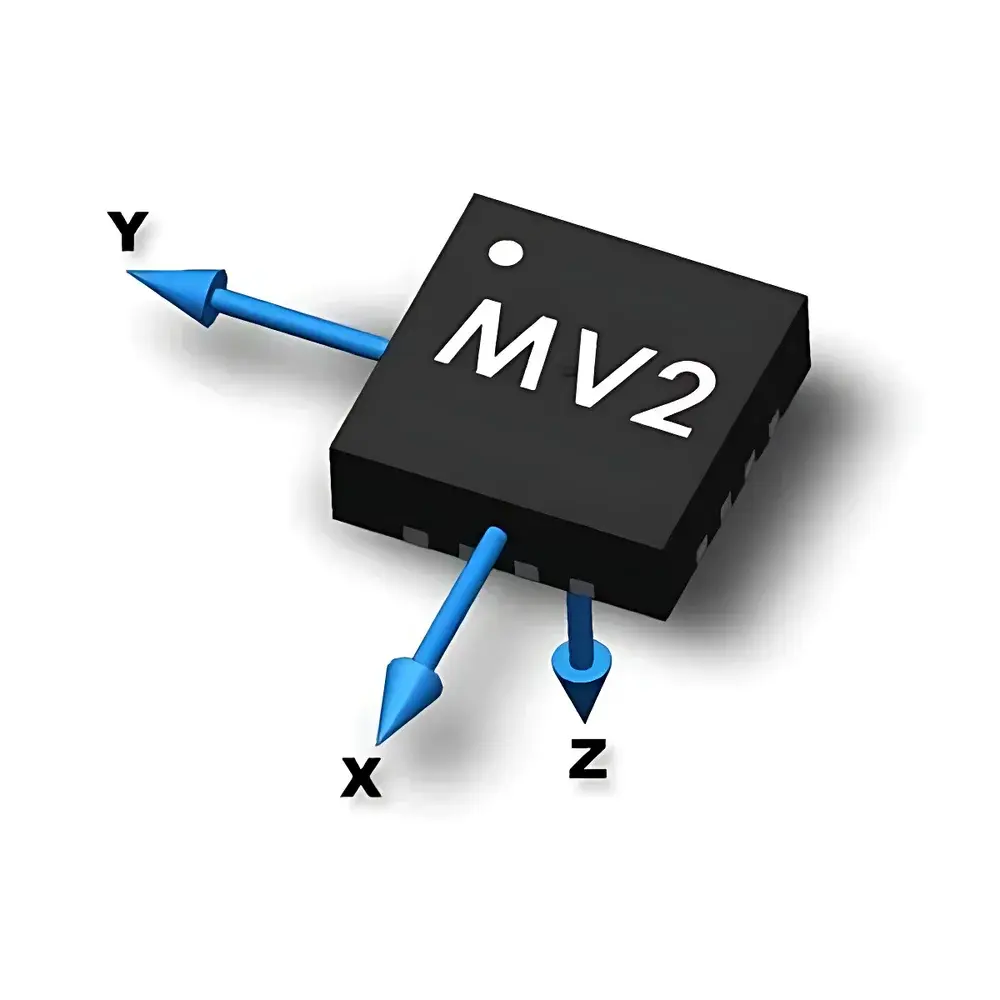
Metrolab MagVector™ MV2 Triaxial Hall Effect Magnetic Field Sensor IC
| Brand | Auniontech (Distributor) |
|---|---|
| Origin | Shanghai, China |
| Package | QFN 3 × 3 × 0.9 mm³, 16-pin + thermal pad |
| Supply Voltage | 3.3 V or 5 V |
| Output Options | Analog (Bx/By/Bz/T) or Digital (SPI) |
| Configurable Ranges | ±0.1, ±0.3, ±1, ±3, ±10, or ±30 T |
| Resolution Options | 14-, 15-, 16-, or 16+-bit |
| Sampling Rates | 375 / 750 / 1500 / 3000 Hz |
| RMS Noise | <2.0 LSB (at 16+-bit) |
| Noise Density | 300 nT/√Hz |
| Analog Bandwidth | 50 kHz |
| Operating Temperature | −40 °C to +125 °C (LN₂-tested) |
| Sensing Volume | 200 × 200 × 5 µm³ |
Overview
The Metrolab MagVector™ MV2 is a high-performance, triaxial Hall effect magnetic field sensor integrated circuit engineered for precision vector magnetometry in demanding embedded and scientific applications. Unlike conventional gaussmeters or standalone magnetometers, the MV2 is not a complete instrument—it is a sensor IC designed for seamless integration into custom electronic systems requiring accurate, synchronized, three-axis magnetic field measurements. Its core sensing principle relies on orthogonal planar Hall elements enhanced by proprietary spin-current technology, which actively suppresses offset drift, in-plane Hall artifacts, and low-frequency noise—enabling stable DC-to-50 kHz analog bandwidth performance. The device measures the full B-field vector (Bx, By, Bz) with simultaneous temperature monitoring (T), making it suitable for environments where thermal compensation is critical—such as cryogenic setups, MRI fringe field mapping, beamline diagnostics, and industrial magnetic anomaly detection.
Key Features
- Ultra-compact QFN package (3 × 3 × 0.9 mm³) with exposed thermal pad—fully non-magnetic and MRI-compatible
- On-chip programmable gain amplifier (PGA) supporting six selectable full-scale ranges: ±0.1 T to ±30 T
- Dual-mode interface: analog output (voltage-proportional to Bx/By/Bz/T) or high-speed digital SPI interface with configurable resolution (14–16+ bits)
- Spin-current biasing architecture minimizing 1/f noise, thermal hysteresis, and planar Hall cross-talk
- Integrated temperature sensor enabling real-time thermal compensation of sensitivity and offset
- Synchronous multi-sensor operation: up to eight MV2 ICs share a single SPI bus via individual chip-select lines
- Wide operating temperature range (−40 °C to +125 °C), validated down to liquid nitrogen temperatures (77 K)
- Low-noise analog front-end with 300 nT/√Hz spectral noise density and 50 kHz small-signal bandwidth
Sample Compatibility & Compliance
The MV2 is intended for integration into user-designed measurement systems—not for direct end-user operation. As a component-level sensor, it does not carry CE, FCC, or IEC 61000-4 certifications independently; compliance must be verified at the system level per application-specific standards (e.g., ISO/IEC 17025 for calibration laboratories, IEC 60601-2-33 for MRI-adjacent medical devices). Its non-magnetic QFN packaging and absence of ferromagnetic materials ensure compatibility with ultra-low-field environments, including superconducting magnet test benches and NMR shimming systems. For traceable calibration, users must implement a documented procedure referencing NIST-traceable field standards (e.g., Helmholtz coils calibrated per ASTM E1447 or ISO/IEC 17025-accredited providers). The device supports GLP/GMP-aligned development workflows when paired with audit-trail-capable firmware and version-controlled configuration registers.
Software & Data Management
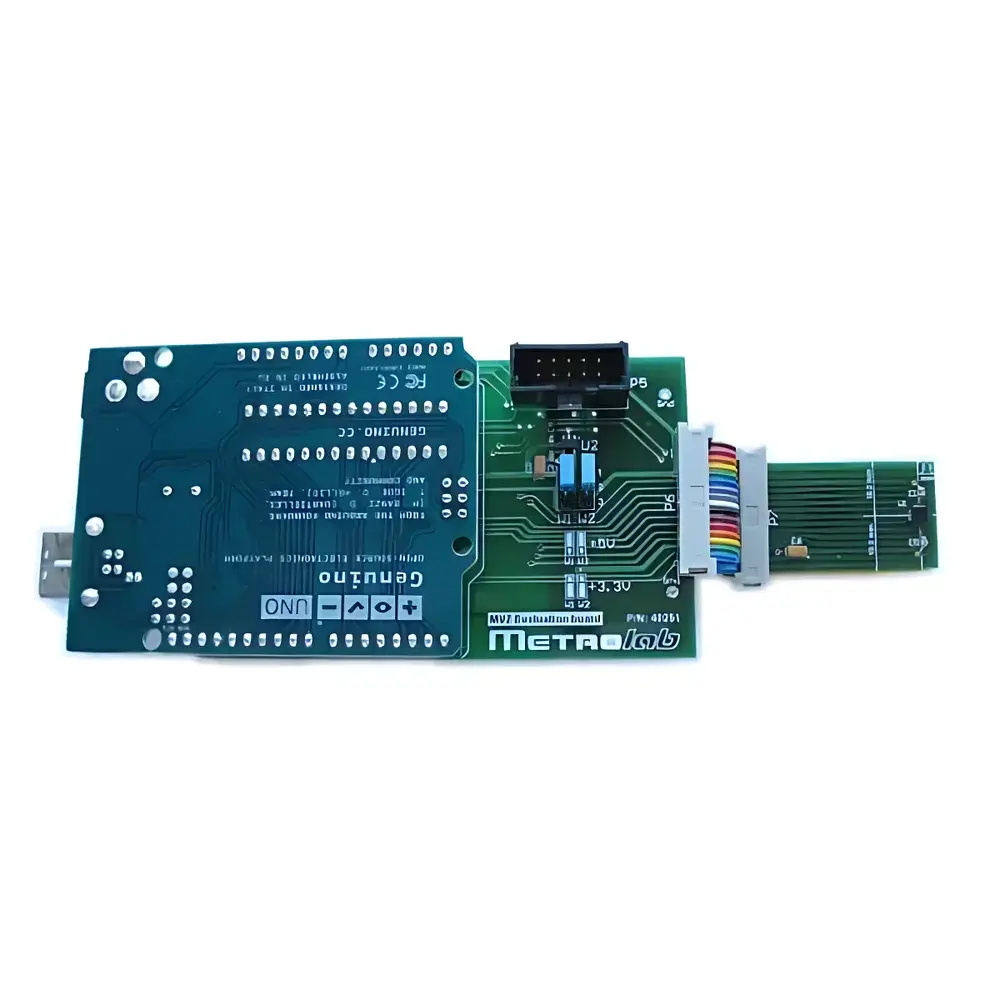
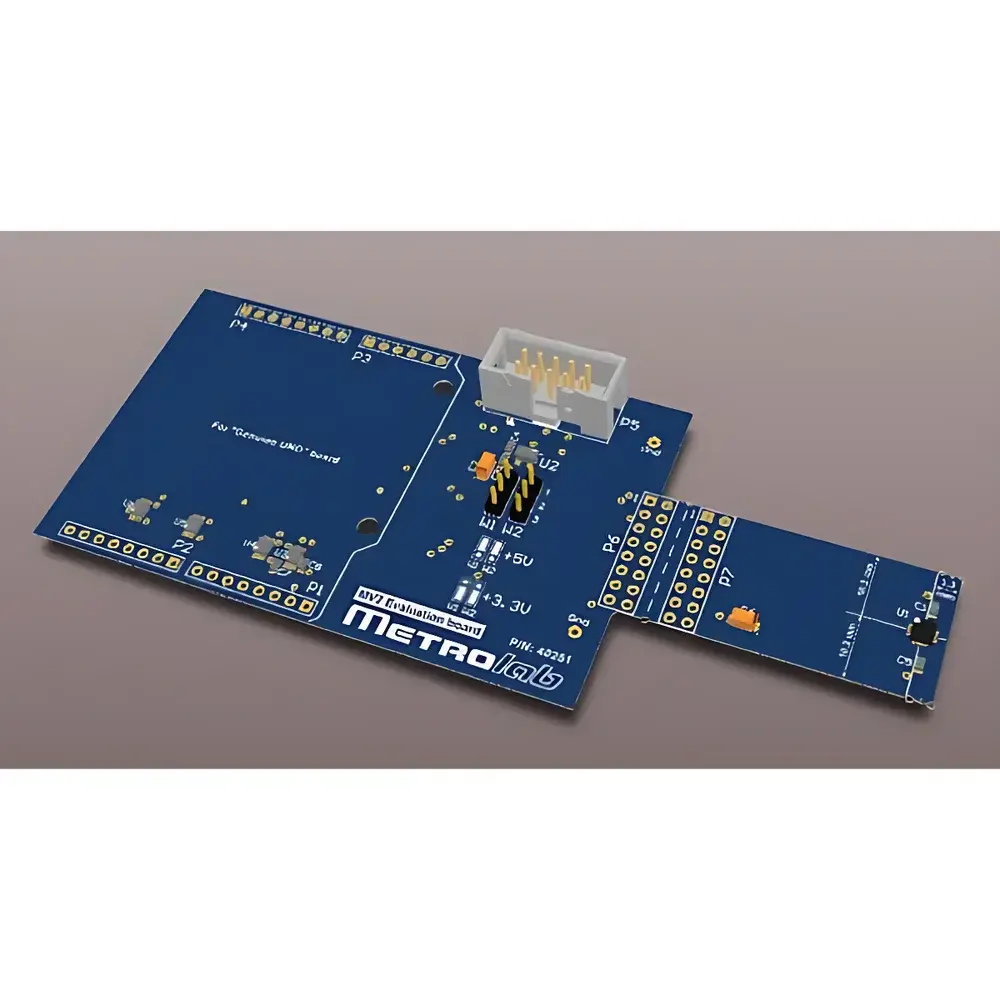
The MV2 operates without onboard firmware—the host microcontroller manages all configuration, timing, and data acquisition logic. In digital mode, all settings—including range, resolution, sampling rate, and ADC timing—are written to internal registers via SPI. The evaluation kit includes open-source Arduino firmware and PC-based host software (C++/Python APIs) with full register map documentation, enabling rapid prototyping and deterministic control. For production systems, developers are responsible for implementing robust error handling (CRC validation, timeout management), calibration coefficient storage (EEPROM or flash), and timestamped data logging compliant with 21 CFR Part 11 requirements where applicable. Raw sensor outputs support IEEE 754 floating-point conversion pipelines, facilitating integration with MATLAB, LabVIEW, or Python-based analysis frameworks (e.g., NumPy, SciPy) for vector field reconstruction, gradient computation, or harmonic distortion analysis.
Applications
- Magnetic field mapping arrays for accelerator beamlines and synchrotron insertion devices
- Cryogenic magnet characterization in superconducting magnet development labs
- Real-time fringe field monitoring around MRI scanners (Class I/II compliance support)
- Embedded current sensing via Ampere’s law in high-power inverters and fusion control systems
- Geophysical survey instrumentation requiring vector field stability over wide thermal gradients
- Quantum sensing platforms (e.g., NV-diamond hybrid systems) requiring low-noise, high-bandwidth reference magnetometers
- Industrial quality assurance of permanent magnets and magnetic assemblies (ASTM A977-compliant workflows)
FAQ
Is the MV2 a standalone gaussmeter?
No. The MV2 is a sensor IC requiring external microcontroller, power regulation, signal conditioning, and calibration infrastructure. It is not a turnkey instrument.
Does the MV2 require factory calibration?
The device ships with nominal sensitivity coefficients, but final system-level calibration—including orthogonality correction, temperature-dependent offset compensation, and nonlinearity correction—must be performed by the integrator using traceable field sources.
Can multiple MV2 sensors be synchronized?
Yes. Using the hardware SYNC pin and SPI command sequencing, multiple MV2s can achieve sub-microsecond inter-device timing alignment for coherent array measurements.
What is the role of spin-current technology?
It replaces traditional constant-current biasing with a dynamically modulated spin-polarized carrier injection, suppressing 1/f noise, eliminating planar Hall crosstalk, and stabilizing offset over temperature and time.
Is the MV2 suitable for DC field measurements?
Yes. With its low-drift architecture and on-chip temperature sensor, it supports stable DC field measurement down to nanotesla-level resolution when combined with appropriate oversampling and post-processing.



