
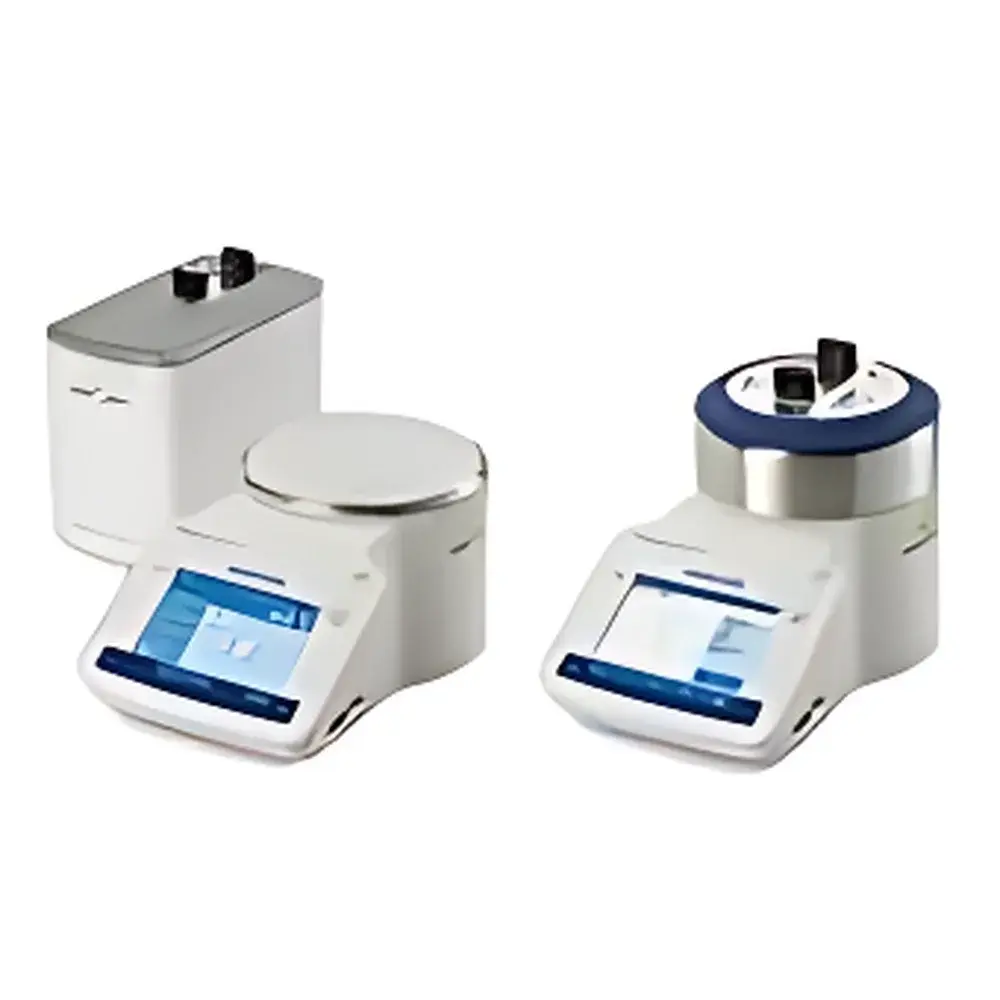
METTLER TOLEDO超越系列DP70/DP90 Automatic Potentiometric Titrator
| Brand | METTLER TOLEDO |
|---|---|
| Origin | Switzerland |
| Model | DP70 / DP90 |
| Measurement Range | ±2000 mV |
| Meter Accuracy | ±0.50% of reading |
| Meter Resolution | 0.1 mV |
| Titration Stability | ±0.2 mV over 3 h |
| Instrument Type | Universal Automatic Potentiometric Titrator |
| Compliance | Designed for ASTM E2087, ISO 8655-6, USP <541>, and GLP/GMP environments |
Overview
The METTLER TOLEDO Excellence Series DP70 and DP90 Automatic Potentiometric Titrators are precision-engineered electrochemical instruments designed for routine and advanced titration workflows in QC laboratories, R&D centers, and regulated manufacturing environments. These systems operate on the fundamental principle of potentiometric endpoint detection—measuring the potential difference between a reference electrode and an indicator electrode as titrant is incrementally delivered to the sample. The resulting potential curve (E vs. volume) enables precise determination of equivalence points via first-derivative or inflection-point algorithms. Built upon METTLER TOLEDO’s legacy of Swiss metrology, the DP70 and DP90 integrate high-stability analog signal conditioning, low-drift electrode interfaces, and closed-loop dosing control to ensure traceable, reproducible results across diverse matrix types—from aqueous acids and bases to non-aqueous solvents and complex redox systems.
Key Features
- One Click™ Method Execution: Pre-validated, context-aware method templates reduce operator dependency and minimize procedural errors—ideal for multi-user labs with varying skill levels.
- Dual-Station Sample Handling (DP90): Simultaneous titration of two independent samples with fully autonomous electrode rinsing, dosing, and endpoint evaluation—increasing throughput by up to 100% without compromising data integrity.
- High-Resolution Color Touchscreen Interface: 7-inch capacitive display with video playback functionality allows full replay of titration curves, dosing events, and real-time pH/EmV traces—supporting root-cause analysis during audit investigations.
- Smart Electrode Recognition: Integrated RFID tags in compatible electrodes (e.g., DL50, DL53) auto-load calibration history, tolerance limits, and maintenance logs into the method context.
- Thermally Stable Dosing Unit: Precision stepper-motor-driven burettes with PTFE-coated pistons and integrated temperature compensation ensure volumetric accuracy per ISO 8655-6 across ambient fluctuations (15–30 °C).
Sample Compatibility & Compliance
The DP70/DP90 platforms accommodate a broad spectrum of sample types—including corrosive acids (e.g., HCl, HNO₃), viscous oils, suspensions, and organic solvents—via interchangeable electrode modules (pH, redox, silver, ion-selective) and configurable dosing manifolds. All hardware and firmware comply with IEC 61000-4 electromagnetic compatibility standards and meet essential requirements of the EU Machinery Directive 2006/42/EC. For regulated users, the system supports 21 CFR Part 11-compliant electronic signatures, role-based access control, and immutable audit trails—including timestamps for every manual override, calibration event, and result export. Full documentation packages—including IQ/OQ/PQ protocols, traceable calibration certificates, and risk assessments—are available upon request to support FDA, EMA, or PMDA inspections.
Software & Data Management
Powered by METTLER TOLEDO’s tiamo™ software (v3.5+), the DP70/DP90 enables centralized method library management, automated report generation (PDF/CSV/XML), and seamless integration with LIMS and ELN systems via ASTM E1394 or HL7 interfaces. All raw data—including analog voltage signals sampled at 10 Hz, burette position feedback, and environmental sensor readings (temperature, humidity)—are stored in encrypted, tamper-evident .tdf files. Audit trail records capture user ID, timestamp, action type, pre-change value, and post-change value for every critical parameter modification—fully aligned with ALCOA+ data integrity principles.
Applications
- Pharmaceutical: Assay of active pharmaceutical ingredients (APIs) per USP ; residual chloride quantification in lyophilized formulations.
- Foods & Beverages: Total acidity (TA) in wines and juices; salt content (NaCl) in dairy and processed meats via argentometric titration.
- Chemicals & Polymers: Acid number (ASTM D974) and base number (ASTM D2896) in lubricants and transformer oils.
- Environmental: Cyanide determination in wastewater (ISO 6703-1); alkalinity profiling in surface water per APHA 2320B.
- Academic Research: Kinetic studies of complexation reactions using dynamic titration modes with programmable pause steps and conditional endpoints.
FAQ
What electrode types are supported out-of-the-box?
The DP70/DP90 natively supports METTLER TOLEDO’s SmartElectrodes (DL series), including combination pH electrodes, redox Pt electrodes, Ag/AgCl titration electrodes, and selective ion electrodes (e.g., fluoride, nitrate). Third-party electrodes may be used with appropriate adapter cables and manual parameter configuration.
Can the system perform thermometric or photometric titrations?
No—the DP70/DP90 is dedicated to potentiometric detection only. For thermometric or photometric endpoints, METTLER TOLEDO recommends the T50/T70 or G10/G20 titration platforms.
Is remote monitoring or cloud connectivity available?
Local network access (via Ethernet or Wi-Fi) enables remote status viewing and method queuing through tiamo™ Web Client. Cloud-based data storage or SaaS deployment is not supported; all data remains on-premise per GxP data sovereignty requirements.
How often does the system require recalibration?
Meter electronics are factory-calibrated and do not require periodic recalibration. Electrodes must be calibrated before each batch per SOP—typically using two-point pH buffers or standard redox solutions traceable to NIST SRMs.
Does the DP90’s dual-channel operation support different titration methods simultaneously?
Yes—each station operates independently with its own method, electrode set, reagent reservoir, and result file. Cross-contamination is prevented by dedicated rinse cycles and air-gap aspiration logic.







