
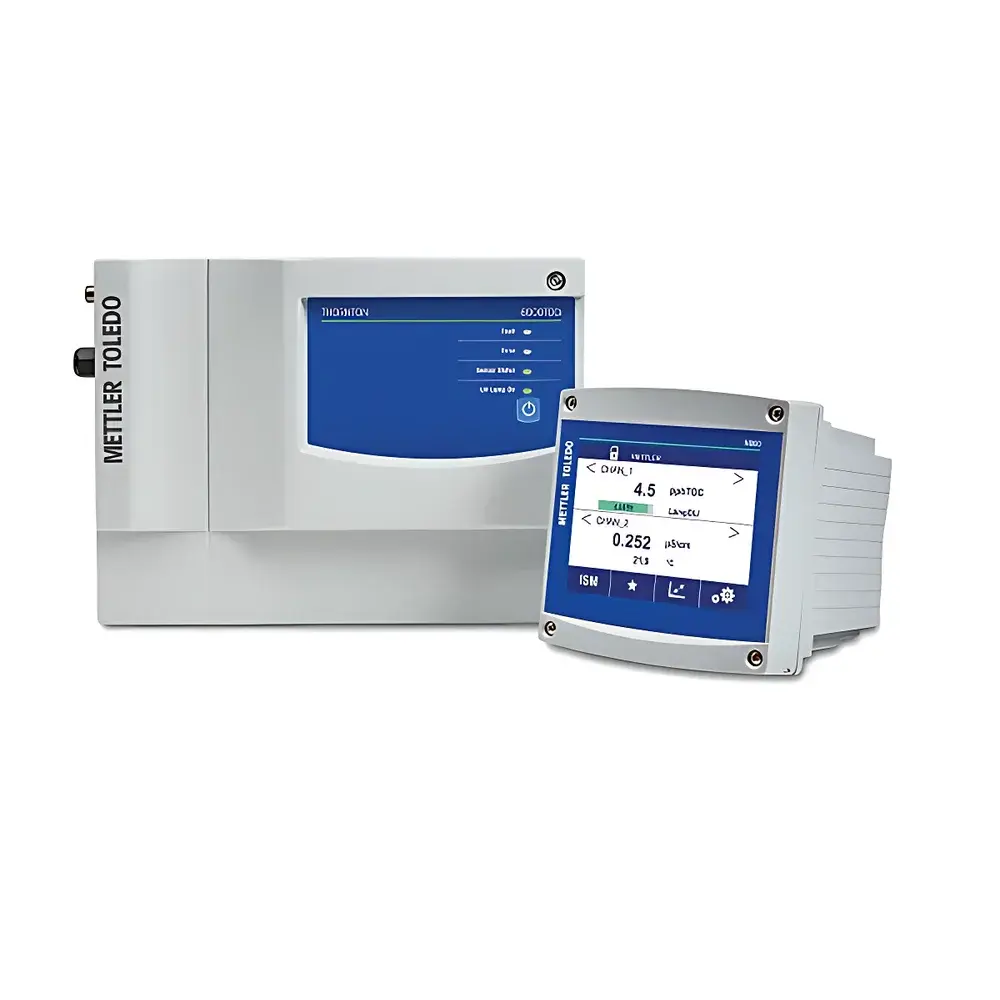
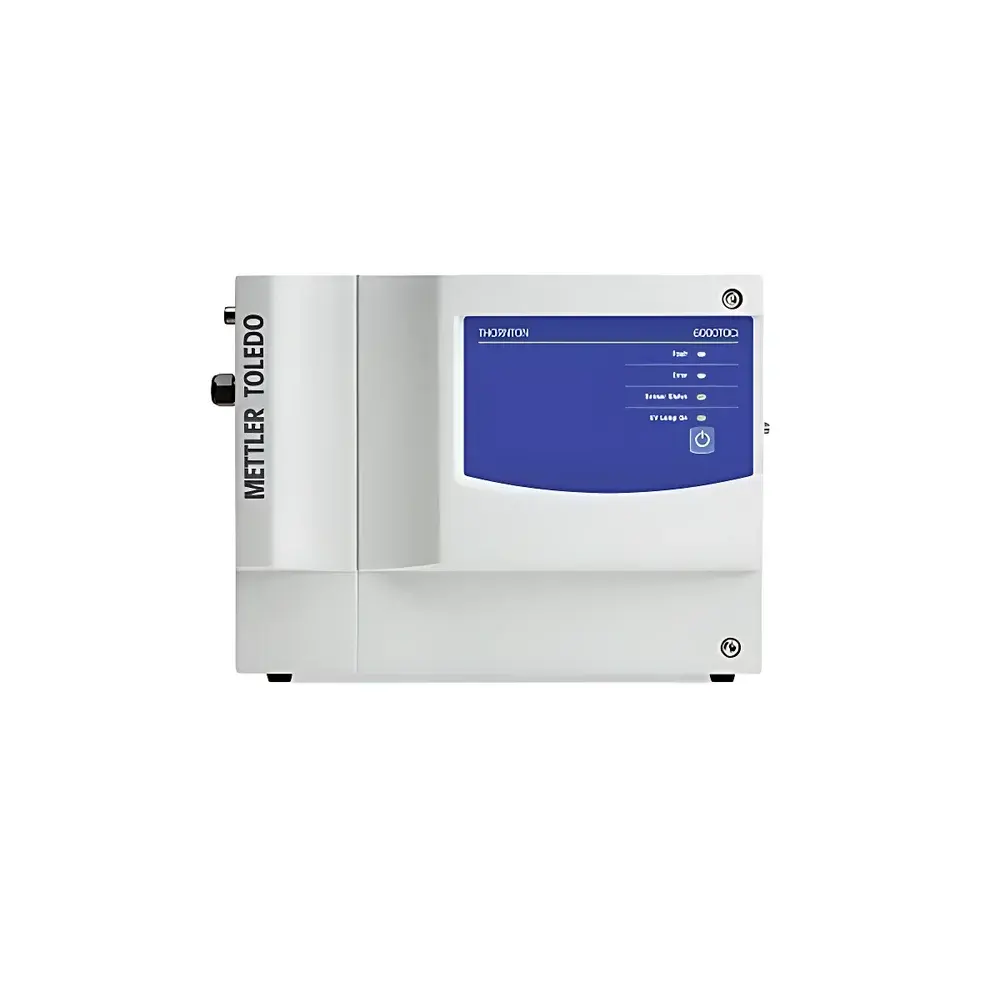
METTLER TOLEDO 6000TOCi Online Total Organic Carbon Analyzer
| Brand | METTLER TOLEDO |
|---|---|
| Origin | USA |
| Model | 6000TOCi |
| Instrument Type | Online TOC Analyzer |
| Detection Principle | Direct Conductivity Measurement |
| Oxidation Method | UV Photolysis |
| Measurement Range | 0–2000 ppb C |
| Accuracy | ±3% |
| Resolution | 0.001 ppb C |
| Detection Limit | 0.025 ppb C |
| Repeatability | ≤3% |
Overview
The METTLER TOLEDO 6000TOCi Online Total Organic Carbon Analyzer is an engineered solution for continuous, real-time quantification of total organic carbon in ultrapure water (UPW) and purified water systems used in pharmaceutical, biotechnology, and semiconductor manufacturing environments. It employs a validated, reagent-free measurement principle based on ultraviolet (UV) photolysis oxidation followed by differential conductivity detection—fully compliant with pharmacopeial standards including USP , USP , EP 2.2.44, JP 16, and ChP 2020. Unlike combustion-based TOC analyzers, the 6000TOCi eliminates the need for catalysts, carrier gases, or chemical oxidants, thereby minimizing maintenance overhead, operational risk, and potential contamination sources. Its compact, flow-through cell design ensures stable hydrodynamics and rapid response time (<3 minutes to 95% of final value), enabling true process-integrated monitoring rather than discrete sampling.
Key Features
- Reagent-free UV oxidation at 185 nm wavelength, ensuring complete mineralization of non-purgeable organic compounds without catalyst degradation or carryover
- Differential conductivity detection system with dual-cell architecture for high signal-to-noise ratio and immunity to background electrolyte fluctuations
- Integrated Intelligent Sensor Management (ISM®) technology enabling predictive diagnostics, automatic calibration scheduling, and full sensor lifecycle tracking
- Continuous flow operation at 8.5 mL/min—optimized for low sample consumption while maintaining analytical robustness and pressure stability
- Temperature-rated construction supporting operation up to 100 °C, compatible with hot water sanitization (HWS) and steam-in-place (SIP) protocols required in GMP facilities
- Modular, split-system configuration: analyzer head mounted outside cleanroom boundaries with only the flow cell entering Grade A/B zones—reducing contamination risk and simplifying validation
- Native compatibility with METTLER TOLEDO M800 multi-parameter transmitters (2- or 4-channel), enabling concurrent monitoring of TOC, conductivity, pH, ORP, dissolved ozone, DO, and pulse-based flow rate
Sample Compatibility & Compliance
The 6000TOCi is specifically designed for aqueous matrices with low ionic strength and minimal particulate load—primarily pharmaceutical-grade purified water (PW), water for injection (WFI), and semiconductor-grade ultrapure water (UPW). It meets all critical regulatory expectations for continuous TOC verification under current Good Manufacturing Practice (cGMP) frameworks. The analyzer supports full audit trail generation per FDA 21 CFR Part 11 requirements when paired with compatible M800 firmware and host SCADA/DCS systems. All calibrations are traceable to NIST-certified potassium hydrogen phthalate (KHP) standards and ASTM D5905-22 reference methods. System suitability testing (SST), installation qualification (IQ), operational qualification (OQ), and performance qualification (PQ) documentation packages are available upon request and align with ICH Q5C, Annex 1, and EU GMP Annex 15 guidelines.
Software & Data Management
Data acquisition and instrument control are managed via the embedded ISM interface within the M800 transmitter or through optional METTLER TOLEDO LabX® software integration. The system records raw conductivity values, temperature-compensated TOC concentrations, diagnostic flags (e.g., lamp intensity decay, cell fouling index), and calibration history with timestamped metadata. All entries are digitally signed and immutable, satisfying GLP/GMP data integrity requirements. RS-232 serial output and isolated 4–20 mA analog outputs enable seamless connection to distributed control systems (DCS), supervisory control and data acquisition (SCADA), or electronic batch record (EBR) platforms. Alarm thresholds—including upper/lower limits, rate-of-change alerts, and sensor health warnings—are fully configurable and logged with event-driven notifications.
Applications
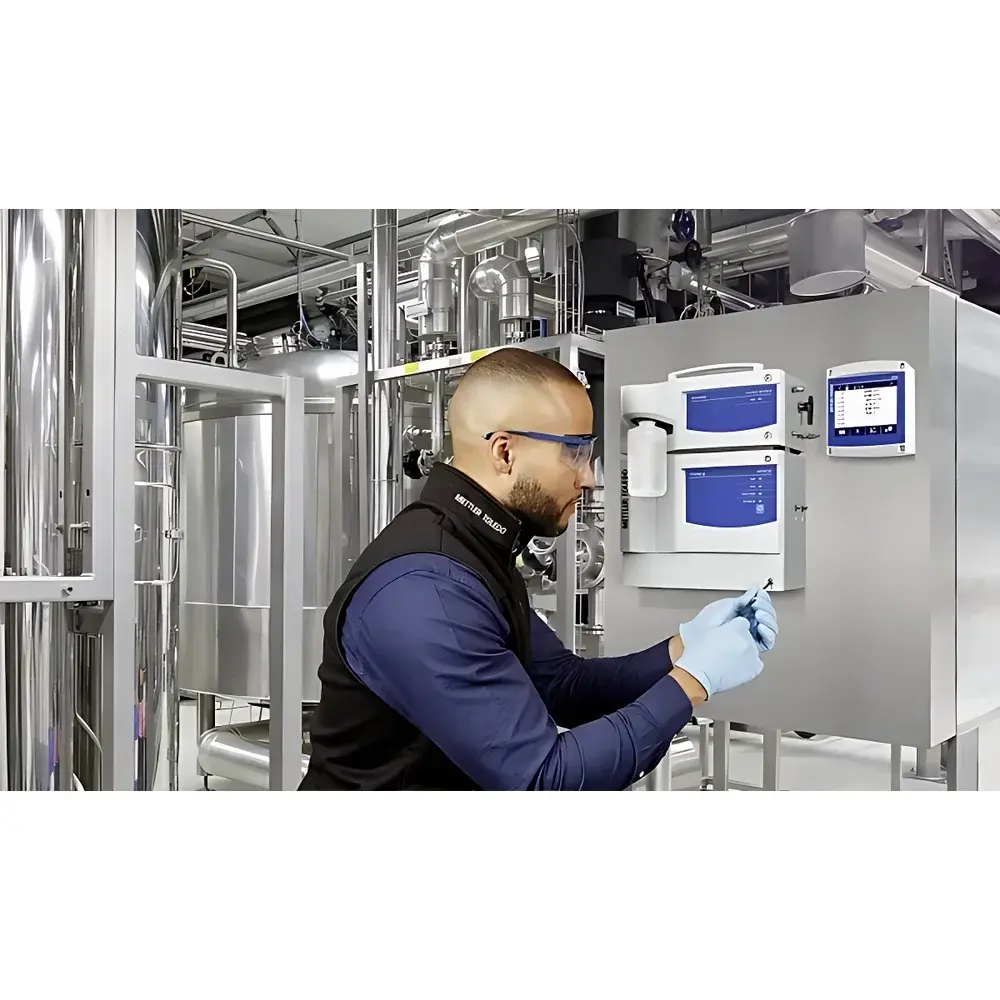
- Real-time TOC surveillance in PW/WFI distribution loops and point-of-use locations across pharmaceutical manufacturing suites
- Validation and routine monitoring of UPW systems in semiconductor front-end fabrication facilities where sub-ppb organic contamination affects wafer yield
- Supporting cleaning-in-place (CIP) cycle verification by detecting residual organics in rinse water effluent
- Monitoring TOC excursions during steam sterilization cycles to verify absence of pyrogenic breakdown products
- Integration into automated water system dashboards for trend analysis, SPC charting, and root cause investigation of quality deviations
FAQ
Does the 6000TOCi require daily maintenance or consumables?
No. The analyzer contains no membranes, moving parts, catalysts, or chemical reagents. Routine maintenance is limited to periodic verification of UV lamp output intensity and conductivity cell cleanliness—typically every 6–12 months depending on water quality.
Can it be validated for use in regulated environments?
Yes. The 6000TOCi is pre-qualified for compliance with USP , , EP 2.2.44, and ChP 2020. METTLER TOLEDO provides IQ/OQ/PQ protocols, test scripts, and validation support services aligned with Annex 15 and ASTM E2500-13.
How does it handle high-conductivity background interference?
The differential conductivity method inherently compensates for baseline conductivity shifts caused by inorganic ions, enabling accurate TOC measurement even in waters with variable CO2 content or minor ionic drift.
Is hot water sanitization supported?
Yes. The wetted components—including the quartz UV reactor and stainless-steel flow cell—are rated for continuous exposure up to 100 °C, making it suitable for integration into hot water circulation loops and SIP processes.
What communication protocols are supported?
Standard outputs include isolated 4–20 mA analog signals and RS-232 serial interface. Optional Modbus RTU/TCP and Profibus DP modules are available for industrial network integration.
Related Products







