METTLER TOLEDO COW-D Container Overload Identification System
| Brand | METTLER TOLEDO |
|---|---|
| Origin | Jiangsu, China |
| Manufacturer Type | Authorized Distributor |
| Product Origin | Domestic (China) |
| Model | COW-D |
| Pricing | Upon Request |
Overview
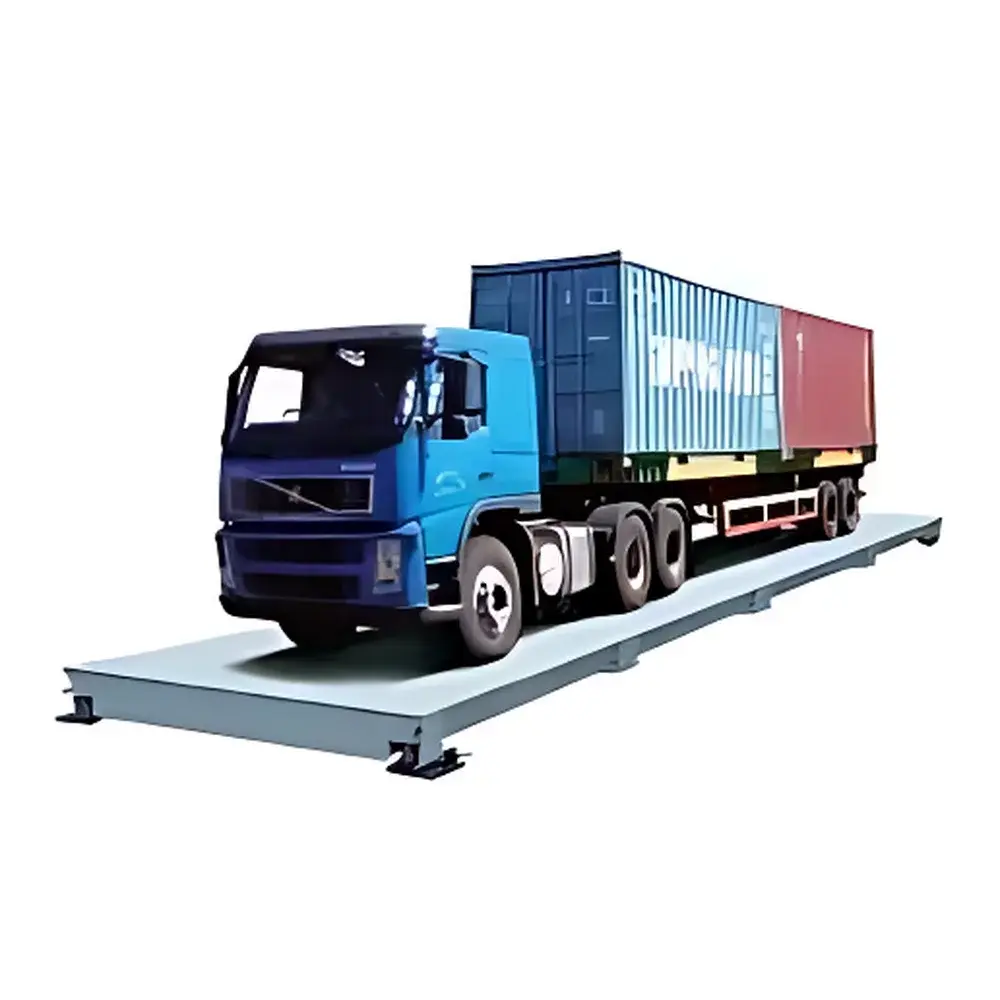
The METTLER TOLEDO COW-D Container Overload Identification System is an engineered solution for static axle-load and container-weight allocation in high-throughput intermodal transport environments—including seaports, railway freight terminals, and logistics hubs. Designed specifically for dual-container semi-trailer vehicles (e.g., 2×20ft or 1×40ft configurations), the system leverages a multi-platform static truck scale architecture combined with vehicle-type mapping logic and proprietary weight-distribution algorithms to determine individual container weights from a single static weighing event. Unlike dynamic axle scales or traditional single-platform systems, the COW-D operates under OIML R76 Class III static accuracy requirements (±0.5% of capacity for legal-for-trade applications), ensuring metrological traceability and regulatory compliance in commercial freight operations. Its core measurement principle relies on distributed load analysis across calibrated digital load cells positioned beneath distinct axle groups—enabling precise reconstruction of front and rear container mass based on known vehicle geometry, empty-vehicle baseline data, and real-time gross axle weight measurements.
Key Features
- Single-static-stop operation: Captures total vehicle weight, individual axle (or axle-group) loads, and allocates mass to front/rear containers without requiring vehicle repositioning or multiple passes.
- OIML R76 Class III certified static accuracy: Meets international metrological standards for trade-related weighing applications in freight logistics.
- Dual-mode functionality: Operates as a full-featured static truck scale for general vehicle weighing while simultaneously supporting container-specific overload identification.
- Patented weight allocation methodology: Implements two granted Chinese invention patents—“Weighing Method for Multi-Platform Static Vehicle Scales Based on Digital Sensors” and “Method for Calculating Individual Container Weights in Dual-Container Transport Vehicles.”
- Robust digital sensor architecture: Stainless-steel hermetically sealed digital load cells with IP68/IP69K ingress protection, resistant to corrosion, dust, moisture, and chemical exposure in harsh port/rail environments.
- TraxDSP™ anti-vibration digital filtering: Ensures stable readings on uneven or vibrating concrete foundations common in outdoor weighbridge installations.
- Plug-and-play sensor diagnostics: T800 terminal supports individual sensor addressing, real-time fault detection, and remote transmission of diagnostic status via serial interface.
- Lightning-resilient design: Integrated secondary lightning surge protection across signal and power paths, compliant with IEC 62305-4 for outdoor industrial weighing infrastructure.
- No recalibration required when replacing digital load cells: Auto-configuration via embedded calibration parameters stored within each sensor’s memory.
Sample Compatibility & Compliance
The COW-D system accommodates standard ISO container-carrying vehicle configurations defined in China’s Ministry of Transport JT/T 480–2019 and JT/T 481–2019 specifications—including tractor-trailer combinations with tandem or tridem axle setups. It supports both 20-foot and 40-foot container pairings (e.g., 2×20ft, 1×40ft, or mixed-length loads) provided vehicle technical parameters (axle spacing, wheelbase, suspension type) are registered in the vehicle-type database. All hardware components comply with GB/T 7723–2017 (Chinese national standard for electronic vehicle scales), OIML R76–1:2017 (static accuracy class III), and IEC 61326–1:2013 (EMC immunity for industrial instrumentation). The ScaleWin® CW software supports audit-ready data logging aligned with GLP principles, including timestamped weight records, operator ID, vehicle ID, and overload alert flags—facilitating internal quality reviews and third-party regulatory audits.
Software & Data Management
The system integrates ScaleWin® CW Container Overload Identification Software—a Windows-based application that manages vehicle-type registration, empty-vehicle baseline acquisition, real-time weight computation, and regulatory reporting. During commissioning, operators use the “Vehicle Type Matching” module to register tractor and semi-trailer IDs, link them to pre-defined mechanical templates, and perform initial tare weighing to populate axle-specific zero-offset values. These parameters are stored in a centralized SQL Server database accessible via secure LAN or VLAN. During live operation, the T800 terminal transmits raw axle weight data via RS-232/RS-485 to the host PC, where ScaleWin® CW applies patented distribution algorithms—factoring in known axle spacing, suspension stiffness assumptions, and center-of-gravity constraints—to compute individual container masses. All transactions are logged with immutable timestamps and support export to CSV, PDF, or XML formats. Optional integration with enterprise WMS/TMS platforms is available via OPC UA or RESTful API interfaces.
Applications
- Port gatehouse enforcement: Prevents overweight container departures prior to crane handling, reducing structural stress on quay cranes and ship stowage planning errors.
- Railway intermodal yards: Verifies compliance with UIC 515-1 axle load limits before train formation, minimizing track wear and derailment risk.
- Inland logistics terminals: Enables automated billing based on container-specific payload rather than gross vehicle weight, improving cost allocation transparency.
- Customs and border control checkpoints: Supports mandatory cargo weight declarations under WTO Trade Facilitation Agreement Annex 7.3 and China’s Customs Regulation No. 164.
- Fleet maintenance analytics: Longitudinal axle load trend analysis identifies abnormal suspension wear patterns or improper container loading practices.
FAQ
Does the COW-D system require dynamic weighing or vehicle movement during measurement?
No. The COW-D is a static weighing system: the vehicle must come to a complete stop on the multi-platform scale for at least 2 seconds before data acquisition begins.
Can it distinguish between 20-ft and 40-ft containers on the same trailer?
Yes—provided the vehicle configuration (e.g., kingpin-to-rear-axle distance, trailer overhang) is accurately registered in the vehicle-type database; the algorithm uses geometric constraints to resolve container mass distribution.
Is ScaleWin® CW compatible with existing weighbridge management systems?
Yes. It supports standard communication protocols including Modbus RTU, TCP/IP socket connections, and configurable ASCII data output for integration with third-party MES or ERP platforms.
What happens if a vehicle’s technical parameters are not found in the built-in database?
Operators may manually enter axle spacing, wheelbase, and suspension type via the Vehicle Type Matching interface, followed by an on-site tare weighing session to calibrate the baseline.
Does the system meet FDA 21 CFR Part 11 requirements for electronic records?
While not designed for pharmaceutical manufacturing environments, ScaleWin® CW includes role-based access control, electronic signature prompts, and tamper-evident audit trails—features commonly referenced during GxP-aligned logistics validation protocols.