METTLER TOLEDO Digital Training Course: Weigh Tank Application Design Requirements
| Brand | METTLER TOLEDO |
|---|---|
| Origin | Switzerland |
| Manufacturer Type | Authorized Distributor |
| Product Origin | Imported |
| Model | Digital Training Course – Weigh Tank Application Design Requirements |
| Training Experience | 10+ Years |
| Equipment Category | Laboratory Weighing Systems |
| Compliance Support | ASTM E899, ISO/IEC 17025, USP <41>, GMP Annex 11 (Data Integrity Principles) |
Overview
This instructor-led digital training course is engineered for laboratory managers, process engineers, QC/QA specialists, and maintenance technicians responsible for the specification, installation, commissioning, and long-term reliability of static or dynamic weigh tank systems. Delivered by METTLER TOLEDO’s certified service engineers with over a decade of field experience in pharmaceutical, chemical, food & beverage, and biotech applications, the course provides a rigorous technical foundation for designing robust, metrologically sound weighing solutions. It focuses explicitly on mechanical integration constraints, load path integrity, environmental influence mitigation, and regulatory-compliant calibration workflows — all grounded in the principles of force measurement traceability and uncertainty analysis per ISO/IEC 17025 and USP <41>. The curriculum centers on RapidCal™, METTLER TOLEDO’s proprietary rapid calibration methodology developed to eliminate iterative field adjustments and reduce commissioning time without compromising measurement confidence.
Key Features
- Comprehensive coverage of mechanical design criteria for single- and multi-point weigh tank installations, including support structure rigidity, thermal expansion compensation, and vibration isolation requirements
- Step-by-step engineering guidelines for RapidCal™ pivot point geometry — including optimal pivot angle, material selection (stainless steel 316L vs. hardened alloy), surface finish tolerances (Ra ≤ 0.8 µm), and load distribution modeling
- Technical rationale behind RapidCal™’s three-point constraint principle and its impact on repeatability (< ±0.05% FS under static loading per ASTM E899)
- Diagnostic protocols for identifying and correcting common installation errors: off-center loading, binding at pivot joints, and baseplate flexure-induced drift
- Regulatory alignment mapping — how design choices affect audit readiness for FDA 21 CFR Part 11 (electronic records), EU GMP Annex 11 (computerized systems), and ISO 13485 (medical device manufacturing)
Sample Compatibility & Compliance
The course applies exclusively to static and quasi-static weigh tanks used in R&D labs, pilot plants, and GMP production environments. It addresses compatibility across METTLER TOLEDO’s IND570, POWERCELL® PDX®, and XPE/XSE platform-based weighing modules, as well as third-party PLC-integrated systems meeting IEC 61000-6-2/6-4 EMC standards. All design recommendations conform to international weighing standards: ISO 9001:2015 (clause 7.1.5), OIML R60 (load cell accuracy classes C3/C4), and NIST Handbook 44 (specifications for commercial weighing devices). Calibration validation procedures align with USP <1058> Analytical Instrument Qualification and ASTM E2533-22 (Standard Guide for Verification of Weighing Systems).
Software & Data Management
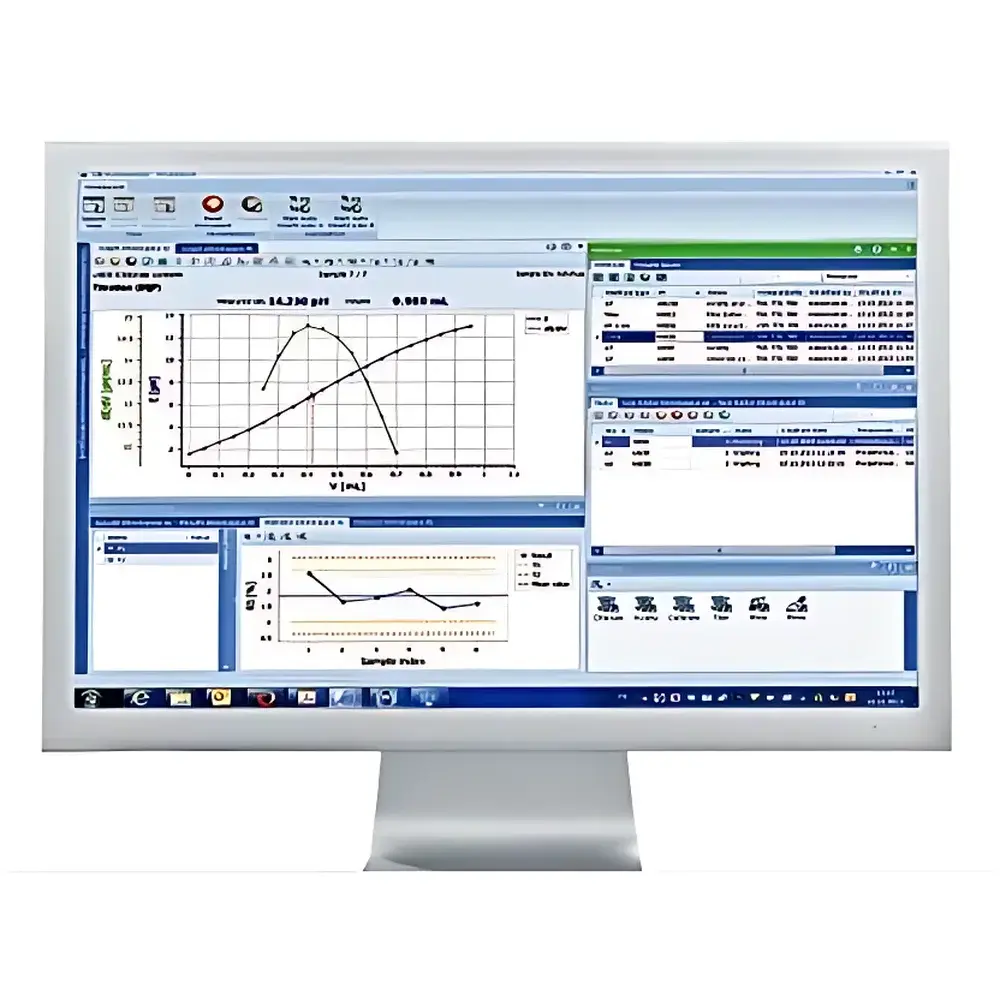
While this is a theory- and practice-oriented training module (not software-driven), it includes documented integration pathways for METTLER TOLEDO LabX® and AutoCAL™ software environments. Participants learn how to map RapidCal™-derived calibration parameters into LabX’s audit-trail-enabled calibration workflow, ensuring full compliance with 21 CFR Part 11 requirements for electronic signatures, change control, and data retention. Emphasis is placed on generating ALCOA+ compliant records: attributable, legible, contemporaneous, original, accurate, complete, consistent, enduring, and available. The course also outlines metadata tagging conventions for calibration certificates, including uncertainty budgets, environmental conditions (temperature, humidity), and operator qualifications.
Applications
- Designing scalable weigh tank systems for API synthesis reactors and crystallizers
- Validating load cell mounting configurations in sterile bioreactor skids (ISO Class 5–8 environments)
- Troubleshooting weight drift in high-precision blending operations (e.g., nutraceutical dry mix formulation)
- Supporting Stage 4 qualification (Performance Qualification) of automated dispensing systems under GAMP 5
- Preparing technical documentation for regulatory submissions (e.g., FDA eCTD Module 3, EU Annex 15 Validation Master Plans)
FAQ
Is this course accredited for continuing education units (CEUs)?
Yes — participants receive a METTLER TOLEDO Certificate of Completion carrying 0.6 CEUs recognized by the International Association for Continuing Education and Training (IACET).
Does the training cover hazardous area (ATEX/IECEx) weigh tank installations?
Yes — Module 4 includes dedicated guidance on intrinsically safe load cell selection, cable routing in Zone 1/21 environments, and grounding practices compliant with IEC 60079-14.
Can RapidCal™ be applied to existing installed weigh tanks?
Yes — the course details retrofit assessment criteria, including pivot re-machining feasibility, baseplate reinforcement evaluation, and post-modification verification testing per ISO/IEC 17025.
Are lab-specific case studies included?
Yes — four anonymized case studies from global pharmaceutical labs are analyzed, covering root cause investigation of ±0.3% weight deviation, thermal hysteresis correction, and GLP-compliant calibration record reconstruction.
Is access to METTLER TOLEDO hardware required to complete the course?
No — the training is fully theory-based and delivered via interactive video modules; however, optional hands-on workshops (in-person or virtual lab simulation) can be scheduled separately upon request.
Related Products