
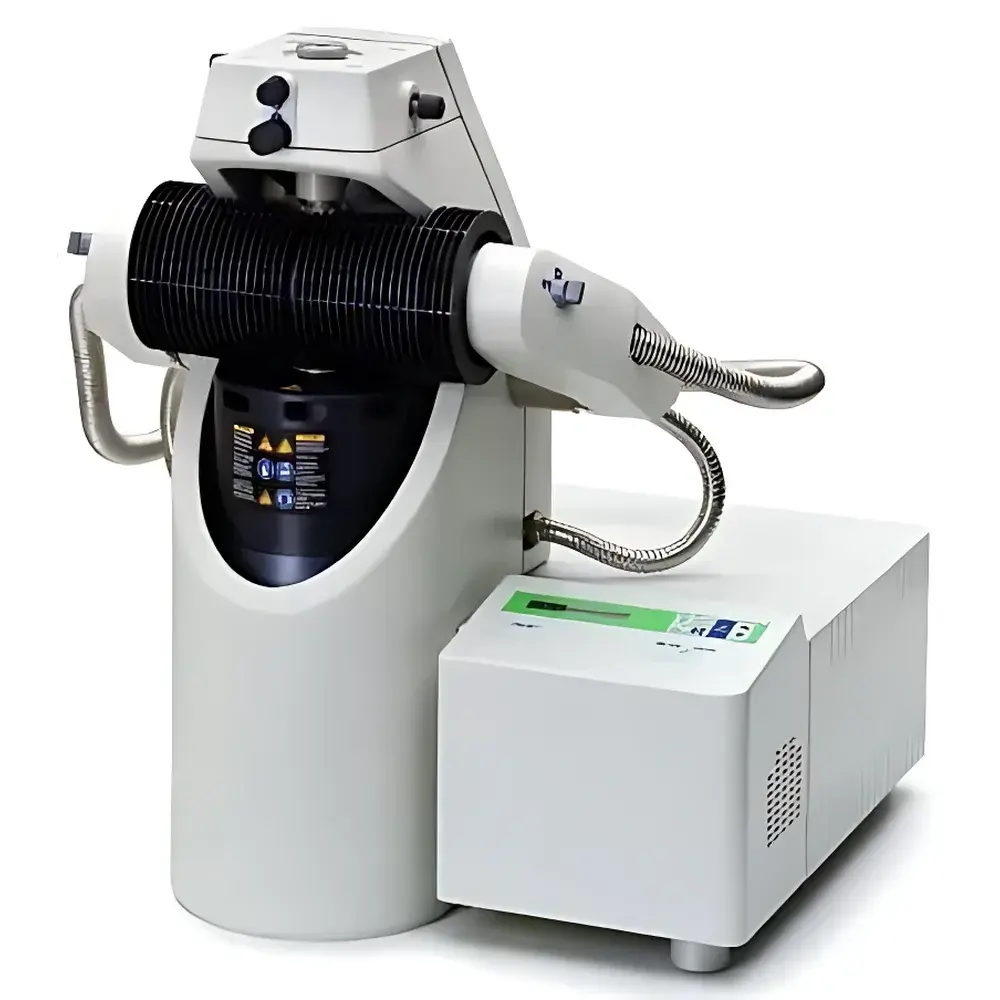
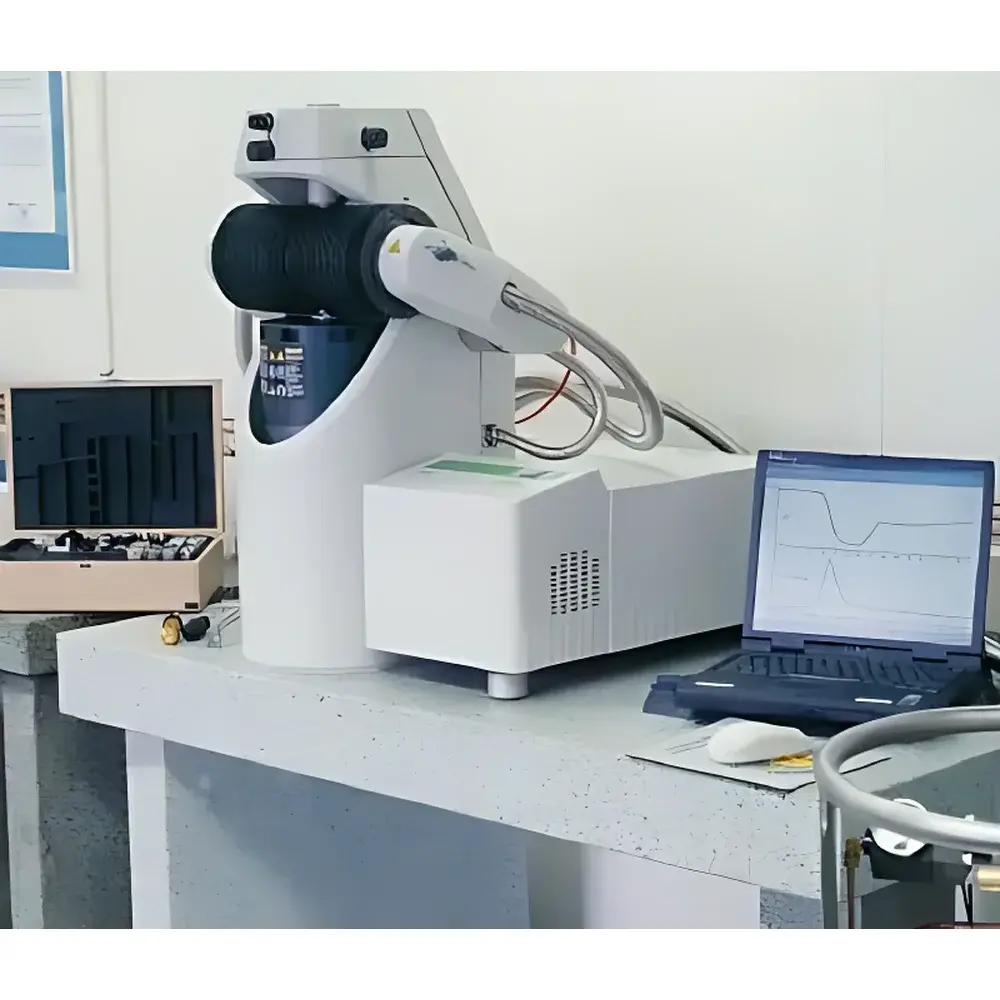
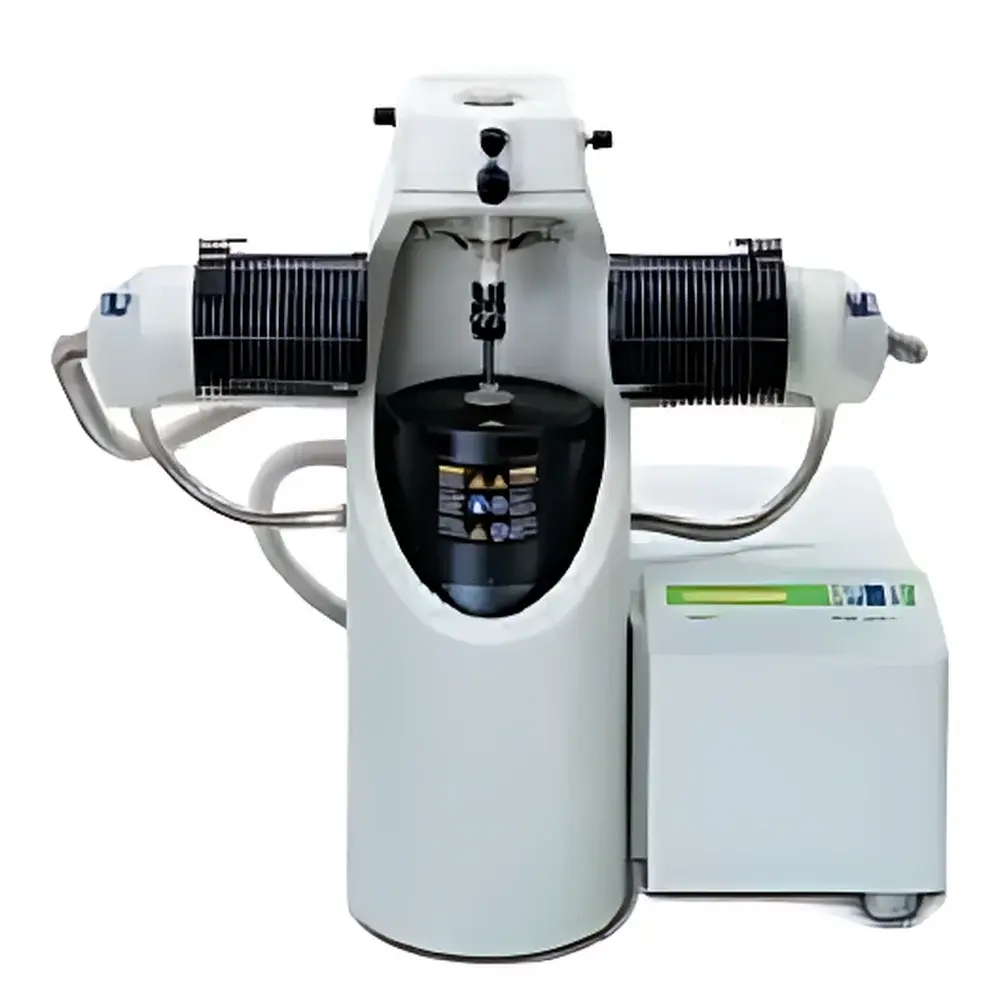
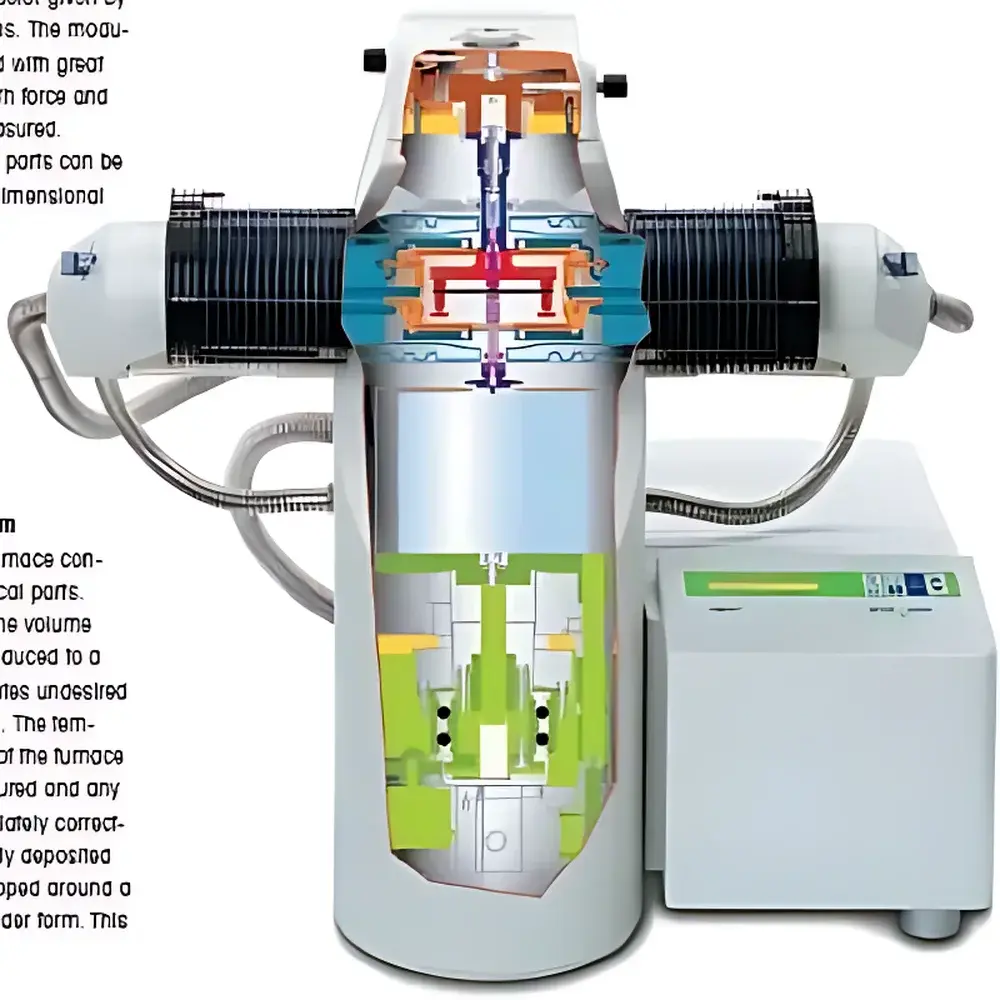
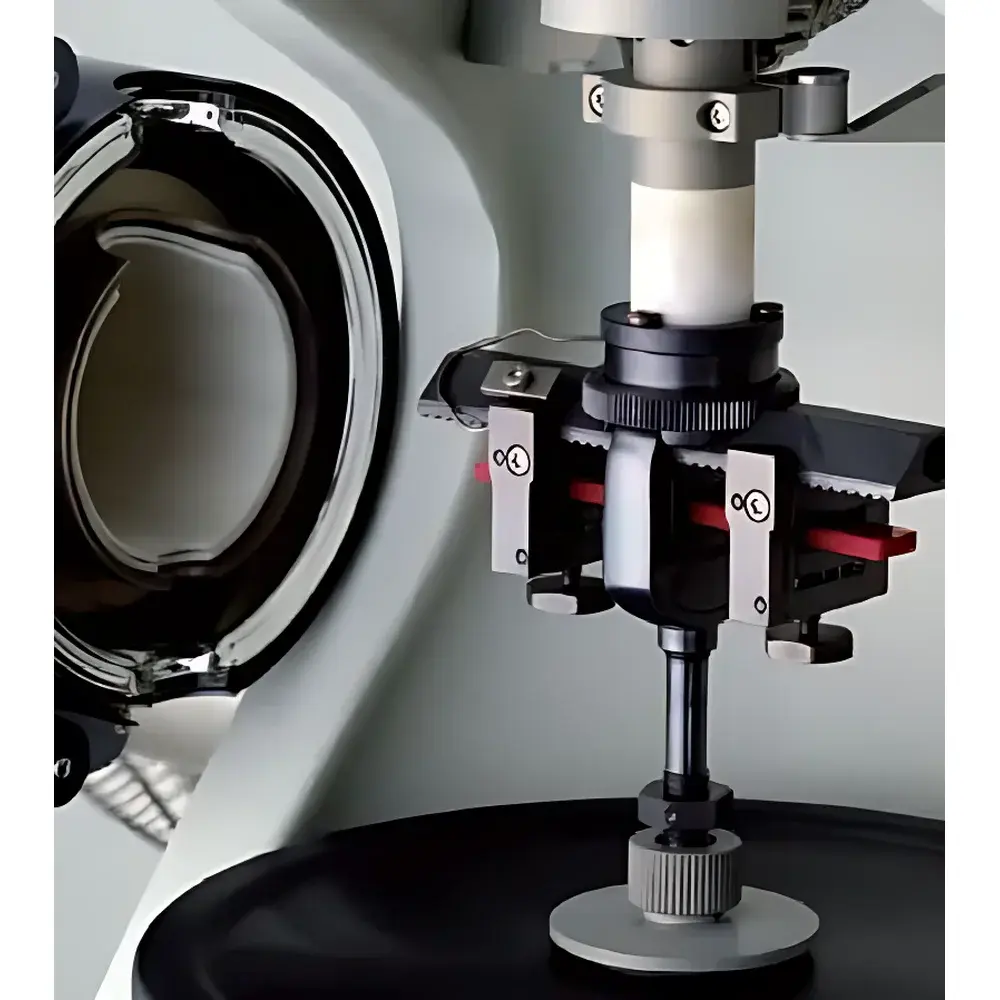
METTLER TOLEDO DMA/SDTA861e Dynamic Mechanical Analyzer with Synchronous Differential Thermal Analysis
| Brand | METTLER TOLEDO |
|---|---|
| Origin | Switzerland |
| Model | DMA/SDTA861e |
| Temperature Range | −150 to 500 °C |
| Temperature Accuracy | ±0.5 °C |
| Force Range | 0.001–40 N |
| Displacement Range | ±1.6 mm |
| Frequency Range | 0.001–1000 Hz |
| Tan δ Range | 0.0001–100 |
Overview
The METTLER TOLEDO DMA/SDTA861e is a high-precision dynamic mechanical analyzer engineered for the quantitative characterization of viscoelastic behavior in solid and semi-solid materials under controlled thermal and mechanical stimuli. Operating on the principle of forced oscillatory deformation, the instrument applies a sinusoidal stress (or strain) to a sample while ramping temperature or sweeping frequency, and simultaneously measures the resulting strain (or stress) response. This enables direct calculation of storage modulus (E′), loss modulus (E″), and loss tangent (tan δ) — fundamental parameters describing stiffness, energy dissipation, and molecular mobility. A defining technical feature is its integrated Synchronous Differential Thermal Analysis (SDTA) capability: a calibrated thermocouple embedded in the sample holder records real-time thermal events (e.g., melting, glass transitions) concurrently with mechanical data, allowing traceable temperature calibration using certified pure metal standards (e.g., indium, tin, zinc). Designed and manufactured in Switzerland, the DMA/SDTA861e adheres to stringent metrological requirements for research-grade thermal analysis instrumentation.
Key Features
- True dual-mode operation: simultaneous, time-synchronized acquisition of mechanical (stress/strain) and thermal (SDTA) signals within a single measurement cycle
- Intelligent force/strain control switching: automatic transition between stress-controlled and strain-controlled modes during a single experiment, enabling seamless characterization from liquid-like precursors (e.g., uncured epoxy resins) to highly crosslinked, rigid thermosets
- Extended dynamic range: 0.001–40 N force actuation and ±1.6 mm displacement resolution support testing of ultra-soft gels, elastomers, adhesives, and high-modulus ceramics or composites using the same hardware platform
- Wide-frequency coverage: 0.001–1000 Hz frequency sweep capability facilitates both quasi-static creep/stress-relaxation studies and high-rate dynamic response analysis relevant to service conditions
- Modular, tool-free sample preparation: proprietary fixture system permits full sample mounting, preload adjustment, and geometry verification on the laboratory bench—outside the furnace—reducing thermal drift and improving reproducibility
- In-situ temperature validation: SDTA signal provides independent, physical reference points (melting onset, peak) for continuous verification and correction of furnace temperature profiles per ASTM E1640 and ISO 6721-7
Sample Compatibility & Compliance
The DMA/SDTA861e accommodates diverse geometries—including tension, three-point bending, dual/cantilever bending, shear, and compression—via interchangeable fixtures optimized for polymers (thermoplastics, thermosets, elastomers, adhesives, composites), ceramics, metallic alloys, fibers, thin films, and biological hydrogels. Sample dimensions are configurable per ISO 6721-1 and ASTM D4065. All thermal and mechanical calibrations follow METTLER TOLEDO’s documented traceability chain to national standards (e.g., NIST, PTB). The system supports GLP/GMP-compliant workflows through optional audit trail logging, electronic signatures, and 21 CFR Part 11–ready software configurations. Temperature accuracy (±0.5 °C) and force linearity (<0.5% full scale) are verified annually using certified reference materials per ISO/IEC 17025-accredited procedures.
Software & Data Management
Controlled by STARe Software (v17.x or later), the DMA/SDTA861e offers fully integrated method development, real-time visualization, automated baseline correction, and advanced model fitting (e.g., Arrhenius, Williams-Landel-Ferry, Havriliak-Negami). Raw data files (.stf) store all primary sensor outputs (force, displacement, temperature, SDTA voltage) with timestamped metadata. Export formats include ASCII, Excel, and universal .tdms for third-party analysis (MATLAB, Python, Origin). The software includes built-in reporting templates compliant with ISO 11357-2 and ASTM D7028, with customizable pass/fail criteria and statistical process control (SPC) charts. Networked deployment enables centralized instrument monitoring, remote diagnostics, and secure data archiving via validated LIMS integration.
Applications
This analyzer serves critical roles in polymer R&D (curing kinetics, Tg mapping, filler dispersion effects), quality assurance of aerospace composites (interlaminar shear stability), biomedical device development (hydrogel swelling mechanics), electronics packaging (CTE mismatch analysis), and advanced ceramic sintering optimization. It is routinely employed to quantify aging effects in rubber seals, evaluate thermal stability of battery separator films, assess interfacial adhesion in multilayer laminates, and validate finite element models with experimentally derived viscoelastic constitutive data.
FAQ
What distinguishes SDTA from conventional DSC in DMA instruments?
SDTA measures heat flow differentially *within the same sample holder* used for mechanical testing—eliminating positional artifacts and enabling true simultaneity at sub-second temporal resolution.
Can the DMA/SDTA861e perform time-temperature superposition (TTS)?
Yes—the wide frequency range and precise temperature control allow construction of master curves per ISO 6721-1, with automatic horizontal/vertical shifting algorithms embedded in STARe.
Is vacuum or inert gas purging supported?
Standard configuration includes purge gas inlet (N2, Ar, He) with mass flow controller; optional vacuum-compatible furnace upgrade available for oxidative stability studies.
How is temperature calibration performed using SDTA?
By running a certified pure metal standard (e.g., indium, mp = 156.60 °C), the SDTA peak onset defines the true sample temperature, correcting for sensor offset and furnace gradient errors.
Does the system comply with regulatory requirements for pharmaceutical excipient characterization?
When configured with 21 CFR Part 11 options and validated IQ/OQ protocols, it meets USP , ICH Q5E, and FDA guidance for viscoelastic assessment of polymeric delivery systems.



