
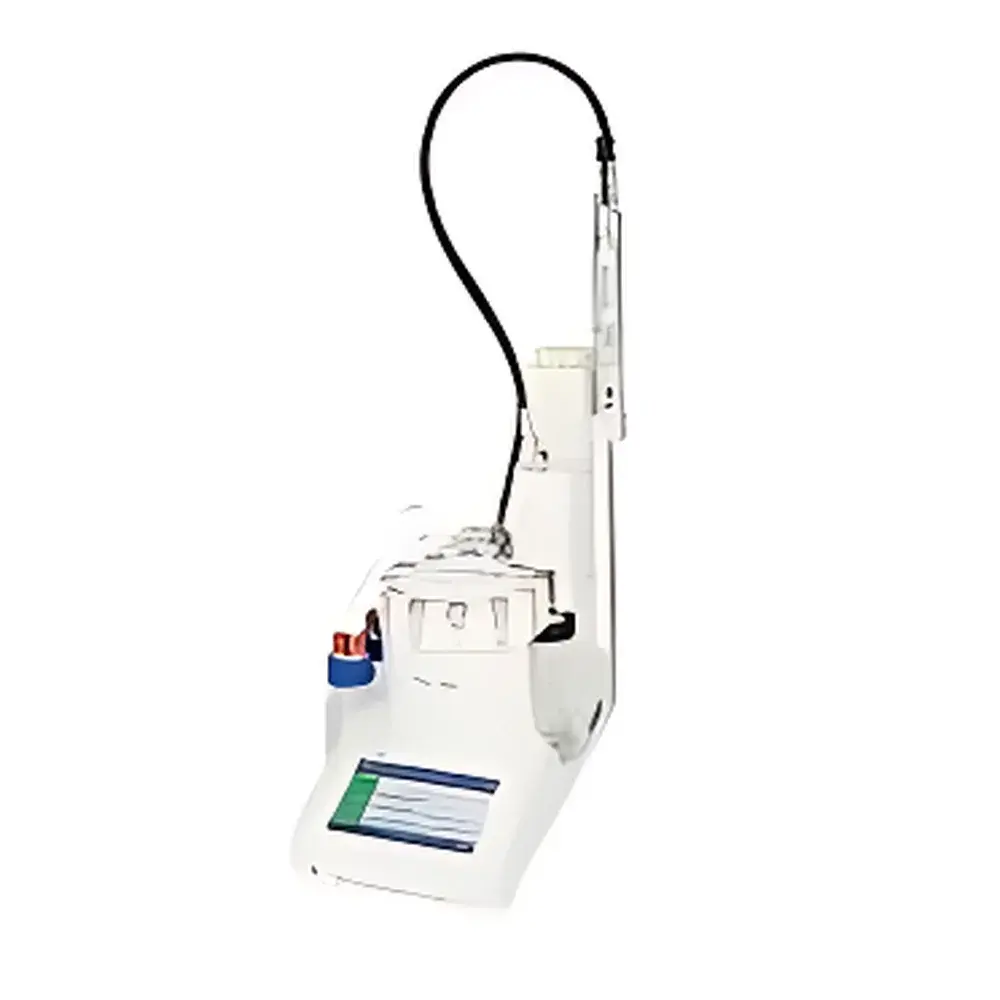
METTLER TOLEDO EasySampler 1210 Automated Reaction Sampling System
| Brand | METTLER TOLEDO |
|---|---|
| Origin | Switzerland |
| Model | EasySampler 1210 |
| Temperature Range | –20 °C to 140 °C |
| Sample Type Compatibility | Homogeneous, heterogeneous, slurry, air- and moisture-sensitive, exothermic/hazardous reactions |
| Compliance | Designed for GLP/GMP-aligned workflows, supports 21 CFR Part 11–compliant data integrity when integrated with iC Software Suite |
Overview
The METTLER TOLEDO EasySampler 1210 is an automated, in-situ reaction sampling system engineered for precision, safety, and reproducibility in process chemistry and pharmaceutical development laboratories. It operates on a closed-loop, syringe-driven aspiration principle coupled with real-time temperature-controlled sample transfer and immediate quenching—eliminating manual intervention, thermal lag, and atmospheric exposure during sampling. Unlike conventional manual or semi-automated approaches, the EasySampler 1210 integrates directly with jacketed reactors (e.g., RC1mx, Excellence Reactors) and maintains strict thermal continuity from reactor core to sample vial. Its core function is to extract statistically representative aliquots under dynamically controlled conditions—including cryogenic (–20 °C) and high-temperature (up to 140 °C) regimes—while preserving chemical integrity for downstream offline analysis (e.g., HPLC, GC, NMR, ICP-MS).
Key Features
- Automated, programmable sampling sequences: Define up to 99 time- or event-triggered sampling points per experiment, synchronized with reactor control parameters (temperature, addition rate, pH, etc.) via Ethernet or RS232.
- Patented inert sampling pathway: All wetted parts are constructed from chemically resistant materials (Hastelloy C-276, PTFE, sapphire, fused silica), ensuring compatibility with corrosive reagents, strong acids/bases, and organometallics.
- Integrated quenching capability: On-the-fly dilution or reagent addition (e.g., cold solvent, derivatizing agent, reducing quencher) occurs within <100 ms of sample aspiration, minimizing post-sampling degradation or side reactions.
- Temperature-stabilized sample transfer: The entire fluid path—from probe tip to vial—is actively temperature-regulated to match reactor setpoint ±0.5 °C, preventing condensation, crystallization, or phase separation during transit.
- Zero cross-contamination design: Each sample is isolated in a dedicated, pre-sterilized vial; the probe undergoes full internal and external rinse cycles (solvent + nitrogen purge) between samplings.
- Explosion-proof and intrinsically safe configuration options available for Class I, Div 1 hazardous area deployment (ATEX/IECEx certified variants).
Sample Compatibility & Compliance
The EasySampler 1210 accommodates diverse reaction media including homogeneous solutions, multiphase emulsions, solid-containing slurries, gas-evolving systems, and air- or moisture-sensitive transformations (e.g., Grignard, lithiation, hydrogenations). Its mechanical architecture enables reliable sampling from viscous media (up to 10,000 mPa·s) and suspended solids (particle size ≤200 µm) without clogging. From a regulatory standpoint, the system supports audit-ready workflows compliant with ICH Q5, Q7, and Q13 guidelines. When operated with METTLER TOLEDO’s iC DataSuite and enabled electronic signatures, it meets FDA 21 CFR Part 11 requirements for electronic records and signatures—including full traceability of sampling events, operator ID, timestamp, reactor state snapshot, and raw sensor data logs.
Software & Data Management
Control and monitoring are executed through METTLER TOLEDO’s iC Software platform (v4.0+), which provides a validated, secure interface for method development, execution, and reporting. The software enables real-time visualization of sampling status, error diagnostics (e.g., pressure fault, vial recognition failure), and automatic metadata tagging (e.g., batch ID, vessel ID, sampling trigger condition). Raw data—including timestamps, reactor temperature at sampling instant, jacket temperature, and pump actuation signals—is exported in ASTM E1384-compliant .csv or .xml formats. Integration with LIMS and ELN systems is supported via OPC UA and RESTful API protocols, facilitating seamless data flow into enterprise analytics platforms.
Applications
- Kinetic profiling of reaction progress and intermediate formation
- Impurity tracking across reaction time courses (e.g., genotoxic impurities, residual catalysts)
- Yield optimization studies under varying stoichiometry, temperature ramping, or addition profiles
- Process safety evaluation via calorimetric correlation (paired with RC1mx or similar reaction calorimeters)
- Development of robust control strategies for continuous manufacturing (QbD-aligned DOE campaigns)
- Supporting regulatory filings with high-fidelity, auditable sampling data for ANDA, NDA, and MAA submissions
FAQ
Can EasySampler 1210 be retrofitted onto existing reactors?
Yes—it supports mechanical and communication integration with most METTLER TOLEDO reactor systems (RC1mx, OptiMax, LabMax) and select third-party vessels via custom flange adapters and Modbus TCP gateways.
Is sampling possible during rapid exotherms or gas evolution?
Yes—the system employs pressure-compensated aspiration and real-time back-pressure regulation to maintain consistent flow rates even during vigorous gas release or sudden ΔT events.
What sample volume ranges does it support?
Standard configurations deliver 0.1–5.0 mL per sample, with optional micro-sampling kits enabling 10–100 µL volumes for high-value or toxic intermediates.
How is calibration and performance verification performed?
The system includes built-in gravimetric verification routines per ASTM E2656, and annual PQ (Performance Qualification) protocols are provided in the IQ/OQ/PQ documentation package.
Does it support unattended overnight operation?
Yes—full sequence autonomy is enabled with hardware watchdog timers, low-vial detection, and automatic shutdown upon error escalation, meeting ISO 14155 and GCP-compliant remote monitoring standards.



