
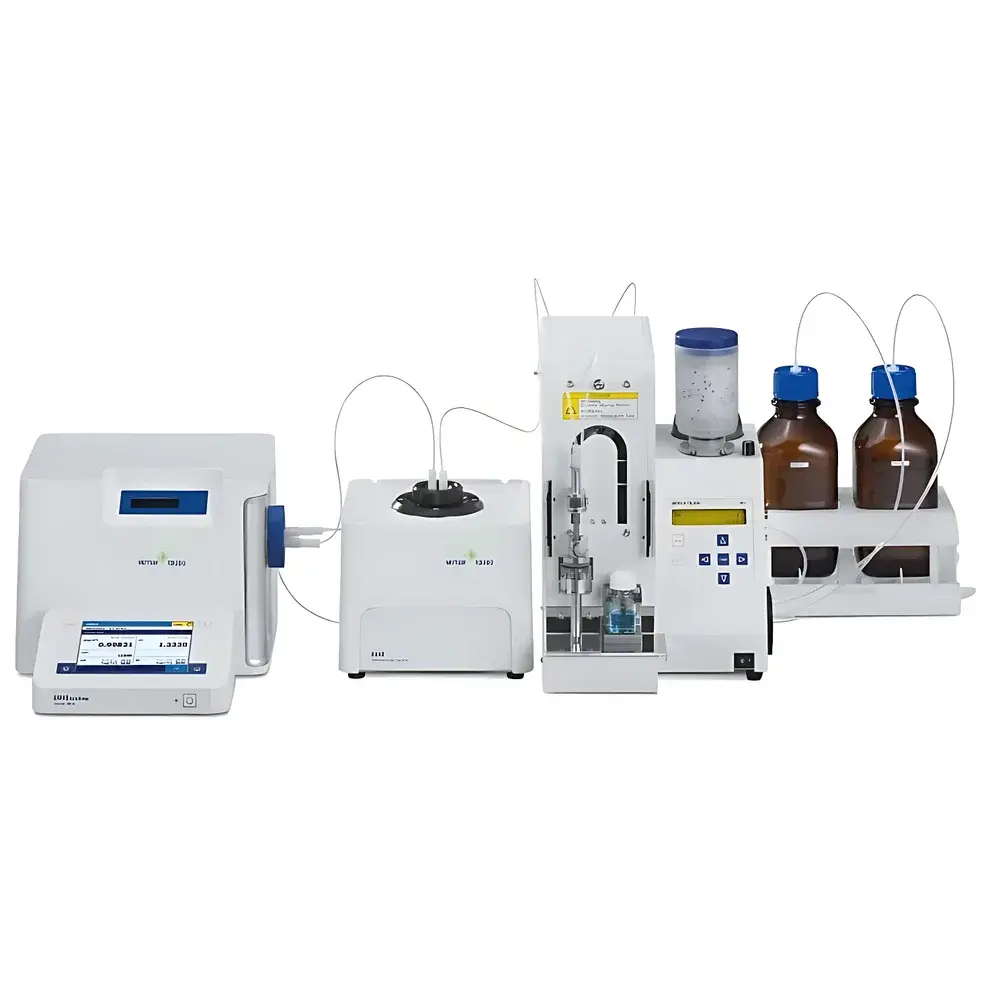
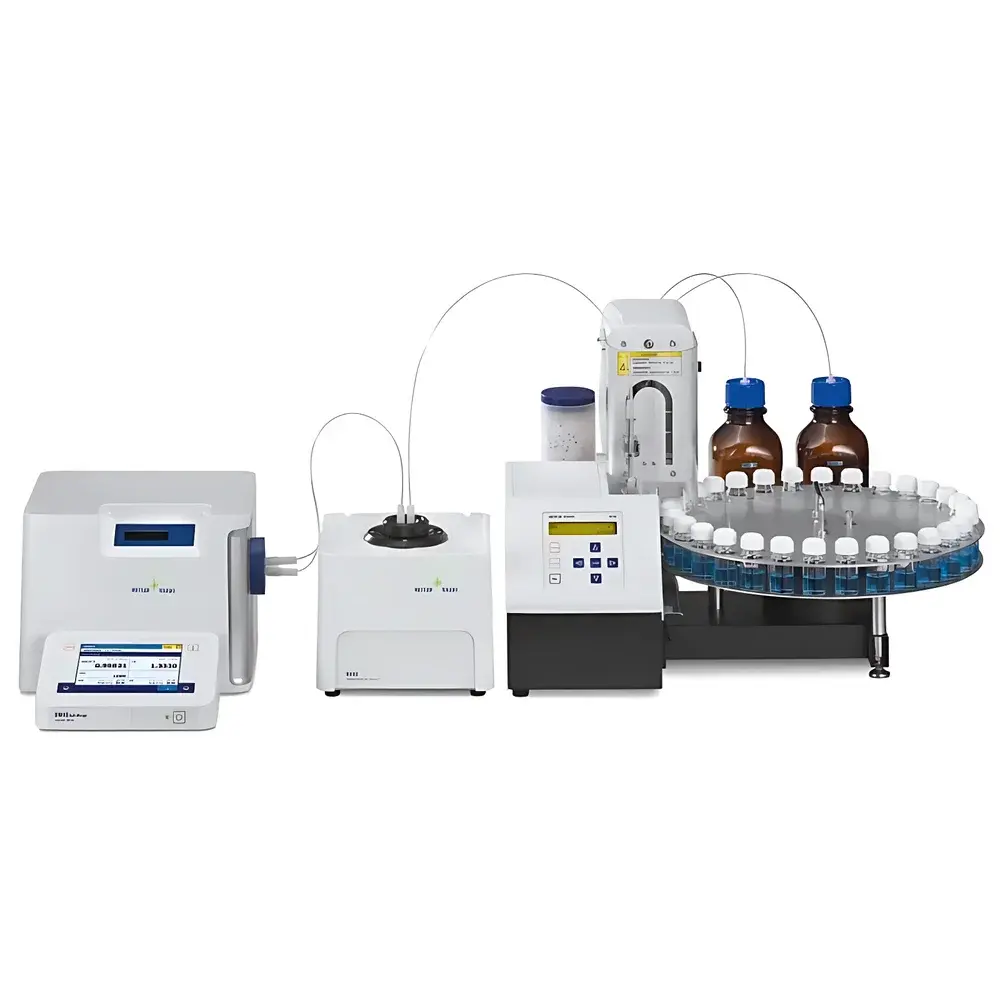
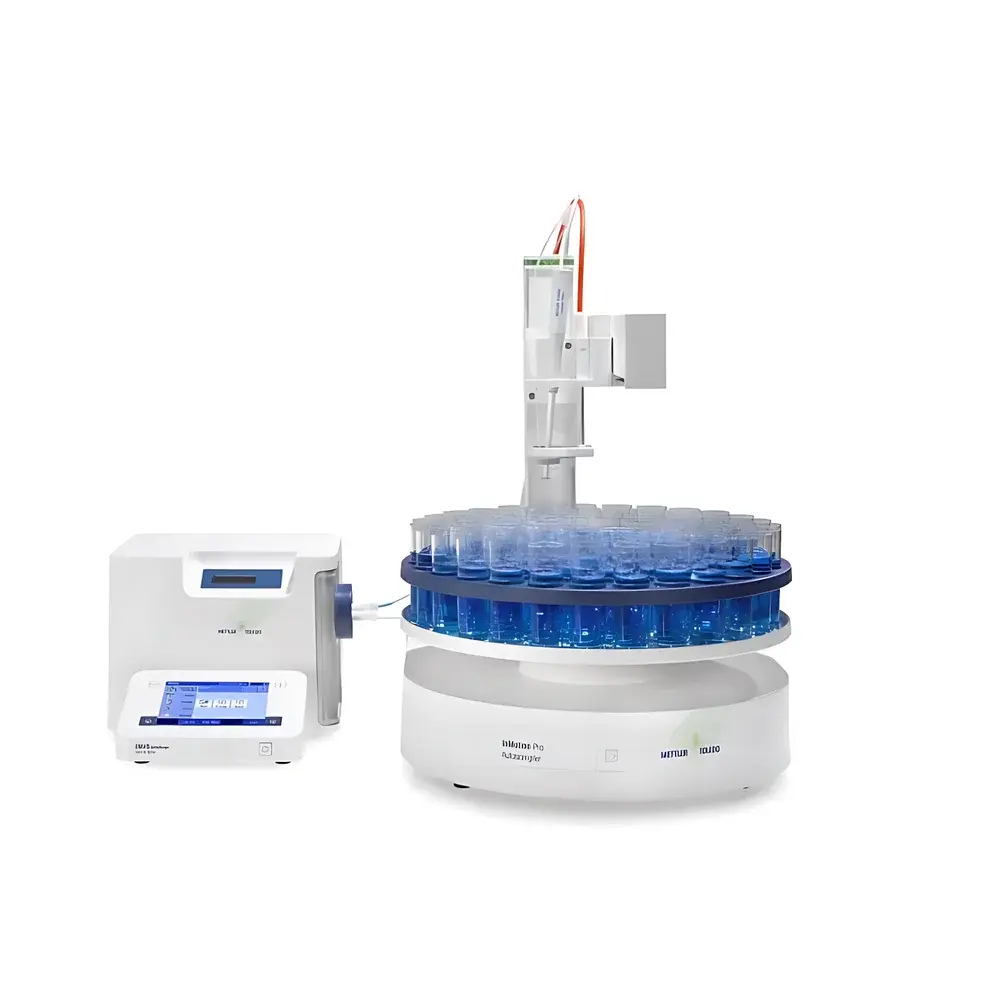
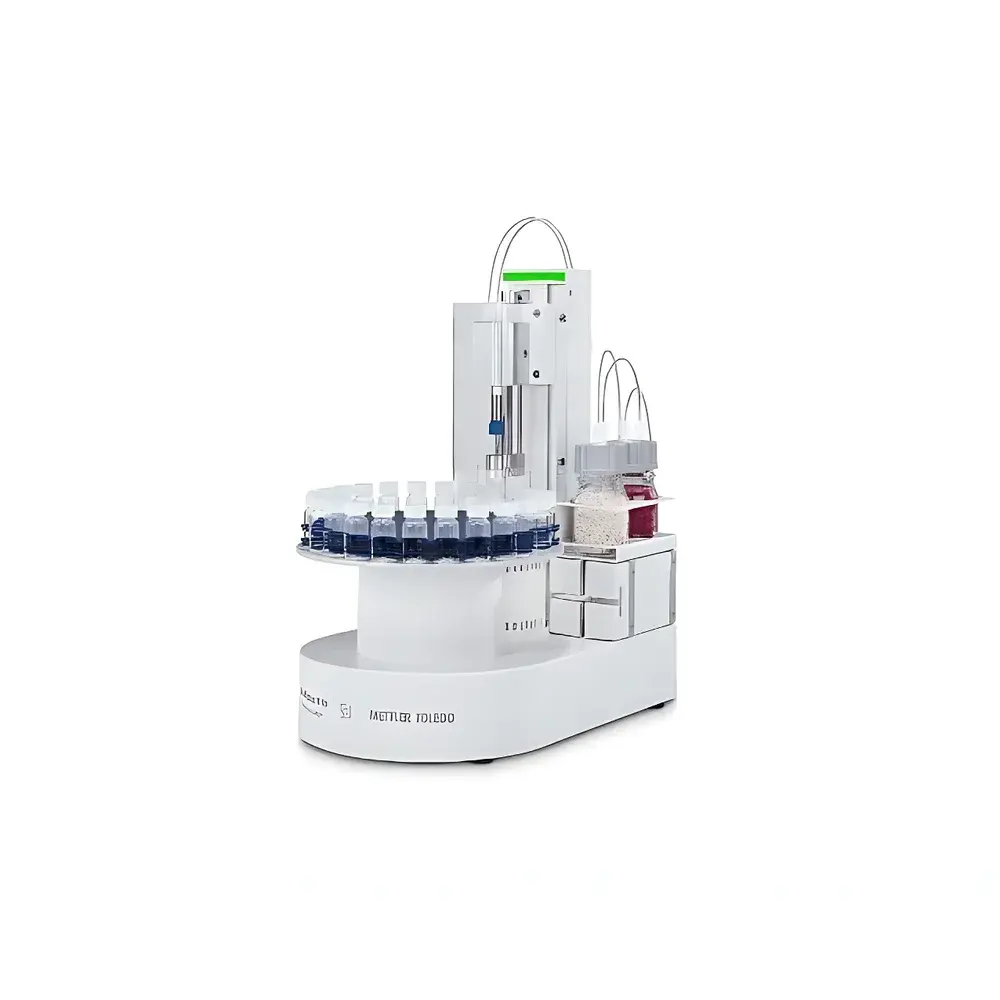
METTLER TOLEDO FillPal, InMotion, SC1(H)/SC30(H) Automated Density and Refractometry Sample Handling Systems
| Brand | METTLER TOLEDO |
|---|---|
| Origin | Switzerland |
| Model Series | FillPal™, InMotion™, SC1(H), SC30(H) |
| Application Scope | Fully automated sample introduction, rinsing, drying, and (where applicable) heating for density and refractive index measurement |
| Compliance Context | Designed to support GLP/GMP workflows with audit-trail-capable software integration |
| Fluid Handling Architecture | Positive-pressure filling (SC-series), peristaltic pumping (FillPal/InMotion), chemically resistant wetted materials (e.g., PTFE, ETFE, sapphire, Hastelloy C-276 where specified) |
| Temperature Control | Ambient-only (FillPal, InMotion, SC1/SC30) or heated up to 100 °C (SC1H/SC30H) |
| Sample Capacity | 1 (FillPal, SC1, SC1H) or up to 303 positions (InMotion), or 30 vials (SC30, SC30H) |
| Cleaning Protocol | Full-cycle automated rinse-dry sequence with configurable solvent selection and dwell times |
Overview
The METTLER TOLEDO FillPal™, InMotion™, SC1(H), and SC30(H) automated sample handling systems are engineered to interface seamlessly with benchtop density meters (e.g., DM45, DA-300 series) and refractometers (e.g., RM40, RX-5000 series), enabling unattended, traceable, and contamination-controlled analysis of liquid and semi-solid samples. These systems operate on three distinct fluidic principles: peristaltic aspiration (FillPal/InMotion), positive-pressure filling (SC1/SC30), and thermally assisted positive-pressure delivery (SC1H/SC30H). Each architecture addresses specific physicochemical challenges—such as high viscosity, volatility, corrosivity, thermal solidification, or residue adhesion—without compromising metrological integrity. All units comply with ISO 17025 traceability requirements when paired with calibrated instruments and are designed to support regulatory-compliant environments under FDA 21 CFR Part 11, EU Annex 11, and ICH GCP/GLP frameworks through optional electronic signature and audit trail functionality in LabX software.
Key Features
- Chemical resistance engineering: FillPal Chem™ and SC-series modules feature wetted components constructed from PTFE, ETFE, sapphire optical windows, and Hastelloy C-276 valves—validated for prolonged exposure to concentrated acids, alkalis, halogenated solvents, and oxidizing agents.
- Thermal management: SC1H and SC30H models integrate PID-controlled heating elements capable of maintaining sample lines and measuring cells at stable temperatures up to 100 °C, enabling accurate density determination of waxes, bitumen, molten polymers, and honey without manual preheating or clogging.
- Zero-cross-contamination design: SC-series systems employ full-volume displacement flushing with dual-solvent capability (e.g., water followed by ethanol or acetone), vacuum-assisted drying, and pressure-leak verification prior to each measurement cycle.
- Scalable throughput: InMotion™ supports up to 303 sample positions with programmable carousel indexing; SC30 accommodates 30 standard 10–20 mL vials; FillPal operates as a single-vial inline module compatible with production line integration.
- Intelligent peristaltic control: InMotion™ and FillPal utilize wear-compensated pump heads with real-time tubing deformation monitoring, ensuring consistent volumetric delivery across >10,000 cycles without recalibration.
Sample Compatibility & Compliance
These systems accommodate samples ranging from volatile hydrocarbons (e.g., pentane, diethyl ether) to non-Newtonian suspensions (e.g., chocolate mass, cosmetic emulsions) and thermally labile biofluids (e.g., serum, plant extracts). FillPal Food™ variants meet EC 1935/2004 food-contact material requirements; SC Chem™ configurations satisfy ASTM D1298 and ISO 3675 for petroleum density testing. All hardware is CE-marked and conforms to IEC 61010-1 safety standards. When operated with LabX software, full electronic records—including operator ID, timestamped method parameters, raw sensor outputs, cleaning logs, and system diagnostics—are retained for ≥30 years per internal archive policy, satisfying long-term data retention mandates in pharmaceutical QC and contract research organizations.
Software & Data Management
Full interoperability is achieved via native integration with METTLER TOLEDO LabX™ software, which provides role-based access control, customizable SOP-driven workflows, and automatic generation of PDF/CSV reports compliant with ISO/IEC 17025 clause 7.8.2. Audit trails record every user action—including method edits, calibration events, and manual overrides—with cryptographic hashing to prevent tampering. For enterprise deployment, LabX supports SQL Server backend integration, LDAP/Active Directory authentication, and automated backup to network-attached storage or cloud repositories (AWS S3, Azure Blob) with AES-256 encryption. Optional 21 CFR Part 11 compliance packages include electronic signatures, biometric authentication, and independent validation documentation (IQ/OQ/PQ protocols).
Applications
- Beverage & fermentation: Automatic degassing and Brix/pH/density analysis of carbonated soft drinks, wine must, and craft beer wort using InMotion™ with integrated sparging modules.
- Petrochemical QA: High-temperature density profiling of vacuum residuum, paraffin wax melts, and lubricant base oils using SC30H with 80 °C stabilization and ASTM D7042-compliant viscosity compensation.
- Flavor & fragrance: Residue-free handling of terpene-rich essential oils and synthetic musks via SC1’s inert gas purge-dry sequence and sapphire flow cell.
- Pharmaceutical excipients: Accurate refractive index mapping of glycerin, propylene glycol, and polysorbate solutions under GLP conditions, with full chain-of-custody documentation.
- Academic & method development labs: Rapid screening of polymer solution behavior (e.g., intrinsic viscosity vs. concentration) using FillPal’s programmable multi-solvent rinse protocol between dissimilar solvents.
FAQ
Can FillPal be used with third-party density meters?
Yes—FillPal interfaces via RS-232 or Ethernet using ASCII command protocols; OEM integration kits are available for select non-METTLER TOLEDO instruments meeting IEC 62591 (WirelessHART) or Modbus TCP specifications.
What is the minimum sample volume required for SC30 operation?
3 mL per vial is recommended for reliable positive-pressure filling; volumes as low as 1.5 mL are supported with custom capillary adapters and extended fill-time programming.
How often must peristaltic tubing be replaced in InMotion™ under continuous operation?
With standard silicone tubing and aqueous samples, replacement is required every 6 months at 24/7 duty cycle; fluoropolymer-reinforced tubing extends service life to 18 months under aggressive solvent exposure.
Does SC1H support temperature ramping during measurement?
No—SC1H maintains a user-defined setpoint temperature only; dynamic ramping requires external bath coupling and manual method sequencing in LabX.
Is dry-pump functionality available for all SC-series models?
Yes—SC1/SC30/SC1H/SC30H all include vacuum-assisted drying with adjustable vacuum level (5–80 kPa abs) and timed purge cycles using nitrogen or compressed air.
Related Products



