
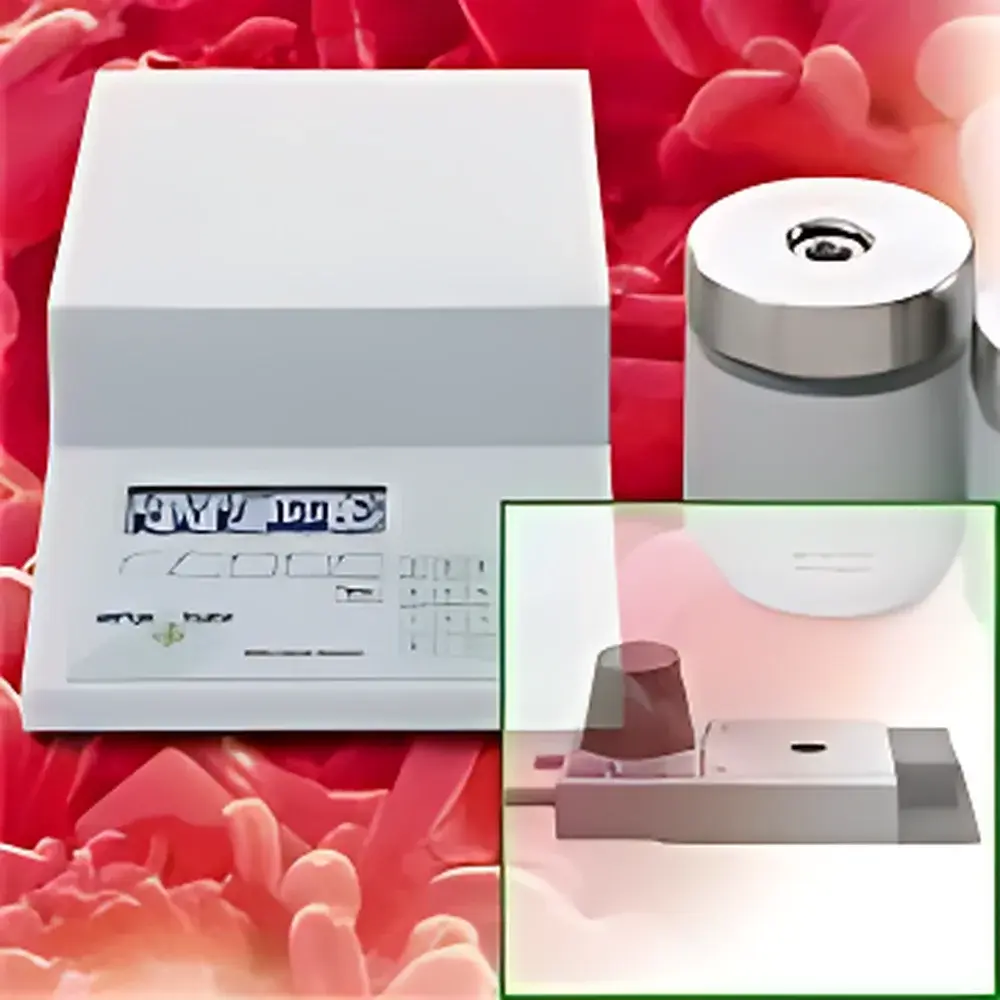
METTLER TOLEDO FP900 Heat Value Analysis System
| Brand | METTLER TOLEDO |
|---|---|
| Origin | Switzerland |
| Model | FP900 |
| Temperature Range | −100 to 600 °C |
| Heating/Cooling Rate | 0–20 °C/min |
| Temperature Resolution | 0.1 °C |
| Sensor Type | PT100 |
| Display | Graphical LCD (60 × 256 pixels, 6 lines × 36 characters) |
| Method Storage | 15 preloaded + 35 user-defined methods |
| Compliance | ASTM, DIN, ISO, USP <741>, GLP/GMP-ready |
| Interface | RS232C |
| Measurement Units Support | °C, °F, K |
| Environmental Operating Range | 20–32 °C |
Overview
The METTLER TOLEDO FP900 Heat Value Analysis System is a modular, controller-based thermal characterization platform engineered for high-precision determination of thermally induced phase transitions and energy-related properties in solid and semi-solid materials. At its core lies the FP90 central controller—a dedicated microprocessor-driven unit that orchestrates communication, method execution, real-time data acquisition, and system synchronization across up to six interchangeable HT-series measurement modules. Unlike monolithic instruments, the FP900 architecture enables laboratories to configure purpose-specific thermal analysis workstations—ranging from classical capillary-based melting point determination to advanced hot-stage microscopy coupled with differential thermal analysis (DTA). Its operational principle relies on precise temperature ramping and stabilization, combined with optical detection (transmittance, image capture), thermal signal monitoring (endothermic/exothermic events), and endpoint logic algorithms compliant with pharmacopeial and industrial standards (e.g., ASTM E324, DIN 51784, ISO 6721-2).
Key Features
- Modular design with FP90 controller supporting FP81HT (capillary melt/boil/cloud point), FP82HT (hot-stage microscopy), FP83HT (cup-based drop/softening point), FP84HT (micro-DTA), and FP85HT (DSC-style thermal transition analysis)
- Wide temperature range from −100 °C to +600 °C with programmable heating and cooling rates up to 20 °C/min; cooling performance varies per module (e.g., FP81HT uses Peltier-assisted cooling, FP85HT employs liquid nitrogen or mechanical cryo-cooling)
- High-resolution PT100 temperature sensing with ±0.1 °C accuracy and 0.1 °C display resolution across all units
- Graphical LCD interface (60 × 256 pixels) enabling intuitive menu navigation, real-time curve visualization, and on-screen method editing
- Comprehensive method library: 15 standardized protocols pre-installed (including USP , Ph. Eur. 2.2.14, ASTM D3418) plus 35 customizable methods with parameter locking, step sequencing, and endpoint criteria definition
- RS232C serial interface for direct connection to LIMS, laboratory PCs, or thermal printers; supports ASCII data export and time-stamped audit trails
- GLP/GMP-compliant operation: full electronic record retention, user access levels, method version control, and timestamped event logging aligned with FDA 21 CFR Part 11 requirements
Sample Compatibility & Compliance
The FP900 accommodates diverse sample formats—including capillaries (1–2 mm OD), standard metal cups (for drop/softening point), microscope slides (for hot-stage imaging), and DSC pans—ensuring broad applicability across pharmaceuticals, polymers, food science, and specialty chemicals. All measurement modules adhere to internationally recognized test standards: ASTM D1560 (drop point), ASTM D3418 (glass transition), ASTM E324 (melting range), DIN 51801 (softening point), and ISO 7884-3 (melting behavior of waxes). The system’s firmware and documentation are structured to support regulatory submissions under ICH Q5C, Q5E, and FDA guidance for thermal stability assessment of drug substances and products.
Software & Data Management
Data acquisition and reporting are managed via the FP90’s embedded firmware—not external PC software—ensuring deterministic timing, minimal latency, and uninterrupted method execution during critical thermal events. Each measurement generates a timestamped dataset containing temperature vs. time, optical transmittance (%), image snapshots (FP82HT/FP84HT), and DTA/DSC signals (FP84HT/FP85HT). Results include onset, peak, and offset temperatures; enthalpy estimates (where applicable); statistical summaries (mean, RSD, confidence intervals); and pass/fail evaluation against preset specification limits. Raw data files are exportable in CSV format for secondary analysis in MATLAB, Origin, or validated statistical packages. Audit trail functionality records operator ID, method name, start/end times, calibration status, and any parameter overrides—fully traceable for internal audits or regulatory inspections.
Applications
- Pharmaceutical development: Polymorph screening, hydrate/solvate stability assessment, excipient compatibility studies, and thermal degradation profiling per ICH Q1A–Q1E guidelines
- Materials science: Crystallinity quantification in polyolefins, glass transition mapping in amorphous polymers, eutectic identification in alloy precursors
- Food & agriculture: Melting behavior of cocoa butter, fat bloom prediction, gelatin setting/liquefaction temperatures, wax content analysis in fruits and beeswax
- Liquid crystal research: Nematic-to-isotropic transitions, smectic phase identification, domain morphology evolution under controlled thermal gradients (enabled by FP82HT/FP84HT integration)
- Quality control labs: Routine release testing of APIs, intermediates, and finished dosage forms per pharmacopeial monographs requiring melting point, drop point, or softening point verification
FAQ
Is the FP900 compatible with modern LIMS or ELN systems?
Yes—the RS232C interface supports ASCII-based data streaming and command-response protocols, enabling integration with validated LIMS platforms using standard serial drivers or middleware such as LabWare or Thermo Fisher SampleManager.
Can the FP900 perform fully automated,无人值守 (unattended) measurements overnight?
Absolutely—up to 99 sequential runs can be queued with independent method assignments, delay timers, and auto-shutdown logic. The FP90 retains full power-loss recovery and resumes interrupted sequences upon reboot.
What calibration standards are recommended for routine verification?
Primary reference materials include indium (156.60 °C), tin (231.93 °C), and zinc (419.53 °C) for temperature accuracy; certified melting point standards (e.g., METTLER TOLEDO MP-Standard kits) for system performance qualification per ASTM E928.
Does the FP900 meet FDA 21 CFR Part 11 requirements for electronic records?
Yes—when operated with enabled user authentication, electronic signatures, and audit trail logging, the FP900 satisfies predicate rule requirements for closed systems. Full validation documentation (IQ/OQ/PQ templates) is available upon request.
Are replacement modules like FP81HT still available for legacy FP900 installations?
While FP81HT was discontinued in 2009, METTLER TOLEDO continues to supply service parts, calibration services, and technical support for installed FP900 systems under extended maintenance agreements; migration paths to MP Series instruments are supported with data continuity planning.



