
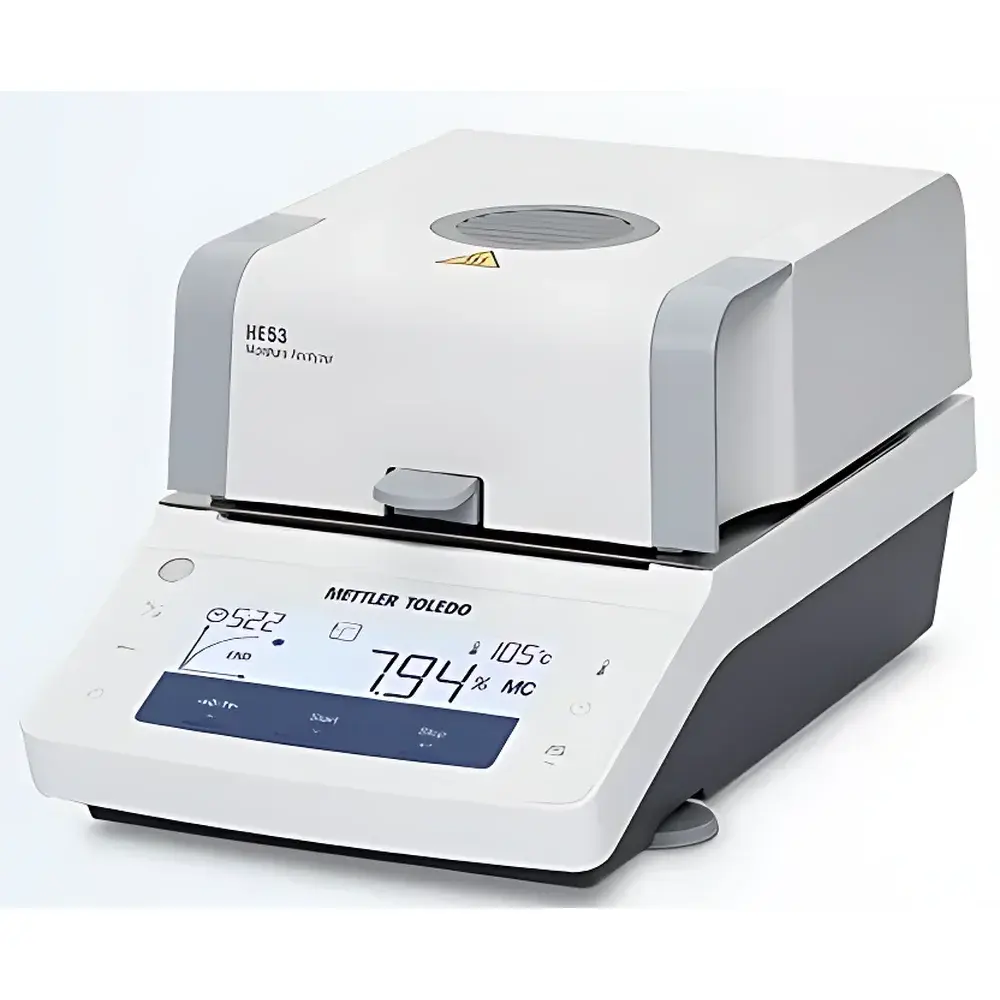
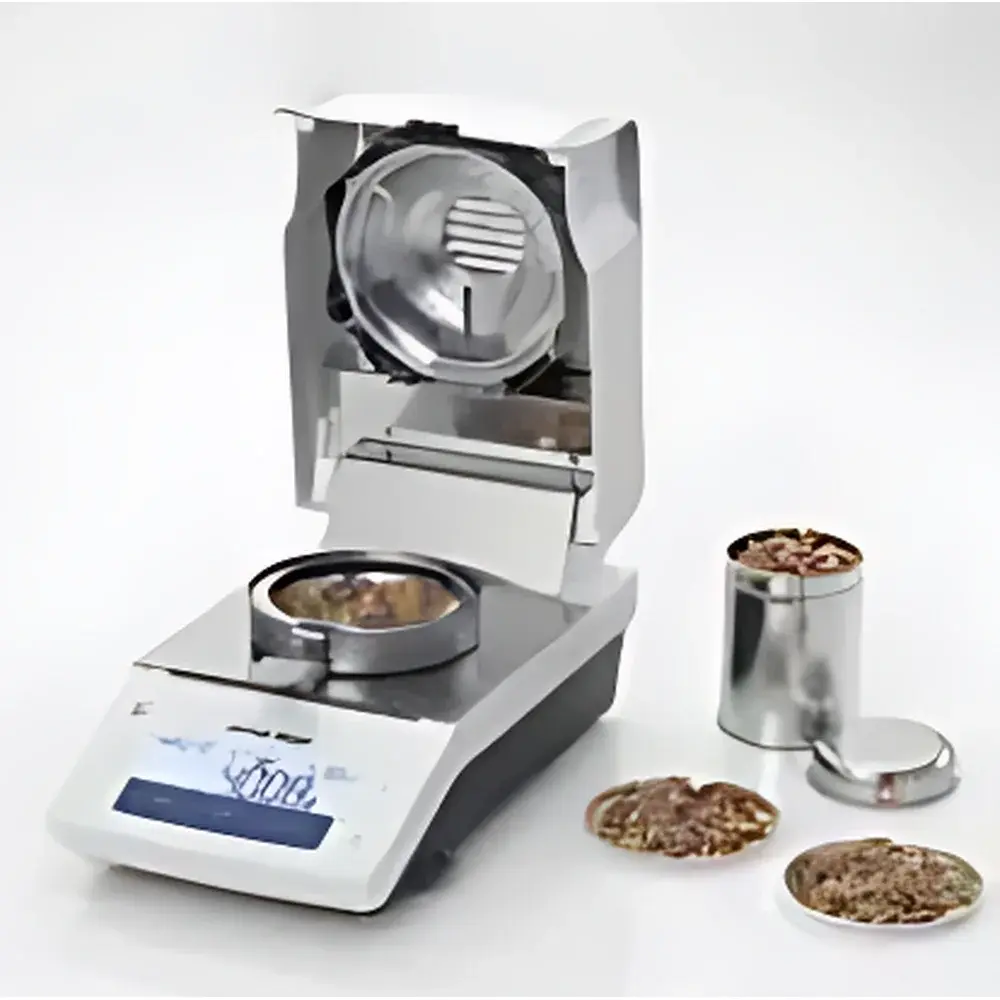
METTLER TOLEDO HE53 Halogen Moisture Analyzer
| Brand | METTLER TOLEDO |
|---|---|
| Origin | Shanghai, China |
| Manufacturer Type | Authorized Distributor |
| Country of Origin | China |
| Model | HE53 |
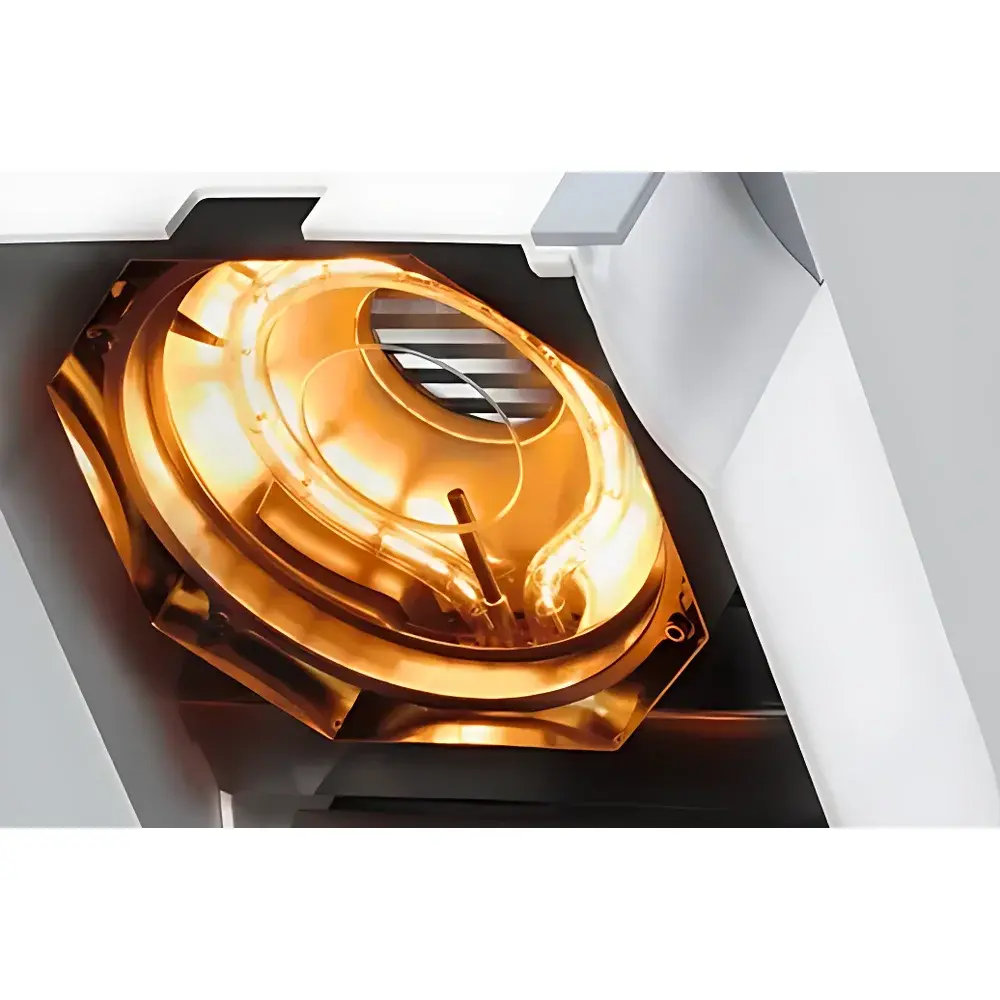
| Heating Method | Halogen Lamp |
| Repeatability (sd) | 0.15 % at 2 g sample |
| Readability | 0.01 % MC |
| Moisture Range | 1.0 – 100 % MC |
| Drying Temperature Range | 50 – 160 °C |
| Temperature Increment | 1 °C |
| Heating Programs | Standard, Rapid |
| Memory | 1 method + 1 result |
| Display Modes | %MC, %DC, %AM, %AD, g |
| Max. Weighing Capacity | 54 g |
| Power Supply | 230 V |
| Part Number | 30100320 |
Overview
The METTLER TOLEDO HE53 Halogen Moisture Analyzer is a precision thermal gravimetric instrument engineered for rapid, reliable determination of moisture content in solid and semi-solid samples. Based on the principle of loss-on-drying (LOD), the HE53 employs a high-intensity halogen lamp to deliver uniform, controllable radiant heating across the sample surface—enabling faster and more reproducible drying than traditional infrared or convection-based systems. Designed in Switzerland and manufactured under stringent quality controls, the HE53 integrates METTLER TOLEDO’s decades-long expertise in analytical weighing and thermal analysis. Its robust mechanical architecture, combined with factory-calibrated thermogravimetric algorithms, ensures consistent performance across laboratory, QC, and production environments—particularly where routine moisture testing must comply with internal SOPs or reference methods aligned with ASTM E1064, ISO 712, or USP <921>.
Key Features
- Halogen heating system with programmable temperature control (50–160 °C in 1 °C increments) for optimized drying kinetics and minimal thermal degradation.
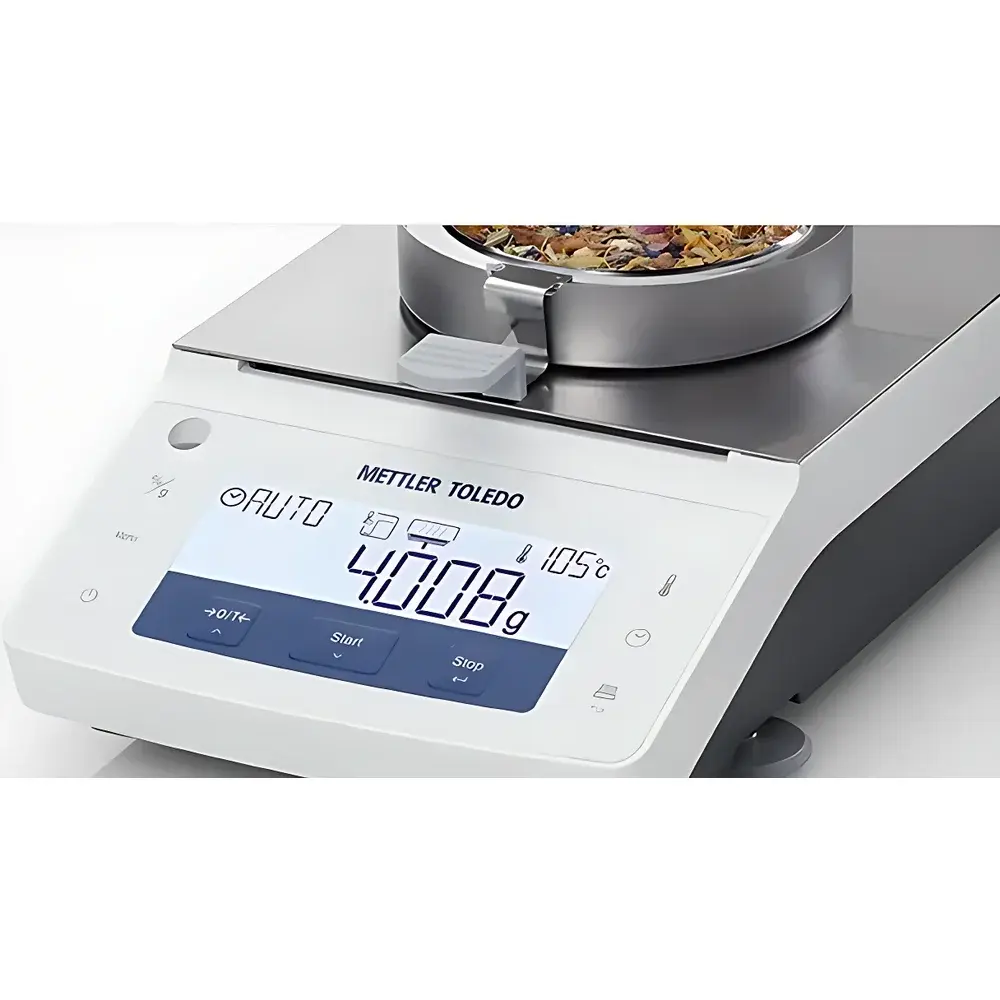
- High-resolution analytical balance (54 g max capacity, 0.01 % MC readability) integrated with real-time mass monitoring and dynamic progress indication.
- Two preconfigured heating profiles—Standard and Rapid—to accommodate diverse sample matrices (e.g., powders, granules, pastes, polymers).
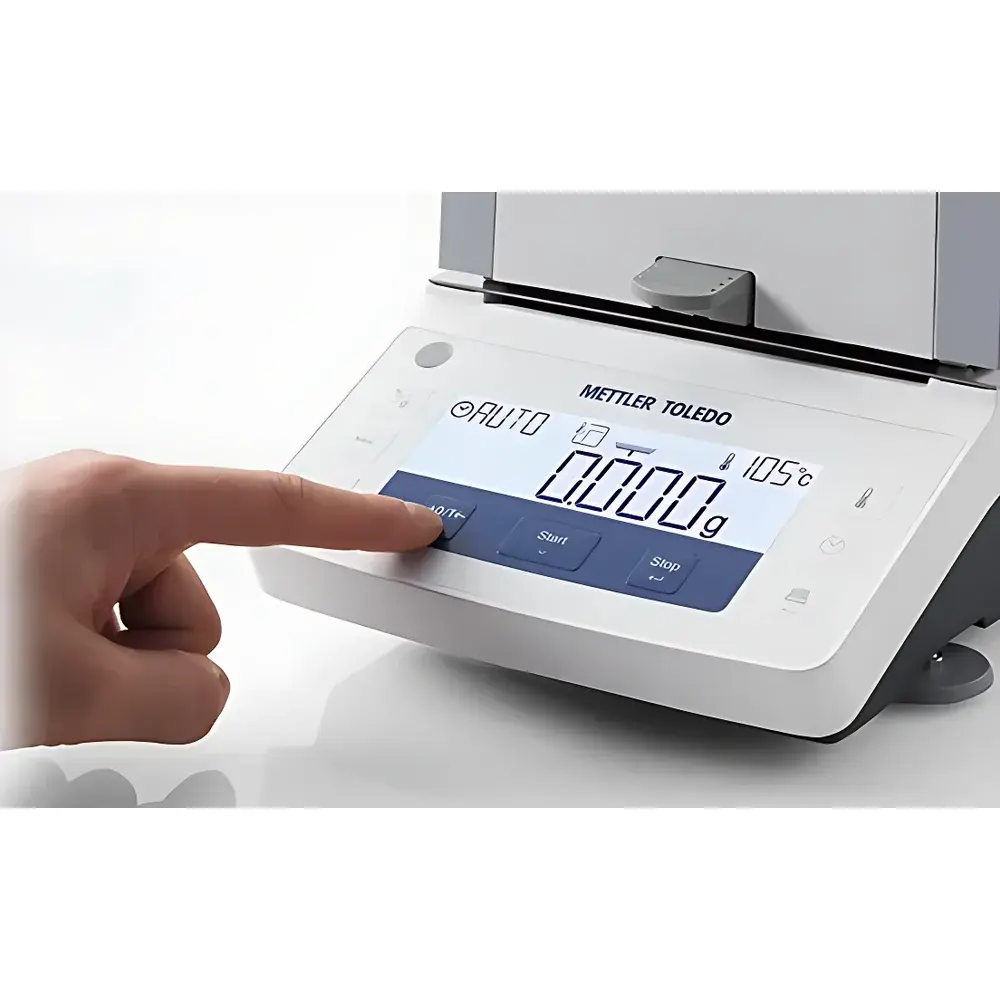
- Intuitive single-touch interface with guided setup wizard: operational within minutes, requiring no prior training.
- Dual user management support (2 users) with password-protected access—enabling basic role separation in shared lab environments.
- Comprehensive result display modes: % Moisture Content (%MC), % Dry Content (%DC), % Absolute Moisture (%AM), % Absolute Dry (%AD), and raw mass (g).
- Embedded auto-shutdown logic (SOC 3 mode) and timer-based termination to prevent over-drying and ensure method consistency.
Sample Compatibility & Compliance
The HE53 accommodates a broad spectrum of industrial and pharmaceutical materials—including active pharmaceutical ingredients (APIs), excipients, food powders, agricultural grains, plastics, ceramics, and chemical intermediates. Sample pans are compatible with standard aluminum or stainless-steel trays (not included), supporting both volatile and thermally sensitive substances when paired with appropriate ramped protocols. While the HE53 itself does not carry FDA 21 CFR Part 11 certification out-of-the-box, its method storage, user tracking, and audit-ready result logging (single method + single result per session) provide foundational traceability for GLP/GMP-aligned workflows. Validation documentation—including temperature calibration reports (at 100 °C and 160 °C) and weight verification records—is supported via external calibration tools compliant with ISO/IEC 17025-accredited practices.
Software & Data Management
Data handling is streamlined through direct readout and manual transcription; the HE53 does not feature USB, Ethernet, or PC connectivity. All measurements are displayed in real time with visual progress indicators (e.g., drying curve approximation, remaining time estimation). The device stores one user-defined method and one final result locally—sufficient for immediate review and batch-level verification. For laboratories requiring electronic record retention, integration with LIMS or ELN systems is achievable via manual entry or optional third-party data capture solutions (e.g., RS-232-enabled serial loggers). METTLER TOLEDO provides complimentary application notes and method development guidance—including drying profile optimization, repeatability assessment per ISO 5725, and uncertainty estimation frameworks aligned with EURACHEM/CITAC guidelines.
Applications
The HE53 serves as a primary moisture testing tool in quality control laboratories across regulated and non-regulated sectors. Typical use cases include incoming raw material inspection (e.g., verifying moisture limits in lactose or microcrystalline cellulose per Ph. Eur.), in-process monitoring of drying endpoints in fluid bed dryers, stability study support for hygroscopic formulations, and routine compliance checks against internal specifications for polymer resins or catalyst supports. Its speed (<5–15 min typical cycle time depending on matrix and target moisture level) and repeatability (0.05 % sd at 10 g) make it especially suitable for high-throughput environments where statistical process control (SPC) charts are maintained for critical moisture attributes.
FAQ
What standards does the HE53 comply with?
The HE53 supports methodologies referenced in ASTM E1064 (moisture in liquid chemicals), ISO 712 (cereals and cereal products), and USP <921> (water determination), though final method validation remains the user’s responsibility per ICH Q2(R2).
Can the HE53 be calibrated for temperature and weight independently?
Yes—temperature calibration is performed using certified reference thermometers at two points (100 °C and 160 °C); weight calibration requires external certified test weights traceable to national standards.
Is the HE53 suitable for volatile organic solvents?
No—the HE53 is designed for water and low-volatility solvent loss only; samples containing ethanol, acetone, or other highly volatile organics require alternative techniques such as Karl Fischer titration.
Does the HE53 support multiple user accounts with individual permissions?
It supports two user IDs without hierarchical permission levels; full multi-user audit trails require external software integration.
How is method transfer validated between HE53 units?
Method transfer should follow a documented protocol including repeatability testing (n ≥ 6 per unit), intermediate precision assessment across operators/days, and comparison of mean %MC values using statistical equivalence testing (e.g., two-one-sided t-tests).





