
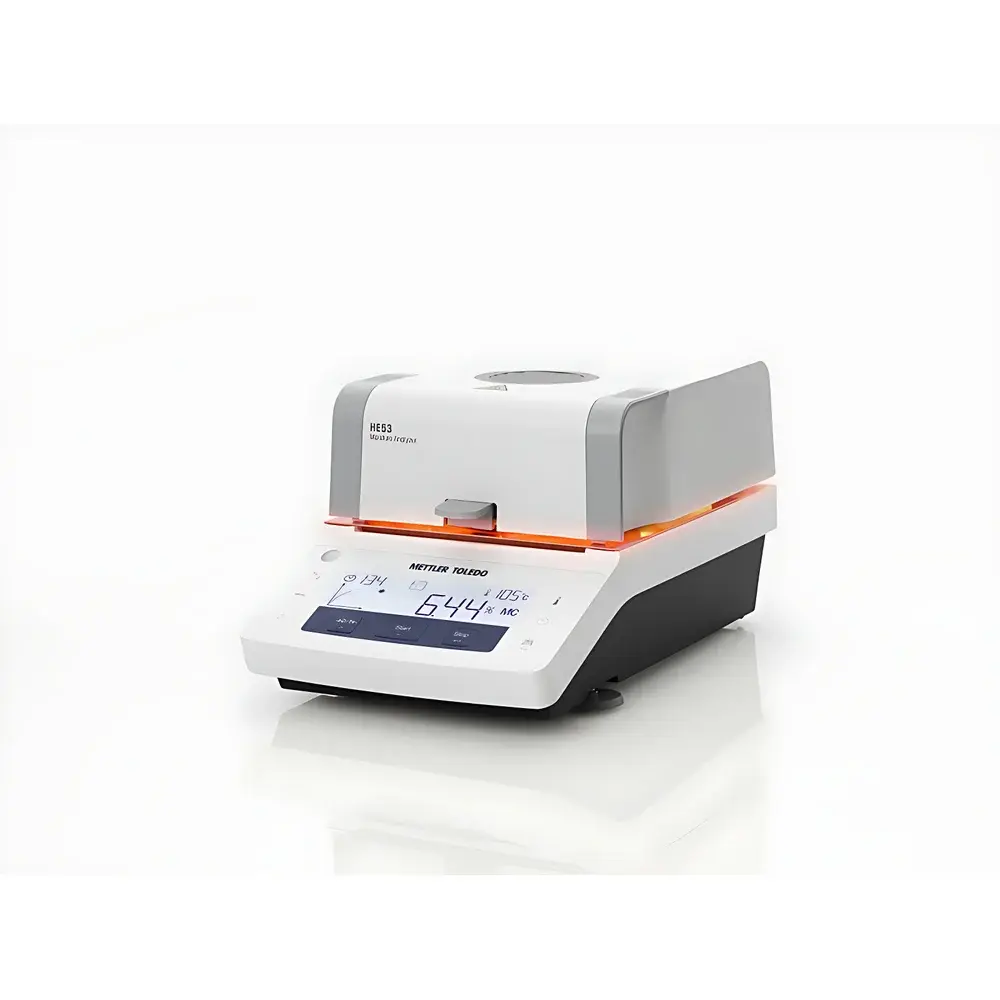
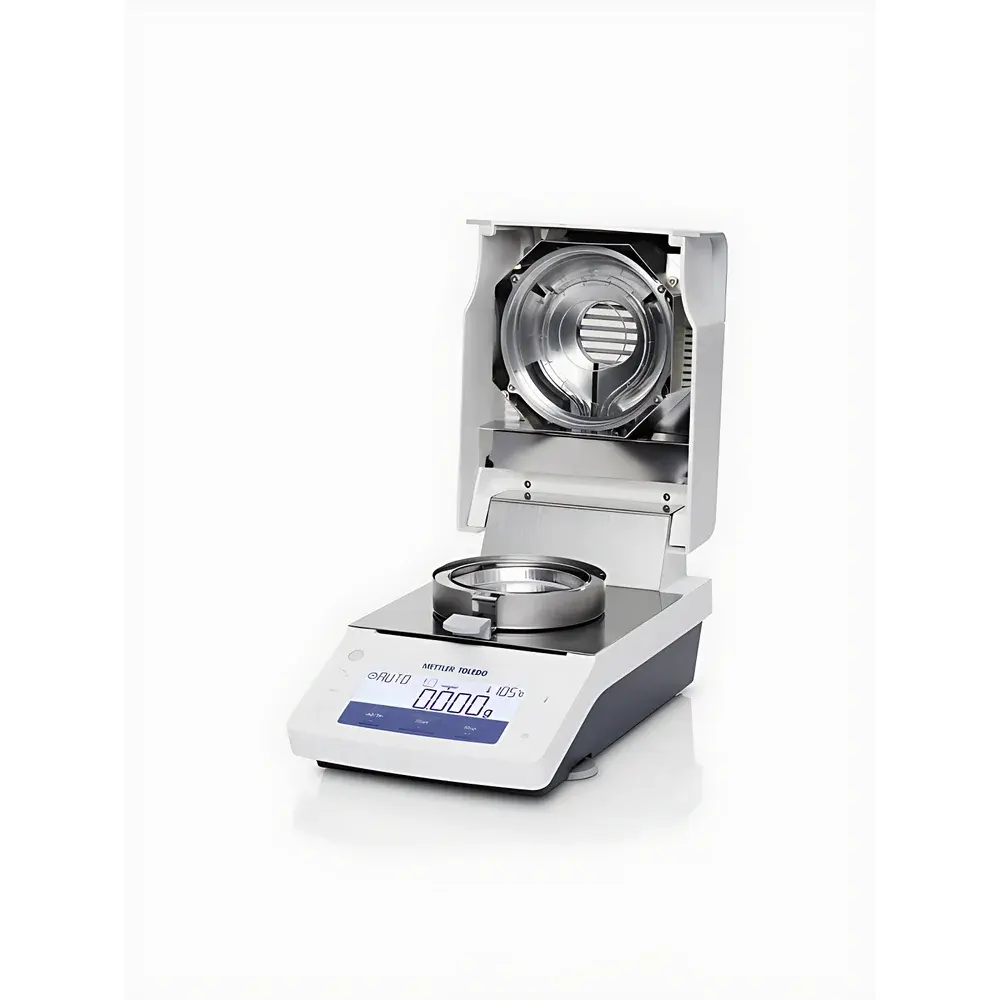
METTLER TOLEDO HE83/HE53 Halogen Moisture Analyzer
| Brand | METTLER TOLEDO |
|---|---|
| Origin | Shanghai, China |
| Model | HE83 / HE53 |
| Heating Source | Halogen Lamp |
| Type | Infrared Moisture Analyzer |
| Compliance Context | Designed for GLP/GMP-aligned routine QC labs |
Overview
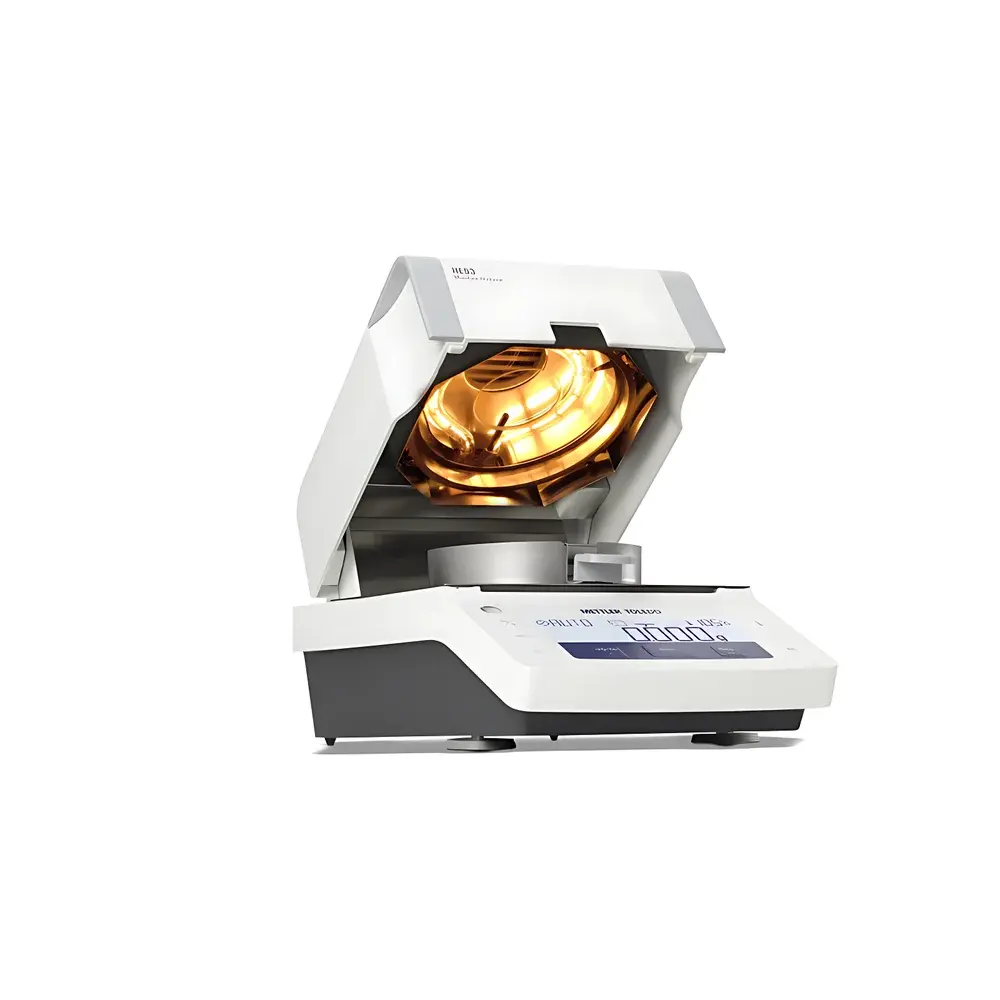
The METTLER TOLEDO HE83/HE53 Halogen Moisture Analyzer is a thermogravimetric instrument engineered for rapid, reproducible determination of moisture content in solid and semi-solid samples via halogen-assisted infrared heating. It operates on the principle of loss-on-drying (LOD): a precisely controlled halogen lamp heats the sample uniformly, driving off volatile components—primarily water—while an integrated high-resolution analytical balance continuously monitors mass loss in real time. The instrument calculates moisture content as a percentage of initial sample mass, delivering results typically within 2–10 minutes depending on sample matrix and target drying endpoint. Designed for routine quality control environments—including food, pharmaceuticals, chemicals, and plastics manufacturing—the HE83/HE53 delivers Swiss-engineered reliability with simplified operation, making it suitable for regulated laboratories where traceability, repeatability, and operator independence are essential.
Key Features
- Halogen heating system providing rapid, uniform thermal energy transfer with precise temperature control (range: 50 °C to 200 °C in 1 °C increments)
- Integrated high-precision analytical balance with readability down to 0.001 g (HE83) or 0.002 g (HE53), optimized for dynamic mass tracking during drying cycles
- Graphical user interface with icon-driven navigation and step-by-step on-screen guidance—no prior training required
- Predefined and customizable drying methods, including standard ramp, step, and automatic shut-off modes based on mass change rate (dM/dt)
- Rugged aluminum housing and thermally stable weighing chamber designed for consistent performance across ambient lab conditions (10–30 °C, ≤80% RH)
- USB interface for method export/import and raw data transfer; compatible with METTLER TOLEDO’s LabX Lite software for basic report generation
Sample Compatibility & Compliance
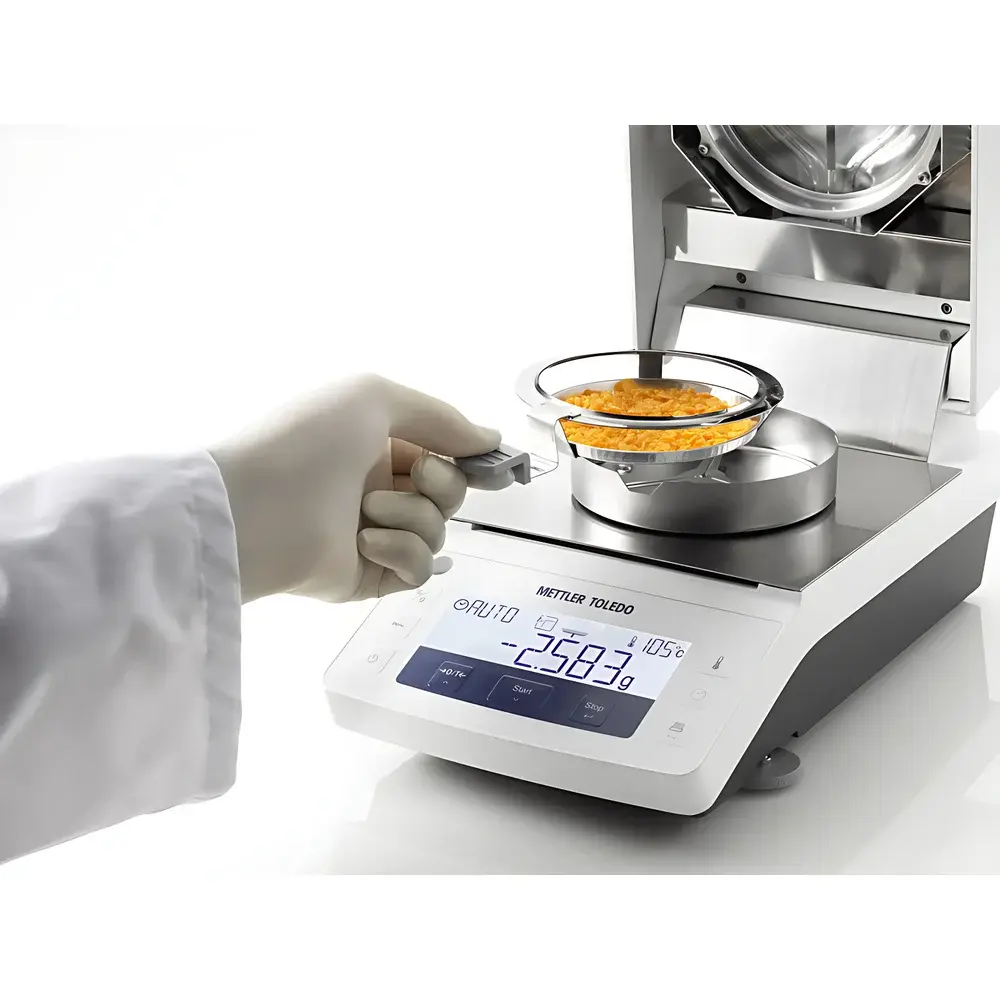
The HE83/HE53 accommodates a broad range of sample types—including powders, granules, pastes, pellets, and thin films—with maximum sample capacity of 50 g (HE83) or 30 g (HE53). Its open pan design supports easy loading and residue inspection post-analysis. While not inherently 21 CFR Part 11 compliant out-of-the-box, the instrument supports audit-ready workflows when used with documented SOPs and external electronic lab notebooks. It aligns with ASTM D4442 (wood moisture), ISO 712 (cereals), USP (moisture content), and internal QC protocols requiring LOD-based moisture verification. Routine calibration using certified reference standards (e.g., sodium tartrate dihydrate) ensures continued accuracy per ISO/IEC 17025 metrological requirements.
Software & Data Management
The HE83/HE53 operates independently via its embedded firmware but interfaces seamlessly with METTLER TOLEDO’s LabX Lite software (freely downloadable). LabX Lite enables method storage, result export in CSV/PDF formats, basic statistical analysis (mean, SD, RSD), and customizable reporting templates. All measurement data—including time-stamped mass curves, drying profiles, and final moisture %—are stored locally with date/time stamps and user ID fields. For higher-tier compliance needs, integration with full LabX software (optional) provides electronic signatures, role-based access control, and full 21 CFR Part 11 audit trails—including immutable records of method changes, result overrides, and calibration events.
Applications
- Pharmaceutical manufacturing: Raw material release testing (excipients, APIs), blend uniformity assessment, and stability study moisture profiling
- Food & beverage QA: Monitoring moisture in flour, dairy powders, coffee beans, pet food, and snack products to ensure shelf-life compliance and microbial safety
- Chemical & polymer industries: Verifying drying efficiency of resins, catalysts, and hygroscopic salts prior to packaging or reaction staging
- Agricultural labs: Rapid field-adjacent analysis of grain, feed, and soil samples per AOAC and ICC methodologies
- Educational institutions: Teaching core principles of thermogravimetry, LOD methodology, and QC statistics in analytical chemistry curricula
FAQ
What is the difference between the HE83 and HE53 models?
The HE83 features higher weighing resolution (0.001 g vs. 0.002 g), larger sample pan diameter (110 mm vs. 90 mm), and extended temperature range up to 200 °C—making it preferable for low-moisture, high-precision applications.
Can the HE83/HE53 be validated for GMP environments?
Yes—when deployed with documented IQ/OQ protocols, periodic performance verification (e.g., temperature uniformity mapping, balance calibration, LOD recovery testing), and appropriate data governance practices, it meets fundamental GMP expectations for moisture testing equipment.
Is method development supported?
Absolutely—users can define custom drying profiles (ramp rates, hold times, termination criteria), save them under unique IDs, and recall them with one touch—enabling optimization for challenging matrices such as oils, gels, or heat-sensitive botanicals.
Does the instrument require external ventilation or cooling?
No—its passive thermal management and compact footprint allow benchtop use without fume hoods or dedicated exhaust, though placement away from drafts and direct sunlight is recommended for optimal stability.
How often should calibration be performed?
Daily zero calibration is advised; full balance calibration with certified weights and temperature verification with reference standards should occur at least weekly—or per internal SOP—especially before critical batch releases.





