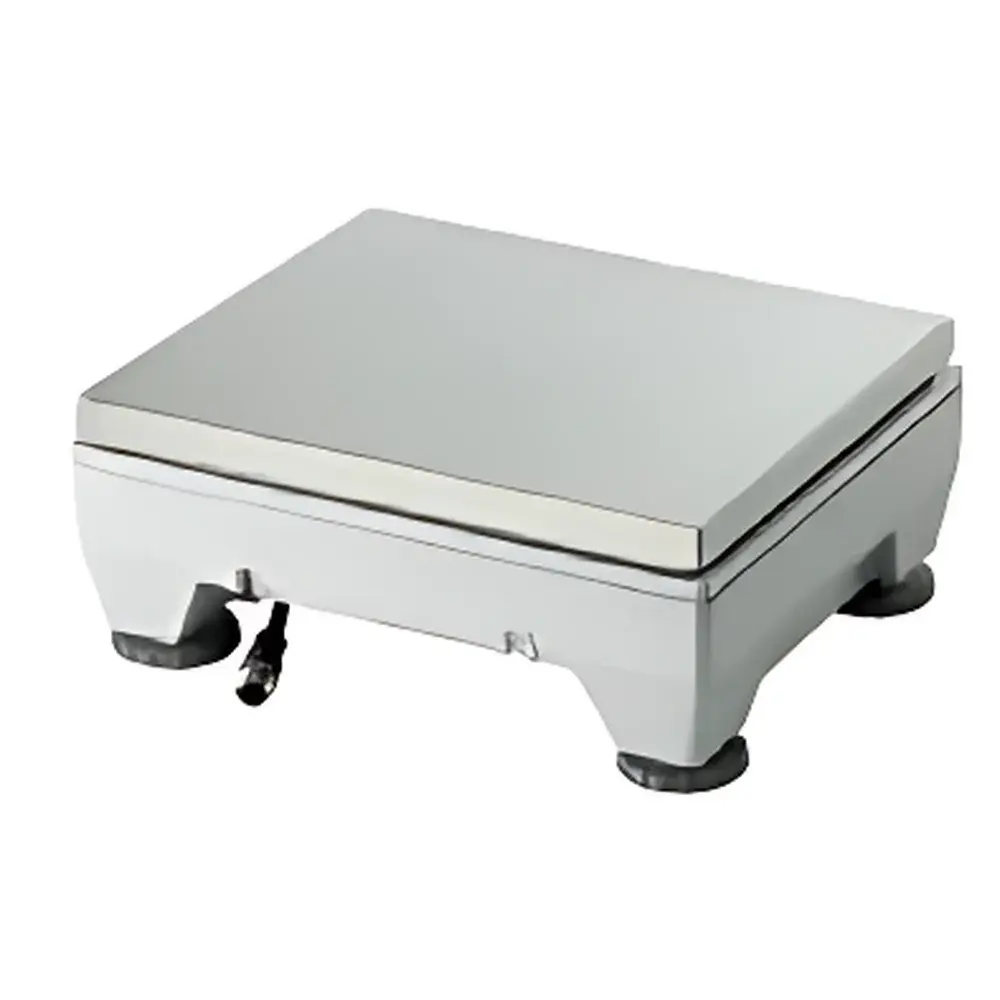
METTLER TOLEDO ICS4_5 and ICS685 Industrial Counting and Checkweighing Scales
| Brand | METTLER TOLEDO |
|---|---|
| Origin | Switzerland |
| Model | ICS4_5 and ICS685 |
| Max. Platform Connections | 1 (ICS4_5), 4 (ICS685) |
| Data Storage Capacity | 100 entries (ICS4_5), 5,000 entries (ICS685) |
| Optional Alibi Memory | 300,000 entries |
| Interface Options | RS232, USB, Ethernet, optional fieldbus modules (PROFIBUS, PROFINET, EtherNet/IP) |
| Display | Full-color graphical LCD with multilingual UI support |
| Compliance | OIML R76, NTEP Class III, ISO/IEC 17025 traceable calibration |
| Software Integration | DatablCs™ database software, configurable transaction logging, FDA 21 CFR Part 11–compliant audit trail (with optional user management module) |
Overview
The METTLER TOLEDO ICS4_5 and ICS685 are industrial-grade bench scales engineered for high-reliability counting, checkweighing, and quantitative filling applications in regulated manufacturing, logistics, and quality control environments. Built upon METTLER TOLEDO’s proprietary electromagnetic force compensation (EMFC) load cell technology, these scales deliver fast settling times (<1.5 s), high repeatability (≤0.5e under dynamic conditions), and long-term stability—even under thermal drift or mechanical vibration common in production-floor settings. The ICS4_5 serves as a compact, single-platform solution optimized for basic weighing, piece counting, and go/no-go inspection tasks. In contrast, the ICS685 is a modular, multi-connection platform capable of synchronizing up to four independent weighing units—enabling advanced statistical process control (SPC), cumulative target-based filling, and real-time weight deviation analysis across parallel production lines. Both models feature cast-aluminum housings rated IP65 for dust and water resistance, ensuring operational integrity in humid, washdown, or particulate-rich industrial zones.
Key Features
- Robust electromagnetic force compensation (EMFC) sensor architecture delivering <0.005% linearity error and temperature-compensated output across –10 °C to +40 °C ambient range
- Full-color graphical LCD with adjustable brightness, icon-driven navigation, and on-screen multilingual prompts (English, German, French, Spanish, Chinese, Japanese)
- Configurable soft keys supporting up to 12 user-defined functions—including custom tare sequences, preset target weights, and pass/fail thresholds with visual/audible alerts
- Integrated data logging with internal non-volatile memory (100 entries for ICS4_5; 5,000 for ICS685) and optional certified Alibi memory (300,000 entries, OIML R76-compliant)
- Flexible connectivity: standard RS232 and USB Device ports; optional Ethernet, PROFIBUS DP, PROFINET, or EtherNet/IP interfaces for PLC integration and MES-level data exchange
- Modular firmware architecture supporting field-upgradable application packages—e.g., “ColorWeight” visual grading, batch accumulation to target mass, and statistical outlier detection per ASTM E29
Sample Compatibility & Compliance
The ICS4_5 and ICS685 accommodate a wide range of sample types—from small discrete components (e.g., screws, PCBs, medical devices) to bulk granular materials (e.g., tablets, capsules, powders)—via interchangeable platform sizes (up to 300 × 400 mm). Each unit undergoes factory calibration traceable to national metrology institutes (NMI) and conforms to international legal-for-trade requirements: OIML R76 (Class III), NTEP Certificate of Conformance (Class III), and EU Measuring Instruments Directive (MID) Annex MI-001. For regulated industries, optional firmware modules enable GLP/GMP-compliant operation—including electronic signatures, role-based user access control (admin/operator/auditor), and tamper-evident audit trails compliant with FDA 21 CFR Part 11 and ISO/IEC 17025.
Software & Data Management
DatablCs™—METTLER TOLEDO’s dedicated scale database software—provides centralized configuration, remote firmware updates, and structured export of weighing records to SQL databases or CSV files. The ICS685 supports customizable transaction logging formats, enabling direct mapping to ERP fields (e.g., SAP MM or Oracle EBS item IDs, batch numbers, operator codes). All logged data includes timestamp, net/gross/tare values, status flags (PASS/FAIL/REJECT), and digital signature metadata. Optional Alibi memory ensures immutable storage of every weighing event—meeting statutory retention mandates in pharmaceutical, food, and aerospace sectors where full traceability is enforced by regulatory auditors.
Applications
- Automated component counting in electronics assembly lines, with statistical verification against pre-defined reference counts (ASTM E105)
- In-line checkweighing for packaged goods—detecting underfill/overfill deviations exceeding ±0.5 g or ±0.2% of nominal weight
- Target-based filling operations: accumulating material across multiple weighments until reaching a precise setpoint (e.g., 100.00 g ±0.02 g)
- Quality assurance labs performing routine balance verification per USP and pharmacopeial uniformity-of-weight testing
- Warehouse receiving stations validating shipment quantities against purchase orders using barcode-triggered auto-count workflows
FAQ
What is the maximum number of platforms that can be connected to the ICS685?
Up to four independent weighing platforms may be daisy-chained via RS485 or Ethernet for synchronized multi-point measurement and statistical aggregation.
Is the Alibi memory module required for legal-for-trade use?
No—it is optional but strongly recommended for audit-intensive environments (e.g., pharmaceutical manufacturing) to satisfy statutory record-retention periods mandated by local metrology authorities.
Can the ICS series integrate with Siemens S7 PLCs?
Yes—via optional PROFINET or PROFIBUS DP interface modules, enabling real-time weight data exchange and PLC-triggered start/stop commands without intermediary gateways.
Does the scale support automatic tare subtraction from nested containers?
Yes—through programmable tare sequences with up to five hierarchical tare levels, including container ID recognition via optional RFID or barcode scanning.
How is calibration performed in GxP-regulated facilities?
Calibration follows METTLER TOLEDO’s documented procedure SOP-ICS-CAL-01, utilizing certified test weights traceable to NIST or PTB, with full electronic documentation stored in DatablCs™ and linked to instrument-specific audit logs.