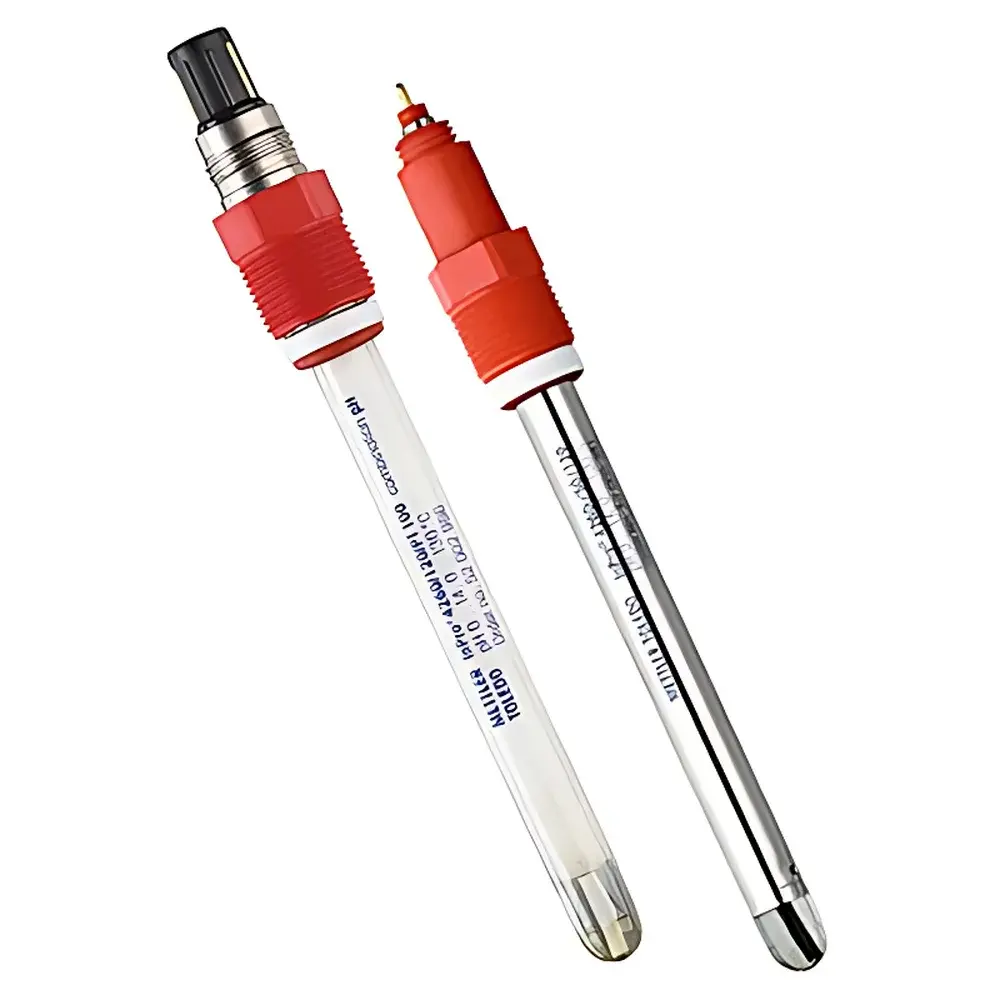
METTLER TOLEDO InPro 4260 / InPro 4260 SG / InPro 4260i Online pH Electrode
| Brand | METTLER TOLEDO |
|---|---|
| Origin | Switzerland |
| Model | InPro 4260 |
| Type | Industrial online pH electrode with open junction and polymer reference system |
| Reference System | XEROLYT® EXTRA polymer gel |
| Junction Type | Open junction (non-ceramic, non-porous) |
| Temperature Compensation | Integrated Pt100 or Pt1000 RTD available |
| Sterilization Compatibility | Autoclavable up to 135 °C, CIP/SIP compatible |
| Application Environment | High-protein, high-solids, sulfide-rich, viscous, and aggressive industrial process streams |
Overview
The METTLER TOLEDO InPro 4260 series represents a class of robust, maintenance-optimized online pH electrodes engineered for continuous, high-reliability measurement in demanding industrial process environments. Unlike conventional pH sensors relying on fragile ceramic or fiber junctions and liquid-filled reference systems, the InPro 4260 employs a proprietary XEROLYT® EXTRA polymer-based reference electrolyte—chemically stable, non-leaching, and inherently resistant to contamination from proteins, colloids, sulfides, or suspended solids. Its core measurement principle follows the Nernst equation, where the potential difference between the glass sensing membrane and the stable polymer reference establishes a linear, temperature-dependent voltage proportional to hydrogen ion activity. This architecture ensures long-term electrochemical stability, minimal drift, and predictable calibration intervals—even under dynamic flow, thermal cycling, or chemical stress typical in biopharma fermentation, food & beverage processing, chemical synthesis, and wastewater treatment.
Key Features
- Open Junction Design: Replaces traditional porous ceramic or sleeve-type junctions with a mechanically stable, non-clogging open junction. Eliminates capillary blockage caused by particulates (>5 µm), biofilms, or viscous matrices such as milk concentrates, yeast slurries, or polymer emulsions.
- XEROLYT® EXTRA Polymer Reference System: A cross-linked, high-ionic-strength gel electrolyte offering exceptional chemical inertness and low junction potential variability. Resists poisoning by sulfides (H₂S, S²⁻), heavy metals, and reducing agents—critical for anaerobic digesters and sulfide-bearing effluents.
- Integrated Silver Ion Trap (InPro 4260 SG variant): Patented silver capture matrix embedded within the reference chamber prevents Ag⁺ leaching and sulfide-induced blackening of the reference element, extending functional lifetime in sulfur-rich media without compromising response time or accuracy.
- Temperature Compensation Integration: Optional built-in Pt100 or Pt1000 resistance temperature detector (RTD) enables real-time, two-point temperature compensation per IUPAC and ASTM E70 standards—essential for compliance with ISO 29843 and pharmacopeial pH measurement requirements.
- Autoclave and CIP/SIP Compatibility: Constructed with PEEK, ETFE, and chemically resistant glass; rated for repeated sterilization at 135 °C (275 °F) for 30 minutes and exposure to caustic (NaOH), acidic (HNO₃), and oxidative (H₂O₂) cleaning agents per ASME BPE and EHEDG guidelines.
Sample Compatibility & Compliance
The InPro 4260 series is validated for use across heterogeneous, non-homogeneous, and chemically aggressive process streams—including protein-rich dairy fermentations, cell culture broths, activated sludge, pulp & paper liquors, and petrochemical desulfurization effluents. It meets material compatibility requirements outlined in USP , EP 2.2.3, and FDA 21 CFR Part 11 when deployed with METTLER TOLEDO’s certified GMP-compliant transmitter platforms (e.g., SevenExcellence™ or EasyPlus™). All variants support GLP/GMP audit trails via digital sensor identification (iSense™), including automatic logging of calibration history, sensor ID, installation date, and thermal exposure records.
Software & Data Management
When connected to METTLER TOLEDO’s iConnect™ or LabX® software ecosystem, the InPro 4260 delivers full traceability: auto-recognition via integrated RFID/NFC chip, encrypted calibration data storage, and configurable alarm thresholds aligned with process safety limits (e.g., ALARP or HACCP critical control points). Raw mV and temperature data are timestamped and exportable in CSV or ASTM E1382-compliant formats. Firmware updates and diagnostic reports (e.g., asymmetry potential, reference impedance, junction resistance) are remotely accessible—reducing unplanned downtime and supporting predictive maintenance strategies.
Applications
- Real-time pH monitoring in stainless-steel bioreactors during monoclonal antibody production
- In-line control of lactic acid fermentation in probiotic yogurt manufacturing
- Continuous neutralization control in chemical effluent treatment plants handling metal sulfide precipitates
- pH verification during Clean-in-Place (CIP) cycles in aseptic filling lines
- Monitoring of anaerobic digestion tanks where H₂S concentrations exceed 50 ppm
FAQ
What distinguishes the InPro 4260 from traditional gel-filled or liquid-junction pH electrodes?
The InPro 4260 eliminates liquid electrolyte leakage and junction clogging through its open-junction geometry and XEROLYT® EXTRA polymer reference—delivering >2× longer service life in high-fouling applications.
Is the InPro 4260 suitable for steam-in-place (SIP) processes?
Yes—certified for repeated SIP cycles at 135 °C/30 min with pressure-rated process connections (e.g., Tri-Clamp 1.5″, DIN 11851).
How does the silver ion trap function in the InPro 4260 SG model?
A chelating polymer matrix selectively binds free Ag⁺ ions released from the reference element, preventing reaction with sulfide anions and maintaining stable reference potential over extended operation.
Can the InPro 4260 be calibrated in situ without removal from the process line?
Yes—supports two-point (buffer + process zero) or single-point adjustment via METTLER TOLEDO transmitters with automated calibration routines compliant with ISO/IEC 17025 metrological traceability requirements.
Related Products