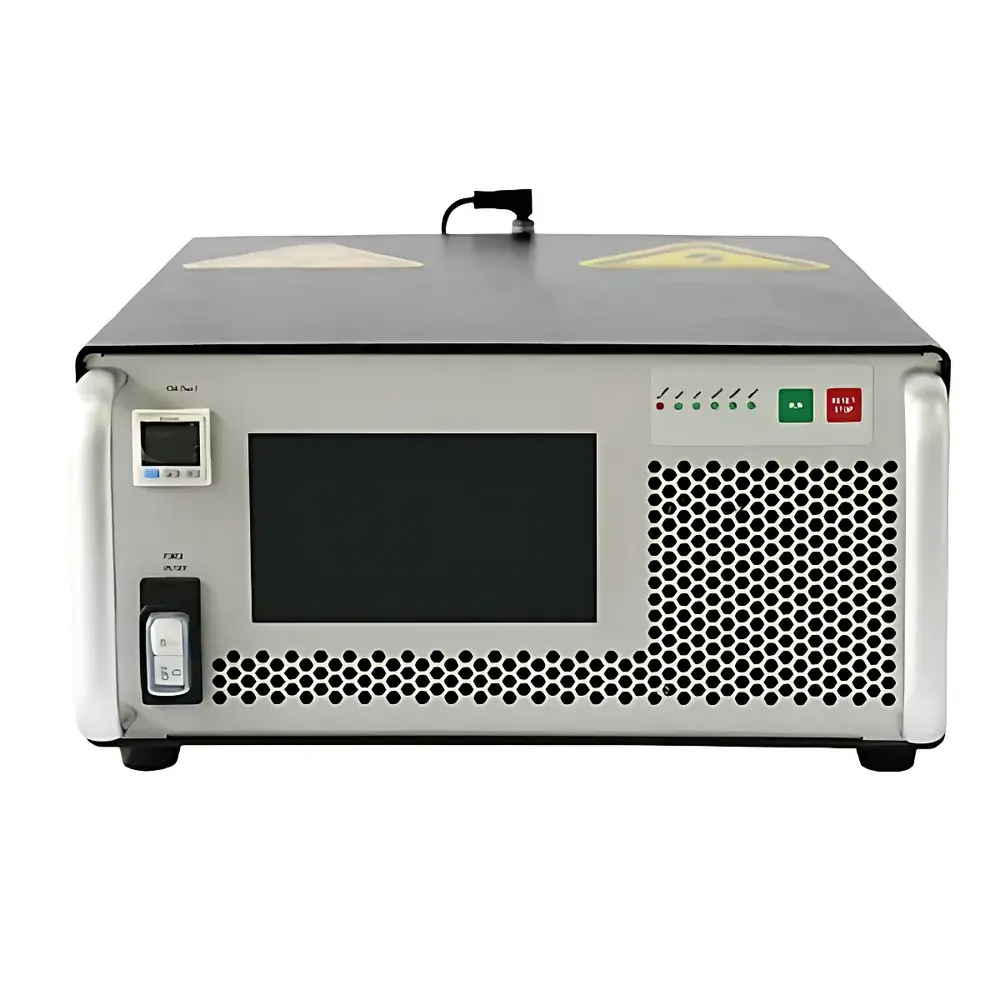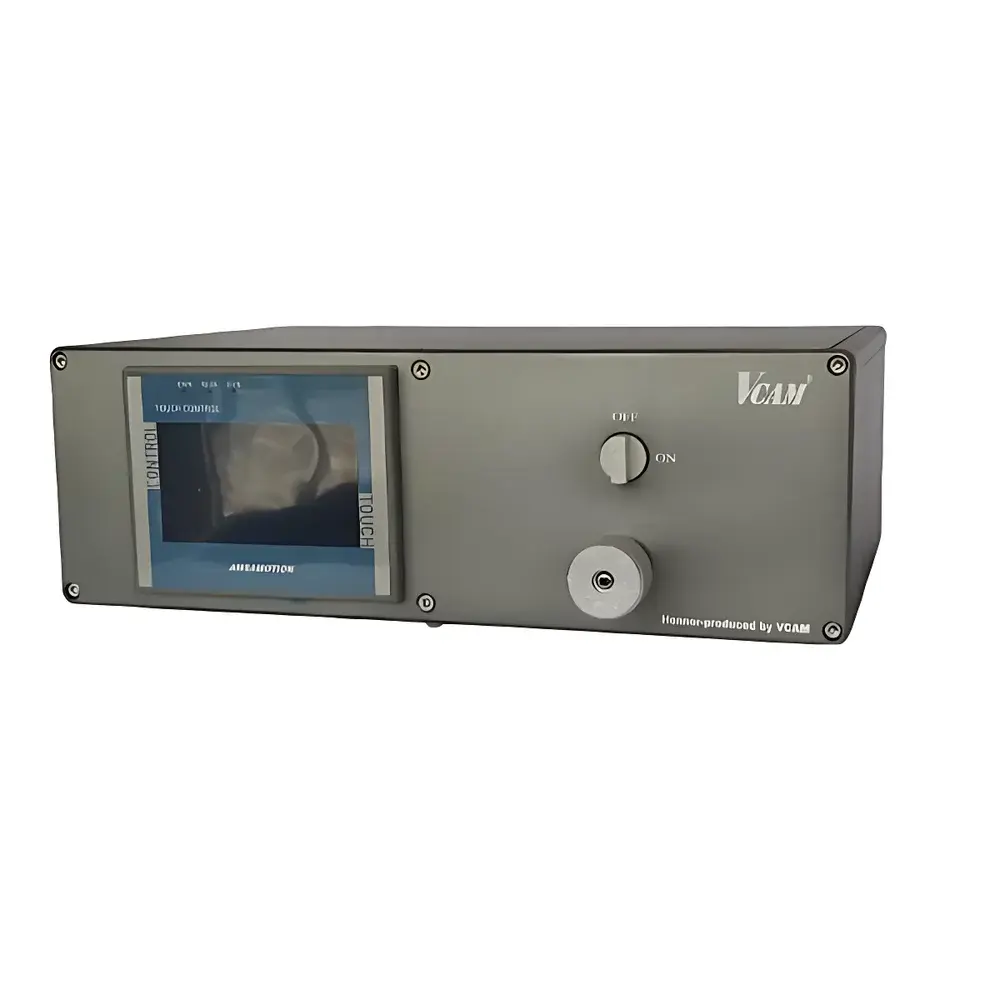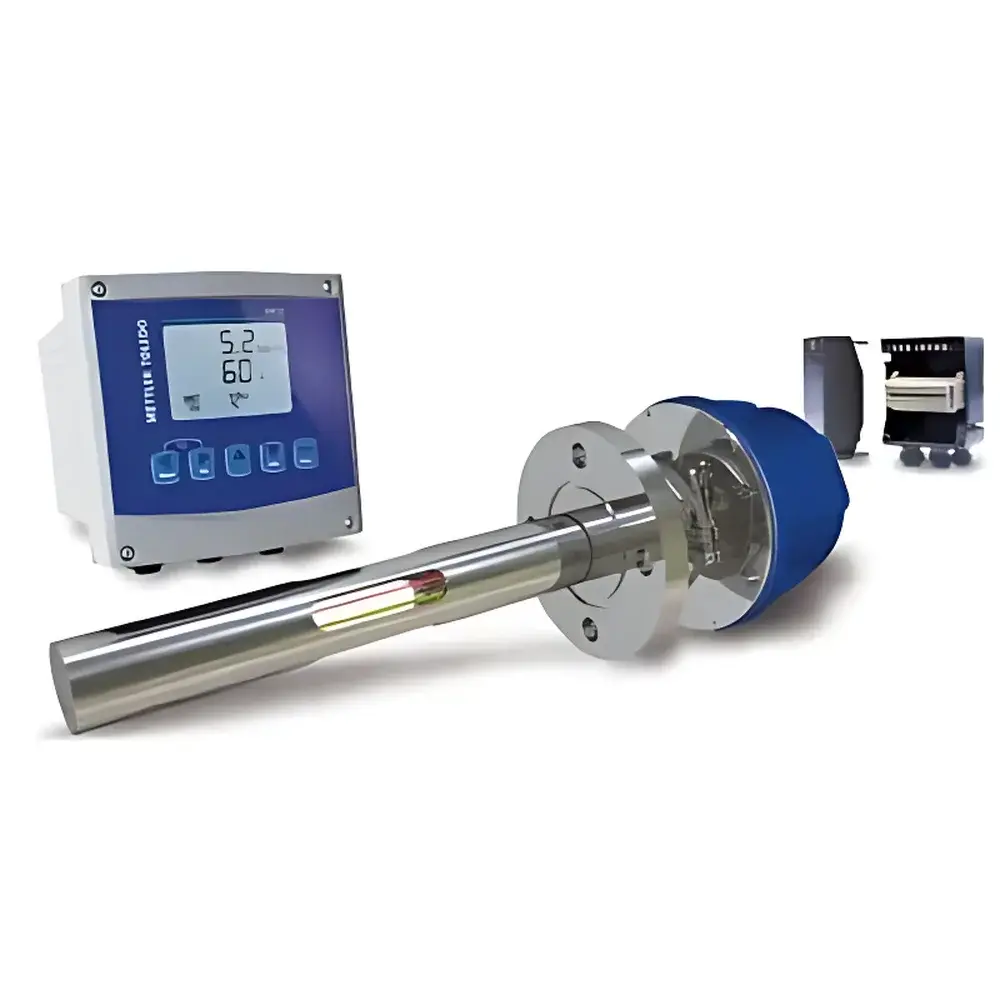
METTLER TOLEDO InPro 6800T TDL-Based In-Situ Oxygen Analyzer
| Brand | METTLER TOLEDO |
|---|---|
| Origin | Switzerland |
| Product Type | In-situ Tunable Diode Laser (TDL) Oxygen Analyzer |
| Measurement Principle | Absorption Spectroscopy at 760 nm |
| Detection Range | 0–25% O₂ (vol%) |
| Response Time (T90) | < 1 s |
| Accuracy | ±0.1% O₂ (full scale) |
| Operating Temperature | –20 to +65 °C (probe) |
| IP Rating | IP66/IP67 (probe), IP65 (transmitter) |
| Compliance | ATEX II 2G Ex db IIB T4 Gb, IECEx db IIB T4 Gb, SIL2 per IEC 61508 |
Overview
The METTLER TOLEDO InPro 6800T is an in-situ tunable diode laser (TDL) oxygen analyzer engineered for continuous, real-time measurement of gaseous oxygen concentration in demanding industrial process environments. Unlike conventional electrochemical or zirconia-based analyzers, the InPro 6800T employs near-infrared absorption spectroscopy—specifically targeting the strong, isolated O₂ absorption line at 760 nm—to deliver highly selective, interference-free quantification. This fundamental physical principle ensures immunity to cross-sensitivity from H₂, CO, CO₂, moisture, and particulates, eliminating the need for sample extraction, conditioning, or frequent recalibration. Designed for direct insertion into ducts, stacks, reactors, and inerting systems, the probe operates without optical alignment requirements and maintains stable performance under high-dust, high-humidity, and thermally fluctuating conditions—making it suitable for applications ranging from combustion optimization and safety monitoring to blanketing control in pharmaceutical and chemical manufacturing.
Key Features
- In-situ measurement architecture: No sampling lines, filters, pumps, or conditioning units required—reducing system complexity, failure points, and maintenance overhead.
- TDL absorption spectroscopy at 760 nm: Provides inherent selectivity for molecular oxygen with no drift from aging electrodes or ceramic elements.
- ISM (Intelligent Sensor Management) technology: Embedded diagnostics continuously monitor optical path integrity, laser stability, signal-to-noise ratio, and detector health; predictive alerts indicate optimal calibration or cleaning intervals directly on the transmitter display.
- Robust mechanical design: Stainless steel probe housing rated IP66/IP67, compatible with flanged or threaded mounting; operating temperature range supports deployment in ambient and moderately heated process streams.
- Hazardous area certification: Certified for Zone 1/21 (ATEX/IECEx) with flameproof enclosure (Ex db IIB T4 Gb) and functional safety compliance up to SIL2 per IEC 61508.
- Low total cost of ownership: Zero consumables, no electrolyte replacement, and <1 hr/year average maintenance time—validated across multi-year deployments in cement, petrochemical, and biopharma facilities.
Sample Compatibility & Compliance
The InPro 6800T is validated for use in gas matrices containing up to 100% relative humidity, particulate loadings ≤10 g/m³, and trace hydrocarbons typical of flue gas, inerted headspaces, and synthesis reactor off-gas. It complies with ISO 14644-1 (cleanroom air monitoring), ASTM D6299 (precision and bias in process analytical instrumentation), and meets data integrity requirements aligned with FDA 21 CFR Part 11 when integrated with METTLER TOLEDO’s iSense software suite. The analyzer supports GLP/GMP audit trails via timestamped event logging—including zero/span events, diagnostic status changes, and configuration modifications—with user-accessible audit history export.
Software & Data Management
The device integrates natively with METTLER TOLEDO’s iSense Process Analytics platform, enabling centralized configuration, remote firmware updates, and real-time visualization of O₂ trends, diagnostic KPIs, and predictive maintenance windows. All communication occurs over standard protocols including Modbus TCP, HART 7, and OPC UA. Configuration files are digitally signed and version-controlled; calibration records include full metadata (operator ID, reference gas certificate number, environmental conditions). For regulated environments, iSense provides electronic signatures, role-based access control, and immutable audit logs compliant with Annex 11 and ALCOA+ principles.
Applications
- Combustion efficiency control in boilers and thermal oxidizers—optimizing excess O₂ to reduce fuel consumption while maintaining NOₓ compliance.
- Inerting and blanketing monitoring in API synthesis, solvent recovery, and lyophilization chambers—ensuring O₂ levels remain below defined pyrophoric or oxidation thresholds (e.g., <0.5% v/v).
- Flue gas desulfurization (FGD) and selective catalytic reduction (SCR) inlet/outlet monitoring—supporting catalyst protection and emissions reporting.
- Bioreactor headspace control during upstream processing—maintaining precise O₂ setpoints critical for cell viability and titer consistency.
- Safety-critical oxygen deficiency/hyperoxia detection in confined spaces and nitrogen-purged enclosures—meeting OSHA 1910.146 and EN 60079-29-1 requirements.
FAQ
Does the InPro 6800T require periodic calibration with certified gas standards?
Yes—though calibration frequency is significantly extended versus electrochemical sensors. Under stable conditions, annual calibration is typically sufficient; ISM diagnostics will recommend calibration only when optical or electronic drift exceeds predefined thresholds.
Can the probe be installed in a vertical stack with condensate accumulation?
Yes—the probe features a heated optical window (optional) and sloped housing geometry to prevent liquid pooling; installation kits include purge adapters for steam or dry air assist where condensation risk is extreme.
Is the analyzer compatible with existing DCS systems using legacy analog I/O?
Yes—4–20 mA current output with HART 7 overlay is standard; optional digital interfaces include Modbus RTU over RS-485 and Ethernet/IP for direct DCS integration.
How does the TDL technology handle high concentrations of CO₂ or water vapor?
The 760 nm O₂ absorption line is spectrally isolated from H₂O and CO₂ bands; spectral filtering and wavelength modulation techniques suppress baseline interference—no compensation algorithms or secondary sensors are needed.
What documentation is provided for regulatory validation (e.g., IQ/OQ/PQ)?
METTLER TOLEDO supplies a complete validation support package including URS templates, FAT/SAT protocols, calibration certificates traceable to NIST, and instrument-specific IQ/OQ checklists aligned with GAMP 5 and ISO/IEC 17025.